Ethics Dunce: Justice Sonia Sotamayor

We shouldn't need one of these at the Supreme Court.

We shouldn’t need one of these at the Supreme Court.

Supporters of Justice Sotamayor’s embarrassingly anti-judicial dissent in Schuette v. Coalition to Defend Affirmative, Integration and Immigration and Fight for Equality by Any Means Necessary betray their ignorance of law and worse, their endorsement of double-talk from the one place in our government where it should never be tolerated, the Supreme Court.

It’s not even debatable.

“The way to stop discrimination on the basis of race is to speak openly and candidly on the subject of race,” she wrote,  “and to apply the Constitution with eyes open to the unfortunate effects of centuries of racial discrimination.”  “Speak openly and candidly…”

How does Sotamayor speak openly and candidly?  Like this, from footnote 2 of her dissent…

“Although the term “affirmative action” is commonly used to describe colleges’ and universities’ use of race in crafting admissions policies, I instead use the term “race-sensitive admissions policies.” Some comprehend the term “affirmative action” as connoting intentional preferential treatment based on race alone—for example, the use of a quota system, whereby a certain proportion of seats in an institution’s incoming class must be set aside for racial minorities; the use of a “points” system, whereby an institution accords a fixed numerical advantage to an applicant because of her race; or the admission of otherwise unqualified students to an institution solely on account of their race. None of this is an accurate description of the practices that public universities are permitted to adopt after this Court’s decision in Grutter v. Bollinger, 539 U. S. 306 (2003) . There, we instructed that institutions of higher education could consider race in admissions in only a very limited way in an effort to create a diverse student body. To comport with Grutter, colleges and universities must use race flexibly, id., at 334, and must not maintain a quota, ibid. And even this limited sensitivity to race must be limited in time, id., at 341–343, and must be employed only after “serious, good faith consideration of workable race-neutral alternatives,” id., at 339. Grutter-compliant admissions plans, like the ones in place at Michigan’s institutions, are thus a far cry from affirmative action plans that confer preferential treatment intentionally and solely on the basis of race.”

Oh, look! A new euphemism, which is how partisans, activists, advocates and pols muddy public policy discussions by using carefully crafted words and phrases designed to mislead the public and hide what is going on!

Continue reading

Comment of the Day: “Ethics Quote of the Week: Justice Sonia Sotamayor”

Here is Chris Marchener’s Comment of the Day on the post, “Ethics Quote of the Week: Justice Sonia Sotamayor”: and the ongoing debate it has sparked here:

I am not a lawyer. do not play one on TV, nor did I spend the night in a Holiday Inn Express last night. BUT, my understanding of the decision was that the SCOTUS would not overrule the will of the electorate, who, after reasoned debate on the issue, voted to amend its state constitution to state unequivocally that no person shall be granted a preference based on some genetic characteristic, belief, religion, etc. Isn’t that what we are striving toward? They did not strike down nor address the merits of affirmative action.

I get Jack’s point that Justice Sotamayor’s dissent was not based on Constitutional law and was reflecting her own biases regarding race and gender.

Outside of this decision, there is no doubt that some people in this country have a cultural aversion to people of other races, nationalities, genders, lifestyles, Such aversions apply equally to all genders, races, nationalities etc. on a global scale. In the US. such personal aversions must not be a criterion for employment decisions, educational, or other economic opportunities.

To Mr. Green’s assertion, “You mean racists are the ones who talk about racism? How is that not like blaming the victim? This is a pernicious, evil lie – that the victims of racism are in fact the cause of racism because they have this nasty habit of pointing out the unpleasant fact of racism’s existence” : The evil lie is that racism and gender discrimination remains an institution perpetrated by white males such that all benefits inure to them within the economy of the US. Therefore, such institutional racism must continue to be addressed through the very means that created unequal opportunities in the first place. I have stated in earlier posts that any group that demands perpetual preferential treatment by virtue of race, ethnicity, gender or some other factor is guilty of the same institutional bias that we seek to overcome.

In Justice Sotamayor’s words  “Race also matters because of persistent racial inequality in society…” What does this mean? Does it mean that every race be identical in population size? Does it mean that income distribution within the racial sub-segment reflect the income distribution in the majority demographic? Or, does it mean that everyone has an equal chance based on persistence, education and intellect?

This is same Justice that said, “I would hope that a wise Latina woman with the richness of her experiences would more often than not reach a better conclusion than a white male who hasn’t lived that life,”

Blatant racism if we switched the nouns, And why just white men?

Later she said, “Whether born from experience or inherent physiological or cultural differences,” she said, for jurists who are women and non white, “our gender and national origins may and will make a difference in our judging.” To this I do not disagree. However, the difference does not mean that better decisions will be made just different decisions. If we accept the premise that physiological or cultural differences are acceptable biases in judicial rulings then no culture, race, or national origin is inherently racist. She cannot say that white European physiology or culture is inferior for is she does then the logical conclusion is that all others are cultures and genders are superior to the white European culture which is a racist statement.

She continues, “And race matters for reasons that really are only skin deep, that cannot be discussed any other way, and that cannot be wished away. Race matters to a young man’s view of society when he spends his teenage years watching others tense up as he passes, no matter the neighborhood where he grew up.”

To that I say, Why can’t they be discussed in any other way? I cannot wish away what others think, I can only think for myself. Why do you feel the need to tell me how I think and feel? Why does the young man sense the tension of others when he walks by? Are the passerby’s truly in a state of tension or has such hypersensitivity been planted within him through the rhetoric of those “leaders” who amass great wealth and power rationalizing every perceived slight as evidence of racism. We need to tell children that they can be anything they want provided they work hard in school and apply themselves. If we continually tell them the majority is against them and they have no chance without government protections then they will simply fail to strive for greatness, reinforcing within them the sense that majority society is against them. This is exactly what the self-described champions of racially equality seem to want. If it is not then I challenge them to try alternative tactics to get my support.

However, because there has been past injustice and we feel that we must compensate those affected by such injustice, we must ask who should pay the price for past injustice and for how long. Is evidence of economic disparity the only means to determine evidence of racism; I think not. It takes individual effort and if that effort is not forthcoming then failure to achieve is not evidence of racism. For those that advocate for affirmative action, should only the sons of whites who had the misfortune of being born into lower and middle-income American families bear the burden of reparations? I don’t think that the sons of well-connected whites suffer from being denied employment in favor of a greater, equally, or lesser qualified women or minority candidate as a result of ensuring affirmative action plan goals. Nor do I think that the daughters of many well to do citizens have ever faced any form of discrimination in their lives.

Continue reading

Ethics Quote of the Week: Justice Sonia Sotamayor

Sonia_Sotomayor

“Race matters. Race matters in part because of the long history of racial minorities’ being denied access to the political process…Race also matters because of persistent racial inequality in society…And race matters for reasons that really are only skin deep, that cannot be discussed any other way, and that cannot be wished away. Race matters to a young man’s view of society when he spends his teenage years watching others tense up as he passes, no matter the neighborhood where he grew up. Race matters to a young woman’s sense of self when she states her hometown, and then is pressed, “No, where are you really from?”, regardless of how many generations her family has been in the country. Race matters to a young person addressed by a stranger in a foreign language, which he does not understand because only English was spoken at home. Race matters because of the slights, the snickers, the silent judgments that reinforce that most crippling of thoughts: “I do not belong here.” In my colleagues’ view, examining the racial impact of legislation only perpetuates racial discrimination. This refusal to accept the stark reality that race matters is regrettable.”

—-Supreme Court Justice Sonia Sotamayor, dissenting in the case of Schuette v. Coalition to Defend Affirmative, Integration and Immigration and Fight for Equality by Any Means Necessary, in which a 6-2 majority ruled that Michigan voters could ban race-based preferences at universities without violating the Constitution.

This screed was remarkably unprofessional for a Supreme Court Justice, an emotional recitation of unsupported assertions, perceptions and complaints with no constitutional relevance. Sotamayor, you may recall, was nominated by the President in the midst of a public debate regarding the importance of “empathy” on the bench, code for “we need more women.” But the Constitution is supposed to be interpreted by principles of law and legal reasoning, not from “the heart.” Well, we clearly got the empathetic Justice he wanted, for better or worse. Continue reading

John Paul Stevens’ Gilbertian Nonsense


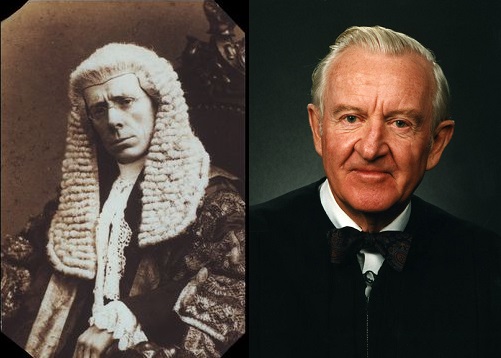
The Lord Chancellor-Stevens

A rather long preface is in order. Bear with me, please…

In the great, underperformed Gilbert and Sullivan operetta “Iolanthe,” W.S. Gilbert, a lawyer by training, devised a satirical judicial solution to a dire turn in the plot. Iolanthe, a fairy, violated Fairy Law by marrying a mortal, who happened to be the Lord Chancellor of England (he never noticed her wings, apparently.) The transgression commands the death penalty, but Iolanthe received a pardon on the condition that she allow her husband to think her dead, which she does for a couple of decades, much of which she spends doing penance at the bottom of a froggy stream, on her head.…but I digress.

When she learns, however, that her husband of yore is about to marry the sweetheart of her half-fairy son, who, though the Lord Chancellor doesn’t know it, is also his son, Iolanthe reveals herself and the paternity to the Lord Chancellor, who is duly stunned. This again triggers the death penalty and just minutes away from the finale, it looks like Iolanthe is going to end up like Carlo in “The Godfather,” as the fairy equivalent of Clemenza waddles on to the stage. (That’s how I would stage it, anyway.) Then this happens: Continue reading

KABOOM! Does Everyone Upset About The “Affluenza” Sentence Feel Better Now?

Top: Morris. Bottom: Me.

Top: Morris. Bottom: Me.

Today we travel cross the pond for a head explosion-prompting episode. A charming young woman and mother named Loren Morris, now 21, began having sexual intercourse  with an 8-year-old boy five years ago, and continued for two years until he was ten years old, involving about 50 forced sexual acts.

The boy, now 14, was overheard bragging about his premature sex life at school, and that led to his molester’s arrest and trial. This week a judge today gave Morris a two-year prison sentence at Worcester Crown Court. She will be eligible for release on parole after only a year.

This case is relevant to a couple of recent Ethics Alarms controversies. Presumably Morris is being sentenced leniently on the basis of her horrific crime being committed while she was a juvenile, even though she is an adult now. As I asserted in the stateside case of the juvenile assault ripening into a murder, I think a juvenile whose crime is only discovered and proven after he or she enters adulthood should be tried and punished as an adult. Continue reading

Ethics Hero: Dick Masten—When Ethics Trumps Law

A heroic and ethical snack...

A heroic and ethical snack…

One way I can always start an argument on Ethics Alarms is to state my position that willfully breaking the law is per se unethical as a breach of citizenship. Like all rules, however, this one has exceptions. Dick Masten, the Director of Miami-Dade Crime Stoppers, recently demonstrated one of them.

The former police chief was ordered by Judge Victoria Brennan to reveal the name of a tipster in a cocaine possession case, State vs. Lissette Alvarez. Alvarez was arrested in 2013 and charged with cocaine possession. Brennan called for Masten to come into court and confer with her in chambers regarding the case. Miami-Dade Crime Stoppers sparked the eventual arrest after getting information from a tipster who was assured anonymity. Alvarez’s attorney insists that the tipster’s information is part of the evidence against his client, saying, “Ms. Alvarez, in this case, has every right to confront her accusers. But more particularly in this case, it’s not the accuser, but the evidence that the State will use against her.”

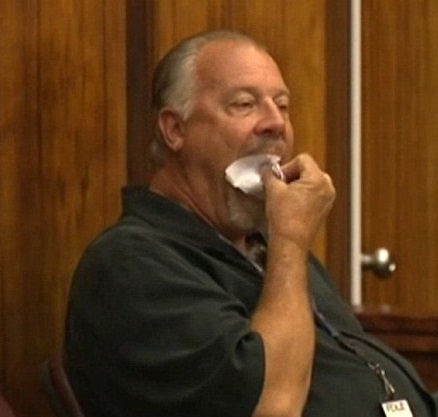
Ordered by the judge to reveal the name of the tipster, Masten, insisted that he couldn’t divulge information to be reviewed in closed court that might be discoverable as evidence. “There is a possibility that looking at certain documents, a defendant could work that case backwards and put the tipster at peril, and I’m not gonna let that happen,” he said. In a dramatic touch, Masten swallowed  a slip of paper that held the tipster’s name. “What is personal to me, is the promise,” Masten said before his ethical snack. “Some of these tipsters could end up dead. Not on my watch.” Continue reading

Legal Ethics Quiz: The Bean Bag Tossing Defense Lawyer

" I swear, you can do this in court. I saw it on "Ally McBeal"...

” I swear, you can do this in court. I saw it on “Ally McBeal”…

Holy crap! Here is a courtroom stunt you don’t see everyday…or ever.

The dramatic bribery trial of Rhode Island defense lawyer Donna Uhlmann and co-defendant Jamaal Dublin took a hard left turn into “Boston Legal” territory and beyond with the, well, creative closing argument of Dublin’s lawyer, Christopher T. Millea. It was so creative, he was nearly held in contempt of court.

“You see, all of this has to do with the throwing of feces,” said Millea, cleverly reminding the jury of the bizarre conduct of a key state witness who once threw his own excrement at a prison guard.  “The state wants to throw as much against the wall to see what sticks, just like Michael Drepaul throwing his feces …”

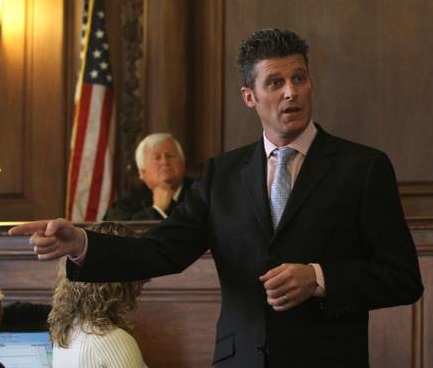
With that introduction, Millea took two bean bags out of a box he had placed in front of the jury, and threw them at the courtroom door. Then he retrieved the turd stand-ins and placed them in another box near the door, and placed that box next to the one in front of the jury, which, it was later discovered, read “Reasonable doubt,” though only the jury could see the words. The first box was labelled, “State’s case.” Continue reading

Signature Significance Lesson: Pazuzu, The Judge And The Racist Email

"Your Honor, uh, you're not quite yourself today.."

“Your Honor, uh, you’re not quite yourself today..”

How many racist e-mails does one have to send out before it proves one is a racist? At Above the Law, legal affairs blogger Ellie Mystal says the answer is one, and I agree. Mystal writes:

“If you send one horribly racist email that actually manages to leak out into public discourse, it’s probably not your only one. Seeing a racist email from someone is like seeing a mouse in your apartment: there’s never just one. I believe in temporary insanity, but I don’t believe in sudden onset racism that magically appears once and only once and then disappears forever. Of course, whenever anybody gets caught in a racist email scandal, they always say that it’s the only one. It’s always “Whoops, that email was racist, but I’m not racist.” The racist email is always allegedly “out of character,” and the person always claims to have shown “poor judgment.” And that person always has some apologists, as if sending one or two racist emails is just something that “happens” in the normal course of business to non-racist people.”

The “out of character” nonsense is what Ethics Alarms refers to as the “Pazuzu Excuse,” as when someone explains that his or her full-throated expression of a vile nature “just wasn’t me” and “doesn’t express how I feel,” as if their being was suddenly possessed by the evil demon that made Linda Blair spit pea soup in “The Exorcist.” People try that excuse—and absurdly often are allowed to get away with it—because, at their core, they realize that signature significance is persuasive when judging character. Non-racists simply don’t send out racist e-mails ever, even once, and one such episode, all by itself, is convincing evidence that the sender is, in fact, a racist.

The racist under discussion by Mystal was retired federal judge Richard F. Cebull, appointed chief judge for the District of Montana by President George W. Bush in 2001. In 2012, Cebull got in trouble when he sent the following e-mail to seven acquaintances: Continue reading

The Good News: For Once, A False Rape Accuser Was Sent To Jail. The Bad: The Sentence Is Ridiculous

And while we are on the topic of offensively lenient sentences to horrible and dangerous criminals:

 "The Flaying of Marsyas" by Titian

“The Flaying of Marsyas” by Titian

In Michigan, St. Clair County Judge Daniel Kelly sentenced Sara Ylen to at least five years in prison Friday for falsely accusing two men of rape. She’s a vicious serial liar: a few days earlier, she pleaded no contest to a cancer scam in a separate case.

Thirty-eight-year-old Ylen had accused a construction company owner and a mental health worker of invading her home and raping her after she drove her children to school in 2012. To help frame them, she went to the extreme of  using makeup to create what looked like bruises and carving an epithet in her arm. They would have been charged, too, except that both men had airtight alibis.  While working to ruin the lives of the innocent pair (they went to the same church as her ex-husband), Ylen also accepted thousands of dollars from supporters while claiming to have end-stage cervical cancer that had spread throughout her body.

At trial her attorney, David Heyboer, argued (zealously, as is his duty) that she was obviously disturbed, and that a single year in the local jail was sufficient punishment, even though this was her second set of false rape accusations. He made this argument without laughing, too. That’s a professional. Continue reading

The Quality Of Mercy Is Not Strain’d, But It Is Sometimes Infuriating

"Murdered toddler...price? Oh, I think 5 years is about right."

“Murdered toddler…price? Oh, I think 5 years is about right.”

I find this story, from Virginia, harder to accept than the infamous “affluenza” case:

MANASSAS — A judge has sentenced a Manassas baby sitter to five years in prison for the murder of a toddler she had been watching, leaving the child’s family outraged by the light sentence.Twenty-two-year-old Jessica Fraraccio pleaded guilty last year to killing 23-month-old Elijah Nealey after he wouldn’t stop crying.Fraraccio had initially said Elijah slipped in the tub, but months later admitted pulling a chair out from under him and smothering him.

Why? 1) The murder was intentional. 2) Fraraccio was in a position of trust. 3) She, unlike Ethan Couch, the teenaged drunk driver in the “affluenza” vehicular homicide case, was an adult. 4) As bad as killing someone accidentally while driving drunk (and without a license, and speeding) is, killing a helpless infant intentionally is worse.

Worse also than the lenient judge’s rationale in the Ethan Couch case—she believes the boy can be rehabilitated—is the utterly indefensible theory of the judge who sentenced Fraraccio. From the Washington Post: Continue reading