Now THIS is Sexual Harassment!

The Arizona Supreme Court has both censured  former municipal court judge Theodore “Ted” Abrams, prohibiting him from serving as a judge again, and disciplined him as an attorney, suspending his law license for two years. Why, you may well ask?

Well, it seems that before he resigned as a judge there was  a bit of a woman problem: if an attractive woman appeared before Abrams as an attorney, she had a problem.

The State Bar of Arizona determined that Abrams, while serving as a judge, “engaged in a prolonged and relentless effort to sexually harass a female assistant public defender who appeared in his court,” as well as, “in a gross misuse of his power, … inflict[ing] his retribution from the bench for the victim’s refusal to yield to his pursuit.”  Over a 14-month period, Abrams sent the woman at least 28 voice mails and 85 text messages, many of which were sexually overt, including one in which he described a sex act he wanted to perform on her. He repeatedly pressured the lawyer for sex, made slurping noises—I’m pretty sure there is something in the judicial code of conduct that prohibits that-– and once fondled her buttocks. Continue reading

Judicial Non-Ethics, Pennsylvania Division: Now THAT’S a Conflict of Interest!

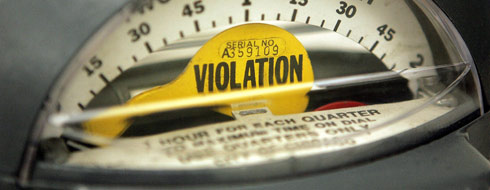
The judge apparently found the meter to be in contempt of court.

Lancaster, Pennsylvania District Judge Kelly Ballentine dismissed several of her own parking tickets and an expired registration ticket within the past year, according to court records.

“According to the state Judicial Conduct Board’s rules, district judges should disqualify themselves in proceedings where they are a party,” notes the news report.

Yes, I rather think that’s a good idea, don’t you?

It appears that Judge Balentine’s colleagues understand this not-so-fine point of conflict of interest principles and basic ethics: a check of court records with regard to all of the county’s district judges revealed that those who had parking or traffic tickets had another magisterial judge handle their cases at the district court level. Sometimes we hear objections to court proceedings in which a judge over-stepped his or her proper role and became de facto “judge, jury, and prosecutor.” A judge serving as judge, defendant and defense attorney, however, is much, much worse. Continue reading

Ethics Dunces: The Wisconsin Supreme Court—Choker, Chokee, Everyone

When a judge acts like this, there's a problem with the court.

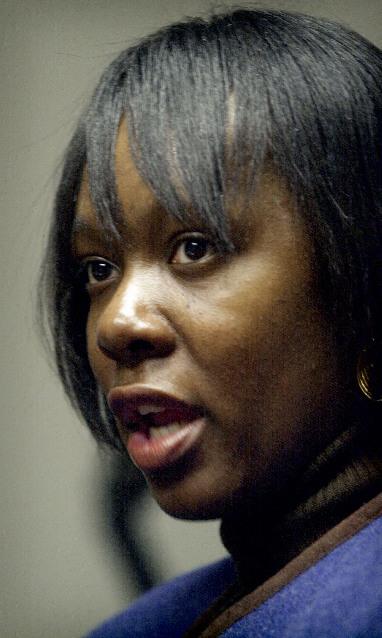
In the story linked here, you can read about the controversy between a liberal, female justice on the Wisconsin Supreme Court who says that a conservative, male justice attempted to choke her, and the male justice, who claims she attacked him. There is more outrageous behavior described as well, including threats, and epithets like “bitch” being used.

I don’t care who did what, or what the facts are.

The conduct of the whole Wisconsin Supreme Court is a disgrace. Continue reading

Ethics Dunce: Broward (Florida) Circuit Judge Barbara McCarthy

Come on! How can you put a guy like this in jail?

Many Americans don’t comprehend the meaning of “justice.”  It is unfortunate that some of these Americans are  judges.

Ryan LeVin, 36, is a drunk, a drug abuser, a playboy, a scofflaw and a killer. He killed Craig Elford, 39, and Kenneth Watkinson, 48, as they were walking to their beachside hotel in 2009. LeVin was driving recklessly in his $120,000 Porsche 911 Turbo, ran them down, and  fled the scene. That was only the latest of his offenses: LeVin was already on probation in Illinois for crashing into a Chicago police officer and instigating a high-speed chase. He has more than 50 traffic violations. What really matters, however, is that Ryan LeVin is rich.

Because he is rich, when LeVin offered enough money to the widows of the two men he killed in his act of vehicular homicide, a Florida judge agreed to let him off with two years of house arrest rather than the 45 years in prison that you or I would serve for a similar crime. Continue reading

Appearance of Impropriety I: Federal Judge in a Whites Only Club? Ethical, As Long As He Doesn’t Like The Policy. Wait…WHAT?

Our Motto: "Trying to find a qualified black member for 110 years...and still looking!"

Is it an ethical violation for a Federal judge to belong to a whites-only country club?

Sure it is. Was that so hard?

Apparently for a judicial appeals panel in Tennessee, it is.

In May of 2008, an anonymous woman complained to the chief judge of the 6th Circuit Court of Appeals that Federal bankruptcy  Judge George Paine II’s  membership in the ritzy Belle Meade Country Club violated the judicial ethics code of conduct that decrees that judges “should not hold membership in any organization that practices invidious discrimination on the basis of race, sex, religion, or national origin.”  This was a reasonable complaint to make, since the judicial codes for both Federal judges and Tennessee judges say that…

 CANON 2: A JUDGE SHOULD AVOID IMPROPRIETY AND THE APPEARANCE OF IMPROPRIETY IN ALL ACTIVITIES

2 C   A judge shall not hold membership in any organization that practices invidious discrimination on the basis of race, sex, religion, or national origin. Continue reading

Are Conviction Bonuses For Prosecutors Ethical?

Next, how about a bonus for confessions?

Sometimes a story starts the ethics alarms ringing so loudly that it is hard to think about anything else. It is rare, however, to have this occur when it is not entirely clear what is so unethical. An unusual bonus arrangement in Colorado is in this category.

Carol Chambers, the District Attorney for Colorado’s Eighteenth Judicial District, offers financial incentives for felony prosecutors who meet her office’s goals for convictions.  Plea bargains and mistrials don’t count in the incentive program; they have to be trial convictions.  The bonuses average $1,100, and Chambers says she gives them out to encourage prosecutors to bring her district’s rates in line with other jurisdictions in the state. No other Colorado DA gives out bonuses, or bases evaluations on conviction rates. Continue reading

The Saga of the Racist Juror and the Angry Judge, Chapter Two: “Never Mind!”


"Oh! You're REALLY a racist? That's OK then...I thought you were LYING about being a racist, and I just hate that!"

When we last left Federal Judge Nicholas Garaufis, he had just sentenced a potential juror to jury duty for life because of her racist and anti-police answers on a jury questionnaire. Then many commentators, including Ethics Alarms, pointed out that punishing a woman for her views, however offensive, was an abuse of judicial power. I wrote:


“This was outrageous abuse of power by a judge, and a slam dunk First Amendment violation. Her opinions are ugly, but there is nothing illegal about having ugly opinions, and  government punishment based on a citizen’s opinion is a dangerous Constitutional breach. A judge can’t dictate how a potential juror thinks or what she believes. He can’t take vengeance on a woman who is hateful, either. She has a right to her hate.”

Today the judge released the woman from the lifetime sentence, saying that it really wasn’t her racist views that angered him, but rather that she had made an obvious attempt to get out of jury duty by putting offensive answers on the jury questionnaire. “My ruling was not based in any way upon whether or not you held any racist views. It was apparent you did not tell the truth,” Judge Garaufis told the woman. “You were the only juror who indicated that you had every form of bias imaginable. You were lying to the court in order to be excused.”

Ah, It wasn’t that she was a racist, but that she pretended to be a racist.

What a minute..huh? Continue reading

Alarm Failure! Racist Juror+Angry Judge=Jury Duty For Life

"You won't like me when I'm angry..."

Political correctness is now officially moving into places where it cannot be tolerated….like the courtroom.

In Brooklyn Federal Court, Juror No. 799, an Asian woman in her 20s who said she works in the garment industry, was up for jury duty in the death penalty trial of Bonanno crime boss Vincent Basciano. Asked to name three people she least admired on her jury questionaire, she wrote, “African-Americans, Hispanics and Haitians.” Elsewhere on the form she declared that all cops were lazy, and used their sirens to bypass traffic jams.

Federal Judge Nicholas Garaufis read the questionaire, questioned the woman, and declared, “This is an outrage, and so are you!” After he dismissed her as a juror on the case, he announced that she was now, until further notice, on permanent jury duty until he let her off.

“She’s coming back today, Thursday and Friday – and until the future, when I am ready to dismiss her,” Garaufis said.

Just desserts for a racist?

Proper punishment for hate?

A lesson in citizenship for all? Continue reading

Quiz: Which Law Enforcement Fiasco Was More Unethical?

It’s Quiz Time!

Chief Wiggum would be an upgrade.

Today’s topic: Why the public doesn’t trust the law enforcement system. Here are two horrible and true, tales of AWOL ethics involving law enforcement in New York and Tennessee. Which is more unforgivable, A or B?

A. Brooklyn, NY: The Perpetual Warrant

What is the fair limit of “the police made  an honest mistake”? Let’s say the police have a warrant to search your house, and come to your door because they got the address wrong—and it’s a mistake. At least they didn’t break down the door in the middle of the night. OK, mistakes happen. Then they come again, because they got your address in error again. Annoying, but they seem embarrassed: they aren’t trying to harass you.

And then they arrive 48 more times. Continue reading

Ethics Hero: New York Courts

Bravo!

New York’s court officials have decided to bar New York’s elected judges from hearing cases involving lawyers and others who make major financial contributions to their campaigns. The New York Times reports that the new rule of the state court system will be announced this week by Jonathan Lippman, the state’s chief judge. “It is believed to be the most restrictive in the country, bluntly tackling an issue — money in judicial politics — that has drawn widespread attention,” said the paper.

The new rule decrees that “no case shall be assigned” by court administrators to a judge when the lawyers or any of the participants involved donated $2,500 or more in the preceding two years. Continue reading