Ethics Quiz: Judge Shecky’s Dilemma

"Here come de judge!"

“Here come de judge!”

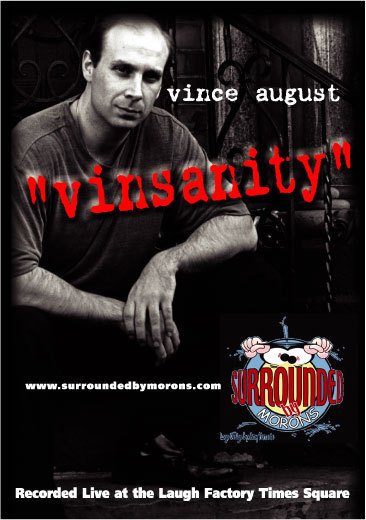
Vince A. Sicari is a municipal judge in South Hackensack, N.J. who moonlights as a stand-up comic, and a fairly successful one at that, named Vince August.

He is now sending his lawyer to argue before the New Jersey Supreme Court that he should be allowed to continue his night and weekend job, overturning a 2008 ethics ruling that for a judge to do stand-up creates  “an appearance of bias, partiality or impropriety or otherwise negatively affect the dignity of the judiciary,” in violation of the Judicial Conduct Code. The issue is complicated by the fact that municipal judges almost have to moonlight as something—they earn only $13,000 a year. Sicari argues that his comedian gigs generate the bulk of his income, and that the two careers are separate. He says doesn’t make jokes about his cases or lawyers, nor sensitive issues involving race and gender, and on the bench he is as serious as, well, a judge.

Thus, your Ethics Quiz of the Day gives you an opportunity to judge “Judge Shecky”:

Is it ethical for a judge to moonlight as a stand-up comic? Continue reading

Judge Ken Anderson: A Judge With An Ethical Obligation To Resign

Ken Anderson

Regret isn’t enough.

Ken Anderson has been a Williamson County (Texas) district judge since 2002, but in 1987  he was the district attorney who prosecuted Michael Morton for fatally beating his wife to death. Morton was convicted and served 25 years in prison before DNA tests proved he was innocent. (This is yet another triumph of The Innocence Project.) Another man has been arrested for the murder of Morton’s wife Christine, as well as a second woman he allegedly killed in similar fashion while Morton was behind bars.

Last week, a five day hearing examined Judge Anderson regarding his conduct in the case, in a special court of inquiry to determine whether he engaged in criminal wrongdoing as well as unethical prosecution. Among the questions raised was why Anderson never divulged to Morton’s defense team a police report that Morton’s neighbors had said that they saw a suspicious man walking into the woods behind the Morton home shortly before the murder, and why Morton’s three-year-old son’s statement that “a monster,” not his father, beat the child’s mother to death was similarly withheld. On the stand enduring five hours of questioning, a tearful Anderson could only say that he didn’t remember not turning over the evidence to the defense, while defense attorneys adamantly insisted that they never received it. The hearing also revealed that Anderson kept his lead investigator from testifying at trial, when his testimony would have ensured that the child’s statement and the report about the stranger were raised in court, as well as allowing defense attorneys to cross-examine the investigator regarding his peculiar theory of the case.The theory, which was subsequently endorsed by DA Anderson, was that Morton become homicidal after his wife fell asleep when he sought to have sex with her, and donned his scuba wet suit so his son wouldn’t know it was him beating her to death. Continue reading

The Judge Who Would Be Nun: This Could Become A Bad Habit

Nun hiest

Sister Mary Ignatius explains it all: “Stick em up!”

You can’t make this stuff up.

Navahcia Edwards, 25, was being tried before U.S. District Judge Matthew Kennelly on charges of bank robbery. She performed the heist disguised as a nun. A scary nun.

Her attorney argued that the  robbery was carried out by a white thief, and Edwards is African-American. Her fiance, the defense claimed, hit the bank with a white accomplice who blackened her face under the old lady mask. This seems like a far-fetched defense to me, but criminal defenses when one’s client is probably guilty tend to be like that.

Judge Kennelly decided to test the theory. He said that he dressed up like the fake nun in the photo, mask and all, and looked in a mirror. His white skin was visible, so he rejected what he described as a “reverse Al Jolson” defense, and found Edwards guilty as charged.

This is unethical judicial conduct. Continue reading

Musings On A Judge’s “One Time Accidental Mistake”

"All right now, boys---smile!"

“All right now, boys—smile!”

From the ABA Journal:

“A Philadelphia traffic court judge has been removed from the bench for showing a female court clerk photos of his privates. In a one-sentence ruling on Thursday, the Court of Judicial Discipline took action for what it called judicial misconduct. However, a lawyer for former judge Willie Singletary called the incident a ‘one-time accidental mistake’ and said the judge had resigned from office in February…According to attorney John Summers, the judge accidentally displayed photos of his genitals for a period of seconds and he and the court clerk were sharing innocuous cellphone content with each other. A legal ethics complaint contended the judge also asked her ‘Do you like it?’ at the time.”

Some thoughts: Continue reading

Judge Norman’s Dilemma Becomes The ALCU’s Problem

Cruel and unusual punishment? Guess again…

You’re a judge. You have power, in your sentencing, to make various miscreants suffer all sorts of creative punishments, as long as they fall well short of the rack and wheel. For example, a judge in Cleveland recently sentenced a woman (who had driven her car up the side-walk to get around a stopped school bus carrying special-needs children) to carry a sign proclaiming herself an idiot. You are faced with a troubled young man who appears to have received almost no instruction, in his 17 years, in the particulars of right and wrong. You see no productive purpose in locking him up and throwing away the key, for what he needs is a transfusion of ethics. What do you do?

In the throes of this very dilemma, Oklahoma district judge Mike Norman was sentencing Tyler Alred  for DUI manslaughter. Alred was driving his Chevrolet pickup drunk in  2011 when he hit a tree, ending the life of his passenger and friend, 16-year old John Dum. The judge gave Tyler a deferred prison sentence provided that he attend church every Sunday for the next ten years, as well as graduate from high school and welding school. Both Alred’s attorney and the victim’s family agreed to the terms of the sentence. Continue reading

Ethics Train Wreck In A Little Teapot

I don’t understand this story at all.*

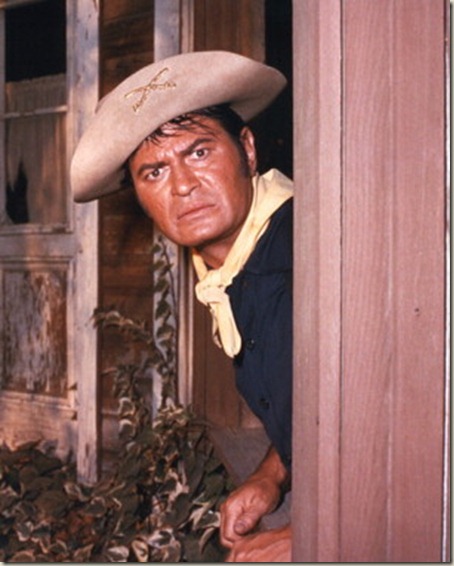
Not THAT Larry Storch! That Larry Storch made sense to me.

Larry Storch is no relation to the late comedian of “F Troop” fame, but is a defiant, uncivil 89-year-old scofflaw who insists on driving around his North Carolina community with his sound system at eardrum-popping levels. “They’ve been giving me noise tickets for years,” Storch said. “I guess they thought their tickets would deter me, but every time I paid off a ticket I’d stop by the speaker place on the way home and add a little more boom to my zoom.” Good for you, Larry; by the way, you’re an asshole. His latest arrest for breaking noise ordinances brought him before a judge who was ready to throw the book at Storch, but who had a peculiar way of doing it. Lenoir County District Judge Robert T. Ironside—who is no relation to the wheelchair-bound Robert T. Ironside played by post- “Perry Mason” Raymond Burr in a CBS detective show—told him:

“You’ve come before this court many times over the years Mr. Storch. In the past I’ve fined you, sentenced you to community service, and at one point even forced you to watch the fourth hour of the ‘Today Show.’ Since none of those punishments have done anything to curb your jackassory behavior, I’ve decided to get medieval on where your butt — if you had one — would be.” Continue reading

Ethics Quiz: Alcoholics Anonymous and Judicial Abuse of Power

Uh, wrong meeting, Barney…

A friend who is a member of Alcoholics Anonymous flagged an interesting ethical dilemma involving the huge, loosely-affiliated alcoholism recovery and support group.

Judges often order mandatory attendance at AA meetings as conditions for leniency in alcohol-related crimes, like DUI, spousal abuse, and others. The problem is that AA is system of commitment and trust, and someone who only comes to meetings under threat of jail time have neither. It is the AA attendee’s acceptance of the reality that they are helpless against alcohol and willingness to commit fully to the program with others like than that allows AA to be as successful as it is, and the assurance of anonymity the group provides makes its existence possible. “Court-ordered attendees slink in here, roll their eyes, do their time and leave,” he told me. “How do we know that they aren’t regaling their friends with hilarious tales about what does on at meetings? What right does a judge have to make AA host someone who doesn’t really meet the group’s criteria?”

Good question, and it’s the Ethics Quiz of the Day:

Is it ethical for judges to force a non-profit, non-government, voluntary organization to assist the justice system at the risk of their own integrity and their members’ confidentiality?

This time I’m going to let everyone weigh in before I show my cards.

Here is a link that discusses some of the related issues.

Ethics Dunces: 29 Wisconsin Judges

Yes the gavel's fuzzy, but then so is the judgment of the person on the other end of it.

There is something seriously wrong with the ethical culture of the judiciary in Wisconsin. I suppose this was already obvious, as it is definitely a bad sign when two members of the state Supreme Court accused each other of physical attacks. Nonetheless, the news that 29 of Wisconsin’s sitting judges placed their names on the recall petition for Gov. Scott Walker would seem to settle any remaining doubts.

Is doing this a strict, slam-dunk, violation of the Wisconsin Code of Judicial conduct? No, probably not. It is in a gray area of the Code. Judicial ethics codes prohibit judges from becoming involved in political contests, but a recall petition a judge signs as a private individual (Personally and professionally, I don’t think it is possible for a judge to sign a petition as “a private individual”) don’t fit neatly into the definition of political activity. Other states, such as New York and New Mexico, have allowed judges to sign nominating petitions for candidates on the theory that it is the equivalent of voting, the right to which judges do not give up by ascending the bench.

Still, the judicial codes don’t exactly give a ringing endorsement to this kind of activity, and I would say the better interpretation is that the ethical rules preclude it. The ABA’s Model Judicial Code, for example, says… Continue reading

Now THAT’s a Conflict of Interest!

"How do you plead, Judge Ballentine?" "I'm innocent, Judge Ballentine!" "I find you credible. Case dismissed, Judge Balentine! See you in the mirror!"

Judge Kelly S. Ballentine, a Pennsylvania district court judge, apparently avoided paying $268.50 in parking tickets by dismissing  her own cases.  Two of the three tickets issued to her were for overtime parking, and the other was for an expired registration. She has been charged with tampering with public records, obstructing the administration of law and participating in activities that are prohibited due to a conflict of interest.

Yes, I’d say that was a fair assessment of the situation.

Ethics Alarms thanks the ABA Journal for the story.

Ethics Quote of the Week: Greta Van Susteren

Welcome to the Wisconsin Supreme Court!

“Are any of the newspaper asking for them to step down? People have very serious disputes and their whole lives depend on decisions on the Supreme Court, and this isn’t fair to the people. Are newspaper editors saying they got to go?”

—-Fox News Host Greta Van Susteren, asking Milwaukee-Journal Sentinel reporter Jason Stein why the Wisconsin news media has not demanded  the removal of Justice David Prosser and  Justice Ann Walsh Bradley or both, since by all accounts they turned ideological differences into a physical altercation in chambers. The reporter ducked the question, and blamed it all on Gov. Scott Walker, thus taking “missing the entire point” to art form status.

Van Susteren is not only right, but obviously right. Continue reading