Ethics Observations on the Trump “Hush Money” Trial

Last week Jonathan Turley issued a thorough indictment of the trial in Manhattan, which he described as “a clear example of the weaponization of the criminal justice system.” The George Washington University law professor has been saying this from the beginning about Alvin Bragg’s partisan prosecution, and it should be self-evident: a criminal case relying on the slimier-than-slime, convicted perjurer and disbarred lawyer Michael Cohen as an essential witness should never be pursued, and it is a violation of prosecutorial ethics to do so.

I was surfing between various news networks’ analyses of the case, and only the usually silly “Fox and Friends” crew stated the most important conclusion that the others carefully avoided. It’s a political prosecution, and the purpose is to get a conviction by any means possible, even one tainted and sure to be overturned, so the Democrats can run against Trump as a “convicted felon.” Justice has nothing to do with it, as Turley’s careful assessment makes clear.

The other purpose is to interfere with the certain Republican candidate’s ability to campaign, because he otherwise has the energy and ability to campaign, while his Democratic opposition does not. Yes, the Democrats are interfering with the 2024 election and attempting to rig it even as in other prosecutions and in campaign attacks, they claim Trump is an existential danger to democracy and that his claims that the 2020 election was “stolen” are “baseless.” The unethical conduct of the Democrats in prosecutions like the “hush money” trial is itself a rebuttal of that statement. If I had to define “hypocrisy,” I couldn’t come up with a better example than that.

The question this week was whether it is fair to try Donald Trump in New York City. That’s easy: no. All of the lawfare cases are calculated to go to trial in communities extremely hostile to Trump: New York, D.C., and Fulton County, Georgia, the solid Blue heart of a mostly conservative state. Given the stakes and the defendant, judges should move all of the cases, just as the trial of Derek Chuavin and the three other cops implicated in George Floyd’s death should have been moved out of the Twin Cities, if the objective had been a fair trial rather than to mollify Black Lives Matters.

Continue reading

Rueful Observations on a Former O.J. Juror’s 2016 Admission

O.J. Simpson’s death this week brought back lots of bad memories—I can’t think of a good one—and a lot of familiar spin and dubious exclamations. One disturbing moment it brought back into the spotlight was the moment above, when in 2016, the ESPN series “O.J.: Made in America” showed Carrie Bess, one of the Simpson jurors, stating that her jury voted to acquit O.J. not because the jury didn’t think he was guilty, but because they sought “payback” for the police beating of Rodney King.

The whole exchange after the interviewer asks, “Do you think there are members of the jury that voted to acquit OJ because of Rodney King?”

Bess: Yes.
Interviewer: You do?
Bess: Yes.
Interviewer: How many of you do you think felt that way?
Bess: Oh, probably 90% of them.
Interviewer: 90 %! Did you feel that way?
Bess: Yes.
Interviewer: That was payback.
Bess: Uh-huh.
Interviewer: Do you think that’s right?

And the ex-juror shrugs.

Nice.

Observations:

Continue reading

From Texas, A “Better Late Than Never” Horror Story

The Texas Monthly story is titled, “The Juror Who Found Herself Guilty.” Its tone is celebratory: a juror who made an unethical decision (though the writer attempts to mitigate it in many ways throughout his article) courageously decided to undo the wrong, and succeeded. Far from being impressed with the alleged ethics hero, Estella Ybarra, I found the story infuriating, and its conclusion that Ybarra should be admired untenable.

The story is in the familiar, long-form format familiar to readers of the New Yorker, Esquire, Vanity Fair and The Atlantic. We are given more details about the lives of all the participants in a drama than we need as well as thick context about every facet of the tale. It can be summarized easily, however, and relatively quickly.

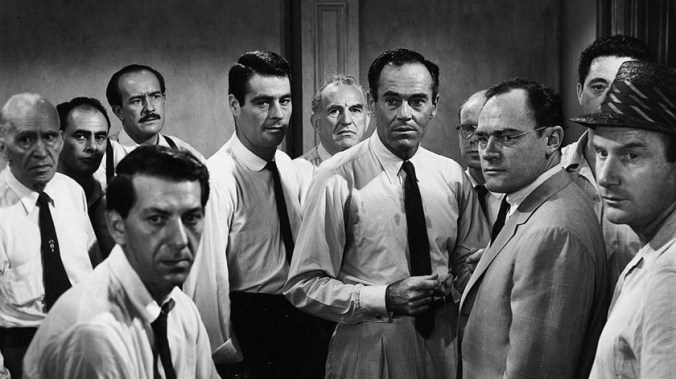
In 1990, when Ybarra was 48 years old, she served on a jury charged with determining the guilt of a Mexican-American man accused of rape. She was the hold-out juror, Henry Fonda in “Twelve Angry Men”; everyone else was certain Carlos Jaile (above) had raped an eight-year-old girl. Ybarra was not: she felt the evidence was thin. There was no physical evidence, the defendant had an alibi, and the main proof of his guilt offered was a child’s eyewitness identification after the fact. But, we are told, Estella was still learning English despite being born in the U.S. (Whose fault is that?) and didn’t understand the justice system very well. (Or that?). As a result, she allowed herself to be bullied into voting ‘guilty’ by the men on the jury, even though she was not at all convinced Carols Jaile was.

She went home after Jaile was convicted and sentenced to life in prison, and wept, we are told. This is supposed to make her seem sympathetic. Later, Estella received a certificate in the mail stating that by serving as a juror and “accepting this difficult and vital responsibility of citizenship in a fair and conscientious manner, you have aided in perpetuating the right of trial by jury, that palladium of civil liberty and the only safe guarantee for the life, liberty and property of the citizen.” Ybarra threw the document into a drawer. She told the writer, Michael Hall, that she thought to herself, “We sent an innocent man away for the rest of his life.”

Continue reading

Unethical Quote Of The Month: The Sussmann Jury Forewoman

“I don’t think it should have been prosecuted. There are bigger things that affect the nation than a possible lie to the FBI.”

—-The forewoman in the just completed Sussman trial, which acquitted Clinton Campaign lawyer Michael Sussman of lying to the FBI when he presented bogus evidence of Trump campaign “collusion” with Russia and said he was doing so as “a private citizen” when in fact he was carrying out the strategy of Hillary Clinton and her campaign.

The  breaking story yesterday, covered at Ethics Alarms here, had less than 24 hours hours of innocence in which the responsible response (and mine) was “we should give the jury the benefit of the doubt; they were in the courtroom for the whole trial, we were not.” Now we know, thanks to this woman, that the jury members were under the influence of progressive-programed  confusion and bias, and were either incapable of fulfilling the duties of a jury, or prompted by the leadership of this proudly unethical fool, chose not to. Continue reading

Joke And Jury Ethics At The Kyle Rittenhouse Trial

chicken_ft-scaled

Weird, man.

In Kenosha, Wissonsin, where Kyle Rittenhouse is standing trial for murder after he shot and killed two protesters during the riots following the shooting of Jacob Blake, an alternate juror was dismissed for making a joke. The juror, a retired white man, said to a court police officer as the officer escorted him to his car, “Why did the Kenosha police shoot Jacob Blake seven times? Because they ran out of bullets!”

HAR! That’s being called a bad joke in the news media: actually, it’s a classic formula joke in the tradition of “Why does a fireman wear red suspenders?,” “Why did the chicken cross the road”? and “How do you know a politician is lying?” (because his/her lips are moving!). Nonetheless, the officer reported the joke to Judge Bruce Schroeder, who called on the juror to explain to him and the lawyers what the joke was and what he meant by it. The juror confirmed that he made a joke but wouldn’t repeat it. That got him kicked off the jury.

Observations:

Continue reading

This Is Not The Statement Of A Juror In A “Fair Trial” [Updated]

This is the first crack in the dam, and there will be more. I was certain this was coming.

Brandon Mitchell, a black, 31-year-old high school basketball coach on the jury that convicted Derk Chauvin, spoke to the Wall Street Journal saying that “staying anonymous wouldn’t help push for change.” If he wants Chauivin to say convicted, he should have kept quiet. From the interview (WSJ has a paywall—sorry):

Mitchell said he was pulled over for no reason by Minneapolis police dozens of times in his early 20s, usually driving his mother’s aging Chrysler Sebring. He said he has always told his players to follow the checklist his mother gave him during these encounters. Take your hat off; announce what you’re doing; be polite; do what you’re told.

Then Mitchell tells the Journal that serving on the jury made him see it was wrong that a person should be so afraid that a police officer could do them harm that they needed to change their behavior, adding,

“That’s also part of the reason why I’m speaking up now because that is a narrative that is horrible…So somebody follows directions or not, they don’t deserve to die. That’s completely ridiculous.”

THEN Mitchell says he “related” to Floyd, saying,

“I just related to it too much.Being big, you know, former athlete and all these things—it just, it really just hit home… It just felt like something that easily could have been me or anybody else that I know.”

Good thinking there, Coach! And America, welcome to the jury system.

Rueful observations in random order:

Continue reading

Assorted Ethics Items, 4/23/2021: I Can’t Talk Or Eat, But I Can Still Write. And Think, Sort Of…[Finally Corrected!]

Well, THAT was certainly unpleasant…made a root canal seem like the warm embrace of a succubus by comparison…

1. An alternate juror in the Chauvin trial gave an interview. She seems like a pretty rational sort, but two comments support the contention that the trial was not a fair one:

  • “I did tell them that I saw the settlement run across the bottom of the screen one day…I was not surprised there was a settlement, but I was surprised they announced it beforehand.” She also said she understood that civil trial and criminal trial standards were different, but the fact that the city essentially announced that its police were liable for Floyd’s death cut the legs out from under Chauvin’s defense.
  • “I did not want to go through rioting and destruction again and I was concerned about people coming to my house if they were not happy with the verdict.” If any jurors feel that way, it’s not a fair trial.

Continue reading

Ethics Reflections And Questions On The Chauvin Verdict, Part I

I haven’t read much commentary on yesterday’s verdict yet. I’m assuming that I’ll have more observations later in the day.

1. Ultimately, it appears that the jury just decided that it wasn’t worth it to acquit Derek Chauvin even if there was reasonable doubt. That’s sad, but the calculation can be defended on utilitarian grounds, meaning that, ironically, the arguably unethical decision to discard the law, individual rights, a fair trial and the integrity of the justice system might have been an ethical decision because it will cause less harm in the long and short run. In other words, it can be defended as a decision in which ethics won and the law lost.

I’m not saying that I would defend it that way, but I acknowledge the argument as respectable.

2. It is important to remember that cases where verdicts were based on emotion, human nature, and sociopolitical dynamics rather than the evidence and strict adherence to the law have occurred periodically, and will continue to do so.

The Nuremberg Trials were travesties from a legal standpoint, and the verdicts “ethical” only in the sense that a formal, solemn statement that some conduct is so heinous that civilization has an obligation to reject it was deemed more important than such niceties as avoiding hypocrisy or respecting the law’s aversion to ex-post facto legal penalties. The trial of the alleged conspirators to murder Lincoln was as rigged as a trial can be. This isn’t an “it happens all the time” excuse for the Chauvin trial, but a reminder that the Chauvin case isn’t the cataclysmic scar on the justice system that many will claim it is.

Continue reading

Daunte Wright Dining Car Specials On The George Floyd Ethics Train Wreck…

1. “Nah, there’s no mainstream media bias! Naturally, the New York Times has a ticket…The Timed headline in its print edition: “Minnesota Police Kill Another Man As Tensions Build.” Oh, did the jury rule that the Minnesota police officers killed George Floyd already? They didn’t? Then what the hell is the New York Times saying “Another” for?

The news media decided that Derek Chauvin is a murderer and has been repeating that assertion as fact for almost a year now.

2. Wait, the Chaivin jury hasn’t been sequestered? Chauvin’s lawyer, Eric Nelson, had argued yesterday that the jurors should be ordered to avoid all media and spend the rest of the trial sequestered, because he feared that rioting in the nearby community where the Wright shooting took place might limit their ability to be fair jurors. The unrest will be at “forefront of the jury’s mind-set,” Nelson argued. He also asked for new interviews with the jurors to determine whether this recent event had already biased them. The judge, Peter Cahill, denied both requests. “This is a totally different case,” the judge held, since the current riots aren’t about a jury verdict but a shooting.

Wow This pretty much convinces me that this is a kangaroo court, and that the judge is trying to do his best to see Chauvin convicted.

Continue reading

Regarding The Guy Charged With a Machete Attack Who Has A Machete Tattooed On His Face

I know these stories are stupid, but I love them, and besides, I can’t pass up the chance to correct Jonathan Turley.

Justin Arthur Allen Couch, 25, pictured above,  is charged with using a machete to attack the victim in the arm and leg during an argument in Tarrytown, Florida. The victim is alive but may have permanent injuries. Couch, as you can see above, has a drawing of a machete tattooed on his face. I’m sure it’s just a coincidence.

Of course, the tattoo doesn’t prove that he’s guilty of a machete attack. It’s circumstantial evidence at best. In fact, if I were defending Couch, I’d be tempted to argue to the jury that the machete should make them question whether Couch was the attacker. Who would be so stupid as to use a machete as a weapon when one is right there on his face? I sure wouldn’t. I’d use a hammer, a golf club, a seafood fork, indeed anything but a machete.

Then again, I would never have a machete tattooed on my face. That act alone raises a rebuttable presumption that Couch is an idiot.

Professor Turley, writing about the case, opines,

Face tattoos are unlikely to be receive assistance from the court in allowing a shroud or covering. The machete tattoo is one of the choices in life that comes back to haunt you in your machete attack case.

The Professor could doubtless make me look like a baboon in a law school class, but he is wrong on this topic, which is a specialty of mine. Turley cites some amusing cases, like the man accused of sexual assault with a forehead where a tattoo reads “I’m a pornstar. I fuck Teen Sluts”…

…and this doofus, who faced charges for multiple crimes….

Continue reading