Clarence Darrow, in 1926, On Why Black Lives Matter

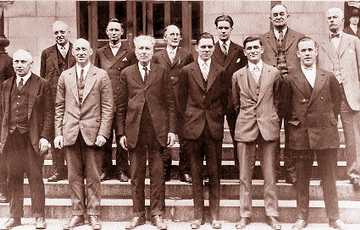
The all white Detroit jury that acquitted Dr. Sweet.

The all white Detroit jury that acquitted Dr. Sweet.

When I referred to Clarence Darrow’s support for terrorist John Brown in the previous post, I reviewed other references to the great trial lawyer that have appeared here. (As you may know, I authored a one-man play about Darrow, still performed to legal groups by actor (and my friend) Paul Morella, and with historian Ed Larson compiled selections from Darrow’s writings, court appearances and speeches, The Essential Words and Writings of Clarence Darrow.) I have also posted on his famous Leopold and Loeb argument against capital punishment, but I was shocked to find out that I never posted any part of his closing argument in the murder trial of Dr. Sweet.  I need to remedy that omission now. That courtroom oratory is not only the best of Darrow’s closing arguments, but also the most relevant to current events. It is a masterpiece, and  also astonishingly prescient and wise.

In 1925, Dr. Henry Ossian Sweet, a black man, moved his family into a house in a previously segregated section of Detroit. Mobs of whites gathered outside the house with torches, clubs and guns the first two nights of their residence, as police stood by passively. On the second night, a gunshot coming from the house killed one of the demonstrators, and all 11 residents of the home, including Dr. Sweet, were charged with murder. The National Association for the Advancement of Colored People hired Clarence Darrow to handle the defense.

There were two trials, the first ending in a hung jury. In the second, Darrow performed a seven hour closing argument, aspects of which have inspired homages in “To Kill A Mockingbird” and “A Time to Kill.” Despite the all-white jury, Dr. Sweet was acquitted, and the charges against the others were dropped. Darrow isn’t a legend for nothing.

I have left out the parts of the closing argument that recount the testimony and the facts of the case: you can read about the trials on Doug Linder’s excellent website, and you can read Darrow’s whole closing here. This redacted version focuses on Darrow comments about race and race relations. It is longer than the version we used in the play, but this is the version I would have used if audiences could tolerate a three hour one man show.

I continue to believe that this was the high point of Darrow’s incredible career, and also one of the most impressive—and gutsy—speeches in our history. Only Clarence Darrow would challenge an all-white jury like this in 1925. It is also unbearably moving. Paul, when he performs the selection, ends with tears streaming down his face, as Darrow did. You might too. Try reading it aloud to your kid. Or to yourself.

This post also relates to another recent post, the one about jury nullification. That is really what Darrow is arguing here, in the context of confronting racial injustice and bigotry for the survival of the nation and society. The white victim of the shooting was shot in the back. Darrow, at one point, calls it murder himself. Nonetheless, he argues that acquitting Sweet and his family is the right thing to do, whatever the law says.

Here is my abridged version of the epic closing argument made by Clarence Darrow, May 11, 1926, in defense of Dr. Sweet and his family.

Continue reading →

Jury Nullification Ethics: Denver’s District Attorney Tries To Make It Illegal To Teach Jurors About The Power Of Juries

ZengerIs it just me, or does it seem to everyone as if  a lot of public officials have been trying to shrink the First Amendment lately?

Jury nullification is the doctrine, rich in jurisprudential and American history, that declares that juries have the power and the right to reject what they believe are either unjust criminal laws or unjust prosecutions, and acquit defendants who may have been proven guilty on the evidence, essentially nullifying the law by refusing to enforce it . They definitely have that power: once a citizen is declared not guilty, that citizen cannot be tried again. The dilemma is that neither judges nor lawyers are permitted to let juries know about nullification, since nullification defies the law. A defense lawyer mentioning it in a closing argument risks a mistrial, and bar sanctions. In most jurisdictions, judges instruct jurors that it is their duty to apply the law as it is written whether they agree with the law or not. In only a few states are jurors expressly permitted to judge both the facts and the law of the case. In 2012, New Hampshire passed a unique law explicitly allowing defense attorneys to inform juries about jury nullification.

In Denver this week, Mark Iannicelli, 56, set up a small booth with a sign that said “Juror Info” in front of the city’s courthouse. The Denver District Attorney’s Office has charged him with eight counts of jury tampering, because Iannicelli used that booth to hand out flyers about jurors’ rights to practice jury nullification to jury pool members. Yes, he has been charged with tampering with juries that aren’t even juries yet. Continue reading →

“Worlds Are Colliding!” If You’d Like To Meet The Ethicist And Blogger, Come See “Twelve Angry Men” And Meet The Director

12show_men

I’ve now received sufficient inquiries from readers to justify the risk of colliding my worlds as a professional stage director, an ethicist and a blogger.

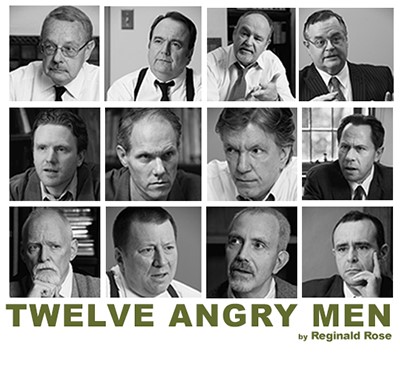
The final production of my quixotic theater company in Arlington, Virginia, “Twelve Angry Men” by Reginald Rose, is playing through August 8. After that, the American Century Theater closes its metaphorical curtains (we perform in a black box theater, in the round for this show) forevermore after 2o rewarding, daring, frustrating years. I know a lot of Ethics Alarms readers live in the Washington D.C, area, and I would love to meet you face to face for a change, which, if you come to a performance, is easy (though you have to let me know when—I don’t see every one.)

You can get information and make reservations here; there are some representative reviews of the show here and here.  Some background on the theater’s closing is here. I’ve written about some ethics issues in the movie (which is the script I directed for the stage) here, here and here.

For many reasons, this is as good a version of the story as you are ever likely to see, and in all honesty and modesty, that includes the classic movie. The script is better live on stage than on film (it is about all the jurors and the jury as a unit, not just Henry Fonda), it cannot be done justice on a proscenium stage; the cast is superb, and the director is a lawyer, an ethicist and a successful stage director who has studied the script for 30 years and directed it three times before to work the kinks out.

If you come, I’ll seat you myself.

Hope you can make it.

Update: You can hear a podcast, hosted by me, about the production here.

The Case Of The Trash-Talking Doctors, And The Price Of Trust

So, did you hear the one about why surgeons wear those masks?

So, did you hear the one about why surgeons wear those masks?

When I first heard about this case, I thought the jury award of $500,000 was ridiculous. The more I think about it, the more I begin to think it was appropriate.

Before his colonoscopy, a Vienna, Virginia patient pressed record on his smartphone, not intending to record everything that was said but ending up with the entire proceedings anyway. That was a half-million dollar stroke of luck for him, and the confirmation of dark suspicions for the rest of us. The resulting recording revealed that the surgical team amused itself by insulting and demeaning the semi-conscious anesthetized man throughout the procedure.

The anesthesiologist, Tiffany M. Ingham, was the ringleader and the primary offender.  Among her inspired bon mots… Continue reading →

Comment of the Day: “Ethics Hero: The Lone Juror, Adam Sirois

Juror 11

Commenter Penn posted a nuanced take on Adam Sirois’s dilemma. It would have been a COTD yesterday, but for some reason WordPress has decided to spam all of Penn’s comments of late, for no reason that I can detect. (I can only discourage commenters I ban by repeatedly spamming them until they go away.) If anyone else has a disappearing comment, e-mail me quick, and I can usually find it. I’m sorry: I swear, it’s not me!

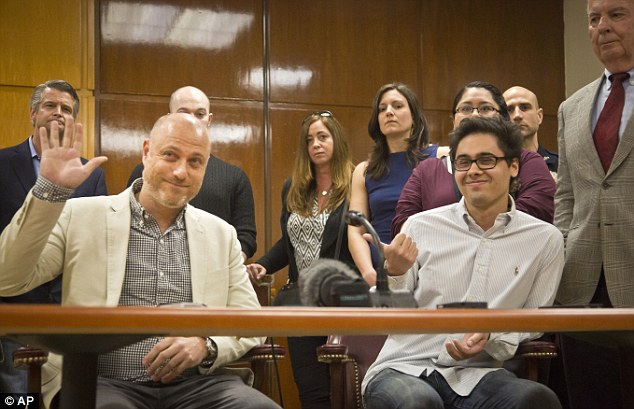
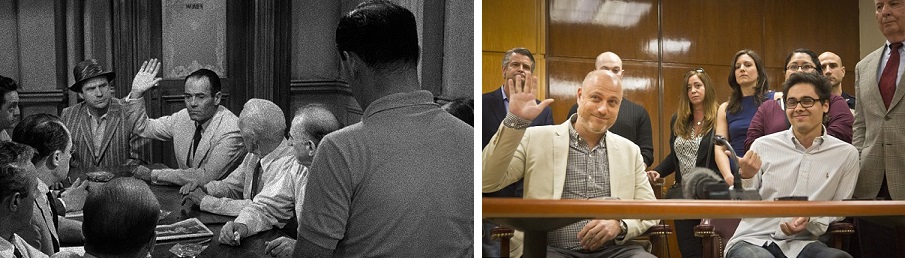
One point before I turn the blog over to Penn. His first comment is about that photo, much criticized, of the lone juror raising his hand in the press conference and “smirking” or looking”sheepish,” or “smug.” I liked Ann Althouse’s take on that:

“The photographers must have taken thousands of pictures of Sirois’s face, and the newspaper editors have chosen one, one that supports the “smirking… sheepishly” characterization. If he “looks like a smug little prick” to you, that’s because the editors decided to help you think that and because the man just had an 18-day experience and was the kind of person who could stand up for his beliefs in a group setting for more than 2 weeks. Most people would cave and go along to get along. These people are much more likely to have a pleasant, unremarkable face.”

Now here is Penn’s spam-rescued Comment of the Day on the post Ethics Hero: The “Lone Juror,” Adam Sirois: Continue reading →

Ethics Hero: The “Lone Juror,” Adam Sirois

Juror 8

Two lone jurors…

In a remarkable example of life imitating art, a single juror, a 41-year-old health care worker, refused to vote guilty with the rest of the jurors deliberating on the case against the accused murderer of Etan Patz, a little boy whose disappearance in 1979 focused national attention on the child predator problem.  The defendant, Pedro Hernandez, had delivered an elaborate confession to police, then revoked it. For 18 days, Adam Sirois battled the eleven other jurors, who told him that they were convinced by the evidence beyond a reasonable doubt. Sirois, however, said he had doubts, too many to send a man to prison for life. In the end, the vote was 11-1. Yesterday, the judge in the case pronounced the jury deadlocked—hung— and declared a mistrial.

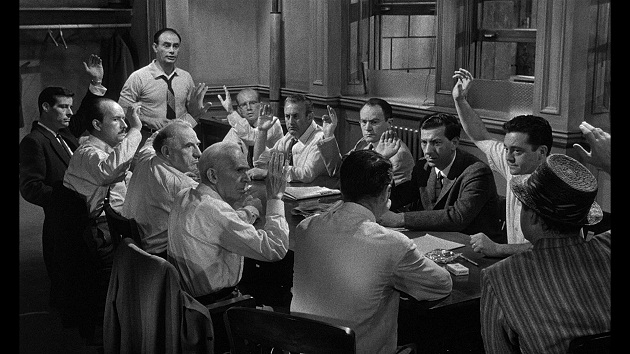
Sound familiar? If Sirois was made the hero of a cable TV  adaptation, it would be considered a shameless knock-off of “12 Angry Men,” the iconic 1957 jury film that originated as a live TV drama by the late Reginald Rose: Continue reading →

“Good Luck In Hell”: Jury Abuse Ethics

12 angry men

 It’s not nice to be mean to juries.

More than that, it’s democracy self-abuse. Juries are the fractals of true democracy, played a crucial role in the intellectual germination of our founding documents  and are as important to the United States’ ideals and core beliefs as any institution.  Citizens contribute their time—okay, some need a little persuading—to take on the massive responsibility of life altering decisions, and despite their fallibility (and look at the rest of the government!) jurors deserve honor and respect.

For lawyers and judges to behave otherwise is not just foolish, it is prohibited by their respective professional ethics rules. Charles Guiteau, who shot President Garfield, was briefly a lawyer. He used to climb into the jury box to yell at jurors. That got him kicked out of the profession, so he moved on to shooting Presidents, which he was better at.

It’s even unethical to berate a former juror, as small firm New York attorney Frank Panetta of Massimo & Panetta  discovered when all of his ethics alarms malfunctioned simultaneously and he sent off the following masterpiece to Lauren Curry, the senior partner in another firm. Panetta is still steamed about a case he lost when a jury found against his client four years ago, and he blames Curry,  who served as his jury’s foreperson. He wrote in an Guiteau-like e-mail, and I swear, I’m not making this up: Continue reading →

Comment of the Day: “Pop Ethics Quiz: Welcoming Rev. Talbert Swan, Late Passenger On The Trayvon Martin-George Zimmerman Ethics Train Wreck”

"OK, you can go, but we want everyone to know that the US Government thinks you're a racist and a murderer."

“OK, you can go, but we want everyone to know that the US Government thinks you’re a racist and a murderer.”

The Justice Department’s press release  yesterday regarding the final rejection of a civil rights charge against George Zimmerman was despicable and unprofessional, political, as everything Holder’s department has done from the beginning, unethical,and an abuse of its power and influence.

Raising this  issue adeptly is reader J. Houghton in his Comment of the Day on the post, Pop Ethics Quiz: Welcoming Rev. Talbert Swan, Late Passenger On The Trayvon Martin-George Zimmerman Ethics Train Wreck. He ends with a question; I’ll return to answer it.

I am curious about the statement by Acting Assistant Attorney General Vanita Gupta that: “Our decision not to pursue federal charges does not condone the shooting that resulted in the death of Trayvon Martin and is based solely on the high legal standard applicable to these cases.” It seems almost like an unnecessary statement of the obvious, like, yes of course; this is a tragedy; mistakes were made; bad judgment happened; and somebody died needlessly. Of course, we all would hope that such tragedies “do not occur in the future” as the JD press release stated… ever! this is a most wonderful thought.

However, what exactly is it that the Justice Department does “not condone” ? Is it possible that General Gupta is suggesting that the Justice Department does not buy into the basic idea of shooting someone in self-defense if believed necessary to protect ones self, or perhaps she questions the basic idea of being legally allowed to carry a concealed handgun by permit for self-defense? Or is she questioning the wisdom of the Neighborhood Watch program which might encourage citizens to… God forbid… watch too closely the goings on in their neighborhoods? What exactly is it that the Justice Department does “not condone” in this particular case?

Not to say that the claim of “self-defense” is always justified… because it most assuredly is not. Nor am I defending in any way Zimmerman for the events that unfolded with very unfortunate results. But I am wondering about the chill this incredibly long and ultimately fruitless federal investigation might put on the fundamental right of self defense to protect ones self or others who might find themselves in the position of facing a real threat. Are citizens going to possibly face federal prosecution in the future for becoming “too involved” in the security of their own neighborhoods, or for protecting themselves or their neighbors if the unlawful aggressor and righteous defender in a specific incident happen to be of the “wrong” ethnicity or race?

Just asking…

Continue reading →

Pop Ethics Quiz: Welcoming Rev. Talbert Swan, Late Passenger On The Trayvon Martin-George Zimmerman Ethics Train Wreck

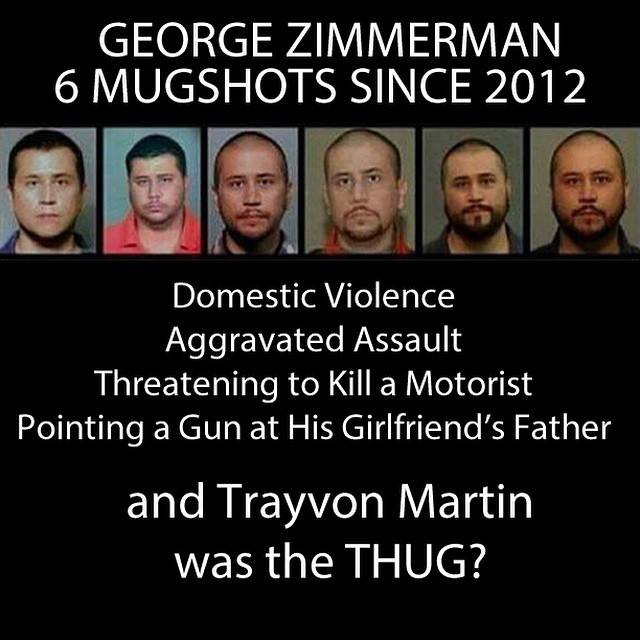
George Zimmerman memes

Quick:

Name everything ethically and logically wrong with this meme.

While you’re making your list, I’ll explain.

It comes courtesy of Talbert Swan–website here, Facebook page here-— who tweeted it to his many followers, lots of whom then dutifully posted it on Facebook. Swan describes himself as a “public figure.”  He is, we learn, an activist, pastor, author, radio talk show host, NAACP president, National Chaplain, Iota Phi Theta Fraternity, Inc. Assistant General Secretary of the Church Of God In Christ. He is also, on the evidence of circulating this meme, a divisive race-baiter who is ignorant of the law, ethics and logic.

Swan sent out this graphic offal with all the typical hashtags: #Trayvon…#MikeBrown…#Ferguson, #Blacklivesmatter and the rest. I would normally just ignore it—I see idiotic memes every day—but this one was posted with approval by a Facebook friend of mine who is objectively brilliant and educated, and justly respected by many, including me. His comment ended with “Case closed!”, and immediately dozens of people “liked” it, many of them undoubtedly then spreading the meme further to make others more ignorant and stupid too. This is affirmatively harmful. Since I know my friend is a good person, the ethics breach is that of responsibility, competence, fairness, and citizenship, the latter because I think promoting racial distrust is being a bad American.

Have you tallied up all the things wrong yet? Here’s my list: Continue reading →

The Murderer and The Unethical Powerpoint

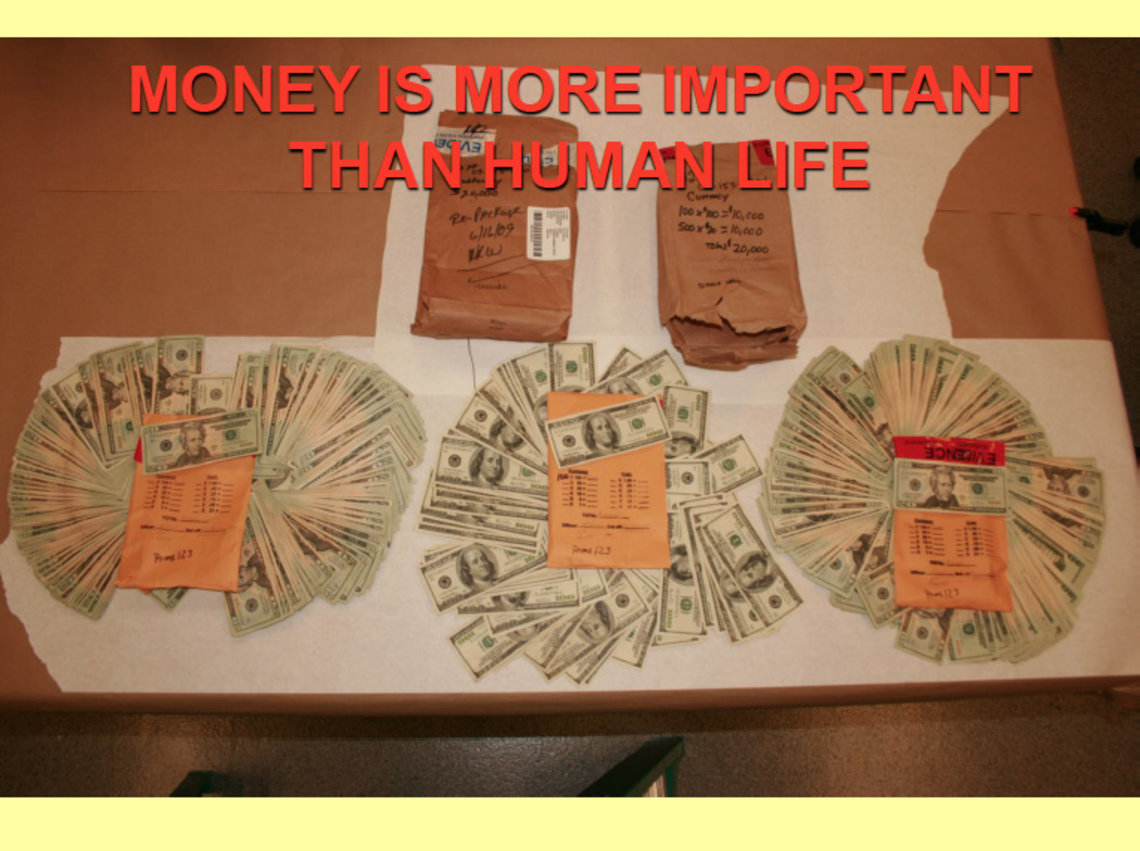
Powerpoint slide

Why didn’t I see this coming? The Washington Supreme Court overturned the conviction of Odies Walker for murder and other crimes in the slaying and robbery of an armored car guard because the  prosecutor’s PowerPoint presentation during his  closing argument constituted “flagrant, pervasive, and prejudicial”  prosecutoral misconduct. While lawyers “may use multimedia resources in closing arguments to summarize and highlight relevant evidence,” the court ruled, “advocacy has its limits.”

The  prosecutor presented a whopping 250 PowerPoint slides to the jury during the summation, including 100 with the caption “defendant Walker guilty of premeditated murder.” The slide above with the caption, “Money is more important than human life,” was typical of the problem assailed by the justices: it was never alleged that Walker said this, or even thought it. Continue reading →