Four Supreme Court Decisions: Abortion, Guns, Affirmative Action, Corruption…And Ethics. Part 4: Voisine v. United States

"Aw, come on, that was a love tap! Now put some ice on that while I go out and buy a Glock...."

“Aw, come on, that was a love tap! Now put some ice on that while I go out and buy a Glock….”

Be honest, now: you thought I’d never finish this series, did you? (Part 1 was posted June 28.)

In Voisine v. United States, a 6-2 U.S. Supreme Court holding issued on June 27 approved extending a federal statute banning firearms possession by anyone convicted of a “misdemeanor crime of domestic violence” to include individuals who have “misdemeanor assault convictions for reckless (as contrasted to knowing or intentional) conduct.”

Justice Elena Kagan, writing for the majority, said that “the federal ban on firearms possession applies to any person with a prior misdemeanor conviction for the ‘use…of physical force’ against a domestic relation. That language, naturally read, encompasses acts of force undertaken recklessly—i.e., with conscious disregard of a substantial risk of harm.”

The opinion isn’t remarkable, nor is it a significant attack on gun rights. The case is really about language, as so many Supreme Court cases are. From the opinion:

“Congress’s definition of a “misdemeanor crime of violence” contains no exclusion for convictions based on reckless behavior. A person who assaults another recklessly “use[s]” force, no less than one who carries out that same action knowingly or intentionally. The relevant text thus supports prohibiting petitioners, and others with similar criminal records, from possessing firearms.”

The real question, from an ethical standpoint, is whether Congress can and should remove a citizen’s Second Amendment right based on a misdemeanor conviction for domestic abuse. Is that fair? Sure it is. It is already settled law that it is Constitutional to prevent convicted felons from owning  guns, even if it was a non-violent felony. From an ethical public policy standpoint, why would it be overly restrictive to ban gun ownership from those who engage in a violent misdemeanor?

Writing in dissent, Justice Clarence Thomas, joined by Justice Sonia Sotomayor (of all people), rejected the majority’s “overly broad conception of a use of force.” In the view of the two dissenters, “the majority blurs the distinction between recklessness and intentional wrongdoing” and thereby does a grave injustice to criminal defendants. Continue reading

Four Supreme Court Decisions: Abortion, Guns, Affirmative Action, Corruption…And Ethics. Part 3: Whole Woman’s Health v. Hellerstedt

shrinking-number-of-abortion-clinics-in-texas

[The Supreme Court came down with four controversial and ideologically contentious decisions in June, and I apologize for taking almost a month to cover them all. One of the reasons Ethics Alarms occasionally launches a series like this one is to ensure that developing ethics stories of importance do not push important issues to the sidelines. The fact that this four part series had only finished parts 1 and 2 was an irritant to me, as well as some readers.]

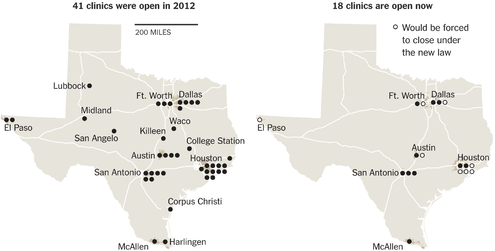
In Whole Woman’s Health v. Hellerstedt, decided on June 27, the Supreme Court held in a 5-3 majority that two provisions of a Texas law, one requiring physicians who perform abortions to have admitting privileges at a nearby hospital and another requiring abortion clinics in the state to have facilities comparable to an ambulatory surgical center,  places a substantial and unconstitutional obstacle in the path of women seeking an abortion, because they constituted an undue burden on abortion access.

Life would be so much simpler if our elected officials and activists employed an adaptation of the Golden Rule, and looked objectively at issues from the other side’s point of view. This is especially true in the realm of rights.  Second Amendment absolutists insist that virtually any laws regulating who can purchase guns, when and where they can purchase them, and how and how quickly they can be purchased are efforts to whittle away the right to bear arms. They also argue that such regulations have the ultimate goal of  eliminating that right entirely, which, in many instances is the case, especially if you listen carefully to the rhetoric of the legislators proposing such measures. There is little difference from this and what anti-abortion advocates are attempting to do with laws like House Bill 2 (H. B. 2).

The bill ostensibly is designed to make abortions safer, thus protecting women’s health, just as many gun laws are promoted as safety measures. Oddly, virtually all of the supporters of the Texas bill would make abortion illegal if they could. I’m sure it’s just a coincidence, just as it’s a coincidence that the authors of bills requiring potential gun owners to jump through increasingly burdensome hoops and deal with mandatory trigger locks and “safe gun” technology would gladly repeal the Second Amendment if they could. The ethical principle is the same in both matters: a right isn’t a right if legal obstacles make it difficult to exercise that right.

The question is, what’s a reasonable obstacle? Any regulation imposed on a constitutional right must not create “a substantial obstacle” and must be reasonably related to “a legitimate state interest.” The Supreme Court uses the language and logic of case precedents, which are its previous examinations of these issues and the balancing they require. One such case, though I did not find it mentioned in the majority opinion or dissents in Hellerstedt, would be the voter ID decision of many years ago, in which a strong majority ruled that the state interest in preventing fraudulent voters and maintaining the integrity of the election process justified inconveniencing those who were subjected to the extra burden of obtaining appropriate identification. In recent years, this decision has been questioned because many believe the motive behind voter ID laws is not really to protect the franchise, but to keep likely Democratic voting blocs from the polls.

Is there a difference legally between a bill that is authored with the intent to restrict the right to vote of older, poorer, and darker citizens while claiming that its sole purpose is to make sure non-citizens don’t affect the results of elections, and an identical  bill that is genuinely intended to safeguard the voting rolls, without any political motive at all? No, or at least there shouldn’t be. The Court’s job is to evaluate what the law does, not try to read the minds and hearts of those who wrote it. Justices only should try to do the latter when there is a debate over what the law says.

Ethically, however, there is a significant difference between a law using a public purpose as a sham to accomplish unethical ends, and a law with a legitimate purpose that has some negative side effects. Trying to restrict a citizen’s rights because one doesn’t respect those rights (or perhaps the citizen) is unethical.

The SCOTUS majority, in its typical examination of a balancing case like this, looked at whether there was a sufficient public safety benefit to a law that had resulted in a precipitous reduction in abortion services: Continue reading

A Jumbo For Sulu

SuluGeorge Takei, the Japanese-America actor permanently enshrined in pop culture history for his role of Sulu in the original “Star Trek” TV series. He has essentially lived off that one felicitous part for forty years, recently acquiring less moldy,  non-sci-fi following by being a gay rights advocate.

Takei recently skimmed, or just didn’t comprehend, Clarence Thomas’s  audacious dissent to the Supreme Court’s Obergefell ruling and Justice Kennedy’s majority opinion declaring same-sex marriage to be a fundamental right protected by the Constitution. Apparently he also does not comprehend that Supreme Court dissents are both stimulating and useful to legal scholars as well as those, unlike Mr. Sulu, possessing an open and curious mind.

Thomas made the unusual but provocative argument that human dignity is innate:

Human dignity has long been understood in this country to be innate. When the Framers proclaimed in the Declaration of Independence that “all men are created equal” and “endowed by their Creator with certain unalienable Rights,” they referred to a vision of mankind in which all humans are created in the image of God and therefore of inherent worth. That vision is the foundation upon which
this Nation was built.

The corollary of that principle is that human dignity cannot be taken away by the government. Slaves did not lose their dignity (any more than they lost their humanity) because the government allowed them to be enslaved. Those held in internment camps did not lose their dignity because the government confined them. And those denied governmental benefits certainly do not lose their dignity because the government denies them those benefits. The government cannot bestow dignity, and it cannot take it away.

Thomas was expressing  his disagreement with the majority that the government withholding the right to marry from gays robbed them of human dignity. I think it is a rather pedantic argument that has more validity in the abstract than in reality, but the position that rights come from creation rather than the government is a core concept in the Declaration of Independence, and one that statists, as in “modern Democrats,” like to ignore. If individuals are born with rights, they cannot be truly taken away. If citizens must look to the government to have their rights granted to them, then government is granted too much power in exchange. Thomas’s philosophical argument is classic conservatism. Naturally, that means, in Takei’s intolerant and partyist world view, that he deserves abuse. Continue reading

Instant Ethics Train Wreck: The Alabama Gay Marriage Stand-off

What does Dred Scott have to do with the Alabama gay marriage mess? Absolutely nothing.

What does Dred Scott have to do with the Alabama gay marriage mess? Absolutely nothing.

This summer, the Supreme Court will again take up the issue of the Constitutionality of state gay marriage bans, having left the question open (why, I don’t know) after striking down the Defense of Marriage Act in 2013. Since that ruling, the states have been busy little bees, some passing laws banning same-sex marriage, some doing the opposite, then fighting out multiple appeals at various levels of the judicial system. Three things are certain: the cultural and legal acceptance of same-sex marriage looks unstoppable; all states need to agree on what a legal marriage is; and some faith-based same-sex marriage opponents will not give in until the last dog dies.

Beginning at the end of last week, a messy situation in Alabama involving all of these factors burst into a full-fledged ethics train wreck. The links in this post will let you immerse yourself in the mess if you choose: I’m going to try to be clear. Here is what has transpired so far:

1) A federal judge, District Court Judge Callie V. Granade,  struck down the state’s ban  on same-sex marriages in January and said that Alabama could start issuing licenses last week unless the U.S. Supreme Court stepped in and stayed her order. A stay was immediately requested by the Alabama Attorney General, who properly defended the state’s law.

2.) The 11th Circuit Court of Appeals refused to step in and stop her order from going into effect.

3) The U.S. Supreme Court also refused the stay request, allowing marriages to proceed in Alabama.

4) Roy Moore, chief justice of the Alabama Supreme Court, reminded everyone that probate judges report to him, not the federal judge and not the Attorney General, and do not have to issue marriage licenses to gay couples until he tells them to. He told them not to.

5) Some Alabama probate judges followed Moore, and some went ahead and issued the licenses. Mass confusion reigned.

6) Meanwhile, the refusal of the U.S. Supreme Court to issue a stay pending its ruling on state same-sex marriage laws later this year was widely interpreted as tantamount to SCOTUS deciding the case before it was even argued.

7) Justice Clarence Thomas, in a dissent from the  majority’s rejection of the stay (we don’t know what the vote break was), argued that “This acquiescence may well be seen as a signal of the Court’s intended resolution of that question. This is not the proper way to discharge our . . . responsibilities.”

8) Justice Ruth Bader Ginsberg, meanwhile, appeared to endorse gay marriage in an interview.

9) Attempting to break the impasse, U.S. District Judge Callie V.S. Granade ordered Mobile County, Alabama to start issuing marriage licenses to same-sex couples, paving the way for resistant officials across the state to follow suit, in a decision stating that the state’s ban on same-sex marriage had been struck down and that ­Mobile County’s probate judge had to adhere to that decision.

10) Chief Justice Moore remains unmoved, but now most of the probate judges are following the federal order.

Got that?

Good, now you can explain it to me.

What a mess.

Here are the ethics verdicts on the participants so far: Continue reading

KABOOM!* An Unethical Loophole In The Justice System—And The Supreme Court Just Refused To Remove It

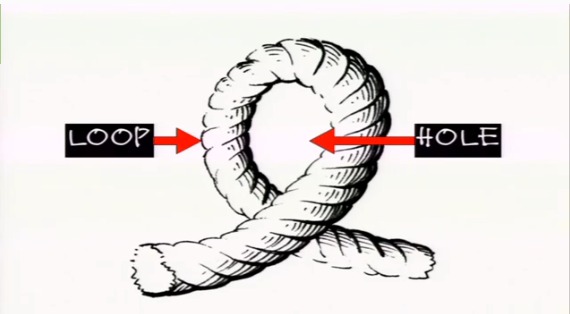
Screenshot_loophole

Radley Balko, the libertarian investigative reporter, reports in his Washington Post column on a sentencing anomaly I was blissfully ignorant of before, and was a happier man for it. He writes…

Think the government must convict you of a crime before it can punish you for it? Think again.Most Americans probably believe that the government must first convict you of a crime before it can impose a sentence on you for that crime. This is incorrect: When federal prosecutors throw a bunch of charges at someone but the jury convicts on only some of those charges, a federal judge can still sentence the defendant on the charges for which he was acquitted. In fact, the judge can even consider crimes for which the defendant has never been charged.

Balko was writing about Jones v. United States,  in which the jury found three Washington, D.C.not guilty of a conspiracy to run an “open air” market for large quantities of illegal drugs on the streets of the nation’s capital, convicting them only of selling small quantities of the drugs, a relatively minor offense.  The judge, however—think about this, now—decreed that his sentence could also take into account the conduct that had led to the more serious conspiracy charge —that is, exactly the charges that the jury had acquitted them of—gave the three men sentences ranging from 180 to 225 months, while the crimes they were found guilty of committing would justify something in the range of 33 to 71 months. Continue reading

Dear Political Blogs: Be As Partisan As You Like, But Don’t Make Your Readers Stupid

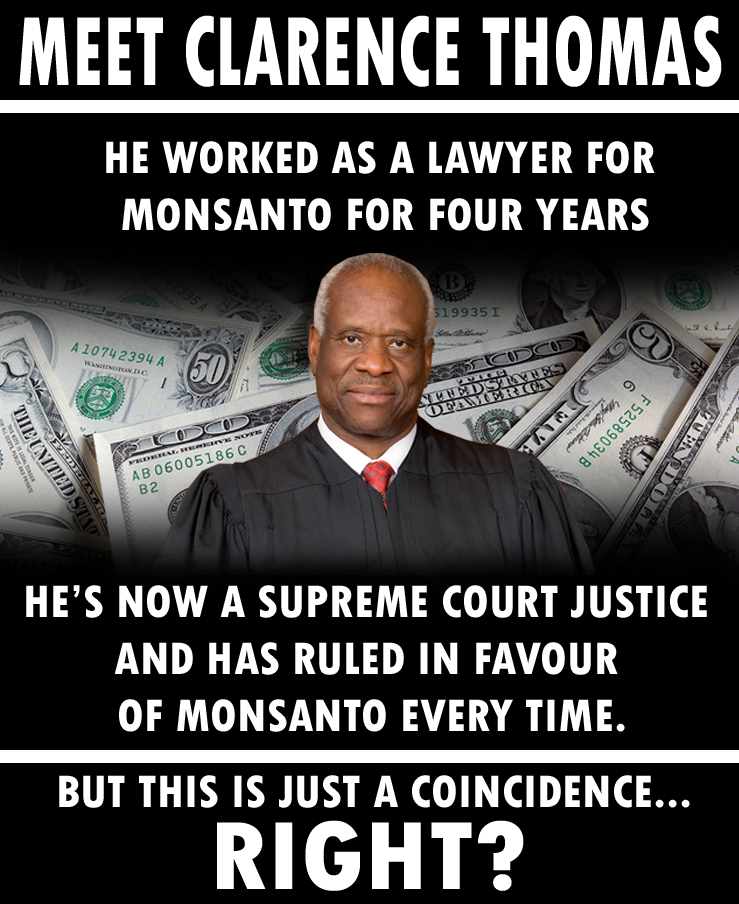
It's a coincidence that Monsanto had the better legal argument each time, yes. Is that what you mean?

It’s a coincidence that Monsanto had the better legal argument each time, yes. Is that what you mean?

It pains me greatly when a Facebook friend (and real friend too) posts something from a right-wing or left-wing website that is ignorant and misleading, as if she has something enlightening to share. Then I am forced to point out that 1) the post was written by someone pretending to have knowledge he did not; 2) those agreeing with him and assuming he had a valid point are hanging out with like-minded partisans who reinforce each others’ happy misconceptions, and 3) that the lawyers who cheer on conclusions that can only be explained by the fact that the concluder can’t spell law, much less under stand it. This typically loses two to ten names off my Facebook friends list. Well, too bad. They should be ashamed of themselves.

The case I have in mind: a site called “Forward Progressive: Forward Thinking for Progressive Action”—hmmm, I think it is a progressive site!—attacked Clarence Thomas for his participation in the recent SCOTUS decision in Bowman v. Monsanto. The Court ruled for Monsanto in a patent case against farmers in a matter involving the reproduction of products whose patents have expired. To Dyssa Fuchs, the writer for Forward Progressive in this case, Thomas had a clear conflict of interest and should have recused himself.

She cites the judicial code, she cites the U.S. statutes, she–of course—cites her belief that Monsanto is evil, and of course, like all good progressives, she hates Thomas, who has the effrontery to be both a hard-core conservative and black. The fact is, however, that she has no idea what she is talking about. Thomas had no conflict of interest in this case, nor does he have an “appearance of impropriety” problem because someone determined to prove that he is corrupt doesn’t understand what improprieties or judicial conflicts are, or for that matter, what lawyers do. Continue reading

Musings On The Clarence Thomas Affair and Insideous, Unavoidable, Rationalization Eleven

If you are good enough and valuable enough, do you deserve one of these?

If you are good enough and valuable enough, do you deserve one of these?

A recent—and off-topic—comment caused me to begin thinking about “The King’s Pass,” #11 on the Ethics Alarms Rationalization hit parade,and perhaps the most perplexing of them all. The commenter referenced the 2010 discovery that Supreme Court Justice Clarence Thomas had inexplicably neglected to mention his activist wife’s annual income on his annual financial disclosure filings, meaning that he had filed a false affidavit and violated the law. Thomas claimed that he had made a careless mistake—for five years—and the matter was allowed to drop except for the angry agitating of the Anti-Clarence Thomas Furies, who are constantly searching for any way to get a conservative black justice off the Supreme Court short of assassination.

The episode had left a bad taste in my mouth, and I was happy to be reminded of it, bad mouth tastes being essential to triggering ethics alarms. I went back to read my post on the matter, and sure enough, I had followed the principle of rejecting The King’s Pass, and asserted that Thomas should be punished appropriately and formally…but that really ducked the question. Lawyers have lost their licenses to practice for single episodes of swearing to false information when it was far more obvious that a mistake had been made than in Thomas’s case, as when a hapless Maryland lawyer carelessly signed a legal document that had misrecorded  his address. The logic of this no-tolerance ruling was that a lawyer, above all people, should never swear to a falsehood, and that doing so, even once, was a serious breach of duty calling into question his fitness to practice law. I think the penalty for this particular act was excessive—it is cited locally as a cautionary tale—but I agree with its underlying principle, which should apply with even more vigor when the lawyer in question is a judge, and not merely a judge, but a Supreme Court Justice.
Continue reading

The Sterling Backlash: Signature Significance, Racism, Hypocrisy, and Double Standards

Bennie Thompson

“No big deal, he’s  just a Congressman…”

I often use the term “signature significance” in posts, and since it is a term that is not often applied to ethics, I thought today would be a perfect time to illustrate it in its original context, while clarifying the ethical murk around the Donald Sterling Ethics Train Wreck.

The original context of the phenomenon of signature significance is baseball, and I just watched an example of it. Today Red Sox left-hander John Lester beat the Oakland A’s, a very good team, by hurling eight innings in which he gave up no runs, only one hit, two bases on balls, while striking out 15 batters. If you don’t know anything about the game, let me tell you: this is extraordinarily good. Pitching performances can be measured and compared by using the “game score” method, developed by sabermetrics (that is, baseball statistics) pioneer Bill James. The best game score ever achieved was 105; the highest score in major league history for a pitcher who did not pitch all nine innings (as with Lester today) is 95, and has only been done once. (Theoretically, a game score could be as high as 145)

James also devised the term “signature significance” in the context of such games. His research showed that pitchers who were not outstanding talents never pitched a game with such a high game score even once—it simply didn’t happen. Thus, he reasoned, pitching a single game like Lester’s (the actual game he used was a similar performance by a young Roger Clemens before anyone knew what Clemens would become) was sufficient proof, all by itself, to conclude fairly and scientifically that the game was meaningful, without any other data. In cases of signature significance, he explained, the usual statistical rule that small sample sizes are not reliable indicators do not apply. Sometimes one incident, performance or episode is sufficient to make a confident verdict.

Signature significance is very useful, I have found, to rebut unethical rationalizations for unethical conduct that are used to excuse the agent of the ethical breach. “It’s only one mistake” and “Anyone can make a mistake” are the main ones. In the case of some serious kinds of bad conduct, this reasoning is misleading and false. Donald Sterling’s comments recorded and publicized by his whatever-you-call-her V. Stiviano have signature significance: they prove he’s a racist. Can you imagine any non-racist individual saying, in public or private, that he didn’t want his girlfriend being seen at his team’s games in the company of blacks?  How could this possibly occur? It wouldn’t, of course. Only those who hold racist attitudes and beliefs think and say such things. Sterling is a racist.

Stiviano, for her part, despite being the one who brought the media, the sports world and the public down on Sterling’s 80-year-old head, now says she doesn’t believe he’s a racist. Of course, she also says she’s his “silly rabbit” and that she is going to be President some day. She is an idiot. But I digress.

Other figures have made statements in the media that also have signature significance of the same sort as Sterling’s, yet the very same groups and journalists who have been whipped into a self-righteous froth over Sterling are strangely silent: Continue reading

Incompetent Elected Official Of The Month: Rep. Alvin Holmes (D-Alabama)

Alvin-HolmesRep. Alvin Holmes is a hatemonger and a race-baiter, but is he a wacko?

This question was inspired in the aftermath to my post about the ridiculous Bob Marshall,  a Virginia legislator who blights the Republican Party in my home state. The question I raised in that post was whether it was true that GOP elected nut-cases are further out in orbit than their Democratic counterparts. The related theory offered (not be me) in the ensuing thread was that while liberal-slanted media sources criticize the deranged in their ideological camp, conservative media sources tend to defend the GOP’s mutants. In fairness, I thought that I should raise the case of Mr. Holmes.

He was recently featured in a column by the Washington Post’s mildly conservative—perhaps the better term is “wishy-washy”—columnist Kathleen Parker. She notes, accurately, that he has at various times… Continue reading

My Hypocrisy Detector Just Blew Up!

sarcasm

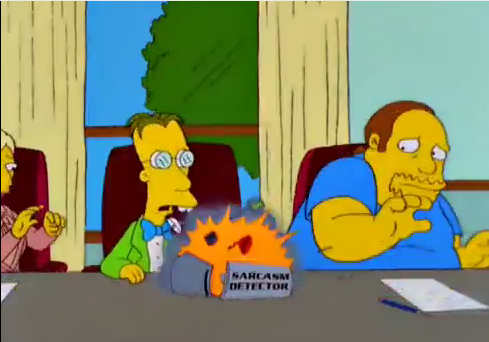
In a favorite episode of “The Simpsons,” the Springfield equivilent of Mensa is having a contentious debate. Prof. Frink, the local mad scientis, complains that the tone has set the readings of his newly-invented “sarcasm detector” dangerously high. “Comic Book Guy,” another brainy member of the club, snarks, “A sarcasm detector? That’s a real useful invention!” Whereupon the sarcasm detector blows up.

Well, my hypocrisy detector just blew up. The readings started going off the charts when I came across this item:

NEW YORK (AP) — Hillary Rodham Clinton said Thursday night that excessive partisanship flowing through the nation’s political system is causing the U.S. to march “backwards instead of forward”…Clinton cited the need to “get back to evidence-based decision-making.”

Oh, you mean like telling America that the allegations that your husband had lied under oath about his sexual affairs in a sexual harassment lawsuit and was using the power of his office to obstruct justice and cover it up was the creation of “a vast right wing conspiracy,” Hillary?  When you knew that the allegations were true? That kind of “evidence-based decision-making”?

I swear, if this awful, dishonest, cynical and untrustworthy woman runs for President, everything here will be exploding—my sarcasm detector, lie detector, hypocrisy detector, head…you name it.

This was just a warm-up, though. Then I read a Washington Post puff piece on Anita Hill, who is peddling a new documentary that casts her as a hero, which is ridiculous on its face. Anita Hill is the walking, talking embodiment of feminist hypocrisy, especially when paired with Hillary’s target, Paula Jones. I remember back when I worked for a large trial attorney lobby and Monicagate was in full force. The female president of the association was going on about her support of Clinton and how this was all, well, Hillary provided the talking point, and I had the cheek to remind her that during Clarence Thomas’s confirmation hearings she wore a button that said “I believe Anita Hill.”

Continue reading