Ethics Quote—But Not Necessarily ETHICAL Quote!—Of The Month: Supreme Court Justice Ruth Bader Ginsburg

i-was-wrong

“On reflection, my recent remarks in response to press inquiries were ill-advised and I regret making them. Judges should avoid commenting on a candidate for public office. In the future I will be more circumspect.”

—- Justice Ruth Bader Ginsberg, officially apologizing for making remarks sharply critical of Donald Trump last week, including suggesting (in jest) that if her were elected President, she might “move to New Zealand.”

Observations:

1. Supreme Court justices almost never apologize, and I only say “almost” because I can’t do enough research right now to safely say “never.” They don’t apologize because the don’t have to: they are, ethically, a law unto themselves, and accountable to nobody unless impeached and convicted. (Justice Samuel Chase, was impeached by the U.S. House of Representatives on March 12, 1804, on charges of arbitrary and oppressive conduct of trials; it was a purely political attack. He was, correctly, acquitted by the U.S. Senate on March 1, 1805.)

2. An apology was appropriate, however. Justice Ginsberg proved herself smarter, better, more ethical and more principled than the embarrassing, crypto-facsist “these are not ordinary times” crowd, including the folks at Salon and other left-wing blogs, this guy, and too many of my dear friends on Facebook, whose expressed opinions really are beginning to make me wonder if they will solemnly send me to a Lobotomy Man when I oppose President Clinton’s declaration of open borders, ban on fossil fuels, race and gender quota in all hiring and admissions to (free) colleges, and confiscation of 50% of my property to help pay for national health care including late-term abortion on demand and tax-payer funded recreational drugs.

3. She apologized because any fool could see that her comments did undermine trust in the institution of the Supreme Court, and that her critics were right. Some of my more misguided colleague in the legal ethics field opined that it was silly to think that Justices don’t have political opinions and biases, just as it is silly to think journalists do not, so why shouldn’t she exercise her First Amendment rights? This  lame notion was decisively rebutted by a lawyer whose name I wish I could reveal, except that his comments were on a private list. He wrote in part… Continue reading
Donald Trump Candidacy Ethics Train Wreck Passenger List Update: Georgetown Law Prof. Paul Butler Scores A Perfect Rationalization #28

We're real sorry about this, but these are not ordinary times...

We’re really sorry about this, but these are not ordinary times…

The human ethics train wreck named Donald Trump is now in the process of exposing how thin the veneer of professionalism is for many alleged intellectuals, scholars and lawyers. On an e-mail list of most of the legal ethicists in the country, one of them posted this in reaction to Justice Ginsberg’s unethical and unjudicial shots at Donald Trump:

“I love RBG way too much to be critical of her in any way . Long may she live!”

This opne expression of willful denial, from not merely a lawyer, but an ethics specialist! It is the epitome of one of my father’s favorite quotes, “My mind’s made up, don’t confuse me with facts.” I responded to the list that it was the most depressing statement I had ever read from any of the list’s participants.

Paul Butler’s op-ed in the New York Times isn’t much better. The Georgetown Law Center professor defended Ginsberg’s indefensible comments by arguing that these times are special, and thus suspend the ethics principles that must govern judges if the judiciary is to engender any respect or trust at all. He writes:

“Normally Supreme Court justices should refrain from commenting on partisan politics. But these are not normal times. The question is whether a Supreme Court justice – in this case, the second woman on the court, a civil rights icon and pioneering feminist — has an obligation to remain silent when the country is at risk of being ruled by a man who has repeatedly demonstrated that he is a sexist and racist demagogue. The answer must be no.”

No, Professor, the answer must be “yes.” Continue reading

Ethics Dunce: Supreme Court Justice Ruth Bader Ginsburg

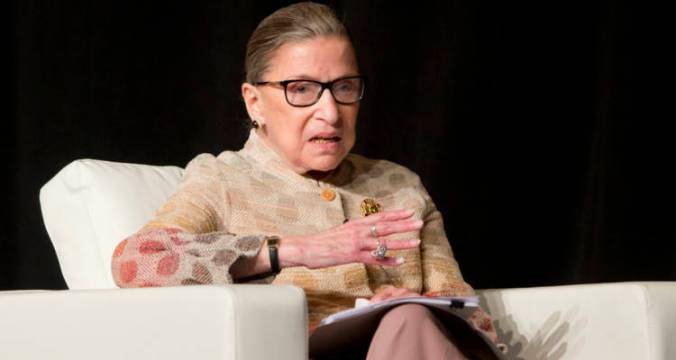
Justice Ginsberg, not giving a damn.

Justice Ginsberg, no longer giving a damn.

Add one more bit of evidence to the pro- side of the debate over whether there should be a limit to Supreme Court tenure. Justice Ruth Bader Ginsburg, 83 and a cancer survivor, has now apparently entered the “What the hell: I’m going to say what I feel like saying” period of her life. How nice for her. The problem is that there are some things an ethical Justice should not and cannot say.

In an Associated Press interview published last week, Ginsberg opined that a Trump Presidency was too awful to contemplate, saying that she presumed Hillary Clinton will be the next president, and that she didn’t ” want to think about that possibility” of Trump being elected instead. Talking to The New York Times, she said, “I can’t imagine what this place would be — I can’t imagine what the country would be — with Donald Trump as our president. For the country, it could be four years. For the court, it could be — I don’t even want to contemplate that.”  Then, in a CNN interview, she got specific:

 “He is a faker…He has no consistency about him. He says whatever comes into his head at the moment. He really has an ego. … How has he gotten away with not turning over his tax returns? The press seems to be very gentle with him on that.”
Law professor Daniel W. Drezner, who teaches at the Fletcher School of Law and Diplomacy at Tufts University,  minces no words over at the Washington Post, nor should he. Like me, he agrees with Madam Justice on the substance of her remarks about, yechh, Donald Trump. Nonetheless, he writes, Continue reading

Instant Ethics Train Wreck: The Alabama Gay Marriage Stand-off

What does Dred Scott have to do with the Alabama gay marriage mess? Absolutely nothing.

What does Dred Scott have to do with the Alabama gay marriage mess? Absolutely nothing.

This summer, the Supreme Court will again take up the issue of the Constitutionality of state gay marriage bans, having left the question open (why, I don’t know) after striking down the Defense of Marriage Act in 2013. Since that ruling, the states have been busy little bees, some passing laws banning same-sex marriage, some doing the opposite, then fighting out multiple appeals at various levels of the judicial system. Three things are certain: the cultural and legal acceptance of same-sex marriage looks unstoppable; all states need to agree on what a legal marriage is; and some faith-based same-sex marriage opponents will not give in until the last dog dies.

Beginning at the end of last week, a messy situation in Alabama involving all of these factors burst into a full-fledged ethics train wreck. The links in this post will let you immerse yourself in the mess if you choose: I’m going to try to be clear. Here is what has transpired so far:

1) A federal judge, District Court Judge Callie V. Granade,  struck down the state’s ban  on same-sex marriages in January and said that Alabama could start issuing licenses last week unless the U.S. Supreme Court stepped in and stayed her order. A stay was immediately requested by the Alabama Attorney General, who properly defended the state’s law.

2.) The 11th Circuit Court of Appeals refused to step in and stop her order from going into effect.

3) The U.S. Supreme Court also refused the stay request, allowing marriages to proceed in Alabama.

4) Roy Moore, chief justice of the Alabama Supreme Court, reminded everyone that probate judges report to him, not the federal judge and not the Attorney General, and do not have to issue marriage licenses to gay couples until he tells them to. He told them not to.

5) Some Alabama probate judges followed Moore, and some went ahead and issued the licenses. Mass confusion reigned.

6) Meanwhile, the refusal of the U.S. Supreme Court to issue a stay pending its ruling on state same-sex marriage laws later this year was widely interpreted as tantamount to SCOTUS deciding the case before it was even argued.

7) Justice Clarence Thomas, in a dissent from the  majority’s rejection of the stay (we don’t know what the vote break was), argued that “This acquiescence may well be seen as a signal of the Court’s intended resolution of that question. This is not the proper way to discharge our . . . responsibilities.”

8) Justice Ruth Bader Ginsberg, meanwhile, appeared to endorse gay marriage in an interview.

9) Attempting to break the impasse, U.S. District Judge Callie V.S. Granade ordered Mobile County, Alabama to start issuing marriage licenses to same-sex couples, paving the way for resistant officials across the state to follow suit, in a decision stating that the state’s ban on same-sex marriage had been struck down and that ­Mobile County’s probate judge had to adhere to that decision.

10) Chief Justice Moore remains unmoved, but now most of the probate judges are following the federal order.

Got that?

Good, now you can explain it to me.

What a mess.

Here are the ethics verdicts on the participants so far: Continue reading

KABOOM!* An Unethical Loophole In The Justice System—And The Supreme Court Just Refused To Remove It

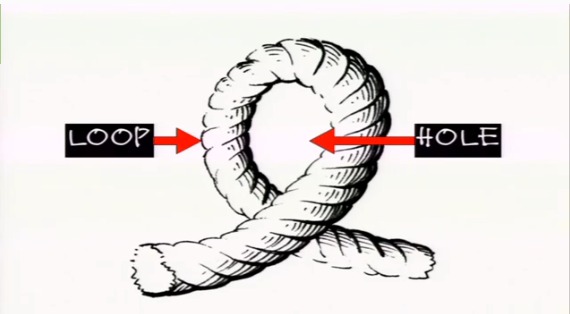
Screenshot_loophole

Radley Balko, the libertarian investigative reporter, reports in his Washington Post column on a sentencing anomaly I was blissfully ignorant of before, and was a happier man for it. He writes…

Think the government must convict you of a crime before it can punish you for it? Think again.Most Americans probably believe that the government must first convict you of a crime before it can impose a sentence on you for that crime. This is incorrect: When federal prosecutors throw a bunch of charges at someone but the jury convicts on only some of those charges, a federal judge can still sentence the defendant on the charges for which he was acquitted. In fact, the judge can even consider crimes for which the defendant has never been charged.

Balko was writing about Jones v. United States,  in which the jury found three Washington, D.C.not guilty of a conspiracy to run an “open air” market for large quantities of illegal drugs on the streets of the nation’s capital, convicting them only of selling small quantities of the drugs, a relatively minor offense.  The judge, however—think about this, now—decreed that his sentence could also take into account the conduct that had led to the more serious conspiracy charge —that is, exactly the charges that the jury had acquitted them of—gave the three men sentences ranging from 180 to 225 months, while the crimes they were found guilty of committing would justify something in the range of 33 to 71 months. Continue reading

Unethical Quote of the Week: Wrongly Imprisoned Victim John Thompson

“I don’t think training would have had anything to do with nothing really, to be honest with you, because you could have trained them and they would still do it. You need to punish them for doing it, then they won’t do it.”

John Thompson, who was wrongly and illegally convicted of murder in Louisiana and spent 14 years on death row because prosecutors withheld exculpatory blood evidence from his lawyers and his trial. His civil suit against the prosecutor’s office, run by Harry Connick, Sr. (yes, the singer’s father) for millions in punitive damages, on the theory that the prosecutors who framed him were inadequately trained, was overturned last week by the U.S. Supreme Court.

This statement apparently was made by Thompson last October, when the Supreme Court took the case, and I missed it. It surfaced again this morning in a Washington Post editorial calling for harsher punishment for prosecutors who violate the rights of accused suspects and send innocent people to prison or execution. The Post has never been more right, and the $14 million originally awarded to Thompson by an appalled jury for his ordeal is still inadequate compensation for the 18 years he spent behind bars because of a prosecutor’s dishonesty.

But the theory used to get Thompson his money—that the tragedy would have been prevented if Connick’s office hadn’t been negligent in training its lawyers in prosecutorial ethics—was a sham, and deserved to be rejected by the Court, no matter how much Thompson deserved the money, or indeed, ten time the money. Continue reading

Scalia’s Latest Controversy: Does An Appearance of Impropriety Have to Be Reasonable?

Supreme Court Justice Antonin Scalia is once again under critical fire for appearing to feed a conservative bias. He accepted G.O.P. Rep. Michele Bachmann’s invitation to address the Tea Party Caucus next month, as the group holds its first Conservative Constitutional Seminar. Some are claiming that the meeting is unethical, raising the specter of an “appearance of impropriety.” Continue reading