Ethics Heroes: Papa Roach

Ethics Alarms’ 2011 Commenter of the Year tgt, who found this story and passed it on, asks,

“How is a horrible stoner rock band more ethical than everyone in politics?”

It’s a great, if sorrowful, question.

A.V. Club has a feature (which could be called “Start a Feud”) in which it asks a rock performer what song he or she hates, and why.  Jenn Wasner, one half of the Baltimore indie-folk duo Wye Oak (“a blend of Southern culture and Northern sensibilities…”) submitted to this invitation to get in trouble, and fingered the song in the video above, “Scars,” by Papa Roach.

Criticizing the work of other artists in the same field is unprofessional at best, gratuitously unkind and disrespectful. Papa Roach’s members would have been within their rights to fire back something less than complimentary in defense, at very least the observation that ethical musicians don’t take gratuitous shots at one another. What the band did however, was this: it sent Wasner flowers. Wasner was convinced it was some kind of diabolical trap, and tweeted as much. The band tweeted back: Continue reading

Ethics Dunce: Lindsay Lohan

So, Lindsay, you really are a “mean girl,” eh? Good to know.

I have been sympathetic to Lindsay Lohan, a tragic example of a child star who has been programmed by an abnormal upbringing and awful parents to be self-destructive and irresponsible. However, Lohan has just signaled that she is also a mean-spirited jerk. Fellow child star Amanda Bynes, once frequently cited as an example of a performing tot who grew up normal, has had a bizarre string of hit-and-run accidents and appears to be dealing with some substance abuse issues. Bynes is facing charges, and has lost her license to drive. So is Lindsay, who has been in and out of court, jail and lawyers’ offices repeatedly over the last several years over everything from drunk driving to violating probation to grand theft, empathetic?  Hardly. Here was her recent tweet regarding Bynes’ problems:

Continue reading

Real Life Bullying That Matters: The Persecution of Pat Rogers

Pat Rogers: prey.

Make no mistake about it, the word for what happened to New Mexico attorney Pat Rogers is bullying. Politicians, pundits and the public like to pontificate against bullying when it involves children, and are even willing to compromise basic First Amendment rights, so outraged are they over abuses of power that victimize kids. When it comes to the bullying of adults, however—good adults, innocent adults, adults who have done nothing to justify vicious efforts to crush them out of pure animus and nothing more—these supposed champions of fairness are as likely as not to side with the bullies.

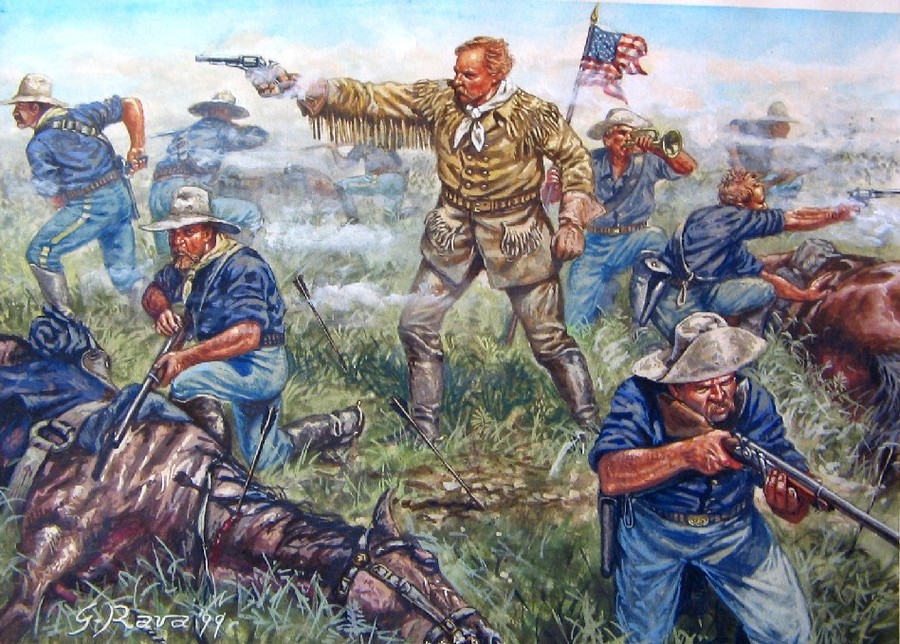
This sickening hypocrisy is on display now in the persecution of New Mexico lawyer Pat Rogers in the ethics train wreck I first described here.  Rogers, whose first offense appears to be that he is a Republican, bared his throat to his attackers by sending an obviously satirical e-mail on the occasion of Governor Susan Martinez, whom he supports, participating in a state Native-American tribal summit. His jocular e-mail went to members of her staff with whom he had worked and who know him, and read, “Quislings, French surrender monkeys. … The state is going to hell. Col. Weh would not have dishonored Col. Custer in this manner.” Continue reading

E-Mail Ethics Train Wreck in New Mexico

This is how things spin out of control.

This really has nothing to do with anything.

In New Mexico, Gov. Susanna Martinez, a Republican, attended a summit of the tribal leaders in the state. For reasons known only to himself, this inspired Pat Rogers, a member of the Republican National Committee and a partner at the prestigious law firm Modrall Sperling, to send a bizarre e-mail to Gov. Martinez’s staff that read,

“Quislings, French surrender monkeys. … The state is going to hell. Col. Weh would not have dishonored Col. Custer in this manner.”

Quisling was the Nazi puppet head of Norway during World War II, and his name has become a term for “traitor.” “French surrender monkeys” is a quote from “The Simpsons.” Col. Weh, a Marine, was Martinez’s opposition in the GOP primary for governor. Taking all of this together along with the fact that this was New Mexico, Custer’s last stand was in what is now Montana, and occurred in 1876, I think it is obvious that Rogers intended the e-mail as a joke, a tongue in cheek remark satirizing the kind of wacky complaints that a Republican Governor probably gets on a regular basis. Either it was a joke, or Rogers is insane. I don’t think he’s insane. Continue reading

Class Act: The New York Yankees

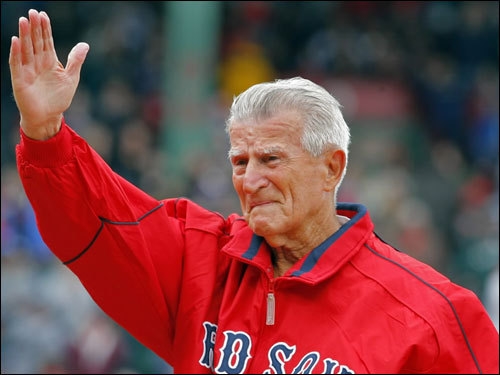
Johnny Pesky, 1919-2012

It’s not quite Ethics Hero territory, and if you know me or drop in to Ethics Alarms with any regularity, you know that as a lifetime Boston Red Sox fan (suffering through a miserable, injury-riddled season) I would rather perform gallbladder surgery on myself than say anything good about the New York Yankees.

I have to put away my partisan biases, however, at least momentarily, to applaud the generous and completely unexpected gesture by the team at tonight’s game, as the New York Yankees held a moment of silence in honor of Johnny Pesky, the Red Sox icon who died today at the age of 92. Continue reading

Ethics Quiz: Twitter Ethics

An Ethics Alarms Quiz for a hot sleepy Sunday:

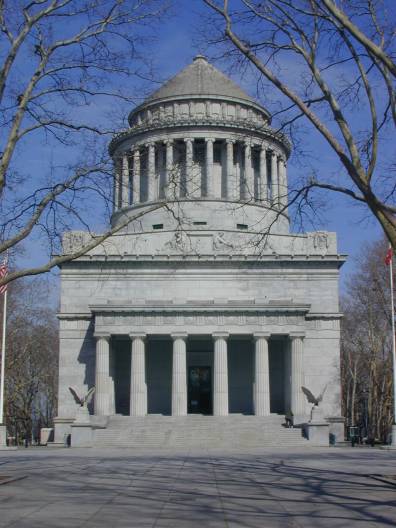
Grant’s Tomb or the National Stupid Question Monument

Young Georgia Ford of Great Britain wasn’t a veteran of Twitter, and when she sent a tweet to her followers naively asking if the Wimbledon tennis tournament was “always held in London,” she had no reason to expect that viral re-tweeting would make her an international laughingstock. It did though, as thousands of Twitterphiles, and some celebrities, pounced on her question and mocked her by name. “Wow, that Georgia Ford tweet from earlier is possibly the dumbest thing I’ve ever heard,” tweeted one Laurence T. Green, who obviously does not follow the speeches of Joe Biden, the political opinions of Bill Maher, or the periodic pronouncements of Rep. Allen West. Embarrassed and humiliated, with her name being made a synonym for ignorance, Georgia closed her Twitter account.

Your Ethics Quiz: Was Georgia’s treatment by the Twittersphere unethical, or was her tweet fair game for ridicule? Continue reading

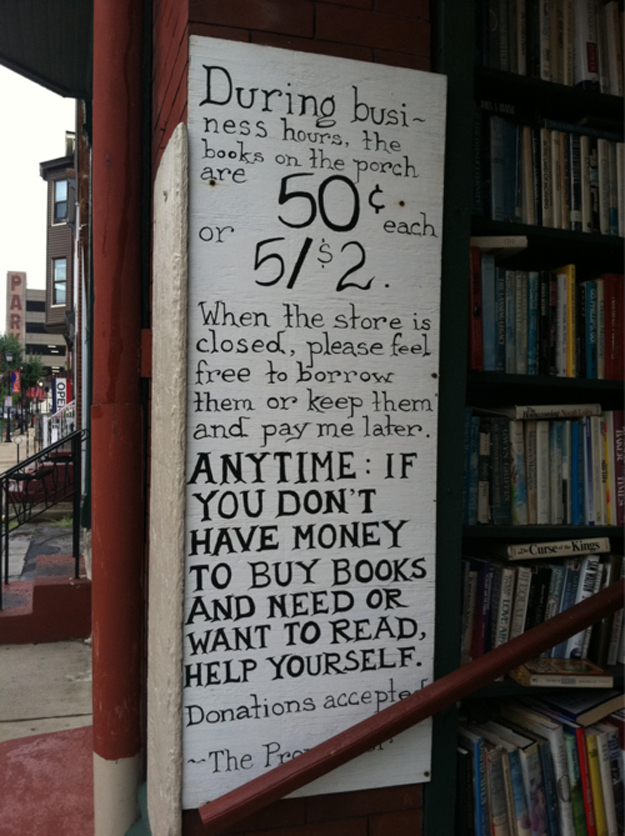
Remember, Things Are Better Than They Seem…There’s Photographic Proof!

Much gratitude is due to Buzzfeed for this lovely and timely sequence of  “21 Pictures That Will Restore Your Faith in Humanity,” of which the photo above is one. Yes, I’m sure one or more may be photoshopped. At this point, I really do not care.

I don’t know about you, but I need a little reinforcement today.

Memo To Ray Dolin: Being Dishonest, Irresponsible and Stupid Is No Way To Promote Kindness, You Boob.

A simple Ethics Dunce just doesn’t do Ray Dolin justice.

Yes, I guess you’re kind, Ray—kind of an idiot.

You may have read the initial story. Ray was hiking across America to promote a personal memoir called “Kindness in America,” when, Ray told police,  he was the victim of a drive-by shooting in Montana, leaving him with a bleeding bullet wound in the upper arm. “How horrible and ironic!” the press exclaimed. “What a sad indication of the cruelty in the nation. Imagine–shot while promoting kindness!

Except that it turns out that Ray shot himself. You see, his promotional hike wasn’t getting the attention he expected, so he thought a random and ironic attack would be just what was needed to give his book publicity a shot in the arm! Har!!!

(I’m sorry.)

The problem was that his description of his drive-by attacker resulted in an arrest of an innocent driver, and when police pressed Ray on the details of the shooting as he lay recuperating in his hospital room, he finally had to admit that the whole thing was a hoax. I suppose one can be kind and be a liar too, but eventually the unethical trait undermines the ethical one. For example, the woman who stopped to help Dolin after he shot himself was being kind, and he he thanked her by making her a pawn in his self-enriching deception. That’s not very kind.

On balance, I would say that Ray Dolin needs to bone up on some of the subtleties of ethics, including the virtue of kindness and the importance of honesty, before he’s qualified to write a book about it. I guess you could say that he jumped the gun. Har!

I’m sorry again.

But what a moron. 

______________________________________

Pointer: Drudge

Facts: Billings Gazette

Graphic: Daily Telegraph

Ethics Alarms attempts to give proper attribution and credit to all sources of facts, analysis and other assistance that go into its blog posts. If you are aware of one I missed, or believe your own work was used in any way without proper attribution, please contact me, Jack Marshall, at  jamproethics@verizon.net.

Ethics Quiz: Alcoholics Anonymous and Judicial Abuse of Power

Uh, wrong meeting, Barney…

A friend who is a member of Alcoholics Anonymous flagged an interesting ethical dilemma involving the huge, loosely-affiliated alcoholism recovery and support group.

Judges often order mandatory attendance at AA meetings as conditions for leniency in alcohol-related crimes, like DUI, spousal abuse, and others. The problem is that AA is system of commitment and trust, and someone who only comes to meetings under threat of jail time have neither. It is the AA attendee’s acceptance of the reality that they are helpless against alcohol and willingness to commit fully to the program with others like than that allows AA to be as successful as it is, and the assurance of anonymity the group provides makes its existence possible. “Court-ordered attendees slink in here, roll their eyes, do their time and leave,” he told me. “How do we know that they aren’t regaling their friends with hilarious tales about what does on at meetings? What right does a judge have to make AA host someone who doesn’t really meet the group’s criteria?”

Good question, and it’s the Ethics Quiz of the Day:

Is it ethical for judges to force a non-profit, non-government, voluntary organization to assist the justice system at the risk of their own integrity and their members’ confidentiality?

This time I’m going to let everyone weigh in before I show my cards.

Here is a link that discusses some of the related issues.

Ethics Hero: Jeffrey Warren

You’ve probably heard or read the story by now.

Wait! Maybe he’s Cherokee!

17-year-old Jeffrey Warren rose to accept the $1,000 college scholarship awarded by the local Martin Luther King Senior Citizens Club during seniors night at Martin Luther King High School in Riverside, California, and provoked both laughter and awkward gasps. He was obviously white—as white as Elizabeth Warren—and the scholarship for intended for black students, though Warren didn’t know that when he applied.

Later, Warren decided to give back the money. His family said they didn’t want the African-American women who gave out the award to be foiled in their attempt to help young black scholars, and that it was the right thing to do. I would say that it was a right thing to do, and showed exemplary kindness, compassion, empathy, generosity, charity and altruism. Jeffrey had every right to accept the money. The Club’s requirements were vague, and did not make it clear that he was not eligible when he applied. If he and his parents had wanted to make a political and philosophical statement about the hypocrisy of a race-based scholarship in the name of Martin Luther King, this was an ideal opportunity, and an argument could be made that this would have been the “right” thing to do as well, if not “righter.” Continue reading