Ethics Hero: Lindsey Bittorf

I regard people who contribute kidneys to near strangers as residing in a special category of Ethics Hero, in the exemplary ethics category….maybe the exemplary exemplary ethics category.  Considering Don Bedwell, the first individual I learned about who  engaged in this extraordinary act of sacrifice, kindness, and compassion,  I began my 2005 post, “There are special and rare people whose ethical instincts are so pure and keen that they can make the rest of us feel inadequate.”  Bedwell, a traveling businessman, donated his kidney to a waitress who often served him at his favorite Cleveland restaurant when he was passing through the city on business. The second altruistic organ donor was East Haven, Connecticut  Mayor April Capone Almon, who gifted one of her kidneys  to a desperate constituent she barely knew.

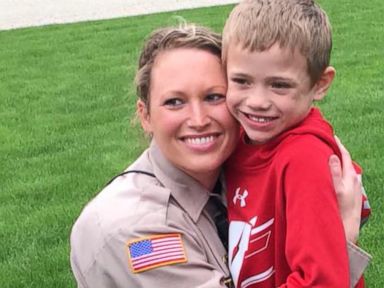
Wisconsin police officer Lindsey Bittorf is the most recent example of this special breed of ethics hero.  She saw a Facebook post from a local mother pleading for someone to rescue might  her  8-year-old son, Jackson Arneson, who needed a kidney. The boy’s family and friends had been tested and none were a match. Bittorf didn’t know the child or the family, but got herself tested on a whim. Doctors told her she was an unusually good match,considering that she was not related to the boy.

Last week, Bittorf  rang the doorbell at Jackson’s home to surprise his family with the good news,  ABC News reported. Jackson could have one of her healthy kidneys.The police officer told Jackson’s mom, Kristi Goll, that it was an “early Mother’s Day gift.”  That’s a bit better than flowers, you’ll have to admit. Continue reading →

Ethics Hero: Pop Star Nicki Minaj

I wouldn’t cross the street to watch over-the-top, beautiful but annoyingly nasal pop singer Nicki Minaj perform, but I’d walk miles to shake her hand.

Over the weekend, the mega-star answered Twitter questions about a lip syncing contest using her “Regret in Your Tears” music video. One audacious follower asked if the singer would pay for her college tuition. It never hurts to ask, right?  Minaj not only agreed but offered to pay the tuition for other fans, tweeting,

Show me straight A’s that I can verify w/ur school and I’ll pay it. Who wants to join THAT contest?!?!🤷🏽‍♀️ Dead serious. Shld I set it up?

And she did set it up. Requests came in from all quarters, containing transcripts and student loan balances.

“U want to go to college but can’t? How much do u need to get u in school? Is that the only thing stopping u?” Minaj asked an immigrant fan who said she could not afford classes. Minaj  sent the money. She also assisted a single mother who needed $500 for her remaining tuition, and sent $6,000 to cover the fall semester for another Twitter follower, including his room and board, courses and meal plan.

Yes, I am keeping my fingers crossed that Minaj’s spontaneous outburst of kindness and charity isn’t exploited by scammers. She’s certainly laying herself wide open to be misled. Yet one cannot be generous and compassionate and not be vulnerable to the worst in society. I’m sure Nicki knows that. To her credit, she is willing to court the risk to change some lives for the better.

She’s a deserving Ethics Hero, and boy, I needed one today.

_____________________

Pointer: Alexander Cheezem

Ethics Hero, Corporate Division: Merck

Sometimes, though their implacable foes would refuse to acknowledge it, big corporations do the right thing even without a metaphorical gun at their heads. This week’s Economist magazine relates an amazing example that the public needs to know about, especially since it challenges popular stereotypes about Big Pharma.

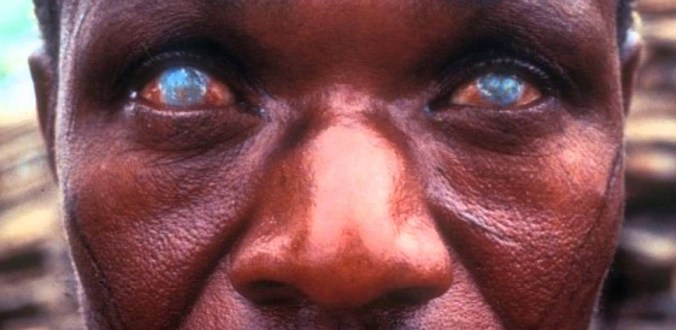
The Economist begins by horrifying us with a deadly aspect of life in third world countries that are hot and wet: “neglected tropical diseases,” or NTDs. These are neglected because the populations that suffer from them are poor and far away, but they affect more than a billion people. Among the scourges, all parasitic, are Buruli ulcer, Chagas disease, guinea-worm disease, leishmaniasis, river blindness, trachoma and yaws. There are 18 pernicious maladies currently listed as NTSs.

In the 1970s, mega-pharmaceutical firm Merck developed the drug ivermectin after tests on animals with parasitic infections. William Campbell, one of the firm’s parasitologists,told company executives that the new drug might be effective against the parasite that caused onchocerciasis, or river blindness, which  afflicts populations in in parts of Africa, Latin America, and  Yemen.  He was given the green light to find out.

The first human trial of ivermectin as treatment for river blindness took place in Senegal in 1981, on patients who had the early stages of the disease—itching, rashes— but no damage to their eyes yet. The results were encouraging,  indicating that ivermectin was safe for humans and highly effective at stopping the disease before it blinded its victims.  Merck, however, now faced the problem that has impeded cures for all the neglected tropical diseases: those who needed ivermectin were too poor to buy it, and so were the nations where they lived. Big corporations are not charities; they have investors, stockholders and a bottom line. They are not accustomed or programmed to give away their products.

Yet Merck made a corporate decision that Bernie Sanders and Elizabeth Warren say is impossible. Starting in 1987, it made an open-ended commitment to distribute as much ivermectin as was needed to eradicate the river blindness worldwide. In the next ten years, it swallowed the cost of 100 million doses. Continue reading →

Ethics Quiz: Lying To The Dying, Or Trump Derangement Meets “The Magnificent Seven”

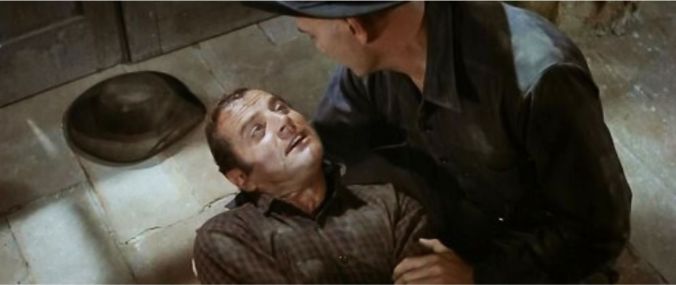
In “The Magnificent Seven,” the original classic, not last year’s disappointing re-make, Harry Luck (Brad Dexter) had always been convinced that the real reason the Seven had agreed to help a poor Mexican village fight a predatory bandit band was because the town had a secret treasure to share. (It didn’t.) Harry refuses to join the rest as they make one desperate effort to help the farmers, then at the peak of the gunfire gallops back into the village to join the battle–and is promptly shot. Dying, he begs Chris (Yul Brenner) to confirm his suspicions…

Harry Luck: Chris… I hate to die a sucker. We didn’t come here just to keep an eye on a lot of corn and chili peppers, did we? There was something else all along, wasn’t there?

Chris: Yes, Harry. You had it pegged right all along.

Harry: I knew it. What was it?

Chris: Gold. Sacks of it.

Harry: Sounds… beautiful. How much?

Chris: At least a hundred and fifty.

Harry: My cut would have been what?

Chris: About seventy thousand.

Harry: I’ll be damned. (He dies)

Chris: Maybe you won’t be.

Today’s news has another story involving lying to a dying man, a really stupid story.

Michael Garland Elliott, 75,  died of congestive heart failure in his Oregon home ,surrounded by his caregivers, neighbors and friends.  Right before the end, his ex-wife,spoke with him over the phone from her home in Austin, Texas.

She told him that President Trump had been impeached.   “I knew it was his very, very last moments,” Teresa Elliott told reporters. “I knew that would bring him comfort and it did. He then took his final breath.”

Your Ethics Alarms Ethics Quiz of the Day is…

Is it ethical to lie to dying friends and loved ones?

Continue reading →

Professor Who Most Needs To Get Over Himself Of The Month

Gilbert Kalonde, a Montana State University assistant professor of technology education, says an employee at the Bozeman, Montana Wal-Mart wrongly listed his occupation on a fishing license as “toilet cleaner” rather than “pompous assistant professor.” This, the toilet cl…er, professor says, constitutes libel, and he is suing for damages because the license has held him up to “hatred, contempt, ridicule.”

Boy, you can say that again. I know I always judge people by what it says on their fishing licenses. Come to think of it, I just judge people harshly if they have a fishing license. Actually, I’m not sure I wouldn’t regard a toilet cleaner as more admirable than a college professor. True, he doesn’t teach at Wellesley….

Why would anyone get upset over something like this? I would be hauling out that license at parties. Yes, that’s not exactly sterling service he got, but it’s Wal-Mart. Besides, based on the law suit, I bet the prof was so insufferable–“See here, my good man, make sure you place the correct occupation on that document, lest my credentials are obscured!”—that the Wal-Mart clerk decided to teach him a lesson in humility. I guess it didn’t work.

The ethical values involved here are proportion, compassion, humility, and kindness, none of which Gilbert Kalonde appears to possess.

At least he has a sense of humor.

______________________

Pointer: Fark

Ethics Hero Emeritus: Eugene M. Lang

A kind, courageous Ethics Hero died last week. To my shame, I had never heard of him. In 1996, President Clinton awarded him the Presidential Medal of Freedom, but that award has been so degraded and politicized that I no longer pay much attention to it. My mistake: in this case, the award was well-earned.

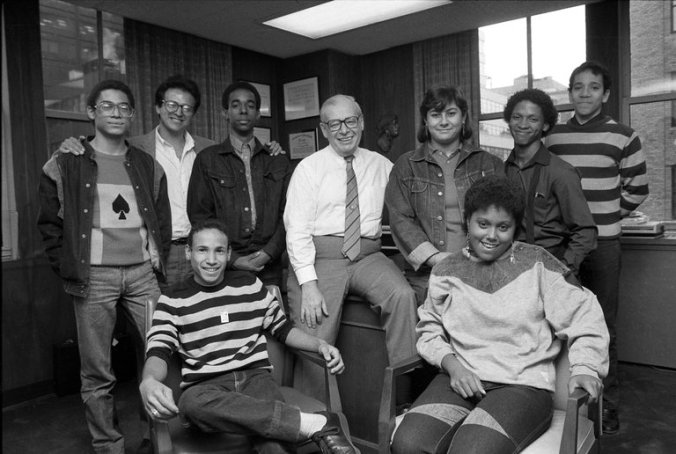
Eugene M. Lang was born poor and became  a successful and wealthy  investor. In 1981, he was invited to deliver a commencement address to 61 New Your City sixth graders at Public School 121, his alma mater.  “I looked out at that audience of almost entirely black and Hispanic students, wondering what to say to them,” he recalled years later. “It dawned on me that the commencement banalities I planned were completely irrelevant…So I began by telling them that one of my most memorable experiences was Martin Luther King’s ‘I Have a Dream’ speech, and that everyone should have a dream.”

Then, in a flash of inspiration, he decided on the spot to tell them that he would give a scholarship to every student in the class who was admitted to a four-year college.

That impulsive promise led to his establishment of the I Have a Dream Foundation, with an office in Manhattan. Lang hired a project coordinator and established a year-round program of academic support including mentoring and tutoring as well as sponsored cultural and recreational outings. In the meantime, he virtually adopted that 6th grade class, taking them on trips and restaurants, and personally counseling them through personal travails as well as school problems, often intervening with school officials on their behalf. By the time Eugene Lang died at age 98,  his dedication had changed the lives of more than 16,000 at-risk children nationwide.

Lang said the he knew, when he made his pledge to those 11 and 12-year olds, that giving poor and  troubled children money for an education would not ensure their success. He knew many would succumb to the cycle of poverty,  drugs, jail and irresponsible parenthood.  “When I made the original promise, the principal told me that maybe one or two students would take advantage of my offer,” he told  one interviewer. That’s why he dedicated himself to doing more.

Continue reading →

Ethics Jump-Ball At The 7-11

Boy, you better be quick if you want to be “pay it forward” in Alexandria, Virginia.

Today I dropped by the local 7-11 for a quick purchase and was third in a line of four. Being served was a very tall—basketball player tall—, very striking young African American man, late 20s, early 30s,  in a three- piece suit and tie. He had his items on the counter for checkout, and excused himself briefly to go out to his car where he said he had left his wallet. A few seconds later he stepped back into the store and said, “Never mind. I’m sorry, I left my wallet at home,” and started to leave. I hesitated maybe two seconds and started to speak, as did the man ahead of me. I was about to say that I would pay for his items, but the guy behind me, short, stocky, white, about 50, and noticeably missing a few teeth in front, stepped out and said, “Hey, man, I’ve got it.”

The young man looked surprised and said, “Are you sure?” “Of course. Is that it?” replied the older man, pointing to the counter.

“Just pay it forward, friend,” said the man in front of me.

“Thank you,” said the Kareem Abdul Jabbar look-alike.  I really did think he looked like Kareem, early 70’s vintage, but handsomer. He also appeared a lot more affluent than his shorter benefactor. “Here’s my contact information…” and he reached into his pocket.

“No, no, come on, that’s not necessary,” said his new friend,, flashing his missing teeth in a big smile. “I’ve got it. We’re all in this together.” And he paid the clerk.

The tall black man shook his hand, and they both held the clasp for a few second. “Thanks so much,” he said.

After he left, both I and the man in front of me congratulated the winner of this ethics jump ball, saying that we both were about to do the same thing, but he had been quicker.

“Oh no!” he said suddenly, eyes twinkling. “I just spent my last dollar! Now I can’t pay for MY stuff!”

“See? I’d really have you both then, wouldn’t I?”

And we all laughed.

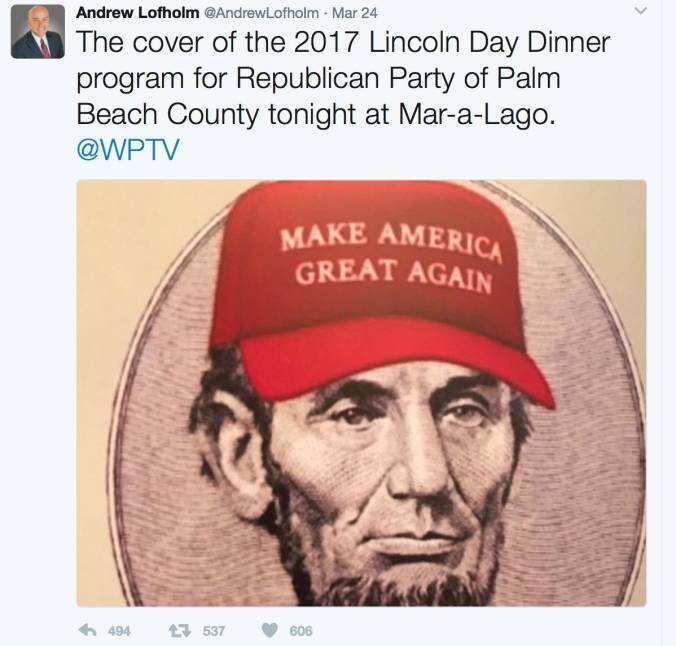
Ethics Quiz: How Much Mockery Should Chelsea Clinton Get For Her Brain-Dead…But FUNNY!— Tweet?

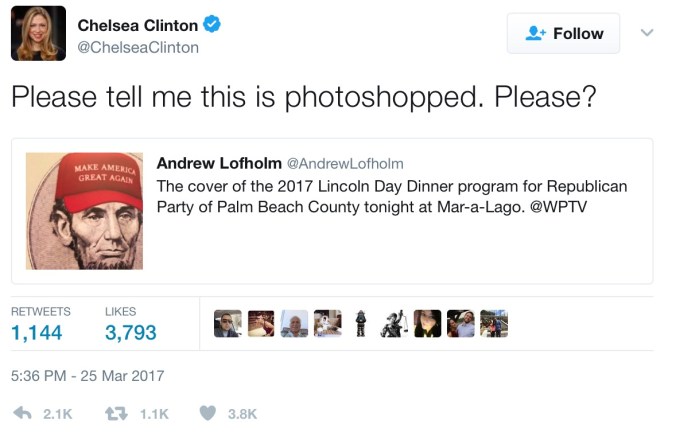
The above tweet and graphic somehow wended its way to Chelsea Clinton. You know: Hope of the Democratic Party Chelsea Clinton? Lifetime Impact Award winner Chelsea Clinton? Graduate of Stanford,  with a masters degree from Oxford—that Chelsea Clinton?

Here is how that Chelsea Clinton responded:

Your Ethics Alarms Ethics Quiz Of The Day is…

How much public ridicule, if any, should be heaped on Chelsea for this?

And why?

Among the  retorts so far:

“No, this is the exact hat Lincoln was wearing when he signed the Emancipation Proclamation. People forget that.”

“Nope, Lincoln was wearing that exact hat at the Theater.”

“Nope, they found a picture of Lincoln wearing a MAGA hat from the nineteenth century. No photoshop needed.”

“I remember this photo was taken at the 1856 Republican National Convention and is real.”

“It’s as real as those Bosnian snipers.”

My answer: she should be as much and as wittily as possible, as long as one agrees that similar treatment should greet one’s own brain-farts if they are especially funny, like this one is.  This will be a great test of Chelsea’s character: if she can take the ribbing and laugh at herself, that will win her points with me.

If she doesn’t understand what’s wrong with the tweet, however…well, that would be a problem.

________________________

Pointer: Newsbusters

Ethics Dunce: Hawaiian Airlines

I find this story hard to believe, and yet it is consistent with the disturbing trend of people and businesses taking unfair advantage of captive audiences and markets—what I recently termed the “The Hamilton Effect.” The attitude is, “we have you, you’re trapped, and you have no choice but to accept what we give you.” It is a breach of respect, fairness, autonomy, and the Golden Rule.

Before I saw this story today—it is a few says old, but I missed it–I was going to write about a more mundane example I encountered at the airport in Sacramento. I was getting on a long flight and an early one, so I bought more items than usual at an airport news store: a large bottle of water, a granola bar, orange juice, some yogurt, two newspapers and a magazine. After I paid, I asked for a bag, as I always do, and was told that it would cost 25 cents. I never heard of such a thing. I literally had more than I could carry without a bag, and told the clerk that if they were going to change the rules, I should have advance notice. There was no real option, however, unless I wanted to be thirsty and hungry on the airplane for a couple of hours, as well as bored with nothing to read.

All of the airport is like that, of course. Commentators as diverse as Jerry Seinfeld and Ralph Nader complain about it: you are suddenly in some alternate universe where everything costs twice as much. I bought a large size bag of M&Ms in Chicago that cost over seven dollars. “We have you, you’re trapped, and you have no choice…”

A 66-year-old man on a Hawaiian Airlines flight that had just left the West Coast for Honolulu found the cabin temperature chilly, and requested a blanket. He was incredulous when he was informed that there would be a $12 charge. I wouldn’t buy a typical airplane blanket for that, and this was a rental! It’s gouging, plain and simple, and the passenger said so. He then demanded to talk to an airline official, and was given the corporate phone number. During his irate conversation, the man told the company representative, “I’d  like to take someone behind the woodshed for this.”  That’s an old, barely used term for reprimanding or punishing someone, but it apparently frightened a culturally ignorant flight attendant, who informed the pilot that a passenger was threatening the staff.Naturally, the only thing to do was to dump excess fuel in the Pacific, turn the flight around, and go back to LAX. This cost about $12,000, and delayed the flight for nearly four hours.

Continue reading →

A Tale Of Two Hotels: Same Problem, Different Responses

A couple of weeks ago, I stayed at Atlanta’s sumptuous Lowe’s hotel downtown. I like the hotel a great deal, but room service at breakfast is ridiculous: essentially you might as well order the deluxe pig-out, which could feed a family of three. The way the menu is set up, you pay the over $25 for any other choice and get half as much food. This is primarily because a pot of coffee costs more than ten dollars, and only the deluxe breakfast has coffee included.

Even though all expenses were being paid by the client, I hate this, so I decided to order a couple of muffins (still about $15 without coffee, not counting tax and the automatic service charge) and tolerate the free instant coffee that is  offered by the little single cup machines in the room. I was a good plan, but the damn thing wouldn’t work. The water didn’t heat. Annoyed (no coffee, 6 AM, brilliant money-saving scheme foiled), I called the front desk to complain. They sent up a young man—he arrived in about 15 minutes, after the continental breakfast—who fiddled with the coffee machine. It was obvious that he had never seen one before.  Eventually he gave up, apologized, and left to get another one. By the time he returned, I had finished most of the muffins, but I made a cup of (lousy) coffee anyway.

Last night, I had to stay in a hotel to make sure that D.C.’s $%^&$#@! Rock and Roll Marathon didn’t stop me from getting to my early morning presentation to new D.C. bar members. The streets around the venue were blocked off, and weird traffic was expected; hard experience dictated the expense was the better part of valor. There was breakfast provided at the bar event, so all I needed was some coffee in my room to wake me up sufficiently so that I didn’t wander onto 14th street and die.

This time, the hotel was the J.W Marriott, and again the little one cup coffee machine didn’t work. Just like in Atlanta, I called the front desk, sounding even more annoyed about the inconvenience than the before. (This was unfair, of course; there is no reason the Marriott should inherit my upset with Lowe’s.) The response from the desk was identical after I described my plight: she would send someone up to my room to check on the machine. Great.

When the knock came and I opened the door, I was greeted by the head of guest services, in a uniform. He had a new coffee machine with him, and also handed me a bag containing two large cups of Starbuck’s coffee, ten creamers, napkins, utensils, and two hot pastries. He replaced the machine after confirming that it was broken, apologized profusely, and took his leave.

Wow.

Now that’s service.