When You Consider The Wisdom Of Obama’s Campaign To Destigmatize Felons, Please Also Consider Felicia Menge Kelley

Portrait of a justice-involved individual...

Portrait of a justice-involved individual…

As it attempts to bolster its political support by sucking up to convicted criminals and their families, the Obama administration has been incrementally making it more difficult to distinguish felons from law-abiding citizens, arguing that once they have paid their debt to society, maybe they are no different. HUD, carrying out the Obama administration’s new theory that felons are just plain folks,  has decreed that landlords risk federal investigations if they reject rental applicants based on the applicant’s undisputed criminal record in newly-released guidelines. 

The Justice Department and the Department of Education are now using a euphemism to make convicts and those with rap sheets sound like they have a hobby: the new cover-phrase is “justice-involved individuals.” (Hillary Clinton is apparently a justice-involved individual.)

The problem with all of this is that being convicted of a felony is not like catching a cold, and often provides a strong clue that the individual involved is not quite as trustworthy as the boy scout or girl scout next door. Take, for example, this story:

From the ABA Journal:

A woman with a history of financial crimes in multiple states got a job as an office manager and bookkeeper for a North Carolina law firm, after a background check failed to pick up her earlier convictions under a different name.

That resulted in a loss of more than $150,000 to the firm, Yow, Fox & Mannen, District Attorney Ben David of New Hanover County told the Port City Daily. The firm’s now-former employee, Felicia Menge Kelley, 44, pleaded guilty on Tuesday to one count of embezzlement and was sentenced to a prison term of between 82 and 111 months, the newspaper reports. She will also be required to pay over $145,000 in restitution.

Kelley, who has previously worked for other law firms in the Jacksonville area, was convicted earlier under the name of Felicia Dawn Menge…

But I’m sure she’s just an exception to the rule…and gives a bad name to decent, hard-working, justice-involved individuals. It’s not like they are criminals or something.



Tales Of The Self-Righteous And Incompetent: Lawyer/Teacher Malik Leigh And His Donald Trump Exam Question

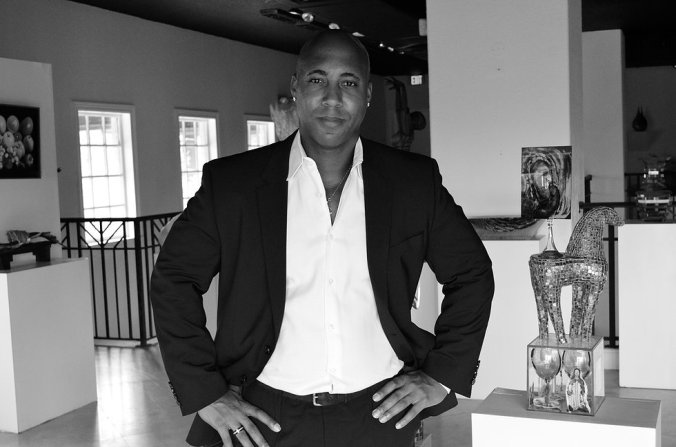
Malik Leigh

Malik Leigh is an attorney who teaches in Palm Beach Lakes High School’s pre-law academy. He submitted an exam for review, as the school requires of all tests, that included this question:

“If Donald Trump becomes president of the United states, we are:

A.) Screwed

B.) Screwed

C.) Screwed

D.) Screwed behind a really YUGE wall that Mexico pays for.”

In another question on the same test, this lawyer—and I’m still trying to get my mind around that embarrassing fact— asked

“When performing an opening statement, it is best to:

A. Wink at the Judge

B. find the hottest person on the Jury and focus your words on them

C. Speak to them as if they are cordial friends.

D. Treat them like the MORONS they are.”

Leigh was suspended.  The letter he received from Principal Cheryl McKeever announcing the suspension stated that the questions contained “inaccurate content, irrelevant material, unprofessional use of language, inappropriate use of language.” Continue reading

Lowe’s, The Rights Of Racist Customers, And Why Lawyers and Doctors Aren’t Like Deliverymen

Now, if Lowe's drivers had law degree's, this would be a different story....

Now, if Lowe’s drivers had law degree’s, this would be a different story….

A fascinating story unearthed by master ethics sleuth Fred:

In Danville, Va., a customer specifically asked that a Lowe’s delivery be administered by delivery personnel who was not an African American. Marcus Bradley, the black driver assigned to the delivery, was called back to the store, and replaced. When the woman who made the request was interviewed, she said, “I got a right to have whatever I want and that’s it…No, I don’t feel bad about nothing.”

For hiss part, Bradley said that he was surprised that the store didn’t stand up for him, but that he would stay in his job. “I mean I gotta work. I’m going to keep going to work like I’ve always done. But I would think Lowe’s would take it into consideration to think about what they’re doing next time,” he said.

Lowe’s corporate office, when informed about the incident, released a statement that said in part… last week, and they said they’d look into it. Wednesday, we received this statement: Continue reading

When Typos Have Ethical Significance

Law-Firm-Advertising-FAIL

I was chided over the weekend for mocking a misspelling in one of the cuckoo online comments cheering on Texas Governor Greg Abbott’s ridiculous “monitoring” of U.S. military exercises in his state. The thrust of my critic’s argument was that picking on such modes of expression was not only a cheap shot but an elitist cheap shot. I generally deplore the “You wrote ‘teh!'” school of online debate, and in my view, that wasn’t what I was doing when I pointed out this particular Texas paranoid’s spelling of government as “goverment” twice . His “position” didn’t require any rebuttal, as it was self-evidently batty; I alluded to “goverment” because I concluded that it was not a typo, but rather an indication that the commenter was as ignorant as granite block. If you can’t spell government, you haven’t read about government enough to have an opinion on it worth inflicting on the rest of us.

It led me to ponder, however, when a typo has undeniable ethical significance, and mirabile dictu, Above the Law today provided the excellent example you see above.

This is part of the marketing for a law firm—you know, those organizations that provide lawyers to ordinary citizens who need help negotiating the complexities of our nation’s increasingly impenetrable laws and regulations in order to live and prosper? Lawyers are supposedly trained in the precision of language, as the presence or absence of a comma or semi-colon in a statute, a motion or a brief can mean the difference between a client being a criminal or a free man, and an unnoticed typo in the draft of a contract, will, trust or settlement can decide the fate of millions of dollars, the ownership of disputed property, the existence of a prenuptial agreement, and other momentous, life-altering  consequences.

The very existence of an embarrassing  law firm marketing device like this one—I think it’s a coaster—leads to many conclusions:

1. It tells us that the law firm’s managing partners are inattentive to details, and in law, details are everything.

2. It tells us that the lawyers in the firm inadequately supervise the non-lawyers who work for the firm, and the ethics rules demand that lawyers be especially attentive to such employees and contractors.

3. It tells us that at least one firm lawyer, whoever approved the thing, either is illiterate or can’t be trusted to check the text of documents, even documents containing only three words.

4.It tells us, in short, that this law firm, and by extension the lawyers it employs, cannot be trusted to exercise care, competence and diligence when they are representing themselves.

How can it possibly be trustworthy when it is representing others?

__________________

Pointer and Source: Above the Law

The Legal Profession’s Failure Of Professionalism Regarding Gay Marriage

blind_justice

Charles Green helpfully sent me the link to today’s New York Times piece documenting how…

“the imbalance in legal firepower in the same-sex marriage cases resulted from a conviction among many lawyers that opposition to such unions is bigotry akin to racism. But there were economic calculations, too. Law firms that defend traditional marriage may lose clients and find themselves at a disadvantage in hiring new lawyers.”

“Am I right that something’s quite amiss here?” he asks. Indeed he is, and I’ve touched on it before.

There are several factors at work here, but the result is deplorable, and indictment of the corrupt values of the legal profession. One of the factors is bias, and it is a bias that the lawyers themselves are either unaware of,  or are unwilling to avoid its effects as their professional codes of ethics require.

The majority of high-powered lawyers hail from urban centers where liberal culture flourishes among the wealthy, the powerful and the influential. These are cosmopolitan lawyers, sophisticated and urbane, who have gay colleagues, gay friends and gay children. They are less likely to be religious, and more likely to have contempt for those who are. Combine with them the legal academics who drive consensus on legal ethics matters—like most academics, they have marinated in the extreme leftist attitudes of U.S. academia—and it becomes clear why, as Michael W. McConnell, a former federal appeals court judge who teaches law at Stanford, tells the Times, “The level of sheer desire to crush dissent is pretty unprecedented.”

I noticed this in 2011, when the legal ethicists I follow, know and debate with decreed virtually en masse that a judge who was not only gay himself but in a long term domestic relationship with his partner had no ethical obligation to recuse himself before he issued the decision on the constitutionality of California’s anti-same sex marriage Proposition 8. Nor did they feel he was ethically obligated to disclose his situation before ruling. I wrote: Continue reading

The Harvard Law Student’s Formula For An Ethical Life

Yes, I hate my job, and yes, my clients are the scum of the Earth, and yes, my life sucks. But think of all the kids I can help get de-wormed!

Yes, I hate my job, and yes, my clients are the scum of the Earth, and yes, my life sucks. But think of all the kids I can help get de-wormed!

When I heard about the Harvard Law Record’s essay by law student Bill Barlow titled “Want To Save The World? Do Biglaw,” I mistakenly  assumed that he had made a persuasive, or at least coherent, utilitarian argument. After all, some fairly distinguished blogs took notice, and set about rebutting him. I was shocked when I actually read the piece. From what I can tell, Barlow understands nothing he was writing about—not the profession of law, not charity, not careers, not values, not law firms, not ethics, not money, not life. Why is someone who thinks like this in law school? What are law schools accepting people capable of writing this? Why is Harvard allowing someone this naive and shallow to display a Harvard degree?

This is literally all there is of substance to the article:

“So there you have it—be a corporate lawyer, donate 25% of your post tax income to charity, and save 150 lives a year, or de-worm 25,000 kids.  Alternatively, go into Public Interest, Government, or Academia, and feel warm and fuzzy about yourself.  Sadly, when people at this school talk about public service, they mean the latter, rather than the former.  If only people applied the same amount of cognitive skill used in just one LSAT logic game to the most critical question of what to do with their law degree, hundreds of lives could be saved.”

Ugh. Where to begin? Continue reading

The Comfort Women Memorial Lawsuit: A “Disgusting” Legal Argument, Perhaps…Unethical, No

The Glendale Comfort Women Memorial

The Glendale Comfort Women Memorial

The large and respected law firm Mayer Brown has taken the ugly case of some Japanese-American clients who want the city of Glendale, California to remove a memorial to World War II “comfort women” from a public park. In doing so, and in the way it is proceeding, the firm has inspired harsh condemnation from two estimable legal commentators, both First Amendment champions: Marc Randazza, and Ken White. Their objections, which caused Randazza to call the firm “the least honorable law firm in the world,”and White to conclude, “This lawsuit is thoroughly contemptible. It should fail, and everyone involved should face severe social consequences,” are heartfelt, but, I think, misguided. Their argument, beside arguing that the lawsuit is frivolous, is best articulated by Randazza: Continue reading

How Can Lawyers Be Shockingly Unethical Without Breaching Any Legal Ethics Rules? Meet Styles & Pumpian

"Let's have a moment of silence for Ira, our troubled friend, partner and colleague, a fine lawyer who left this world too soon....Ok, now that's over, how can we keep his fee from his family?"

“Let’s have a moment of silence for Ira, our troubled friend, partner and colleague, a fine lawyer who left this world too soon….OK, now that’s over, how can we keep his fee from his family?”

Ira Bordow, a partner in the Wisconsin law firm of Styles & Pumpian, had been handling a family’s dispute with an insurance company. Successfully too: he negotiated a $250,000 settlement, and the company sent him the check for that amount, to be divided among the plaintiffs and Bordow’s firm. Bordow, as a partner, was going to get a $41,666 share.

The 54-year-old lawyer, however, had problems of his own that money could not solve, and committed suicide. His brother found the quarter of a million dollar check on the seat of Bordow’s Lexus coupe, and properly and correctly sent it on to  Styles & Pumpian.  Bordow had already earned his cut of the settlement at before he took his own life, for he, and the firm, were working on a contingent fee basis. The representation was at an end. Apparently, however, once the firm had the check in hand, the brilliant legal minds at Styles & Pumpian applied their craft to thinking of ways they could avoid paying the grieving family of their tragically demised partner any of the loot. They thought of one too, at least one they felt was worth a shot.  The firm is refusing to pay the Bordow estate the late lawyer’s $41,666 cut, arguing that Bordow’s suicide in his River Hills home negated his partnership agreement with the firm. It was a breach of contract, they say, and thus, even though he would have received the money if he had lived, the firm can keep it now.

Continue reading

Now THAT’S An Untrustworthy Legal Secretary!


"Hey! That's Barbara! See you at wok, Monday, Barbara!"

“Hey! That’s Barbara! See you at work, Monday, Barbara!”

The Connecticut Law Tribune reports that Barbara Kalpin, a former legal secretary at the Waterbury law firm of Grady & Riley,  has been charged with stealing more than $1 million while forging dozens of checks and documents.

She was, the story says, “a longtime and trusted employee at the firm.” It seems the firm’s trust was misplaced.  Investigators have discovered that she spent about $500,000 over the last few years at an off-track betting venue in New Haven for horse and dog racing. According to police, she wrote 93 checks from a client fund that she managed, among other things using the money to pay credit card bills and to finance multiple mortgages on her home. Kalpin is facing two counts of first-degree larceny and 112 counts of second-degree forgery, and is awaiting arraignment next week.

Connecticut’s bar, like every that of every other state, imposes a strict obligation on attorneys to supervise non-lawyers who are placed in positions of assisting in legal work and the handling of client matters: Continue reading

How Not To Quit Your Law Firm

"Bye! Come see me at my new firm! Just follow the trail of embers..."

“Bye! Come see me at my new firm! Just follow the trail of embers…”

The legal world is buzzing and tittering over a remarkable exit memo sent to firm clients and others by a disgruntled and departing partner at Ogletree Deakins. His detailed version of the events leading to his bitter good-bye was unusual enough that it was leaked to Reuters, and subsequently published elsewhere on the web. In legal circles, it is pretty viral at this point. Why? Because the author is a prominent employment lawyer, and the memo is the epitome of airing dirty laundry, burning bridges to ashes, and throwing a stink bomb on the way out the door…in short, it’s unprofessional conduct, and extremely so.

The diatribe begins with sensational allegation of management misconduct (but without names attached…these are lawyers, after all): Continue reading