The Ethics of Deporting Mahmoud Khalil For Pro-Terrorist Advocacy, I.

ICE arrested Palestinian activist and former Columbia student Mahmoud Khalil with the intent of deporting him in accordance with the announced Trump policy of deporting non-citizens who engage in pro-“terrorist” speech related to the Israeli-Palestinian conflict. Predictably, the Axis is all-in supporting Khalil, who sure appears to be a bad human hill to die on. Representative Alexandria Ocasio-Cortez condemned ICE’s detainment of Mahmoud Khalil, calling it a “tyrannical” move, “Violating rule of law, actually,” she wrote. That AOC defends him alone makes me inclined to want to get rid of the guy, but that would be irrational. Judge Jesse Furman of the Southern District of New York issued an order today halting Khalil’s processing and scheduled a hearing on the case for later this week. Ah yes, the Southern District of New York!

In a confusing essay at The Volokh Conspiracy, Ilya Somin writes that deporting non-citizens for the content of their speech is a First Amendment violation and “a slippery slope,” then, in the fifth paragraph, acknowledges that 8 U.S.C. § 1182(a)(3), bars “Any alien who … endorses or espouses terrorist activity or persuades others to endorse or espouse terrorist activity or support a terrorist organization.” I’d say endorsing and supporting Hamas qualifies under that law, wouldn’t you? So Somin says, “Such laws, too, should be ruled unconstitutional.” But until and unless it is, the Trump administration has the law on its side.

The question remains, is such a restriction on the free speech of non-citizens ethical? Somin:

“The First Amendment’s protection for freedom of speech, like most constitutional rights, is not limited to US citizens. The text of the First Amendment is worded as a general limitation on government power, not a form of special protection for a particular group of people, such as US citizens or permanent residents. The Supreme Court held as much in a 1945 case, where they ruled that “Freedom of speech and of press is accorded aliens residing in this country.”


Continue reading

Encore: From “The Law vs Ethics Files: The July 24, 1983 Pine Tar Incident, When Baseball Chose Ethics Over Law, And Was 100% Wrong

Several things led me to re-posting this Ethics Alarms entry from 2017.

First of all, the MLB network showed a documentary on the career of George Brett today, and scene above, with Brett erupting in fury at the umpire’s call voiding his clutch, 9th inning home run, is one of the classic recorded moments in baseball history. There was also a recent baseball ethics event that had reminded me of Brett’s meltdown: Yankees manager Aaron Boone was thrown out of a game because a fan behind the Yankees dugout yelled an insult at the home plate umpire, and the umpire ejected Boone thinking the comments came from him.. When Boone vigorously protested that he hadn’t said anything and that it was the fan,Umpire Hunter Wendelstedt said, “I don’t care who said it. You’re gone!”

Wait, what? How can he not care if he’s punishing the wrong guy?

“What do you mean you don’t care?” Boone screamed rushing onto the field a la Brett. “I did not say a word. It was up above our dugout. Bullshit! Bullshit! I didn’t say anything. I did not say anything, Hunter. I did not say a fucking thing!” This erudite exchange was picked up by the field mics.

There was another baseball ethics development this week as well, one involving baseball lore and another controversial home run. On June 9, 1946, Ted Williams hit a ball that traveled a reported 502 feet, the longest he ever hit, and one of the longest anyone has hit. The seat was was painted red in 1984 (I’ve sat in it!), and many players have opined over the years that the story and the seat are hogwash, a lie. This report, assembling new data about the controversy, arrives at an amazing conclusion: the home run probably traveled farther than 502 feet.

But I digress. Here, lightly edited and updated, is the ethics analysis of the famous pine tar game and its aftermath:

***

 I have come to believe that the lesson learned from  the pine tar incident is increasingly the wrong one, and the consequences of this extend well beyond baseball.

On July 24, 1983, the Kansas City Royals were battling the New York Yankees at Yankee Stadium. With  two outs and a runner on first in the top of the ninth inning,  Royals third baseman George Brett hit a two-run home run off  Yankee closer  Goose Gossage to give his team a 5-4 lead.  Yankee manager Billy Martin, however, had been waiting like a spider for this moment.

Long ago, he had noticed that perennial batting champ Brett used a bat that had pine tar (used to allow a batter to grip the bat better) on the handle beyond what the rules allowed. MLB Rule 1.10(c) states: “The bat handle, for not more than 18 inches from the end, may be covered or treated with any material or substance to improve the grip. Any such material or substance, which extends past the 18-inch limitation, shall cause the bat to be removed from the game.” At the time, such a hit was defined in the rules as an illegally batted ball, and the penalty for hitting “an illegally batted ball” was that the batter was to be declared out, under the explicit terms of the then-existing provisions of Rule 6.06.

That made Brett’s bat illegal, and any hit made using the bat an out. But Billy Martin, being diabolical as well as a ruthless competitor, didn’t want the bat to cause just any out. He had waited for a hit that would make the difference between victory or defeat for his team, and finally, at long last, this was it. Martin came out of the dugout carrying a rule book, and arguing that the home run shouldn’t count.  After examining the rules and the bat, home-plate umpire Tim McLelland ruled that Brett used indeed used excessive pine tar and called him out, overturning the home run and ending the game.

Brett’s resulting charge from the dugout (above) is video for the ages. Continue reading

Ralph Petty, the Moonlighting Texas ADA, Strikes Again!

Back in 2021, an outrageous legal ethics scandal in Texas so disturbed me that I wrote virtually the same post about it twice, once in May and again in September, without realizing it until one of you reminded me. This time, however, I’m not repeating myself.

Former Texas attorney Weldon Ralph Petty Jr prosecuted defendants before Midland County judges as an assistant district attorney, while simultaneously working as a law clerk for some of the same judges, on occasion advising them regarding the criminal cases he was prosecuting. He did this for more than a decade, with the complicity of the judges and his colleagues. Finally another prosecutor blew the whistle on this unethical conduct, which even Fani Willis would recognize as a conflict of interest. Maybe.

Last month Petty, who was disbarred, appeared in the news again.

Continue reading

From Showtime’s Series “The Affair,” An Ethics Zugzwang “What Would You Do?”

As I noted in this post, I am slogging through Showtime’s ethics series “The Affair ” (2016-2021) again after catching much of it pre-streaming. One of the issues raised during an episode was discussed here. At the climax of the second season, a wildly contrived scenario that determined the course of the whole thing occurred. I write ethics hypothetical for a living, and I could not come up with one filled with more ethics conflicts, dilemmas and rationalizations.

Here’s the set-up: The four parties involved in “the affair” are Noah, a late forties, insecure, narcissist writer; Helen, his wife of 25 years with whom he has had four children; Alison, a young, clinically depressed former nurse whom Noah encountered in a chance meeting at Montauk restaurant, The Lobster Roll,” while his family was vacationing, and who subsequently engaged in a mad, impetuous affair with him that broke up his marriage and hers; and Cole, her ex-husband, who ran the family ranch and dealt drugs on the side.

At the point when the incident in question occurs, Noah and Helen are divorced, as are Cole and Alison. Alison and Noah are now married but estranged because Alison just informed Noah that what he thought was their infant daughter is in fact the result of an impulsive post-divorce one-time-only moment of passion with Cole when they were both drunk and depressed. (Everyone drinks a lot in “The Affair.”) Helen and Noah have finally agreed to share care of their kids, especially after Helen having a DUI with her youngest daughter in the car made her case for full custody untenable.

Stipulated: all members of the shattered couples have lingering intense feelings for each other.

Continue reading

“Curmie’s Conjectures” #3: Confucius and the Fourth Circuit

by Curmie

Twentysomething years ago, a few months after completing my PhD, I got a phone call from my mentor in Asian theatre, who, upon learning job search wasn’t going as well as I might have hoped, asked if I wanted to teach a couple sections of the university’s Eastern Civilizations course.  I asked if I was really qualified to teach such a course.  His response: “You know something, and you can read.” 

Based largely on his recommendation, I got an interview for the position.  I made no attempt to conceal my ignorance of a lot of what I’d be teaching.  But the department had struggled with grad students who had lost control of their classrooms, and I’d taught full-time for ten years before entering the doctoral program; I got the job.  The head of the Eastern Civ program closed the interview with “There are some books in my office you’ll want to read before you start.”  I knew something, and I could read.

That’s relevant to my consideration of the recent ruling of the Fourth Circuit Court of Appeals in Porter v. Board of Trustees of North Carolina State University, in which a tenured faculty member claimed to have been punished for arguing against certain initiatives undertaken by his department.  I’m no lawyer, so there’s some legalese I’m not so sure about, and I have no interest in chasing down all the precedents cited by either the majority or the dissent to see if they really say what these judges say they say.  But I know something and I can read. 

More to the point, one of the texts I taught in that Eastern Civ course was Confucius’s Analects, which I had to get to know a lot better than I did previously in order to teach it to someone else.  One of the central tenets of Confucian thought was his argument against having too many laws, as no one could possibly predict all the various special circumstances surrounding every dispute.  Context matters; timing matters; motives matter.  Confucius’s solution was to turn everything over to a wise counselor (like him) who would weigh all the relevant elements on a case by case basis.  That’s not the way our justice system works, nor would it be practical, but it’s easy to see its appeal… in theory, at least.

Significantly, Confucius’s reservations about laws’ inability to anticipate all the possible combinations of circumstances are the first cousin if not the sibling of what Jack calls the “ethics incompleteness principle” which asserts that there “are always anomalies on the periphery of every normative system, no matter how sound or well articulated.” 

Continue reading

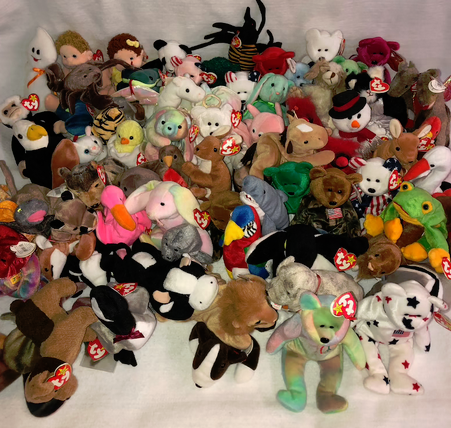
From The Ethics Alarms Mail Bag: The Case Of The Abandoned Beanie Babies

Now and then people contact EA privately for some ethics guidance, which I usually supply free of charge. Yesterday an inquirer spun this tale:

Her neighbor decided to clean house, and get rid of all of her now grown and out children’s abandoned toys. Among these were dozens and dozens of Beanie Babies, the toy fad of the Nineties. My inquirer said that neighborhood parents and pre-schoolers were just scooping the things up, and so she asked her neighbor if she could have three, two for her granddaughter, now 4, and one for as a future stocking-stuffer. Receiving a positive response, she chose three that she thought a little girl would like.

She swears it didn’t occur to her at the time that Beanie Babies are collectibles, but when she got home, she was moved to investigate. She was shocked at what some of the old stuffed animals are worth, and was particularly shocked to see that one of the BB’s she had chosen at random and that appeared to be in mint condition is considered rare and valued at $70,000. Her question: what is the ethical course to pursue at this point?

Continue reading

A Show Of Hands On The Trial And Conviction Of Douglass Mackey

Douglass Mackey was convicted by a federal jury in Brooklyn last week of Conspiracy Against Rights during the weeks before the 2016 election by circulating false and misleading tweets that, I think it is fair to say, were aimed at tricking naive, stupid or ignorant Hillary Cinton voters into failing to cast valid votes. The verdict followed a one-week trial before United States District Judge Ann M. Donnelly, and now Mackey faces a maximum of 10 years in prison.

This is an immediate and significant law vs. ethics conundrum.

Mackey was part of an apparently loosely organized effort by Trump supporters in 2016 to use misleading and false tweets and memes like those above to fool Hillary Clinton supporters into believing that they could vote for the Democrat in the Presidential election via text messaging. The question raised by the conviction is whether such internet-based election dirty tricks actually violate the federal civil rights statutes. The relevant one in this case makes it “unlawful for two or more persons to conspire to injure, oppress, threaten, or intimidate any person of any state, territory or district in the free exercise or enjoyment of any right or privilege secured to him/her by the Constitution or the laws of the United States, (or because of his/her having exercised the same).”

Continue reading

Pet Goat Ethics: Is There Anyone Behaving Ethically In This Mess?

Are they just not installing ethics alarms any more?

Above you see Cedar the Goat with his 9-year-old owner, now grief-stricken because Cedar ended up on a State Senator’s menu thanks to a series of unethical acts that could have been short-circuited if anyone with power or authority had been a little more ethical, but no.

Jessica Long bought Cedar last year as a pet for her nine-year-old daughter, but for some reason decided to hand the beloved pet over to a livestock auction at a district fair, which stipulated that the all sales were final and Cedar, like all the other farm critters, would be sold for meat. The fair’s brochure clearly stated “no exceptions.” But Long’s daughter was distraught about the prospect of losing Cedar, so her mom begged the fair to give him back before bidding started.

“Pet schmet,” the fair’s rulers essentially replied. “Making an exception for you will only teach our youth that they do not have to abide by the rules that are set up for all participants,” Shasta District (that’s in California) Fair Chief Executive Officer Melanie Silva lectured in an email. So Cedar was duly auctioned off to a representative of California State Senator Brian Dahle for $902. Just $63.14 of that goes to the state fair and the rest, $838.86 to Long.

Thinking hard (but not well) about how to please her daughter, Jessica kidnapped the goat and decided to “take the goat that night and deal with the consequences later.”

Oh, good thinking there, Mom!

The fair’s livestock manager contacted Long warning of “serious consequences” if the goat wasn’t returned. Then a sheriff from Shasta County, filed a search warrant, a judge signed off on it and officers used “breaching equipment to force open doorway(s), entry doors, exit doors, and locked containers in pursuit of their target.” Cedar was the target. Clever Long, however, had sent Cedar into hiding at a distant farm in Sonoma County, but it still didn’t work: authorities got her goat anyway and drove him 200 miles to Shasta County for slaughter.

It is believed that the little goat was served at a community barbecue to which he had been donated as a gesture by Senator Dahl. And that he was delicious.

Continue reading

Ethics Mash-Up! Cross Today’s Post On Unethical Laws With The Post On Tolerated Cheating And You Get…

…the Minnesota District Court ruling that biological males must be allowed to compete in women’s powerlifting competitions if they “identify” as female. (The posts referenced above are here and here).

The decision, which declared USA Powerlifting’s 2019 policy barring biological men from competing against women illegal in the state a violation of the Minnesota Human Rights Act. That it is, because the Minnesota Human Rights Act is unethical in its treatment of the transgender issue, not to mention bats. The ruling requires USA Powerlifting to amend its policy to allow transgender people to compete along with other members of their self-identities sex. As a result, female power-lifters who didn’t have the advantage of going through puberty as males are going to be squashed in competition with newly minted ex-men. If ever there was a sport where allowing transexual competitors was unconscionable, this is it.

But Minnesota is right up there (down there?) with California, Washington, Oregon, New York and Vermont when it comes to placing woke ideology over reality.

Continue reading

Comment Of The Day: “In The Dispute Over The Fate Of The Elgin Marbles, It Is Time For The Brits To Choose Ethics Over Law”

Last week, Ethics Alarms confidently presented the ethics verdict that it was high time—more than high time, in fact—for the British Museum to finally return the so-called “Elgin Marbles” to Greece. As the priceless art was literally ripped off the Parthenon, I didn’t think the question justified an ethics quiz. I still am unconvinced by the arguments that the Brits should hold on to their ill-gotten gains, but I am the grandson of a Spartan, after all. There were several excellent comments asserting ethical grounds for the British position; this one was outstanding.

Here is P.M.Lawrence’s epic tutorial, rebuttal, and Comment of the Day on the post, “In The Dispute Over The Fate Of The Elgin Marbles, It Is Time For The Brits To Choose Ethics Over Law”:

***

“In the early 1800s, Lord Elgin, a British aristocrat, shipped to England treasures of Greek antiquity that he had strip-mined from Greece, including the carved frieze panels that had decorated the Parthenon. Supposedly this was done with the permission of Turkey, which was then ruling Greece, which is like your home invaders giving neighbors permission to take the art off your walls…”

There is a little more to it than that:-

– On the legal maxim of “nemo dat quod non habet”, of course the Turks couldn’t convey title. But they didn’t, they offered a quitclaim, as it were; they removed themselves from obstructing.

– As regards any original owners, there simply weren’t any left. The last remaining ones were ended by rounds of persecution of pagans, centuries earlier.

– As far as any generic claims of common heritage of western civilisation go, and those claims only go for want of better (there being no direct heirs), what better place to put the items than in a museum furthering that common heritage? Are the British somehow less heirs of that than are the Graeculi? Particularly considering how much safer the items were in that museum(those not taken have suffered horribly from war, corrosion, and what not). And, of course, the very word “museum” proclaims that furthering that common heritage.

Now, none of that conveys title to the British Museum, but adverse possession in the years since does – adverse, in that no better claimant came forward. Just as today’s Greeks feel an understandable connection to these items, as they do to the Lions of St. Mark’s, so too do today’s British – and as today’s Venetians do to the Lions of St. Mark’s. They are as intertwined with the histories of each place as of the other.

The Solomonic solution would be to sand blast the items to the condition of those not taken if any effort to transfer them were ever made. But I expect the Sir Humphreys will loudly assert ownership while underhandedly arranging a loan in name only with no means of foreclosing, just as they have with foundational documents that ought to have remained in British archives. That would satisfy none but the Sir Humphreys.

Continue reading