Tales of The Corrupted: David Ignatius’s Hillary E-mail Scandal Whitewash

This is how the world ends. The ethical world, anyway...

This is how the world ends. The ethical world, anyway…

I am charting the Clinton Corruption of the Democratic Party and how it spreads to other populations, like progressives, feminists, journalists and voters. I fear that a map of the projected progress will look like one of those scary plague or zombie computer progressions in scenes from movies like “Outbreak,” showing the entire nation turning blood red over a series of progressions beginning with a single carrier in Montana or someplace. “We have 72 hours, gentlemen, until the whole nation is infected!”

Still, there is hope. Last week I was struck by the sad cast of Clinton surrogates that her campaign trotted out to argue that it is ridiculous for anyone to think that a Secretary of State should be expected to follow her own department’s best practices, take proper steps to protect sensitive communications or tell the truth. The most raving was Howard Dean, who essentially adopted the Big Lie approach employed by James Carville. “Look,” Dean told “Meet the Press” host Chuck Todd last week, “this is, in fact, manufactured partly by a press that’s bored and partly by the Republicans….She can’t be blamed for this. So I look at this as the usual press frenzy, the pack journalism, and I think it’ll go away, because there’s no sense to it.” Dean should have also mentioned the bored FBI, the bored judges, and the hundreds of bored lawyers I have discussed the issue with in ethics seminars. If there is one of the latter group who agrees with Dean (who isn’t being paid by the Clintons), he or she hasn’t had the guts to say so out loud. Then Hillary sent a sacrificial lamb to Fox News, a poor ex-Bill Clinton State official named Ellen Tauscher who looked terrified…
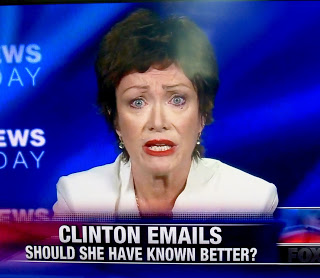
Tauscher

….spoke in a shaky voice,  stumbled and stuttered and made no sense at all, teeing up junk like this…

TAUSCHER: Look, Secretary Clinton has former foreign service officers, civil servants. I did as undersecretary too, that make sure all of this information is protected. It is physically impossible to move things from the classified system to the unclassified system. We are only talking about the classified system, unclassified system. Everything on the classified system is where it belongs and there is no question about that. The Federal Records Act makes very clear that the person that transmits the information is responsible for the classified — classification of the information. And is it possible that Secretary Clinton was passed something by somebody and somebody and somebody? Yes. That would have been true if it had been on the state dot-gov e-mail system. But I mean, I think that we all understand that Hillary Clinton is held to a different standard. But let’s get it straight. Let’s be lawful and let’s be smart about this. We’re talking about unclassified e-mails. We’re not talking about classified e-mails, we’re talking about unclassified e-mails and they are clearly subject to what people interpret…. And there are differences between the State Department and the intelligence community right now.

As Olsen Johnson said in response to Gabby Johnson’s “authentic frontier gibberish” in “Blazing Saddles,” “Now who can argue with that?”

My impression was that no articulate, honest, credible Democrat was willing to defend Clinton, hence the campaign’s reliance desperate resume peddling hacks like Tauscher and principle-free madmen like Dean and Carville.

This week, it was more of the same. On “This Week With Martha Raddatz Pretending To Be George Stephanopoulos,” Hillary’s designated liar was a state senator I had never heard of who refused to answer Raddatz’s questions. My favorite exchange: Raddatz asked her about polls showing that a majority of the public believes that Hillary lies and isn’t trustworthy, and whether this wasn’t a serious concern for the campaign?

“Well, I certainly don’t feel that way!” the surrogate answered, with that frozen smile these people get when they have to stick to talking points and admit nothing.

Still, the Clinton Corruption Contagion (CCC) is spreading to the thoughtful and credible. The venerable Cokie Roberts, on the ABC roundtable today, has embraced the deceptive and misleading media spin that the only issue is whether the e-mail revelations ultimately costs Clinton significant support. No, that’s not the issue at all, at least not the one the news media should be concerned with. The issue is what Clinton did and what she said, and whether being incompetent, conflicted, reckless with sensitive communications and lying about it repeatedly, plus destroying evidence, disqualifies a former Secretary of State from being considered as a legitimate Presidential contender. Cokie Roberts’ analysis has now deteriorated into “Will Hillary’s lies and blame-shifting work?”

Hearing her talk like that is like watching Dana Wynter open her cold, inhuman eyes post-podding in “Invasion of the Body-Snatchers.”

Then there is David Ignatius, one of the Washington Post’s more trustworthy pundits, who authored an op-ed some CCC infected staffer headlined “The Hillary Clinton e-mail ‘scandal’ that isn’t.” Continue reading

Law vs. Ethics: A Snatched Bar Mitzvah Gift, A Leaky AG, An Embarrassing Scoreboard, and”OINK”

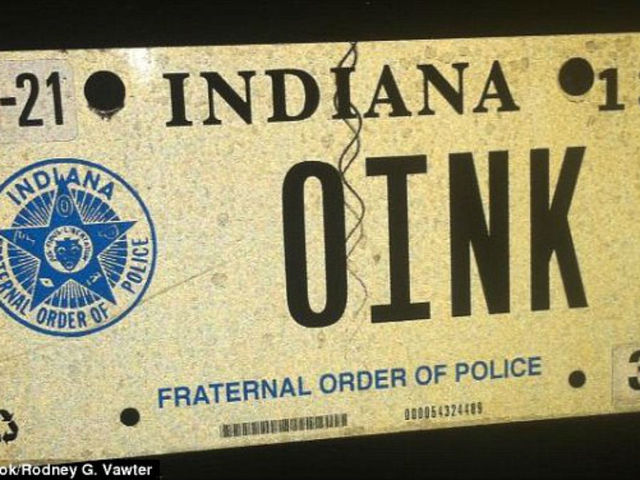
Oink

I try to keep my legal ethics seminars up-to-the-minute, so while preparing for yesterday’s session with the Appellate Section of the Indiana Bar, I came across a bunch of entertaining stories in which the ethics were a lot clearer than the law, or vice-versa. All of them could and perhaps should sustain separate posts; indeed, I could probably devote the blog entirely to such cases.

Here are my four favorites from the past week’s legal news, involving a mother-son lawsuit, a brazenly unethical attorney general, a college scoreboard named after a crook, and police officer’s sense of humor: Continue reading

The Next Time You See One Of Those Opera Commercials About Selling Structured Settlements, Think About “Rose”

Rose

Because I worked as the general counsel for the late Richard Halpern, a kind and brilliant man, I know a lot about structured settlement, and also about the slimy businesses that conspire to destroy them. Richard’s company, The Halpern Group, worked with trial lawyers to develop structured settlements for successful plaintiffs who had won long-term damages for catastrophic injuries due to medical negligence, product liability or other torts. Most of these clients were poor, and if their millions in damages, designed to help them survive the rest of their lives, were awarded in lump sums, the result would almost always be catastrophic. These were poor people, for the most part, with poor families and poor friends and neighbors, none of whom had any experience or success managing money.  Drop millions on someone who has never had luxuries of any kind, and a spending spree as well and handouts to needy or greedy friends and acquaintances were sure to follow. For their own protection (or the protection of minors needing lifetime medical care), these plaintiffs of Rich’s lawyer clients were advised to forgo a big lump sum in favor of an annuity which would pay out regular amounts over time.

The plaintiffs own the income stream, but not the annuity itself. With assured income developed according to projected needs, the plaintiffs and their families could be assured of security and relative comfort and well-being—relative, because damages can seldom make up for broken bodies, minds and lives. Let me take over for myself here, from a post I wrote on this topic almost exactly six years ago.

Once they are on their own, however, the compensated victims are targeted by viatical settlement companies, both those with cute opera-singing commercials and those without. They undermine the sound advice of the attorneys with slogans like “It’s your money!” and try to persuade the former plaintiffs to unstructure the structured settlement by selling the annuity’s income stream to the viatical settlement company at a deep discount. Result: the annuity company gets the regular income at bargain rates, and the victims get a new, smaller lump sum to dissipate in exchange. The statistics say that the customer of the viatical settlement company will run out of cash long before he or she runs out of the need for it. But for the company, it’s a sweet deal.

It’s also despicable. The viatical settlement industry like to use lottery winnings, which are usually paid out in annuities like structured settlements, to justify their business. Lottery winning are windfall funds; while the same dissipation  hold for those lump sums (most multi-million dollar lottery winners have no money left after five years), the winners are usually no worse of after the money has been blown than they were before their number came up. When the money is a settlement for an injury, however, losing it is calamity. I would consider a viatical settlement company that only bought the income stream from lottery annuities ethical. There is no such company, however. The victims with structured settlements are a much larger and more lucrative market.

I have written about these legal but unethical businesses more than once. The first time, on The Ethics Scoreboard, I described a viatical settlement company only by using quotes from its own website, and explained what it meant, accurately. The company’s lawyers demanded that I take down the post, claiming that I had disparaged them (by using their own words and making it clear how they made their money.) I was in no position, with a family, a struggling business and aging parents, to engage in a legal battle of principle (though I suspected the company was bluffing, and I didn’t know Ken White and Marc Randazza then, both courageous blogging lawyers who assist bloggers who are threatened, like I was being threatened, to silence them. I took down the post. Continue reading

Planned Parenthood Videos Surprise: Forced To Defend Abortion Ethics Acknowledging The Existence Of A Second Human Life In The Equation, Advocates Run Out Of Arguments, Part Two: Bad Analogies

The involuntary liver transplant from Monty Python's "The Meaning of Life." Why, you're RIGHT, Amanda! It's EXACTLY like a pregnancy!

The involuntary liver transplant from Monty Python’s “The Meaning of Life.” Why, you’re RIGHT, Amanda! It’s EXACTLY like a pregnancy!

(Part One is here.)

If an advocate has persuasive, honest, strong arguments not based on fallacies and rationalizations, I assume that those would be the ones he or she would use.

The recent Center for Medical Progress videos featuring employees of Planned Parenthood and StemExpress describing in graphic detail the process by which fetal tissue is harvested for research, and in some cases showing the process itself, have made abortion advocates squirm by making it difficult for them to deny that a tiny, growing human being is sacrificed in the act of abortion. This makes the evasive “choice” defense of abortion inadequate. Why shouldn’t unborn lives matter? Either because of neglect (“It’s legal” and “it’s my right” have been used to cut off debate for decades), because the rationale for debate has been built on a convenient fiction (“Life? I don’t see any life!”), or because there really aren’t any ethically satisfying justifications for abortion on demand, the pro-abortion lobby’s attacks on the videos have been notable for their lack of substance and abundant desperation.

This has been especially true of the analogies offered for the relationship between a mother and unborn child, and the fetus itself.

In the Washington Post last week, Margo Kaplan, who as an associate professor at Rutgers Law School should be skilled at analogies, attacked anti-abortion advocates with what she seemed to think was a definitive “gotcha!” She notes that there is nowhere near the same level of attention paid to frozen embryos that are donated to research as aborted fetuses, and from this concludes all manner of horrible things about abortion opponents: Continue reading

Bad News For Hillary: Someone At CNN Told Carol Costello To Stop Helping Her, And Clinton’s Talking Points Are Wearing Thin…OK, THINNER

This was fascinating. I was trying to decide whether to post today about the latest spin tactics by Hillary’s minions and her dwindling but still formidable media allies  in light of Clinton’s awkward press conference where she insisted that she didn’t do anything “wrong” regarding the mishandled State e-mails. Earlier in the day the Washington Post’s Chris Cillizza, a usually decent journalist whom it is sad to see succumbing to the  Clinton Corruption Virus (you would think there would be a vaccine by now!), had used this same talking point—and it is a campaign talking point. In a column that could be used in a public service announcement, Cillizza seriously wondered why Hillary was in trouble. Gee, he mused, maybe Hillary just isn’t very good at campaigning! What else could possibly explain why she isn’t cruising to the nomination?

In other words, the fact that she has lied constantly, used her foundation to profit from influence-seeking foreign powers, was a flop as a Secretary of State, put U.S. security at risk and destroyed potential evidence so she could avoid getting caught in her complex political/financial machinations—Allegedly! Allegedly!—wouldn’t matter at all to Democrats, voters or Chris if she was just better at fooling the public. Darn!

“This is Chris, and this is the tragedy of Clinton Corruption Syndrome. Won’t you help?”

Then he wrote, “The appearance here — even if Clinton did nothing wrong (and there is no proof she did at this point) — is terrible.”

What? WHAT? Of course she did things that were wrong. Isn’t lying like crazy wrong, Chris? Isn’t paying people to throw the media off the track and confuse the public using deceit and misrepresentations wrong, Chris?  Isn’t the tactic of smearing the messengers wrong, and sending out statements like the infamous “nonsense” letter wrong? Is intentionally breaking your own Department’s policies wrong? Is sending and receiving sensitive information in a manner that makes it vulnerable to hacking by foriegn governments wrong, Chris? Do you even know what wrong means any more, Chris?

That’s when it hit me, and that’s why I decided I had to post, again, on the Hillary Clinton E-mail Ethics Train Wreck, which is really just part of the The Hillary Clinton Presidential Candidacy Ethics Train Wreck. The Clinton campaign’s current strategy is now to make the public understand right and wrong the way the Clintons do. If it isn’t illegal, it isn’t wrong. (This is on the Ethics Alarms Rationalization list, incidentally: #4. Marion Barry’s Misdirection, or “If it isn’t illegal, it’s ethical.” Marion Berry went to jail.)

Talk about waving a red flag in front of an ethicist! Continue reading

Interview Ethics: CNN’s Alisyn Camerota Shows Why News Anchors Need Training In Basic Ethics, Not To Mention Journalism Ethics

Alisyn

This morning, as I rush to get my act to together to fly, sick, to Rhode Island where the bar will allow me to teach ethics to its members in the first two of three planned seminars, I made the mistake of checking in on CNN’s New Day to see what trouble Chris Cuomo and Alisyn Camerota could get themselves into. Sure enough, there was Allison interviewing Oklahoma Senator Jim Lankford regarding Republican efforts to de-fund Planned Parenthood over the revelations of the surreptitiously taken “sting” videos showing various Planned Parenthood personnel seeming to haggling over the prices for tiny little human organs successfully harvested from embryos whose tiny wittle heads have been crushed juuuust right. These individuals discuss unborn human beings with the sensitivity a normal person bestows on a Jimmy Dean sausage, but Planned Parenthood acknowledges that they need to practice a more pleasant tone in case somebody who cares about these inhuman organ bags is listening.

Is that an unfair characterization?

Let me know why you think so.

But I digress…

Camerota’s questioning demonstrated in multiple ways just how ethically ignorant the highest levels of our broadcast journalism are: Continue reading

When Law Co-Opts Ethics: Florida’s Unconstitutional Pro-Gun Doctor Gag Law Upheld

Unbelievable!

“See doc? That’s what you get for shooting your mouth off! Get it?”

A federal appeals court this week upheld an NRA-crafted Florida law making it illegal for doctors to ask questions and record information about a patient’s gun ownership. Medical groups had challenged the law, arguing that it infringed on doctors’ First Amendment rights.

Which it does. The law is an outrageous incursion on free speech in order to protect gun owners from unwelcome anti-gun lobbying by their physicians.

Among other restrictions, the law says doctors must refrain from asking about gun ownership by patients or family members unless the they believe in “good faith” that the information is relevant to medical care or safety. It also prevent doctors from discriminating against patients or “harassing” them because of owning firearms, which presumably means that it is illegal for a doctor to tell a patient, “You’re too clumsy to own a gun, and if you blow your damn face off, don’t come crying to me.”

“The purpose of the act, as we read it, is not to protect patient privacy by shielding patients from any and all discussion about firearms with their physicians; the act merely requires physicians to refrain from broaching a concededly sensitive topic when they lack any good-faith belief that such information is relevant to the medical care or safety of their patients or others,” said the 2-1 majority opinion, written by Judge Gerald Tjoflat and joined by Judge L. Scott Coogler.

Dissenting Judge Charles Wilson argued that the law violates the First Amendment rights of physicians:

“Simply put, the act is a gag order that prevents doctors from even asking the first question in a conversation about firearms. The act prohibits or significantly chills doctors from expressing their views and providing information to patients about one topic and one topic only, firearms.”

I don’t see how anyone can dispute that analysis. I especially don’t see how the other two judges dispute it.

Doctors shouldn’t use their position of influence to try to impose their political, social and life-style views on patients. If the American Medical Association wants to declare that to be an unethical abuse of a doctor’s status and a patient’s trust, I wouldn’t complain. The law, however, has no more business telling doctors that they can’t advise their patients that owning guns may be bad for their health or their neighbor’s health than it has making it illegal for doctors to tell patients that Donald Trump is just what this country needs in the White House. What’s next, telling dentists that they can’t tell you about their brilliant kids while they’re poking around your mouth?

The state doesn’t have to get involved in what patients and doctors talk about, shouldn’t, and mustn’t. This is a job for ethics, not law. If a doctor won’t stop telling you that the Second Amendment should be repealed, the remedy is easy: tell him to shut up, or you’ll find a new doctor.

Or just shoot him.

Kidding.

_____________________
Pointer: Legal Ethics Forum

On Preventing Web Mobs: The Prisoner’s Dilemma And “Tit For Tat” Reconsidered

prison

As I expected, it took all of ten minutes for my post about the web vigilante attack on Dr. Walter Palmer to bear fruit, as in tomatoes tossed at my metaphorical face. The reason, as I calculated in advance, was my decision to employ a Tit for Tat strategy in responding to what I believe is a deadly trend on the internet that requires a strong response to restrain it. A would-be commenter attempted to make my blog party to web mob efforts to do financial, personal and even physical harm to the hapless hunting dentist by publicizing various addresses and phone numbers. I published his e-mail address.

I’m not sorry.

The  issue raised by my conduct involves integrity. By giving out the e-mail address of a commenter (because the commenter unethically attempted to publicize personal contact information regarding Palmer and his family) when I state on the site that I will not do so, I both violated my own policies and engaged in conduct that this blog specifically declares unethical: Continue reading

Unethical Quote Of The Month AND Comment Of The Day: Ethics Dunce: “Cecil The Lion Killer Walter Palmer…Or Any Big Game Hunter, Really”

“Feel free to pay this murdering asshole a visit at his home at XXXXXXXXX.. Don’t forget to bring your hunting gear. Can’t make it then send some mail to him and his wife XXXXXX. She loves animal killers! His wife is one of the owners of XXXXXXXXX, a customs broker in North Dakota. His daughter is XXXXXX (Palmer) and she can be reached at her company XXXXXXXXX. He also has vacation home at XXXXXXXXX.”

—– “Is,” an attempted, but immediately banned, Ethics Alarms commenter to the post about Walter Palmer, the big game-hunting dentist who inadvertently ended up shooting a popular and well-known lion rather than a random, everyday, mount-his-head-on-the-wall lion, as if it makes any real difference at all. The X’s cover up personal information about the Palmers, as this vicious and anonymous creep attempted to use this blog to facilitate organized harassment and possibly violence.

Dr. Palmer's office front...

Dr. Palmer’s office front…

It has been pointed out, fairly and accurately, that while people like Mia Farrow are trying to get Palmer killed—she tweeted out the same information I deleted above– because he was unlucky enough to be tricked into killing a lion-icon, the media is barely covering serial videos showing the dead-eyed callousness of the Planned Parenthood officials who facilitate and encourage the abortion, for any reason, of unborn human beings.  The same sensitive, compassionate progressives who are trying to get Palmer murdered (PETA has stated that he should be hanged) are shrugging off human carnage that is exactly as legal as the activity that Walter Palmer thought he was engaging in. One old lion versus a million nascent human beings, trying to live. Thus does selective outrage approach madness. Continue reading

“I think abortion is evil, but it is a necessary evil.” Discuss.

Foetus-435110

This blog doesn’t discuss evil very often because it is not a term appropriately associated with ethics. Evil is a concept related to morality. In an ethics discussion, I would take evil to mean something extremely, irredeemably unethical by any ethical analysis or system. The statement “I think abortion is evil, but it is a necessary evil” appeared parenthetically in a comment by Beth, a frequent commenter on Ethics Alarms who is a mother and a lawyer, regarding the Planned Parenthood videos. Though the news media appears to have successfully distorted that story by focusing only on whether the videos were evidence of illegal “trafficking in body parts” by Planned Parenthood, that was not the reason I posted the essays, and it is not the reason those videos are significant in the ongoing debate over abortion rights. Two high ranking individuals in the organizations casually discussed the crushing and crunching of the heads and torsos of living and helpless individuals with the sensitivity I would associate with stepping on a roach. If this doesn’t disturb you, it should. If it does disturb you, as it did Beth, what does that mean?

Abortion is one of the most important and difficult ethics issues in the culture, indeed in world culture. It involves millions of lives and millions of deaths, law, bioethics, religion, social policy, science, human rights and feminism, as well as society’s ultimate respect for life itself. I have written about the ethics of the abortion debate frequently (you can find most of the relevant posts here), but to summarize the Ethics Alarms views on the topic:

1. Abortion is an ethics conflict, meaning that there are ethical principles in opposition to each other, requiring society to set priorities.

2. The absolutist position on the anti-abortion side is that abortion involves the taking of innocent human life, which begins from conception, and is thus unethical in all cases. It is a strong position if one accepts the underlying assumption.

3. However, no absolute position is really absolute. Every ethics absolute has an exception, or several: there must be some circumstances when abortion is necessary and right. (This is not true of moral absolutes, since moral absolutes are self defining. If the power dictating a moral precept says it is absolute, it is so.)

4. The absolutist position on the abortion side of the argument holds that a woman’s right to have complete dominion over her body, reproductive activity and health justifies abortion in all cases. This is not a strong position, and in fact is one that cannot be honestly argued or sustained. It supports abortion on demand for any purpose or preference, entirely at the mother’s discretion.

5. To make that argument, extreme pro-abortion advocates have had to deny the humanity and human rights of unborn children, even to the point of arguing that they are not individuals at all, but mere “parasites,” or “tumors.” The removal of a second life from the equation that is at the core of the abortion problem makes the abortion decision easy and guilt-free; it also settles the debate by pretending the central issue doesn’t exist. That issue is that there is another life involved, not just the mother’s.

6. The debate over the ethics of abortion has been handicapped by the tactic of both sides to pretend a legitimate interest championed by the other doesn’t exist. A woman’s ability to control her own life, career and what happens to her body is an important societal issue, yet the term “pro-life” ignores it entirely. It is not the only important interest involved in the abortion decision, however, as the term “pro-choice” suggests.

7. Neither absolute position, whatever its theoretical virtues, is practical from a policy perspective. Desperate women who are pregnant will seek abortions, people will help then (or exploit them, or kill them), and public policy cannot pretend otherwise. Society will not tolerate punishing women for aborting their unborn children, whether they deserve to be punished or not. Yet allowing mothers to have unborn children killed on a whim leads to the callous, ugly, dangerous attitude toward innocent life on display in the Planned Parenthood videos. Callousness toward any human life, history has shown us, is a slippery slope with the potential of doing terrible harm to the culture.

8. Roe v. Wade was a premature Supreme Court decision and a badly reasoned one. Until and unless it is overturned, abortion is a right. That does not mean, and never meant, that abortion necessarily is right.

9. Because absolutism fails here, abortion is a problem that demands utilitarian analysis–balancing of interests and values, in the best interests of society, long and short-term, and everyone in it, according to the facts as we understand them.

10. Balancing requires an honest acknowledgement that there is something to balance. The “pro-choice” and “pro-life” dichotomy doesn’t acknowledge that in their most extreme incarnations, and since abortion is currently a right, the pro-choice lobby detects no reason to yield to logic, science and reality. Continue reading