Ethics Hero: Dick Masten—When Ethics Trumps Law

A heroic and ethical snack...

A heroic and ethical snack…

One way I can always start an argument on Ethics Alarms is to state my position that willfully breaking the law is per se unethical as a breach of citizenship. Like all rules, however, this one has exceptions. Dick Masten, the Director of Miami-Dade Crime Stoppers, recently demonstrated one of them.

The former police chief was ordered by Judge Victoria Brennan to reveal the name of a tipster in a cocaine possession case, State vs. Lissette Alvarez. Alvarez was arrested in 2013 and charged with cocaine possession. Brennan called for Masten to come into court and confer with her in chambers regarding the case. Miami-Dade Crime Stoppers sparked the eventual arrest after getting information from a tipster who was assured anonymity. Alvarez’s attorney insists that the tipster’s information is part of the evidence against his client, saying, “Ms. Alvarez, in this case, has every right to confront her accusers. But more particularly in this case, it’s not the accuser, but the evidence that the State will use against her.”

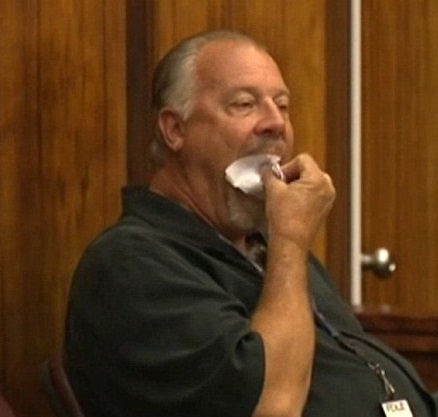
Ordered by the judge to reveal the name of the tipster, Masten, insisted that he couldn’t divulge information to be reviewed in closed court that might be discoverable as evidence. “There is a possibility that looking at certain documents, a defendant could work that case backwards and put the tipster at peril, and I’m not gonna let that happen,” he said. In a dramatic touch, Masten swallowed  a slip of paper that held the tipster’s name. “What is personal to me, is the promise,” Masten said before his ethical snack. “Some of these tipsters could end up dead. Not on my watch.” Continue reading

Ethics, Justice and Punishment: The Don Collins-Robert Middleton Case

Collins

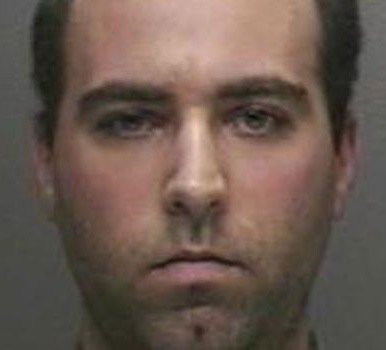
Several readers sent me this case, which is as odd as it is horrible. In 1998, Don Willburn Collins allegedly attacked, possibly raped, and set on fire an 8 year-old boy named Robby Middleton when Collins was 13, and Middleton was only 8. Collins spent several months in juvenile detention but was released when prosecutors decided they did not have enough evidence to convict him. Middleton survived, permanently scarred and maimed, his health ruined. In 2011 he died of skin cancer, which doctors attributed to his burns. Shortly before he perished, he gave a video deposition accusing Collins of the crime.

Now a judge has ruled that Collins can be prosecuted for Middleton’s murder, since he died as a direct consequence of the attack 13 years earlier. Moreover, the judge said, he can be charged as an adult, though he was a juvenile when the attack took place.

The case raises many legal issues, and I am neither prepared nor interested in exploring those. I suspect that the task facing prosecutors is insuperable, given the time that has passed, issues of proof and law, and the gut feeling many jurors will harbor that such a conviction would be unfair.

I will render this ethics verdict, however: If Collins was the attacker, I believe it would be fair, just and ethical for him to be punished for it now as an adult, for that is what he is. Continue reading

Ethics Heroes: The Massachusetts Supreme Judicial Court

Michael Robertson: pervert, creep, outrageous abuser of women who deserves to be shunned, despised and condemned by all decent people. But a criminal? Not yet...

Michael Robertson: pervert, creep, outrageous abuser of women who deserves to be shunned, despised and condemned by all decent people. But a criminal? Not yet…

The degree to which our media pundits fail to grasp the essential nature of the rule of law remains confounding, and this is another in a long line of examples. Worse, the lower court in this weird case failed to grasp it as well.

You see, there is conduct that is obviously wrong, which we call unethical. Some of that conduct is so wrong, so harmful, and so difficult to discourage with social opprobrium and informal enforcement alone that we pass laws against it, both to signal strong disapproval but also to add serious negative reinforcement, in the form of tangible punishment, to the mix. Then the wrongful conduct becomes both unethical and illegal. If we skip the essential intermediate step of writing and duly passing the law that designate the conduct as illegal, however, we have established a dangerous, indeed frightening precedent. Then we have created a society where one can be imprisoned or fined for conduct that is regarded as unethical without a law in place that empowers the state to take such actions against citizens who engage in it. Ethics, unlike law, especially on the margins, is never etched in stone. Once society starts imprisoning individuals based on ethics alone, none of us are safe.

Yet this morning I was subjected to the protests of one TV commentator after another who derided the absolutely correct decision of the Massachusetts Supreme Judicial Court to uphold this principle by throwing out the conviction of Michael Robertson, a sick sleaze-ball who was arrested in August 2010 by Boston transit police who had set up a sting after getting reports that he was using his cellphone to take photos and video up female riders’ skirts and dresses: Continue reading

How Can Lawyers Be Shockingly Unethical Without Breaching Any Legal Ethics Rules? Meet Styles & Pumpian

"Let's have a moment of silence for Ira, our troubled friend, partner and colleague, a fine lawyer who left this world too soon....Ok, now that's over, how can we keep his fee from his family?"

“Let’s have a moment of silence for Ira, our troubled friend, partner and colleague, a fine lawyer who left this world too soon….OK, now that’s over, how can we keep his fee from his family?”

Ira Bordow, a partner in the Wisconsin law firm of Styles & Pumpian, had been handling a family’s dispute with an insurance company. Successfully too: he negotiated a $250,000 settlement, and the company sent him the check for that amount, to be divided among the plaintiffs and Bordow’s firm. Bordow, as a partner, was going to get a $41,666 share.

The 54-year-old lawyer, however, had problems of his own that money could not solve, and committed suicide. His brother found the quarter of a million dollar check on the seat of Bordow’s Lexus coupe, and properly and correctly sent it on to  Styles & Pumpian.  Bordow had already earned his cut of the settlement at before he took his own life, for he, and the firm, were working on a contingent fee basis. The representation was at an end. Apparently, however, once the firm had the check in hand, the brilliant legal minds at Styles & Pumpian applied their craft to thinking of ways they could avoid paying the grieving family of their tragically demised partner any of the loot. They thought of one too, at least one they felt was worth a shot.  The firm is refusing to pay the Bordow estate the late lawyer’s $41,666 cut, arguing that Bordow’s suicide in his River Hills home negated his partnership agreement with the firm. It was a breach of contract, they say, and thus, even though he would have received the money if he had lived, the firm can keep it now.

Continue reading

Comment of the Day: “Of COURSE There’s An Unwed and Pregnant Catholic School Teacher Principle….Don’t Be Silly.”

No irish

I encourage the long form comment here, and Ethics Alarms has many commenters who are masters of the form. I feel badly about the many longer, well thought out essays-as-comments that I do not highlight as Comments of the Day, because they represent—well, most of the time—the kind of serious thought and original expression that most blogs, even many of the best, seldom see. Length is not virtue, of course, but ethics, as this post by texagg04, reminds us, is a vital topic that often does not yield answers that are easy, simple, or permanent. The post is in response to a statement from Fred, another trenchant commenter, on the thread’s discussion of whether a school is ethically obligated to allow single and pregnant teachers, if in its view this undermines its efforts to teach certain values and life choices to the young. Fred wrote:

““Doesn’t have to take the job” is not an ethical or legal excuse if there’s a discriminatory requirement not related to doing the job. Being pregnant while teaching does have some relation to the job. Mopping while Methodist doesn’t….There’s an ethics question in whether the school lived up to their religious principles and a legal issue of arguable sex discrimination.”

Here is texagg04’s reply and the Comment of the Day, to the post, Of COURSE There’s An Unwed and Pregnant Catholic School Teacher Principle….Don’t Be Silly.:


Let’s start from the market aspect and contractual aspect, and disregard existing law initially…

An employer creates jobs when he senses the market demands a value the potential job can provide. I think the answer lies between two poles: Continue reading

Law vs. Ethics, The Cynical “War on Women,” And Stacking The Deck for Hillary

Let me begin by reprinting, in its entirety, a post from the earliest days of Ethics Alarms, one then titled, The Difference Between Law and Ethics:

In the instructive category of “Lawsuits that demonstrate the distinction between law and ethics,” we have the Massachusetts case of Conley v. Romeri.

Ms. Conley met Mr. Romeri when they were both in their 40s and divorced. As romance beckoned, Ms. Conley told her swain that she was childless, and wanted to begin a family before her biological clock struck midnight. The defendant, who had sired four children already, told her “not to worry.” He had seen a fortune-teller who had predicted that he would increase his number of children from four to six.

That held Ms. Conley for seven months. Then he told her that he had been vasectomized years ago.

Ms. Conley sued the bastard, claiming that her now ex-boyfriend had fraudulently misled her into believing he could father little Conleys in order to prolong the relationship, and that his actions had thrown her into emotional distress and depression.

Let us pause here and say that Mr. Romeri is a cur. Knowing that Ms. Conley was desperate for children and running out of time, he nonetheless deceived her for his own purposes, costing her perhaps her only chance to have the family she desired. For the fans of Bill Clinton out there, he was also clearly adept at Clintonesque deceit: he said “don’t worry” about having children, not that he was capable of creating them; he said a fortune- teller has assured him that he would have more kids, but never said her prediction was plausible. Mr. Romeri, like millions of deceitful people before him, probably doesn’t think he really lied. But of course he did.

The Massachusetts Appeals Court, however, found that while Mr. Romeri may have behaved abominably, it was not the place of the law to punish him.

Such claims, the judges said,

“…arise from conduct so intensely private that the courts should not be asked to resolve them….It does not lie within the power of any judicial system to remedy all human wrongs. Many wrongs which in themselves are flagrant–ingratitude, avarice, broken faith, brutal words and heartless disregard–are beyond any effective remedy.”

Our hearts go out to Ms. Conley. But the law will never succeed in making people be honest, caring, and fair. Only we can do that by creating a society in which boys grow to manhood knowing that behavior like Mr. Romeri’s is wrong, and at the same time, a society where women take responsibility for their own welfare, without seeking government remedies for every challenge.

——————————————–

Reading this post again, and watching the (I think) overtly cynical and political effort by Democrats and the Obama Administration to increase the weight of the already heavy hand of the law in matters involving problems that are unique to or that disproportionately affect women, I think the importance of Conley v. Romeri extends beyond the original reason I posted it. Among other things, the case stands for the proposition that the government need not and should not treat women as if they are helpless against adversity, and must be accorded special privileges and protection Continue reading

Kaitlin Pearson: First “Naked Teacher Principle” Subject of 2014, And Maybe The Most Perfect Naked Teacher Example Ever

Kaitlin3

It’s 2014, and time for the first Naked Teacher Principle controversy. As it happens, this one may be the standard against which all others are judged.

Kaitlin Pearson, a Fitchburg, Massachusetts elementary school teaching assistant in the special education department at South Street Elementary School, was exposed, wait, no…busted….no, sorry, not that, er..outed as a well-publicized nude model when someone sent an anonymous package containing her “elegant implied nude” photos to the principal. (That’s the first thing that jumped into my mind when I saw the photo above, I can tell you; “Now there’s an elegant implied nude photo!”) She’s on paid leave now, and you never know what those wacky school administrators will do, but Kaitlin is most down-the-middle-of-the-alley example of the Naked Teacher Principle in action as I’ve ever seen:

1. She’s a teacher…

2. At an elementary school…

3. Who has her photo taken in mostly naked and sexually suggestive poses…

4. Has them posted on the web, where they are easily accessed under her name….

5. Has posted many of them herself….

6. Never alerted her employers to her alternate vocation, and in particular,

7. Didn’t explain this practice and its inevitable results when she was interviewing for the job. Continue reading

Virginia’s McDonnells, Masters Of Rationalization

Former_Governor_Indicted

The only question regarding the multiple count federal corruption indictment of Virginia’s most recent ex-Governor Bob McDonnell (R) and his wife is whether or not the relevant laws are so porous that they can’t be convicted on the evidence. Did they use McDonnell’s high office for personal enrichment? Yes. Did they go to great lengths to disguise the fact? Yes. Did the Governor betray the public trust? Yes. Were the gifts, loans and cash, totaling at least $165,000, received from a dietary supplements company CEO essentially bribes? Of course they were. This is another excellent example of why the admonition that the accused are innocent until proven guilty is often technical rather than true. Based on irrefutable facts, the Virginia’s former First Couple is guilty as hell—of dishonesty, greed, corruption, obstruction of justice, bribery, betrayal of trust, the appearance of impropriety and outrageously unethical conduct. They just may not have broken any of the laws regulating those actions.

The legal case will ultimately rest on whether there was a specific, provable quid pro quo, which is to say, were the gifts and loans from Jonnie Williams Sr., former CEO of Star Scientific, expressly made in exchange for the governor’s assistance in helping his company in the state? Williams, who has made a deal, will testify that this was his understanding; why else would he allow himself to be used as a piggy bank by McDonnell and his wife? But in politics, as we all know, the myth is otherwise. Big companies give lawmakers big campaign contributions out of the goodness of their hearts and patriotic fervor, and it’s just a coincidence that those same lawmakers subsequently support laws that make those same companies millions, or block laws that would get in their way. It’s a coincidence! The Feds are going to have to show that what McDonnell did was significantly more sleazy than what virtually the entire population of Congress does by reflex, and also a clear violation of law. Continue reading

The Unprofessional Cause Of Unprofessional Lawyer Brian Zulberti

Brian ZYoung Brian Zulberti may be nice guy. He may even be a competent lawyer, though the chances of his being able to demonstrate that are diminishing daily. Nevertheless, his quixotic and misguided, and dare I say it, really stupid, quest to show that professionalism, judgment and character are not properly relevant to the practice of law is an exercise in hubris that must fail, deserves to fail, and of course, will fail, leaving him to pick up the pieces of fifteen minutes of media fame purchased at the price of a reputation. It looks like he’s having fun, and that’s something, I guess. Ten years from now, I doubt that he’ll think it was worth it.

Shortly after passing the Delaware Bar, Zulberti, a 2009 law school grad,  emailed the entire Bar membership asking for a job. In lieu of his résumé;  he attached a photo of himself in a Villanova Law muscle shirt that would be more at home on a dating site for the shallow. The web also contained his half-naked selfies, and various websites with varying motives picked up the story. Interviewed on YouTube, Zulberti proclaimed that being true to himself was more important to him than getting hired, and that he wasn’t about to change his Facebook privacy settings to portray himself as a traditional, dignified, applicant for legal work.

Let me pause here to say that in many ways I sympathize with Zulberti. Continue reading

Cautionary Tales: When The Law Protects Unethical Creeps

Chaney_Chelsea

Two recent court rulings demonstrate how the law often cannot punish purely unethical conduct if it falls in the cracks of legal language and definitions. When that happens, however, it is incumbent upon the rest of the culture not to allow an Ethics Dunce, or worse,to escape without proper identification and condemnation.

Case A: Curtis Cearley

Director of technology services for the Fayette County (GA) school district.

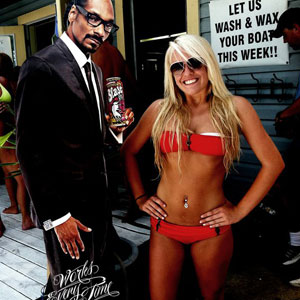
Fayette County high school student Chelsea Chaney used her Facebook page to post a photo of herself wearing a bikini and standing next to a life-size cardboard cut-out of rapper Snoop Dogg holding a can of Blast, the caffeinated alcoholic beverage he promotes. Although it was posted for the student’s friends, Cearley saw it, and used the comely photo in a  presentation at a public forum on the risks of sharing potentially embarrassing personal information on social media. He also used her name, identifying Chaney at the forum which was attended by parents, faculty and  students who attended school with her. He never alerted her, or asked her permission to use her photo as a “Don’t be like Chelsea!” example. The forum was titled “Once It’s There, It’s There to Stay.”

Horrible. This is a pure Golden Rule violation by Cearley, unfair, cruel, thoughtless, mean and intentionally  harmful to a minor, no less: Continue reading