My mother stole a piece of the Parthenon. She was Greek, my father and she were visiting Athens, and when no one was looking (including my father) she scooped up a 1 x 8 inch chuck of white marble by the ruins and smuggled it home, where she displayed it on her fireplace mantle. My sister and I were horrified when we learned what the piece was, and plotted various ways to have it returned without getting our aged mother prosecuted. When they moved from Arlington, Mass. to Arlington, Va, the item just vanished, or so Mom said. (We didn’t believe her.) It was never seen again.
I think about this family scandal whenever I think of the seemingly endless dispute over the Elgin Marbles.
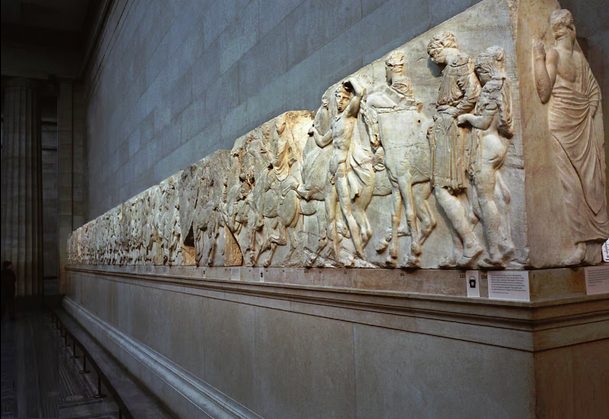
In the early 1800s, Lord Elgin, a British aristocrat, shipped to England treasures of Greek antiquity that he had strip-mined from Greece, including the carved frieze panels that had decorated the Parthenon. Supposedly this was done with the permission of Turkey, which was then ruling Greece, which is like your home invaders giving neighbors permission to take the art off your walls. The “Elgin Marbles” were sold to the British government and became among the most valued artifacts in the collection of the British Museum in London. As my mother’s son, I know they were among my top three favorite exhibits when I first visited, along with the Rosetta Stone and Paul McCartney’s handwritten draft of the lyrics for “Yesterday.”
Well, Greece has been asking for the Elgin Marbles back for over two centuries now, and if the museum has a leg to stand on in keeping them, it pretty much comes down to that hoary (and not exactly true) line, “possession is 9/10s of the law.” However, recent decades have seen a cultural shift as Western colonization and imperialism have acquired a bad reputation. Many museums are returning such looted treasures to where they were created and, I believe, belong. Why, then, haven’t the Elgin Marbles been sent back to Greece as its government demands, urges, and begs?









 Ethics Alarms