The “Unacceptable Word” Fiasco: OK, Now I Really Want To Know How Many Progressives Seriously Endorse Stuff Like This?

I just received an email from the Democratic National Committee urging me to protest Betsy DeVos’s (completely valid and overdue) withdrawal of the “Dear Colleague Letter” by which the Obama Department of Education pressured universities into dispensing with due process when a male student is accused of sexual assault. “Tell Trump and DeVos not to undo President Obama’s policies to combat sexual assault on campus!” it bleats. The e-mail blast (if I ever find out who put me on this list, there will be blood), quotes DeVos, as if this advances their case, as saying, “If everything is harassment, then nothing is harassment.”

The Education Secretary was exactly right, and a story today from Reason shows why.

Joshua Zale, a student at Moraine Valley Community College, was asked by his drama instructor to play a pimp asking for money from another student, playing the role of a prostitute in an improvisation exercise. Improvisation means that the actors work without a script. In the process of the improv, Zale used an “unacceptable word” according to the instructor, who was apparently improvising the role of a fool. The teacher immediately reprimanded Zale, who later insisted on a private meeting to learn why he had been attackedfor using a word he felt was consistent with  the role he had been assigned.  Assistant Dean Lisa Kelsay subsequently accused  Zale of violating Title IX—the weapon of choice in the “Dear Colleague Letter”—and school conduct policies by sexually harassing his acting partner “as a woman.”

No one has yet divulged what this “unacceptable” word was. I have taught improvisation. I am a pretty creative guy, with a fairly extensive vocabulary. I cannot imagine any word, from Pneumonoultramicroscopicsilicovolcanoconiosis to supercalifragilisticexpialidocious to Bill Maher’s favorite, cunt, to “penis breath,” uttered by a child in the opening minutes of “E.T.”, that would be “inappropriate” in an improv, especially in a scene involving a sex worker and a pimp.

As you know, ethics stories often remind me of TV shows and movies. This one (see the video clip above)  reminds me of a famous “MASH” episode, “The General Flipped At Dawn,” in which Harry Morgan, later to play lovable, crusty old Col. Potter, played an insane general. Reviewing the MASH squad, he asks Radar, “Where are you from, son?” Radar answers, “Iowa, sir..” only to have the General scream, “NO TALKING IN RANKS!!!!”

Maybe the improv instructor, Craig Rosen, flipped too. That would be an excuse, at least. But how do you explain the Assistant Dean? Continue reading →

Morning Ethics Warm-Up, 8/31/17: Southern Poverty Law Center Edition

A Cayman Islands sunrise!

Good Morning, Everyone!

1.For the second time in two months, I had the wrong date on yesterday’s Warm-Up. This time, I was six days off. That’s incompetence, not malice. If I made anyone miss a birthday, anniversary of other appointment, I am so, so sorry.

2. D. James Kennedy Ministries of Fort Lauderdale, Florida, an evangelical Christian ministry, is suing the Southern Poverty Law Center for calling the ministry a hate group because of its stance against LGBT rights. The SPLC is an Alabama-based, self-styled  watchdog group that tracks tracks what it considers extremist organizations, and it publicly names organizations it considers hate groups. It considers hate groups to be any group that is sufficiently aggressive in opposing certain core progressive positions. The entire operation is a masterpiece of self-validating virtue. The name was carefully chosen to signal unimpeachable virtue: it’s “Southern,” so its stance against discrimination is obviously defient and in opposition to its surrounding culture and biases. Though little of its activity involves poverty, the name also signals charity and virtuous motives.  What’s a law center? Well. I grdauted from one, and that was a law school. The Southern Poverty Law Center isn’t a law school, but doesn’t the name sound impressive? Originally, the SPLC acted as a public interest law firm (I would call its use of “law center” misleading, and a breach of several states’ legal ethics rules if it were still a law firm), but now it is a progressive activist and propaganda organization. Not that there’s anything wrong with that, but part of its schtick is to designate organizations as hate groups because, well, they say so. Then the left-leaning news media accepts their verdict as fact. You will read articles saying that there are 917 hate groups in the U.S. No, there are 917 groups the Southern Poverty Law Center calls “hate groups.” .Many of the organizations on the SPLC’s list are undeniably racist and violent. Many are not, or may not be. Lumping them all together as “hate groups” is an effective way to demonize dissent. “Hate group” has no accepted definition, but SPLC defines a ‘general hate group” thusly: “These groups espouse a variety of rather unique hateful doctrines and beliefs that are not easily categorized.”

Got it. The Southern Poverty Law Center is a hate group by its own definition. To be a reliable arbiter of whether a group is promoting hate rather than a just a controversial policy position, a group would have to be non-partisan, objective and politically neutral. all things that the SPLC is not. This is an organization that designates groups that espouse views that it hates as hate groups.

I hate that. Continue reading →

Ethics Dunce: Federal Judge Gary Feinerman

(I am going to eschew cheese jokes in this post, and I expect some credit for it.)

We recently learned that grated parmesan cheese often contains  cellulose powder.  This icky fact spawned dozens of lawsuits against Kraft, Heinz, Walmart, Target, Albertsons, Publix, and others, alleging consumer fraud by selling products with labels claiming that the contents were “100% grated parmesan cheese,” or words to that effect.

Since the  lawsuits all made the same claims, they were consolidated into one multi-district litigation overseen by a federal judge Gary Feinerman in Illinois. Judge Feinerman dismissed the litigation last week, ruling that “100% grated parmesan cheese” is an ambiguous statement that is open to multiple interpretations.

Judge Feinerman doesn’t understand deceit.

“Although ‘100% grated parmesan cheese’ might be interpreted as saying that the product is 100% cheese and nothing else, it also might be an assertion that 100% of the cheese is parmesan cheese, or that the parmesan cheese is 100% grated,”he wrote in his ruling. “Reasonable consumers would thus need more information before concluding that the labels promised only cheese and nothing more, and they would know exactly where to look to investigate — the ingredient list. Doing so would inform them that the product contained non-cheese ingredients.”

Each of the products involved, the judge noted, listed cellulose and the other ingredients on the label, along with the fact that the cellulose is added ‘to prevent caking.’”

“100% Grated Parmesan Cheese” might also mean “I did not have sex with that woman,” I guess. The companies didn’t put that legend on the packages to let consumers know that the cheese is “100% grated.” They put it there to mislead consumers, and try to ensure that they didn’t read that there were wood chips in their cheese. This is classic deceit, and the judge is letting companies get away with it.

The judge smugly asserts that a reasonable consumer would know that pure cheese is not shelf-stable at room temperature and couldn’t sit in sealed packaging in a grocery store for long periods of time. “Cheese is a dairy product, after all, and reasonable consumers are well aware that pure dairy products spoil, grow blue, green, or black fuzz, or otherwise become inedible if left refrigerated for an extended period of time,” he writes, and thus “would still suspect that something other than cheese might be in the container, and so would turn it around, enabling them to learn the truth from a quick skim of the ingredient label.”

Except that the labeling was designed to hide the truth, mislead buyers, and gull them into believing that it was “100% grated parmesan cheese,” like  the package said.

The judge is coming perilously closed to the old, discredited “let the buyer beware” standard that opened the door for outrageous and often dangerous consumer fraud.  I guess the judge is saying I’m an idiot: when I saw a label that said “100% grated parmesan cheese,” I didn’t assume that it mean “8% other crap.”  I assumed that it meant “100% grated parmesan cheese.”

I always wondered how that Kraft box stayed in my mother’s cupboard so long, though. But my mom also kept catsup, mustard and other condiments for decades.

We used to get sick a lot, now that I think about it…

The ruling isn’t a breach of judicial ethics, just a bad ruling that encourages deception by excusing deceit.

No, You Lazy Conservative Journalists, A Court Did NOT Rule That The DNC AND Wasserman Schultz Rigged The Nomination Against Bernie

Find another occupation where your stupidity and incompetence doesn’t make the public stupid and ignorant.

“Court Admits DNC and Wasserman Schultz Rigged Primary Against Sanders,” screamed the headline of the Washington Observor, and other sources, including conservative blogs, followed the theme. This was the essence of Fake News, and like most fake news, the result of bias and incompetence, plus unprofessional editors.

In June of 2016, a class action lawsuit was filed against the Democratic National Committee and former DNC Chair Debbie Wasserman Schultz for rigging the Democratic presidential primaries for Hillary Clinton and against Bernie Sanders. The plaintiff class was made up of Sanders donors and other, and immediately smelled like a publicity stunt. The theory was that the DNC violated its own charter, but the likelihood of prevailing was virtually nil from the start. I didn’t read a single authority who thought it had a prayer.

Sure enough, the lawsuit was dismissed last week in federal court on the grounds that the plaintiffs lacked standing and the suit was a guaranteed loser. Federal Judge William Zloch, dismissed the lawsuit, saying,

“In evaluating Plaintiffs’ claims at this stage, the Court assumes their allegations are true—that the DNC and Wasserman Schultz held a palpable bias in favor Clinton and sought to propel her ahead of her Democratic opponent.”

That means that for the purpose of the decision whether to allow the lawsuit to proceed, the judge assumed that everything the plaintiffs claim was true. It doesn’t mean that they had proved their case, or that the judge has ruled that the DNC and Debbie Wasserman Schultz did what is alleged. Law professor Jonathan Turley explains, Continue reading →

Ethics Dunces: The 8th U.S. Circuit Court of Appeals

I don’t understand this ruling at all.

In 2011, Cooper Tire & Rubber Co. had locked out union workers. After the company later settled a contract dispute, they all returned to work except for Anthony Runion, who had been fired. Runion had shouted at a van carrying replacement workers onto the company’s grounds: “Hey, did you bring enough KFC for everybody?” and “Hey, anybody smell that? I smell fried chicken and watermelon,” the opinion noted, adding that most of the replacement workers were black.

In the 2-1 ruling for the fired worker, Judge William Duane Benton cited the law protecting unions, strikers and pickets, 29 U.S.C. § 157. Section 7 of the Act guarantees employees the right to “assist labor organizations . . . and to engage in other concerted activities for the purpose of collective bargaining or other mutual aid or protection.” Section 7
gives locked-out employees the right to picket. Section 8(a) prohibits an employer from interfering with, restraining, coercing, or discriminating against employees in the exercise of their Section 7 rights.

How would firing  a worker for uttering undeniable racially hostile verbiage in the process of striking? Benton writes, citing various cases in the line of labor decisions:

“One of the necessary conditions of picketing is a confrontation in some form between union members and employees.” Chicago Typographical Union No. 16, 151 NLRB 1666, 1668 (1965), citing NLRB v. United Furniture Workers of Am., 337 F.2d 936, 940 (2d Cir. 1964). “Impulsive behavior on the picket line is to be expected especially when directed against nonstriking employees or strike breakers.” Allied Indus. Workers No. 289 v. NLRB, 476 F.2d 868, 879 (D.C. Cir. 1973) (internal citation omitted). This court analyzes picket-line conduct under the Clear Pine Mouldings test: a firing for picket-line misconduct is an unfair labor practice unless the alleged misconduct “may reasonably tend to coerce or intimidate employees in the exercise of rights protected under the Act.” NMC Finishing v. NLRB, 101 F.3d 528, 531 (8th Cir. 1996), citing Clear Pine Mouldings, Inc., 268 NLRB 1044, 1046 (1984), enf’d, 765 F.2d 148 (9th Cir. 1985). The test is objective.

Wait: racially prejudiced rhetoric is “impulsive behavior”? Not by non-racists, its isn’t. Non-racists don’t suddenly start talking like racists on impulse. Anthony Runion unmasked himself as a racist by his behavior on the picket line. It may not have been “picket line misconduct,” but it was certainly unacceptable workplace and employee conduct, with a strong indication of more to come. Benton wrote that there was no evidence the black “scabs” heard Runion’s racist words, though dozens of others nearby did, and that the comments were not directed at any individual. Wait again: is the judge arguing that using racial epithets in the workplace isn’t a firing offense as long as the offender can say, “I didn’t mean you” ?

The lone dissenting judge, Judge C. Arlen Beam  dissents by stating the obvious: Continue reading →

Morning Ethics Warm-Up: 8/13/2017

1. Is the concept that people and groups who have ugly or even essentially un-American beliefs and positions still ave the right to express them, advocate them, and do so without being attacked, and once attacked, have the right to defend themselves like any other citizen really so hard to grasp? Is it also controversial after all these years? Based on the echo-chamber garbage I’m reading on Facebook and on blogs like The Huffington Post, it would appear so.

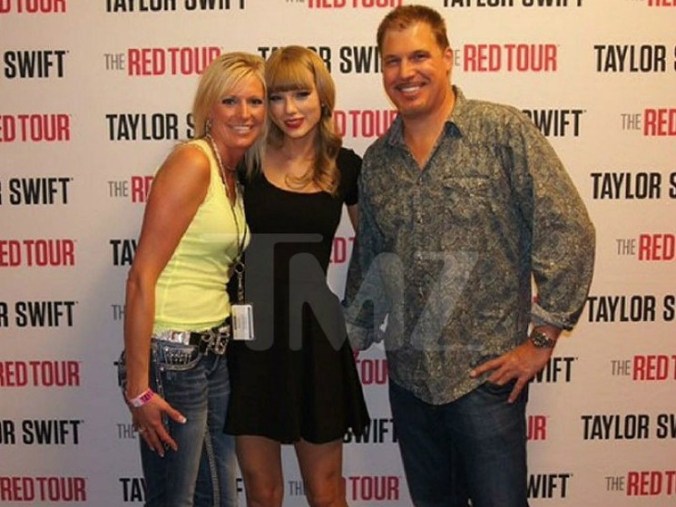
2. I haven’t been following the Taylor Swift groping lawsuit, have you? I’m not sure it justifies following, though it does follow the path of campus sexual assault accusations. To summarize for those of you with higher priorities, pop superstar Taylor Swift was in the midst of a 2013 tour when  she hosted a meet-and-greet for fans in Denver. David Mueller, then a DJ for the radio station KYGO, came to the event and posed for a photo with Swift and his girlfriend. Here is the resulting photo, courtesy of gossip site TMZ:

Swift said that Mueller reached under her skirt and molested her from behind. Her security team ejected the DJ and complained toMueller’s employer, KYGO, which fired him.. In 2015,  Mueller filed a defamation suit against Swift,  denying that he touched her intimately and demanding millions in damages for his lost job and sullied reputation. She has counter sued for a single dollar.

As with many sexual assault cases tried in a civil setting or by a university kangaroo court, this lawsuit will come down to who the jury believes, and the photo, which is the only evidence. (Mueller says that he recorded a two-hour phone call with KYGO the day after he learned of  Swift’s complaint, and had a copy of the audio file on his laptop and on an external hard drive, and his cell phone too, but he spilled coffee on and then lost the laptop, while the external hard drive inexplicably stopped working. Then he threw out the cell phone.  ( Sure. ) In its article about the case, Vox says,

“America has long had an unspoken understanding that famous women have no real right to bodily autonomy. Women in general aren’t understood to have much right to bodily autonomy in America: hence rape culture, hence comments about rape like, “if a man walked around with a suit made of $100 bills, he’d expect to be robbed, wouldn’t he?” that make women’s bodies analogous to money. But because fame already comes with diminished expectations of privacy, celebrity women are considered to be especially fair game.”

Fake history. I was certainly not taught this, nor did I “understand it” to be true. There are, and have always been, pig assholes who think like Vox describes, but they have been regarded as assholes for decades. This is feminist bigotry at work, stated as fact. As a civilized male who was raised to respect women and their bodily autonomy, I find the trope that all men, especially those on college campuses, are nascent rapists political propaganda of the most despicable kind, and not worthy of the seriousness accorded it by female Democratic Senators, publications like Vox, Obama’s Education Department and feminists.

My reading of the case is that Swift made the unfortunate but understandable choice of continuing to pose for the picture while this creep was fondling her butt, but that Mueller will have a difficult time proving defamation—the burden is on him, not her—and is likely to lose, not in small part because Swift, a trained PR whiz, was a spectacularly effective witness. ( Question from the plaintiff’s counsel: Why did your skirt look undisturbed in the photo if my client had his hand under it as you claim?  Swift: “Because my ass is located in the back of my body.” Continue reading →

The Trustworthy New York Times, Whose Editors Don’t Read Their Own Paper

I was stunned when the New York Times, after a Bernie Sanders supporter engineered a sniper attack on a group of Republican Congressmen (Steve Scalise is still hospitalized) published an editorial including the “everybody does it” argument that Republican rheteric had activated madmen too, reminding readers that there had been a  “clear” and “direct” causal connection between Palin’s PAC’s “targeting” of Gabrielle Giffords’ district and Jared Loughner’s murder of six people in Tucson. How could they be dredging up this old smear again, after it had been so thoroughly debunked? It seemed like a desperate, vicious deflection.

The  theory had caused an extended and heated debate at the time of the Tucson attack, with left-biased media pundits, including the Times’ Paul Krugman and others, attempting to silence conservatives by arguing that their harsh “eliminationist rhetoric” had put Gifford in the crosshairs, literally. The Left’s prime scapegoats for the shootings were the most vocal conservative  critics  of President Obama and the Democrats at the time, Rush Limbaugh and Sarah Palin.The smear was transparent and dishonest; eventually even President Obama rejected it in the best speech of his tenure as President. It was also quickly disproven by the facts. Loughner, if anything, was a progressive lunatic. His written rants suggested no influence by the Right at all, and certainly no indication that Palin’s use of a crosshairs graphic to indicate Democrats “targeted” for defeat at the ballot box had even been seen by the killer, much less set him on his murderous path.

The revived lie was taken down online within a day, though not before the Times’s rival for the title of  “Parper Most Willing To Devastate Its Reputation To Destroy Donald Trump” issued a merciless ‘factcheck.”  The falsehod was also put into print. Several lawyers suggested that Palin had grounds for a defamation lawsuit, even though, as a public figure, prevailing in a lawsuit would require her to prove “actual malice.” Palin did sue.  Sure enough, The Times is denying malice by arguing that it made an “honest mistake.” But how could it be an honest mistake, when the Times itself had published reporting that finally proved Loughner was no devotee of Palin or Limbaugh.

For the Times editors to claim they made an honest mistake, they must insist that they were unaware of what had been prominently published in their own newspaper, under their own oversight. Sure, that’s certainly the kind of professionalism, competence and care one expects from the flagship of American journalism. Continue reading →

Morning Ethics Warm-Up: 7/31/17

Good Morning!

1. If you want an instant reading on someone’s ethics alarms, or a quick diagnosis of whether he or she is a jerk, ask their opinion on yesterday’s episode in which New Jersey Governor Chris Christie got in the face of a Cubs fan who was harassing him during the Brewers-Cubs game. Instead of ignoring the fan, who was shouting insults at him, Christie walked over to him and said, among other things, “You’re a big shot!”

“Appreciate that,” the fan gulped.

It’s rude, uncivil and cowardly to shout insults at anyone who just happens to be attending an event as a private citizen. It doesn’t matter who the target is. The fan, Brad Joseph, assumed that he was insulated  by the crowd and the setting from any consequences of being a jackass by setting out to make Christie’s visit to the ball park unpleasant. Bravo to Christie for behaving exactly as any other non-weenie would when subjected to such abuse. Brad was adopting the same false  entitlement the “Hamilton” cast assumed when it harassed Mike Pence, though in lower case. Elected officials have an obligation to listen to the public’s complaints and positions. They do not have an obligation to accept outright abuse, and shouldn’t.

Joseph, heretofore to be referred to as “The Jerk,” or TJ, told a radio station, “I called him a hypocrite because I thought it needed to be said.” Then walk up to the Governor like a man, look him in the eyes, and say it, you chicken. Shouting from a crowd is a hit-and-run tactic, and you know it. You depended on it.


“This is America and I think we have the right to say what you believe as long as it’s not crude or profane,” Joseph then said. Wrong, Hot Dog Breath. You do have a right to be crude and profane, but as with those abuses of free speech, harassing someone, anyone, at a ball game is still unfair and unethical.

2. Then there were the ad hominem attacks on the Governor in the comments to the story. Did you know Christie was fat? Did you know that being fat proves his unfitness for public service or removes his human right to be treated decently when he goes to a ball game? These were the conclusions of easily 75% of all commenters, proving informally that 75% of internet commenters have the ethical instincts of 10-year-olds.

The news media was hardly better: check which sources make a big deal about the fact that Christie was holding a plate of nachos when he stared down TJ. This non-essential detail was even in some headlines. Newsweek, which is really just a left-wing supermarket tabloid now, actually headlined the story “Chris Christie confronts fan who wouldn’t let him eat nachos in peace.”

That’s not just fat-shaming, that’s an endorsement of fat-shaming. The problem with Chris Christie isn’t that he’s fat; the problem with him is that he is corrupt and sold out his principles and his country to help make Donald Trump President, none of which justifies abusing him when he’s at a baseball game.

Or watching “Hamilton. Continue reading →

Unethical Quote Of The Day: Valerie Joseph, Wheelchair-Bound Uber User And Class Action Litigant

“I feel frustrated because I have to plan my day.I can’t do things on a whim. I have to plan it days in advance.”

—Valerie Joseph, litigant in  class-action lawsuit accusing Uber of discriminating against New York City riders with disabilities by providing inadequate access to wheelchair-accessible cars .

Could there possibly be a better quote to exemplify the entitled mentality of so many Americans, and the unethical values they have somehow extracted from our political culture?

Yes, Valerie, you are handicapped. I’m sorry about that, but I’m not responsible for it. Nor are you entitled to make me, and businesses, and the government pay to ensure that society can mitigate every inconvenience created by your misfortune. You do not have the luxury of doing things “on a whim.” Neither do single mothers. Neither do small business entrepreneurs who have substantial debt. It’s your life, deal with it. I also have to plan my days because of circumstances beyond my control. It’s called adulthood. Grow the hell up.

The lawsuit Valerie champions, filed in State Supreme Court in Manhattan by the non-profit Disability Rights Advocates is a classic. It is seeking to risk putting Uber out of business and remove its lower-cost transportation options for the vast, vast majority of the public by insisting on expensive retrofitting of the company’s cars that would benefit a tiny minority.

The Taxis for All Campaign filed a similar discrimination lawsuit over yellow taxis, virtual legal extortion that resulted in a settlement requiring half of all yellow taxis to be wheelchair accessible by 2020. Thus the litigants in the Uber suit already have an acceptable option: call a cab.  There are now 655 wheelchair accessible taxis in the New York city area.  I’d love to see statistics on how often they are used by the passengers they are designed to serve.  My guess: not that often. As much as anything else, this is an interest group power-play. It is discrimination, they insist,  if handicapped passengers have to wait longer than non-handicapped. New York’s Taxi and Limousine Commission has proposed broad new requirements for wheelchair-accessible service for the entire for-hire industry including Uber and the other ride-hail companies. Naturally: they want to put ride-sharing companies out of business, and this could do it. Continue reading →

From The “Law vs Ethics” Files: PETA Chooses To Harm An Artist On Behalf Of A Monkey Who Couldn’t Care Less, And Judges Think It’s An Amusing Legal Condundrum

“I’m baaaaack!”

When we last heard from  photographer David Slater, the U.S. Copyright Office had rejected his claim that he owned the  copyright for the famous series of selfies presumably taken unintentionally by a Celebes crested macaque.  In 2011,  Slater spent several days following and photographing a troop of macaques in Sulawesi, Indonesia, and the selfies were a lucky bi-product that quickly became a web sensation. Slater had asserted ownership over the photos, and had demanded that various on-line users, such as Wikipedia, either take them down or pay him as the copyright holder. The ruling of the Copyright Office was based on the theory that Slater had not taken the photo, so he was not the creator, and animals couldn’t own copyrights, so the photos were in the public domain.

Pop Ethics Quiz: Would it have been unethical had Slater simply released the photos without revealing that the selfies had been the lucky result of an  accident, snapped by the monkey while it was messing around with his equipment?

About the Copyright Office’s ruling: I’m dubious. Slater owned the equipment, and had the sense to preserve the photos. A decision that if a photo is taken accidentally by a non-human or an act of God, the photographer who owns the equipment gets the copyright would have been fair.  Zapruder owned the film that inadvertently caught President Kennedy having his forehead shot off, and it made him rich. Slater’s claim just goes a step further: Zapruder left the street  to buy a hotdog, put his camera on on a trash can and asked a friend to “watch it,” and a dog turned the camera on, catching the grisly scene. So Zapruder doesn’t own the film anymore? Does that make sense to you?

Well, that was the ruling anyway. Then things got really ridiculous. Slater included the monkey selfies in a book, and People for the Ethical Treatment of Animals (PETA)  brought a law suit against Slater on behalf of the monkey,which PETA claims is named Naruto, and asked that PETA be appointed to administer proceeds from the photos for the benefit of Naruto and other crested macaques in the reserve on Sulawesi. So PETA would suddenly be the de facto copyright holder. Continue reading →