Tales Of The Self-Righteous And Incompetent: Lawyer/Teacher Malik Leigh And His Donald Trump Exam Question

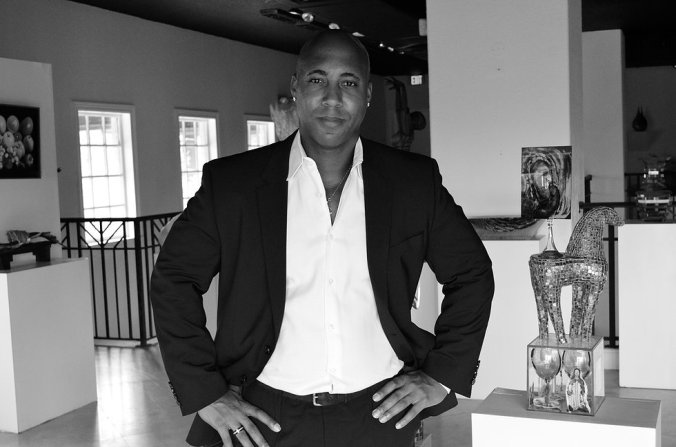
Malik Leigh

Malik Leigh is an attorney who teaches in Palm Beach Lakes High School’s pre-law academy. He submitted an exam for review, as the school requires of all tests, that included this question:

“If Donald Trump becomes president of the United states, we are:

A.) Screwed

B.) Screwed

C.) Screwed

D.) Screwed behind a really YUGE wall that Mexico pays for.”

In another question on the same test, this lawyer—and I’m still trying to get my mind around that embarrassing fact— asked

“When performing an opening statement, it is best to:

A. Wink at the Judge

B. find the hottest person on the Jury and focus your words on them

C. Speak to them as if they are cordial friends.

D. Treat them like the MORONS they are.”

Leigh was suspended.  The letter he received from Principal Cheryl McKeever announcing the suspension stated that the questions contained “inaccurate content, irrelevant material, unprofessional use of language, inappropriate use of language.” Continue reading

Ethics Dunce: U.S. Supreme Court Justice Sonia Sotomayor

"Hey, when you leave, will you ask the bar rep with the gun outside my office what a good job I did for you? I can get bonus credit!"

“Hey, when you leave, will you tell the bar rep with the gun outside my office what a good job I did for you? I can get bonus credit!”

Speaking before an audience at the American Law Institute, U.S. Supreme Court Justice Sonya Sotomayor said that she advocated mandatory pro bono service ( that is, for no compensation) to poor citizens by all lawyers. “If I had my way, I would make pro bono service a requirement,” she said.

“I believe in forced labor.”

This is the quality of thought that we get on the highest court in the land, that must decided our most difficult, controversial and society-molding legal. This is what we end up with when a Justice is appointed in order to check off group identify boxes for “diversity” rather than on the basis of ability.

Sotomayor made the comment at the American Law Institute’s annual meeting in Washington, in response to a question from institute director Richard Revesz about the problem of improving access to low-cost and effective legal services for low-income individuals. I’m pretty sure the “forced labor” comment was delivered as a joke, but it looks terrible in print, and immediately drew a predictable response from conservative pundits. “YOU BELONG TO THE STATE” quipped Instapundit’s Glenn Reynolds.
Continue reading

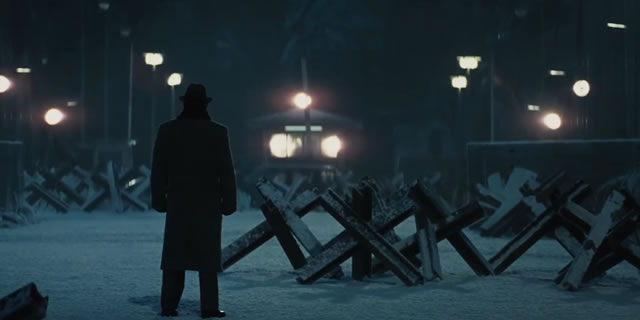
The Real Legal Ethics Conundrums In “Bridge of Spies”

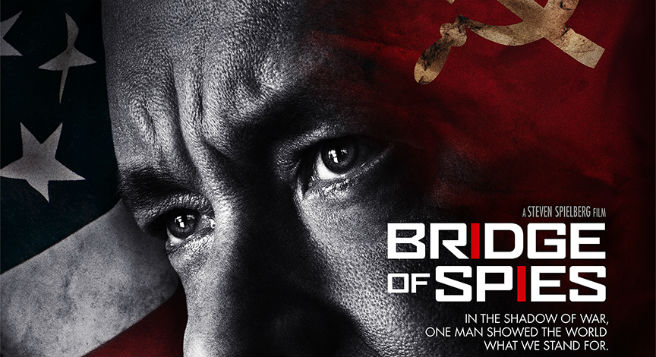
bridge-of-spies

Quite a few readers have written that they would enjoy some of the problems I present in my seminars on legal ethics. I try to please, so here are some difficult legal ethics issues that arose in the screenplay of last year’s Oscar-nominated film “Bridge of Spies.”

I wrote about the film earlier this year, here.

The film tells the true story of Jim Donovan, an insurance lawyer who is recruited, in 1957, by his New York bar association to take on the representation of the accused Soviet spy Rudolf Abel, a job that we see Donovan not only do bravely and competently, but one that he takes all the way to the Supreme Court. He loses, and Abel goes to prison.

Legal ethics points:

  • That ends the representation, and Abel is no longer Donovan’s client, but a former client.
  • Lawyers still have duties to former clients: they must keep all of the confidences learned during the representation and after, and not use these against the interests of the ex-client, or reveal them ever, even after the ex-client is dead and buried, except under rare circumstances.
  • A lawyer is also not allowed to become adverse to the interests of a former client in a substantially related matter to the one he (or she) handled for the client.

Because when representing Abel, Donovan had argued against executing the spy on the grounds that he might a useful  bargaining chip if an American was captured by the Russians—an argument he made to save Abel’s life, not to provide unsolicited advice to the government—the capture of U2 pilot Gary Powers after he was shot down in a spy plane makes the lawyer a candidate to make his own scenario come true. An East German official sends Donovan a letter claiming to be able to broker an exchange of Powers for Abel. When the CIA learns about the letter, they ask Donovan to go to East German and negotiate the deal. Continue reading

Now THAT’S The Unauthorized Practice Of Law!

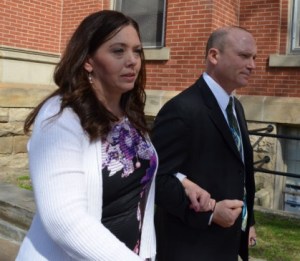
The fake lawyer with her husband, if it really IS her husband....

The fake lawyer with her husband, if it really IS her husband….

Usually lawyers get sanctioned for engaging in the “unauthorized practice of law” when the unwittingly fail to pay their bar dues, or handle a matter from the comfort of their office involving a client in a state they can’t practice in. It’s a serious ethics violation and a crime as well in some cases, but seldom do you see an example of UPL, as it’s called, like this.

For ten years, Kimberly Kitchen worked as an estate planning lawyer at BMZ Law in Huntingdon County, Pennsylvania, and thrived.  She even served as president of the county bar.  She was never a lawyer, however; never went to law school, never took the bar exam. Prosecutors said she forged documents to show she graduated from law school at Duquesne University, passed the bar and was licensed to practice. Everything was a fake, and she was a fraud. Now she is facing jail time. Continue reading

Jury Rejects Damages Suit By Jefferson School Of Law Grad Who Claims She Was Defrauded. Good.

alaburda

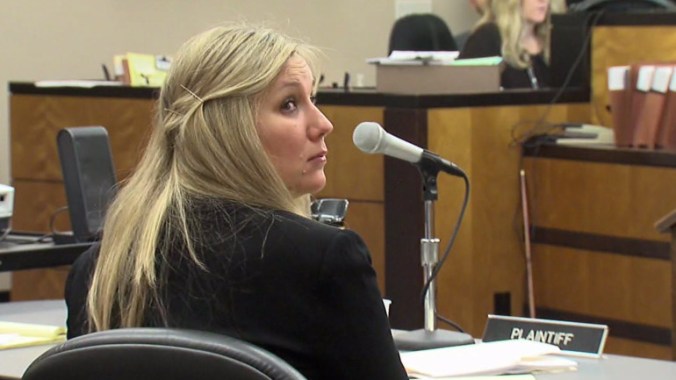
A jury this week rejected a law suit by  Anna Alaburda (above), a 2008 graduate of Thomas Jefferson School of Law. seeking  damages on the grounds that the San Diego institution misled her by fraudulently enhancing  job-placement data concerning its alumni. The case had been hailed by supporters of the alleged “Lawscam” conspiracy theory that holds that students across the country have been gulled by promises of riches, firm partnerships and career success into paying for degree that only brought them debt and disappointment. Similar suits had been dismissed or abandoned, and this was supposed to be the lawsuit that broke the dam.

Alaburda’s sad tale was that she has been unable to find full-time work as a lawyer even though she graduated near the top of her class and she still has to pay $170,000 in educational debt. She sought $125,000 in damages: $92,000 in lost income and $32,000 for tuition and fees.  The San Diego Superior Court jury voted 9-3 to reject her fraud claim, however. A single fact in evidence explains why all by itself: she turned down a perfectly good career-starting offer (paying $60,000 a year) from a firm shortly after graduation, apparently on the grounds that she felt the firm was too hard on mortgage delinquents.  Well, the school didn’t promise nice legal jobs: that was her decision, her mistake, and her misfortune. The rejection of the kind of  job offer many young lawyers were desperate for  broke any chain of causality between the alleged fraud and her alleged damages. I’d like to know where Alaburda’s lawyer went to law school and learned that this pathetic case was a viable suit. Maybe that lawyer should sue for educational malpractice. Continue reading

Ethics Quote Of The Month: “Bridge of Spies”

bridge-of-spies-656

The shooting script for the Academy Award nominated film “Bridge of Spies” is now online. Written by Matt Charman and the Coen brothers, it, like the film that Steven Spielberg made out of it, provides an unusually accurate and nuanced portrayal of ethical lawyering. The movie is worth seeing, better more than once, and I expect that I will use many issues raised in it for class discussion as I teach legal ethics to lawyers this year.

There is one howlingly wrong scene, in which the lawyer, Jim Donovan (played by Tom Hanks) has a private discussion with the judge who will be sentencing his client, a convicted Russian spy. Donovan argues against a death sentence. If this happened, and I doubt it, it would have been an egregious ethics breach: this is called ex parte contact, and is strictly forbidden.

The film redeems this misstep many times over, especially in a scene that neatly explores both the duty of confidentiality and the duty of loyalty, as well as the crucial role of rules in society, and why “the ends justify the means” as well as those who advocate that philosophy must be rejected. “Ethics Bob” Stone told me that he now uses the scene in his business ethics classes.

The scene begins with Donovan meeting in a restaurant with a man who has been following him…. Continue reading

Tales Of The Unethical: A Client Hacks, His Lawyer Cheats, And HIS Lawyer Spins

hackedWhat a mess.

Missouri lawyer Joel Eisenstein saw two documents illicitly obtained by his client: a payroll document for the client’s wife and a list of direct examination questions prepared by his client’s wife’s attorney for an upcoming divorce trial.

This kind of stuff, proprietary material that is handed over to a lawyer by someone, including a client, who received it under dubious circumstances is ethically radioactive. As the DC bar wrote in Ethics Opinion 318…

When counsel in an adversary proceeding receives a privileged document from a client or other person that may have been stolen or taken without authorization from an opposing party, Rule 1.15(b) requires the receiving counsel to refrain from reviewing and using the document if: 1) its privileged status is readily apparent on its face; 2) receiving counsel knows that the document came from someone who was not authorized to disclose it; and 3) receiving counsel does not have a reasonable basis to conclude that the opposing party waived the attorney-client privilege with respect to such document. Receiving counsel may violate the provisions of Rule 8.4(c) by reviewing and using the document in an adversary proceeding under such circumstances and should either return the document to opposing counsel or make inquiry of opposing counsel about its status prior to determining what course of action to take. Continue reading

From A Proud Abortion Defender, An Inconvenient Truth….

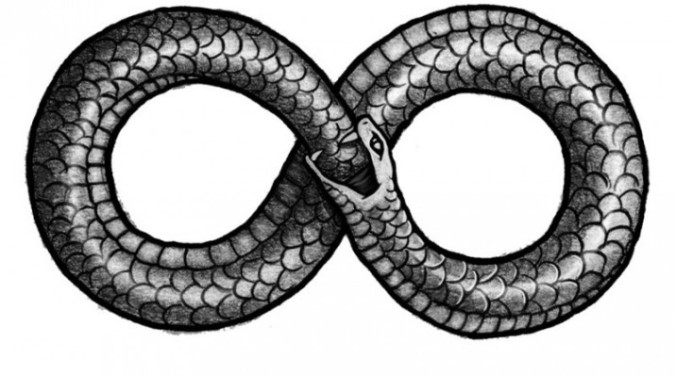
Snake eating its tail

A New York lawyer named Janice Mac Avoy gifted the Washington Post with an op-ed that was supposed to be a powerful brief for abortion. Viewing it as someone who is deeply conflicted about the ethics of abortion, which is to say, someone who is objective and who didn’t make up his mind first and then look for rationalizations to support that position, I recognized it as a perfect example of why abortion advocates still haven’t made a strong enough case for me, and perhaps why they can’t.

I am still surprised, somehow, when lawyers, like Mac Avoy, display poor reasoning skills. I shouldn’t be, I know: I’ve known plenty of dumb lawyers, even rich and successful dumb lawyers. I suppose I am hostage to the mythology of law school, that professors take students whose “minds are much,’ to quote Professor Kingsfield, and transform those minds into whirring computers of emotion- and bias- free rationality. Unfortunately, mush in, mush out tends to be reality.

Mac Avoy places her own mind in the mush column immediately, with her title “I’m a successful lawyer and mother, because I had an abortion.” This shows her adoption of the classic logical fallacy Post hoc ergo propter hoc, or “After this, thus because of this.” The statement is factually nonsense, and her column takes off from there.

Some highlights:

1. She writes…

“In spring 1981, I knew I wanted to be a lawyer. I was about to become the first person in my family to graduate from high school. I had a scholarship to college, and I planned to go on to law school. I was determined to break a cycle of poverty and teenage pregnancy that had shaped the lives of the previous three generations of women in my family — all mothers by age 18. Then, just before graduation, I learned I was pregnant. Knowing that I wasn’t ready to be a mother, I had a friend drive me to a Planned Parenthood clinic, where I had an abortion.”

Pop quiz: What crucial piece of information is glossed over, indeed strangely omitted, from that account? Mac Avoy “was determined to break a cycle of poverty and teenage pregnancy” —so determined and laser focused on the life goal that she suddenly woke up pregnant! How did that happen? Apparently, despite her representation to the contrary, she was not sufficiently determined that she was willing to refuse  to engage in the exact and only conduct that could foil her intent, and that she knew could foil her intent.

I’m not arguing that a teenage mistake of judgment should derail a life, but I am pointing out that to ignore that personal conduct, as Mac Avoy does, and pretend that pregnancy in every case is some unavoidable random tragedy like a rape or incest, is self-serving and intellectually dishonest, and like most pro-abortion rhetoric, avoids the key issues that make abortion a difficult ethical problem.

2. She writes… Continue reading

Trump’s New Jersey Muslims 9-11 Celebration Lie Justifies A Nazi Label

trump-salute

The current controversy—except there’s no disagreement on the facts, so it isn’t really a controversy—over Donald Trump’s unretracted statement that he saw “thousands” of New Jersey Muslims celebrating the Twin Towers’ destruction on 9-11 is materially different from the other items on the list of his various outrageous insults, vulgarities and misrepresentations. It’s a Big Lie, the device perfected and employed by Hitler and Goebbels, a weapon of totalitarianism. Other American politicians and leaders have dabbled in the technique, of course. I flagged the false accusation that the Republicans “stole” the 2000 Presidential election as a Big Lie; so is the Democratic cant that Bush “lied” about weapons of mass destruction. The “War on Women” is a Big Lie. Birthers are engaging in Big Lie politics—so is Rep. Alan Grayson (D-Fla), who insists that Ted Cruz isn’t a “natural born” American. The Truthers are Big Liars. Black Lives Matter was built on the Big Lies that Trayvon Martin and Mike Brown were murdered. The current claim, being treated with disgusting respect by journalists, that white America is engaged in systematic black genocide is a Big Lie.

Most of these, however, are really Little Big Lies. They are dangerous and destructive, but not in Goebbel’s league. Trump, however, is using a Big Lie to impugn the patriotism and trustworthiness of a group of citizens based on their religion and cultural heritage, and attempting to stir up purely group-based hate. To hell with Hanlon: this is Nazi Propaganda 101, and deserves to be identified as such directly to Donald Trump’s face.

There is no debate over whether Trump could have “seen” thousands of Muslims whooping it up on TV (like blacks celebrating O.J.’s acquittal for gutting his wife), because no such video was taken, broadcast, or archived. If there were such celebrations, Trump didn’t see them, unless he somehow obtained George Burns’ magic TV from the old Burns and Allen sitcom, on which George was able to see what his wife, friends and neighbors were doing while he chatted with the TV audience. If Trump did see such a non-existent broadcast, he couldn’t have seen “thousands,” unless there was a ’round the state relay, like they do on New Years Eve at midnight, going around the country to show simultaneous celebrations.

Trump didn’t see it. He couldn’t have. There is no controversy.

Yet he still claims he did, and has a team of paid liars telling media interviewers he did. He could have said he was mistaken; he could have said that he confused televised scenes of Muslims abroad celebrating (though not “thousands”) with accounts of some Muslims celebrating in New Jersey, and apologized. He didn’t though. He stuck to a false story after he had to know it was wrong, and that makes it a lie. The fact that the lie tacitly suggests that American citizens of the Muslim faith lack loyalty to their nation and love of their fellow citizens whom they cheered to see murdered  makes it a Big Lie. Continue reading

World Series Ethics: Another Pine Tar Sighting, As Baseball Ethics Rot Gets A Thumbs Up From Legal Ethics Rot

Sal Perez

Cameras during Game #2 of the 2015 World Series revealed that Kansas City Royals catcher Sal Perez had what appeared to be pine tar on his shin guard during the game. This would presumably be there for the purpose of surreptitiously smearing some of the gunk on the ball, then throwing it back to the pitcher so he could “get a better grip on the ball,” a.k.a “tamper with the baseball so it can do loop-de-loops.” This is illegal. It is cheating. According to Rule 8.02(a)(2), (4) and (5), the pitcher shall not expectorate on the ball, on either hand or his glove; apply a foreign substance of any kind to the ball; [or]  deface the ball in any manner. The rule is unambiguous, and if a pitcher or a catcher is caught violating the rule, they are thrown out of the game with a suspension and fine to follow.

None of this happened to Perez or his pitcher that night. According to NBC Sports blogger Craig Calcaterra, a former practicing lawyer who I am officially disgusted with, the reason was that “Nobody cares,” including Calcaterra.

I wrote extensively about Major League Baseball’s unethical attitude toward violations of this particular rule last year, after an absurd sequence in which Yankee pitcher Michael Pineda was caught by TV cameras apparently using pine tar on his pitches without compliant from the opposing Red Sox, followed by Sox manager John Farrell saying that he hoped he would be “more discreet” about his cheating “next time,” and then when Pineda was more obvious about it next time, Farrell complained to the umpires, who threw Pineda out of the game (he was also suspended). I wrote, Continue reading