Marilyn Mosby Secures Her Reputation As One Of The Most Shamelessly Unethical U.S. Prosecutors Of All Time

The other shoe dropped: prosecutors dropped all remaining charges against three Baltimore police officers accused in the arrest and death of Freddie Gray,  following the acquittals of three other officers  by Circuit Judge Barry G. Williams. He was expected to preside over the remaining trials, and, as the Bible says, the writing was on the wall.

Make no mistake: this result was completely and entirely the result of the incompetent, unethical conduct of State’s Attorney Marilyn Mosby, who vaingloriously announced charges against the officers in the immediate wake of rioting in Baltimore, following the dictates of a mob. She did this without sufficient investigation, evidence or, despite the ethical requirements of her office, probable cause. She had the city of Baltimore agree to a large damages settlement for Gray’s family before any of the officers were tried, prejudicing their cases. She spent millions on the prosecutions, and shattered the lives of all six officers, and yet never made a case that justified any of it.

There are more unethical things that a prosecutor can do, and they certainly do them. Some prosecute individuals they know are innocent, which is a bit worse than prosecuting someone who might be guilty because a mob wants blood. Those unethical prosecutors, however, try to cover their tracks. Not Mosby: she’s proud of being unethical, because its the kind of unethical conduct that African-American activists think promotes justice. Justice is when someone pays with their life or liberty if an African American dies, regardless of law or evidence.  That’s the theory, anyway. Continue reading

Pokémon Go Ethics: Beware The Terms Of Service Agreement!

pokemon-go-starters

I had a hard time finding anything unethical about Pokémon Go, the smartphone GPS scavenger hunt game that sends players all over the landscape to find and trap those adorable Japanese monsters that caused a trading card craze and more a decade ago. (I assume that anything that seems really dumb is likely to have ethics problems. You’d be amazed how often I’m right.) It seems benign. The game can be good exercise, it’s engaging for people who have no more productive avocation, and best of all, it gives American something to obsess about not named Bill or Hillary. There are some troubling signs: administrators at the National Holocaust Museum and Arlington National Cemetery felt that they needed to ask visitors not to play the game while contemplating the murder of six million Jews and the fallen heroes of foreign ways—what is these spoilsports’ problem?—and some people are letting the game endanger themselves and others, leading to these morons falling off a cliff, causing this idiot to drive  his car into a tree, and prompting this in Arizona…

Pokemon go traffic sign

Continue reading

Essay: On Loretta Lynch And Fighting Cynicism And Distrust Regarding The FBI Investigation Of Hillary Clinton

America_Falling_Apar

Warning:

This is long.

I think it’s important

In the wake of Attorney General Lynch’s acknowledgment of wrongdoing in meeting, however briefly and innocently, with Bill Clinton, some  reader comments here are redolent of the destructive distrust of government and leadership engendered by this administration and others, particularly Bill’s. Yet this attitude feeds on itself, and is to an extent a self-fulfilling prophecy. If leaders think that people expect corruption, they are less likely to shy away from it. Cynicism leads to acceptance. Of course, this is one explanation of why the tarmac meeting took place—pure arrogance and a belief that with the news media’s complicity, now virtually any degree of government dishonesty and corruption will be either effectively hidden from the public, or accepted by it.

This is untrue, still. Indeed, this episode is proof that it is untrue, though the news media did make (disgusting and ignorant) efforts to shrug off the clear appearance of impropriety represented by Lynch having a meeting with Clinton the Impeached under these circumstances. Why do I labor trying to write these essays explaining the legal and ethical context of such events if readers are so poisoned by bitterness and distrust that they can’t or won’t process them, and just default to “it doesn’t make any difference, all is shit, all is lost”?  If I believed that, I wouldn’t be spending time—work  time, uncompensated time—writing this stuff. I can earn peanuts directing professional theatrical productions: it makes people happy, gives actors work, and is a lot more fun, believe me.

Paranoia, suspicion, despair, and conspiratorial views of government, which are all these comments represent, are just forms of bias. Bias makes us stupid, and in this case, bias makes us dysfunctional as a people and fearful and miserable as individuals. Continue reading

Freddie Gray Prosecution Update: A Law Professor Formally Accuses The Unethical Prosecutor Of Being Unethical

finger-pointing

George Washington Law School Professor John F. Banzhaf III has filed an ethics  complaint against State’s Attorney Marilyn Mosby with Maryland’s Attorney Grievance Commission. Banzhaf accuses Mosby in his 10-page complaint of breaching Maryland’s rules of professional conduct for lawyers, which requires that a prosecutor refrain from prosecuting a charge unless it is supported by probable cause, in her conflicted and incompetent prosecution of six police officers involved in the arrest of Freddie Gray. The complaint also flags Mosby’s improper use of public statements to bias the administration of justice.

Good.

Of course he is right, as I have repeatedly explained here, here, here, here, and here. I assume there have been other complaints before this one, but he has made the issue a high profile one, and that’s excellent news.

Mosby has earned the Mike NiFong treatment: the unethical prosecutor in the Duke Lacrosse rape case was disbarred, briefly jailed, and sued. She is black, female, and a Democrat, and NiFong remains one of the very, very few prosecutors to be punished significantly for unethical conduct. I will be amazed if the commission does anything momentous or sufficient to discourage grandstanding prosecutors like Mosby in the future, even though such prosecutors are willing to ruin lives for political gain.

I hope I am wrong.

(But I’m not.)

Johnny Manziel’s Lawyer’s E-Mail Ethics Disaster

email mistake

In an article last year inspired by increased attention in the legal profession prompted by Hillary Clinton’s epic incompetence handling her e-mail, New York’s Legal Ethics Reporter last year published “Ethical Implications & Best Practices for Use of Email.” It began with a quiz:

Which of the following statements are true?

A. Email is a wonderful tool for the successful practice of law.

B. Email not only saves time and money, but also allows for prompt communication with clients, colleagues, and opposing counsel.

C. Email is overused, often results in incomplete or inaccurate responses to inquiries, and fills up your Inbox with useless information.

D. Careless use of email can subject the sending lawyer to embarrassment, unhappy clients, lost income, breach of the duty of confidentiality, discipline, or claims of malpractice.

E. All of the above.

The correct answer is E— All of the above.

One reason lawyers are, as a group, far less forgiving of Hillary’s nonsense (and lies) is that her conduct, if it involved a client, and not just a relatively minor institution like the U.S. State Department, would constitute a clear violation of  the ethics rules covering competence and confidentiality. (Let’s ignore, for now, the rules requiring honesty and the avoidance of conflicts of interest.). Work- and case-related e-mail must be handled with care, or disasters occur. One of the lawyers for disgraced ex-NFL quarterback Johnny Manziel just provided a lesson in how that can happen, and it is going directly into my next seminar.

Defense attorney Bob Hinton, representing  Manziel  in a hit-and-run case, accidentally sent an Associated Press reporter an e-mail intended for the athlete’s legal team. The misdirection appears to be the result of an auto-address feature that assumed whom Hinton wanted to communicate with based on the first few letters he typed.

In the memo, Hinton expresses exasperation at the extent of Manziel’s dependence on illegal drugs, and reveals that he has a receipt that shows Manziel may have spent more than $1,000 at a drug paraphernalia store just 15 hours after he was involved in the crash. “Heaven help us if one of the conditions is to pee in a bottle,”  the lawyer wrote. This is a problem, since Manziel is seeking a plea deal that almost certainly would require periodic drug tests. Continue reading

It’s Time To Fire And Discipline Marilyn Mosby

Mosby in 2015, ruining lives, pandering to the mob, and undermining justice...

Mosby in 2015, ruining lives, pandering to the mob, and undermining justice…

The third (of six) indicted Baltimore police officer charged in the death of Freddie Gray was acquitted last week, and how the rest of the trials, if they even occur, will play out is now a foregone conclusion. To be fair, this was a forgone conclusion from that moment that Baltimore City Attorney Marilyn Mosby charged the officers a year ago without sufficient justification beyond her own political ambitions, those of her husband (who is now running for mayor), racial bias and a desire to mollify rioters. Most commentators believed the charges were premature, rushed to avoid civic unrest. To say that is really to say that she allowed a mob to dictate to law enforcement. This was unethical, dangerous and despicable then, and remains so today.

If officer Caesar R. Goodson Jr., who drove the police transport van in which Gray suffered the spinal cord injury that killed him, could not be found guilty of intentionally killing Freddie Gray, nobody can. Says the New York Times,

“His acquittal on seven counts leaves the state without any convictions after three trials, in one of the nation’s most closely watched police misconduct cases — and continues to leave open the question of what, exactly, happened to Mr. Gray inside the van….Judge Barry G. Williams, who presided over the Goodson trial, issued the verdicts to a hushed, packed courtroom. He drew no conclusions about exactly when during the van ride Mr. Gray got hurt, saying there were several “equally plausible scenarios.” And he rejected the state’s contention that the officer had given Mr. Gray an intentional “rough ride” and knowingly endangered him by failing to buckle him into the van or provide medical help.” 

The prosecutor isn’t supposed to ruin the lives and careers of presumptively innocent law enforcement officials to try to find out what happened to Freddie Gray. The prosecutor is supposed to investigate until sufficient evidence tells her that a crime was committed, and the she has enough of that evidence to get a legitimate conviction. The three trials have shown that such evidence either doesn’t exist, or was never found. No, we don’t know what killed Freddie Gray, and that’s called “reasonable doubt.” Continue reading

Ethics Tip To The Michigan Bar: Disbar Incompetent And Unethical Lawyers, The Justice System Works Better

There are too many stories like this. The Detroit News reports that Davontae Sanford, who spent his teen years and early 20s behind bars for multiple murders he didn’t commit, will be released today after the judge who presided over his 2008 trial vacated his sentence. It seems that he was innocent of the crimes, as a confession by someone else shortly after he was locked up should have suggested. Read the whole tale. I spit out a mouthful of coffee, however, when I got to this part, near the end of the article.

Sharing criticism for this miscarriage of justice, along with police and prosecutors,  is Sanford’s original attorney, Robert Slameka.  Sanford’s current attorney told reporters,

“One of the really tremendous failures of the system was his defense attorney. There was not one pretrial motion that was brought. Davontae’s confession had all the hallmarks of a false confession; (it was) never challenged. The failures are manifest, but a lot of it falls to the one person who was supposed to protect Davontae in this process, and that was his attorney. And that wasn’t done, and when that’s not done, the system sort of collapses.”

This lawyer didn’t stutter (that is, I don’t think so) but  convinced Sanford to plead guilty to second-degree murder, telling him prosecutors had an iron-clad case, and that if he pleaded, he’d get out of prison earlier. While allegedly defending the teen,  Slameka waived making an opening statement (maybe he DID stutter!) , and never cross-examined the detective who questioned Sanford. Continue reading

Now, Trump, On The Other Hand, Knows How To Create REAL Bias In The Justice System: Bribery!

Bribe

Florida’s attorney general Pam Bondi personally solicited a political contribution from Donald Trump while she considered joining an investigation of alleged fraud at Trump University and its affiliates, AP reports

Trump’s $25,000 donation to Bondi came from a Trump family foundation in a likely violation of rules surrounding legitimate activities by 501 C (3) charities, which are not allowed to engage in political grant-making. And Justice for All, a political group backing Bondi’s re-election,  reported receiving the check on Sept. 17, 2013 — four days after Bondi’s office publicly announced she was considering joining a New York state probe of Trump University’s activities.

What a coincidence!

 After the check came in, Bondi decided to leave Trump alone, citing insufficient grounds to proceed.

ANOTHER coincidence!

This was a bribe, ladies and gentlemen, and an unusually obvious one.

Bondi’s a crook, and an unethical lawyer. Trump, meanwhile, is Trump.

Do you wonder that he said that “it is a rigged system”? No wonder he thinks that: he’s helped rig it.

__________________________

Pointer: Fred
Source: AP

From “The Ethics Incompleteness Theorem” and “The Ends Justify The Means” Files, The Pautler Case: My Favorite Legal Ethics Dilemma Ever!

"Irena's Vow" Pictured L to R: Maja Wampuszyc, Tracee Chimo, Tovah Feldshuh (kneeling), Gene Silvers

The Sundance Channel was doing a “Law and Order” marathon this week, and I happened to see an episode from 2002 that I had missed. It was based on the Pautler case in Colorado from the same year.

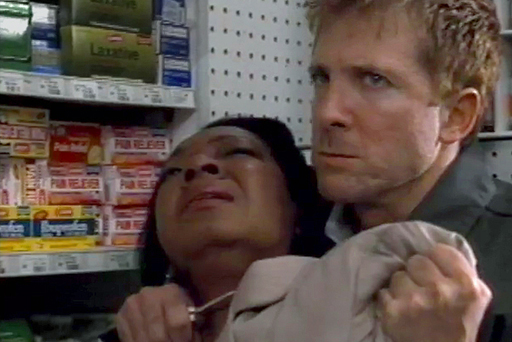
In “DR 1-102,”  Assistant DA Serena Southerlyn (Elisabeth Rohm) deals with a hostage crisis in which a man suspected of bludgeoning two women to death claims he will release his captive, held at knifepoint (above), if he can consult with an attorney. Southerlyn volunteers to enter the scene, and obtains both the hostage’s release and the killer’s  surrender, but only by deceiving him into believing that she is his lawyer, and not a prosecutor working for the police and the State. Although Southerlyn is hailed as a hero, the bar seeks to disbar her, charging her with violating Disciplinary Rule 1-102 (now New York RPC 8.4 d., which prohibits lawyers from lying.  .

Actually, Serena did a lot more than that, as did her model, Mark Pautler, the Jefferson County (Colorado) assistant D.A. whose real life conduct created a legal ethics dilemma that is debated to this day.

On June 8th, 1998, Chief Deputy District Attorney Mark Pautler  arrived at a gruesome crime scene where three women lay not just murdered, but chopped in the skull.  All had died from hit in the head with a wood splitting maul. The killer was William Neal, who had apparently abducted the three murder victims, one at a time, and killed them over a three-day period. Now, police said, he was at another locale, having released three hostages he had held in terror for about 30 hours. Neal left in the apartment a tape recording that detailed all of his crimes, including a fourth murder and rape at gun point.

Neal contacted police at the apartment using his cell phone and personally described his crimes in a three-and-a-half hour conversation. The officer speaking with Neal took notes of the conversation and occasionally passed messages to Pautler and other officers at the scene. A skilled negotiator, she urged the maniac to surrender peacefully. Efforts to ascertain the location of Neal’s cell phone were unsuccessful, and it was feared that if Neal did not surrender, others would die.

Neal made it clear he would not surrender without legal representation. The police did not trust the public defenders office to handle the situation, fearing that a defense counsel’s advice might lead Neal not to place himself in police custody. Pautler also believed that a public defender would advise Neal not to talk with law enforcement. Neal was savvy enough, he felt, that a police officer could not effectively pretend to be his lawyer, so Pautler agreed to impersonate a defense attorney over the phone He told Neal that his name was was “Mark Palmer.”

Though in the ensuing phone conversation Pautler tried to avoid giving direct legal advice, it was clear that Neal believed “Mark Palmer” worked for the public defender’s office and represented him. And the deception worked: Neal eventually surrendered without further incident.

Not surprisingly, the Colorado Bar had problems with Pautler’s conduct. He was charged with violating two ethics rules, the equivalent of the one used in the “Law and Order” episode and also Colorado Rule 4.3, which requires a lawyer to inform an unrepresented party so it is clear that he isn’t representing him, and to give no legal advice other than to get an attorney. They could easily have charged him with violating others. like Rule 1.3, requiring diligent representation (Call me a stickler, but trying to trick your client into surrendering to police isn’t what the rule has in mind), Rule 1.4, which requires a lawyer to keep a client informed (“Oh: I’m really a prosecutor!“), Rule 1.6, Confidentiality (Pautler shared what Neal told him with police; a lawyer can’t do that! ) Rule 1.7, Conflicts of Interest (Ya think?) and Rule 4.1, which prohibits lawyers making false statements of fact, like “I’m here to help you.” Continue reading

Essential Ethics Points Regarding Casey Anthony’s Investigator’s “She Did It!” Claim

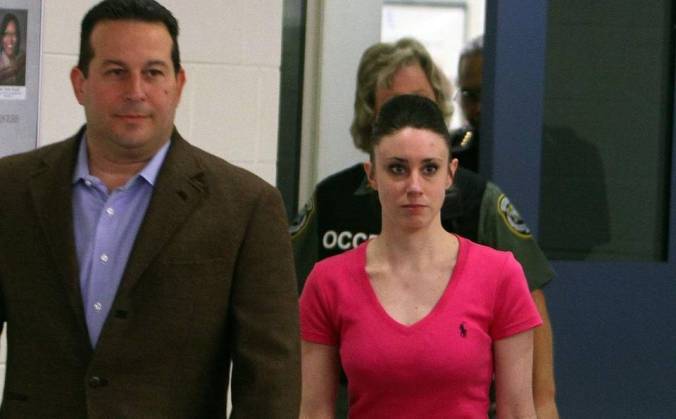
Anthony and LawyerCourtExcerpt

News Flash:

Private investigator Dominic Casey submitted a court affidavit in  Casey Anthony’s bankruptcy case (he wants to get paid), that stated that Casey’s attorney Jose Baez (above, left) “ told me that Casey (above, right) had murdered Caylee and dumped the body somewhere. He also alleges that Baez had sexual relations with Anthony.

Here’s what you need to know about the ethics issues involved:

1. Most important of all: USA Today’s website headlined the story, P.I. says Casey Anthony lawyer acted unethically. I’d guess 95% or more of readers assume that what was unethical was Baez defending Anthony when she was guilty. Maybe USA Today even thinks that. That is pure, inexcusable ignorance. All criminal defendants have a Constitutional right to a zealous defense, and the defense lawyer’s duty is the same whether his client is guilty or not, Jack the Ripper or a jay-walker. The duty is to make the State prove its case with admissible evidence beyond a reasonable doubt. Almost everyone who has followed the case believes that Anthony is guilty of facilitating the murder of her daughter Kaylee, but the evidence was ambiguous and circumstantial, and the prosecution didn’t prove its case.

Having sex with a client is unethical, specifically under the rules of most states, and arguably under the rules of all states under general ethics and professionalism principles. Continue reading