Ethics Quote Of The Month: “Bridge of Spies”

bridge-of-spies-656

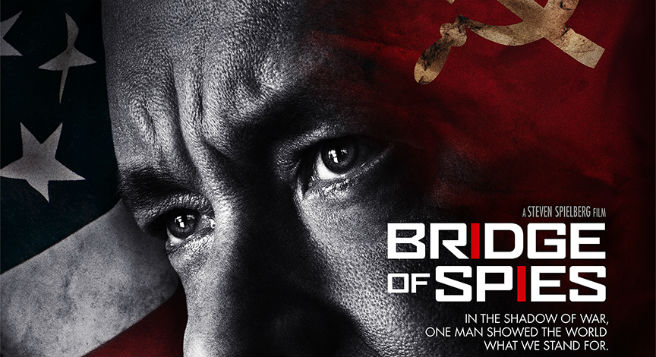
The shooting script for the Academy Award nominated film “Bridge of Spies” is now online. Written by Matt Charman and the Coen brothers, it, like the film that Steven Spielberg made out of it, provides an unusually accurate and nuanced portrayal of ethical lawyering. The movie is worth seeing, better more than once, and I expect that I will use many issues raised in it for class discussion as I teach legal ethics to lawyers this year.

There is one howlingly wrong scene, in which the lawyer, Jim Donovan (played by Tom Hanks) has a private discussion with the judge who will be sentencing his client, a convicted Russian spy. Donovan argues against a death sentence. If this happened, and I doubt it, it would have been an egregious ethics breach: this is called ex parte contact, and is strictly forbidden.

The film redeems this misstep many times over, especially in a scene that neatly explores both the duty of confidentiality and the duty of loyalty, as well as the crucial role of rules in society, and why “the ends justify the means” as well as those who advocate that philosophy must be rejected. “Ethics Bob” Stone told me that he now uses the scene in his business ethics classes.

The scene begins with Donovan meeting in a restaurant with a man who has been following him…. Continue reading

The Final Ethics Verdict On Ted Cruz

Check enclosed

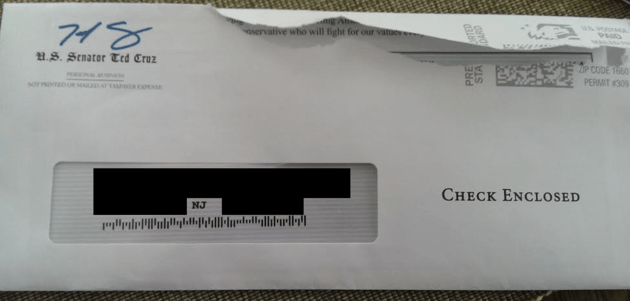
See that official-looking envelope above? That’s from Ted Cruz’s campaign: it’s been arriving in mailboxes all over the country. See what it says in the lower right corner? “CHECK ENCLOSED.” This is to entice you to open it. But here is the “check” enclosed:

Cruz check

It’s not a check. It looks like a check, but it isn’t one, because checks can be cashed. It’s a fake check not made out to the recipient of the envelope, but to the Cruz campaign. This is a fundraising appeal, you see, but it has employed two lies: Continue reading

The Seventh Annual Ethics Alarms Awards, Part II: The Worst of Ethics 2015

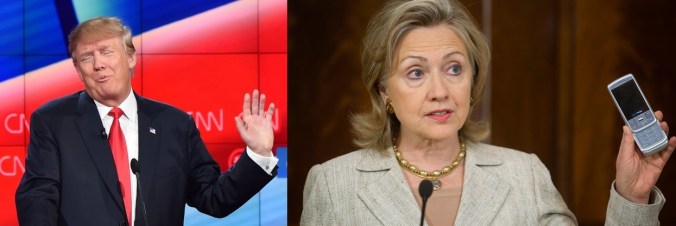
Donald and Hillary

Ethics Corrupters of the Year

(Awarded to the unethical public figure whose prominence, popularity and success most corrupts the public’s ethical values)

A Tie: Hillary Clinton and Donald Trump.  Nobody else is close.

I’m sorry that these two are so dominating the awards. They also dominated the posts last year. If they dominate the awards next year, God Save The United States of America…

Double Standard Of The Year

The deference accorded to anti-white protesters on dozens of college campuses, not just by spineless administrators but much of the news media. Similar protests, conduct and rhetoric by white students would be immediately condemned for what it would be: blatant racism.

 Lie of the Year

Hands Up! Don’t shoot! The lie was uttered in 2014, but acquired new status after the Justice Department unexpectedly and definitively determined that the evidence did not support the inflammatory myth that Mike Brown was shot dead in Ferguson while trying to surrender to Officer Wilson. Never mind: the lie is part of the manifesto of Black Lives Matter and similar groups; it is still alluded to by activists and shameless politicians; it still divides the nation and focuses hate on police departments; and it has contributed to getting police officers killed while making communities more vulnerable to crime. It may be the Lie of the Decade.

Uncivil U.S. Official of the Year

Justice Antonin Scalia, who crossed all lines of judicial restraint, collegiality and civility when he excoriated his colleague, Justice Kennedy, who was the fifth vote in the majority of SCOTUS’s ruling  that same-sex marriage was a Constitutional right no state could deny, with this comment in a footnote:

“If, even as the price to be paid for a fifth vote, I ever joined an opinion for the Court that began: ‘The Constitution promises liberty to all within its reach, a liberty that includes certain specific rights that allow persons, within a lawful realm, to define and express their identity,’ I would hide my head in a bag. The Supreme Court of the United States has descended from the disciplined legal reasoning of John Marshall and Joseph Story to the mystical aphorisms of the fortune cookie.”

——U.S. Supreme Court Justice Scalia,


The Jesse Jackson Award 

(For the Year’s Worst Amateur Diplomat)

Barack Obama.  I know, this is snarkier than I like to be in these awards, but the signature diplomatic measure of the past year, the astounding, one-sided, dangerous and Munich-like deal with Iran, could only be the product of an ideological tyro placing wishes and hopes over diplomatic responsibility, and not for the first time. For most Presidents, trading dangerous terrorists for a deserter would be nadir. History has seen many tragedies seeded by world leaders with no diplomatic skills: the disastrous Treaty of Versailles,  Potsdam, and the treaty that this one most resembles, negotiated by the hapless Neville Chamberlain. We can only hope that the worst case scenario doesn’t materialize, but if it does not, it will be moral luck.

Most Unethical Sports League
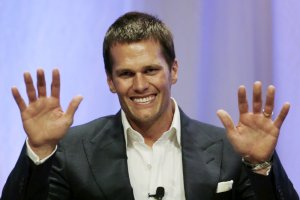
New England Patriots quarterback Tom Brady speaks at Salem State University in Salem, Massachusetts, May 7, 2015. REUTERS/Charles Krupa/Pool ORG XMIT: BKS06

The NFL, for the third year in a row. “Concussion,” Tom Brady, Deflategate, more evidence that NFL players are slowly killing themselves with brain damage, Johnny Manziel.  What a great sport pro football is.

Sports Cheat of the Year

Tom Brady, New England Patriots ball-deflating quarterback.  Brady eventually avoided punishment because the NFL botched both its investigation and its imposition of penalties, but his smirking, cynical comments about the incident made it clear that he thinks cheating is no big deal, and most of his fans agree.

Not surprisingly, Brady supports Donald Trump.

Unethical Lawyers of the Year

Law Firm Division:  Lawyers Stephen Diaco, Robert Adams and Adam Filthaut of the Florida firm Adams & Diaco were found to have “maliciously” set up the drunken-driving arrest of their opposing counsel in a  high-profile defamation trial. The plot involved a comely paralegal and a cooperative DUI cop. Last I checked, it looked like all three lawyers would be disbarred for life.

Scary Lawyer Division: California lawyer Douglas Crawford  held a can of pepper spray a yard from the face of the opposing lawyer saying, “I will pepper-spray you if you get out of hand.” Then the lawyer pointed a stun gun at Traver’s head and said, “If that doesn’t quell you, this is a flashlight that turns into a stun gun.” To show he wasn’t kidding, Crawford discharged the stun gun the startled lawyer’s face.

Hard-working Lawyer Division: Massachusetts lawyer,  Karen Andrade, was  charged with prostitution after a police investigated a report by a suspicious neighbor and  found online reviews of both the lawyer’s legal services and her escort services

Celebrity Lawyer Division: Michael Cohen,  one of Donald Trump’s lawyers, told the Daily Beast that it was legally impossible for a man to rape his wife. He was only a couple of decades and many court cases behind on his research. That piece of legal scholarship came after he had threatened the website’s staff in language usually associated with loan sharks and pimps.

Unethical Prosecutor of the Year
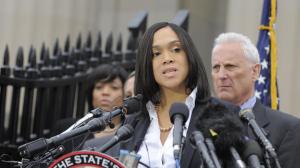
Mosby

Baltimore’s City Attorney Marilyn Mosby
Continue reading

The Case Of The Snoozing Prosecutor

cigar ash

There is a true story about Clarence Darrow putting a wire in his cigar and puffing it during an opponents closing argument to the jury. The idea was to create an absurdly long ash, so the jury would become distracted and watched to see when it would fall on his suit, when they were supposed to be paying attention to the summation. I’ve used that story in ethics seminars, asking attendees if this was unethical, and if so, was there a rule that could be used to punish a lawyer who did it.

Now comes word that the Maine Supreme Judicial Court ruled  on Tuesday that there was no prejudicial error in the trial of Buddy Robinson, who was convicted in the death of his downstairs neighbor, despite the fact that the prosecutor, then Assistant Attorney General Andrew Benson, pretended to fall asleep during his Robinson’s lawyer’s closing. Robinson had appealed the verdict because of this and other questionable conduct by the prosecutor. Benson admitted that he sometimes pretended to be asleep in trials to annoy defense attorneys. In its opinion denying the appeal, the court concluded that the trial judge did not err in denying Robinson’s motion for a new trial, given the strength of the prosecution case.

It also said that the fake sleep bit “was sophomoric, unprofessional and a poor reflection on the prosecutor’s office.”

It’s also an ethics violation, a couple of ways. Maine’s Rules… Continue reading

Ethics Alarms’ All-Time Greatest Hits

AllTimeGreatestHits

I am listing these because one of the past posts that keep drawing readers is going nuts today: the 2013 essay about the horrible Wanetta Gibson, who sent Brian Banks, a young man with a bright future to prison by falsely accusing him of rape when she was 15. If anyone has any idea why this would be, let me know; as far as I can find out, there are no new developments in the case.

It is gratifying that so many Ethics Alarms posts continue to find new readers. Here are the top ten that have “legs,” and my assessment of why.

1. The Rationalizations List. That’s no surprise, since I link to it so frequently, and it is also frequently updated.

2. Wanetta Gibson Is Even Worse Than We Thought

3.The Amazing Mouthwash Deception: Helping Alcoholics Relapse For Profit. I am proud of this one. The use of mouthwash by alcoholics is epidemic, yet now, as in 2010 when I wrote this, almost nobody who isn’t a drunk is likely to know it. This makes it easy for closeted alcoholics to hide their illness, and continue to harm themselves by gulping 54 proof liquor out of various convenient containers or their caps, which are coincidentally shaped like shot glasses. Incredibly, the Ethics Alarms post is still one of the few references on this problem on the web. As you will read, I think the makers of mouthwash intentionally keep it this way, because the alcoholic market is huge.

I regularly receive thanks from family members of alcoholics, who tell me that reading this post led to their discovering that a loved oned had relapsed. Continue reading

Tales Of The Unethical: A Client Hacks, His Lawyer Cheats, And HIS Lawyer Spins

hackedWhat a mess.

Missouri lawyer Joel Eisenstein saw two documents illicitly obtained by his client: a payroll document for the client’s wife and a list of direct examination questions prepared by his client’s wife’s attorney for an upcoming divorce trial.

This kind of stuff, proprietary material that is handed over to a lawyer by someone, including a client, who received it under dubious circumstances is ethically radioactive. As the DC bar wrote in Ethics Opinion 318…

When counsel in an adversary proceeding receives a privileged document from a client or other person that may have been stolen or taken without authorization from an opposing party, Rule 1.15(b) requires the receiving counsel to refrain from reviewing and using the document if: 1) its privileged status is readily apparent on its face; 2) receiving counsel knows that the document came from someone who was not authorized to disclose it; and 3) receiving counsel does not have a reasonable basis to conclude that the opposing party waived the attorney-client privilege with respect to such document. Receiving counsel may violate the provisions of Rule 8.4(c) by reviewing and using the document in an adversary proceeding under such circumstances and should either return the document to opposing counsel or make inquiry of opposing counsel about its status prior to determining what course of action to take. Continue reading

Now THAT’S An Unethical Lawyer!

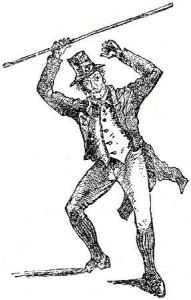
"Ay, ye fekin' eejit, I'll be reefing ye with me shillelagh!"  TRANSLATION: "Disbar me, quick!"

“Ay, ye fekin’ eejit, I’ll be reefing ye with me shillelagh!” TRANSLATION: “Disbar me, quick!”

Yesterday I posted on Facebook a real news story about an Australian teen who plotted to plant explosives on a kangaroo and sent it hopping to a terrorism target. This story, about a Louisiana lawyer who is either trying to get disbarred (with apparent success) or has lost his mind struck me about the same way. Everything seems to spinning out of control.

The Louisiana Bar Disciplinary Board  has recommended permanent disbarment for lawyer Ashton O’Dwyer Jr. This passage of its report particularly appealed to me: During a June 2012 hearing by the committee, O’Dwyer “had to be admonished for brandishing about his shillelagh, his action clearly inappropriate for a disciplinary proceeding.”

Clearly.

That’s just a sample. Here’s a random selection of some examples of how this spunky Irishman has behaved,  from the “How To Get Disbarred” handbook.

O’Dwyer first ran afoul of the ethics rules  in federal court in New Orleans during Hurricane Katrina litigation, when he engaged in personal attacks on the judge and opposing counsel, and engaged in other irregularities “prejudicial to the administration of justice.”  He was suspended by that court in 2008 for his  conduct. In response, he…

….filed a “Declaration of His Intentionally Contemptuous Non-Compliance with the Court’s Order”…

….called the Louisiana Supreme Court a “bunch of kids”…

…referred to the chief justice with a “sexual and offensive nickname,” according to hearing board’s findings of fact.

O’Dwyer then sent an email to the disciplinary counsel in which he implausibly denied the use of racially disparaging terms, which the bar found to be “disingenuous.” Then he sent another email the same day calling the disciplinary counsel a “pimp,” a “puppet,”  “Uncle Tom” and an “Oreo.”

Nothing racially disparaging about any of that, right? All of this got him disbarred for a minimum of two years. Continue reading

Ethics Heroes: The Orleans Public Defenders

foldersWhen is it your ethical duty to refuse to do your job? Here is one example.

The Orleans Public Defenders office finally decided to force the issue of under-funding for the defense of indigent criminals in the city, announcing last week that, as Chief Defender Derwyn Bunton warned nearly two months ago without any official response, it will begin refusing to handle serious felony cases in which defendants face lengthy or life sentences. Such cases include murder, attempted murder, forcible rape and armed robbery.

The office either needs more funding or reduced caseloads. The city must provide a lawyer for those charged who cannot afford counsel (The 6th Amendment and the Supreme Court insist) , but like almost every city in the nation, the funding for the New Orleans public defenders service is pitiful. With an inadequate staff of lawyers who must handle more cases than it is possible to defend competently, this creates both a Constitutional crisis and an ethical one.

Defense lawyers, like all lawyers, must do a competent job. The professional ethics rules require attorneys to control their workloads: Comment 2 to ABA Rule 1.3, which corresponds to the Louisiana rule, states that a lawyer’s workload “must be controlled so that each matter may be handled competently.” Most public defenders offices know that their clients’ right to representation is being compromised by under-funding, but choose to soldier on, doing the best they can. Several years ago, one office even argued that their clients had “consented” to less than competent representation, because the alternative was no representation at all.  (The court did not agree.)

The American Bar Association addressed this problem in a formal opinion, and wrote, Continue reading

David Brooks’ Dirty Hit On Ted Cruz: How Pundits Lose Credibility

That's some role model you've chosen there, David

That’s some role model you’ve chosen there, David

…or at least deserve to.

Here is how New York Times columnist David Brooks begins his character evisceration of Ted Cruz:

“In 1997, Michael Wayne Haley was arrested after stealing a calculator from Walmart. This was a crime that merited a maximum two-year prison term. But prosecutors incorrectly applied a habitual offender law. Neither the judge nor the defense lawyer caught the error and Haley was sentenced to 16 years.

Eventually, the mistake came to light and Haley tried to fix it. Ted Cruz was solicitor general of Texas at the time. Instead of just letting Haley go for time served, Cruz took the case to the Supreme Court to keep Haley in prison for the full 16 years.

Some justices were skeptical. “Is there some rule that you can’t confess error in your state?” Justice Anthony Kennedy asked. The court system did finally let Haley out of prison, after six years.”

From this, Brooks goes on to conclude…

…Cruz’s behavior in the Haley case is almost the dictionary definition of pharisaism: an overzealous application of the letter of the law in a way that violates the spirit of the law, as well as fairness and mercy….Cruz’s speeches are marked by what you might call pagan brutalism. There is not a hint of compassion, gentleness and mercy. Instead, his speeches are marked by a long list of enemies, and vows to crush, shred, destroy, bomb them.

Cruz’s behavior in the Haley case [Dretke v. Haley] does nothing of the sort. The columnist intentionally—I’m assuming that he read the case, now—misrepresented what the case was about, how the court reacted, and what Cruz’s ethical duties were regarding it. As it happens, I share much of Brooks’ dislike of Cruz’s rhetoric. This case, however, tells us nothing about Cruz’s character. It tells us that that as Solicitor General of Texas, Cruz did his job, which was to represent his client’s position.

James Taranto, the pretty damn brilliant Wall Street Journal blogger, wit and conservative pundit, nails Brooks to the wall. He writes in part… Continue reading

Here’s What Was REALLY Wrong With Bill Cosby’s Sweater…

Cosby sweater

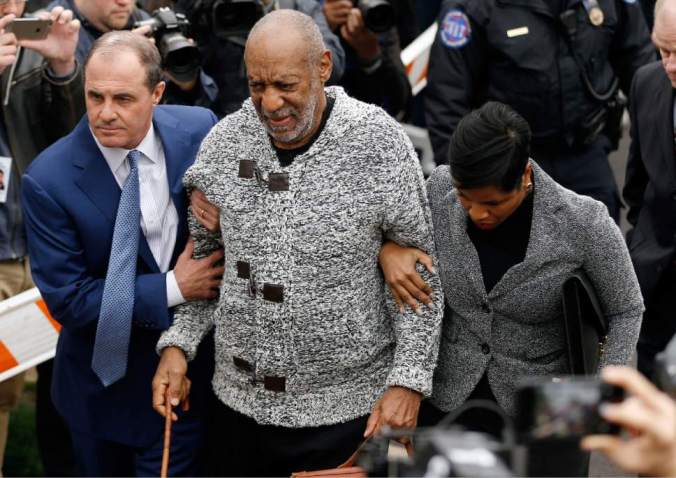
Washington Post fashion editor Robin Givhan set off a lively controversy by alleging that the “grandpa” sweater Bill Cosby wore to court was a calculated and manipulative ploy to gain public sympathy. “Bill Cosby’s perp walk was striking for its overwhelming lack of grace and power. It was an exploitation of our assumptions of fragile old age,” she wrote.  “It was the explicit manipulation of a studiously unattractive sweater.”

Was it? Lawyers often micro-manage a clients’ appearance in court; when it amounts to deception, I have written that it is unethical. Cosby’s attire seems hardly deceptive; after all, he is famous for his sweaters. There is even a pop song called Cosby’s Sweater. Ann Althouse agrees with Givhan that it was “a con,” but suggests that it’s an ethical con because “everybody does it.”

I don’t understand either Givhan’s logic or Althouse’s, and if Cosby’s lawyers talked him into this costume, they did him no favors. Cosby’s best armor against the verdict of public opinion is that Cliff Huxtable would never do the horrible things he’s being accused of.  There is no better, more benign, more appealing image of Bill Cosby than “TV Bill Cosby” as we fondly remember him. In court, he looked like a dirty old man, which is what he apparently is. Cliff Huxtable wouldn’t be caught dead wearing a sweater like that to court. (Bill would have also been well-advised to shave.) Continue reading