The Most Unethical Prosecutor Of All: Baltimore’s Marilyn Mosby

Mosby

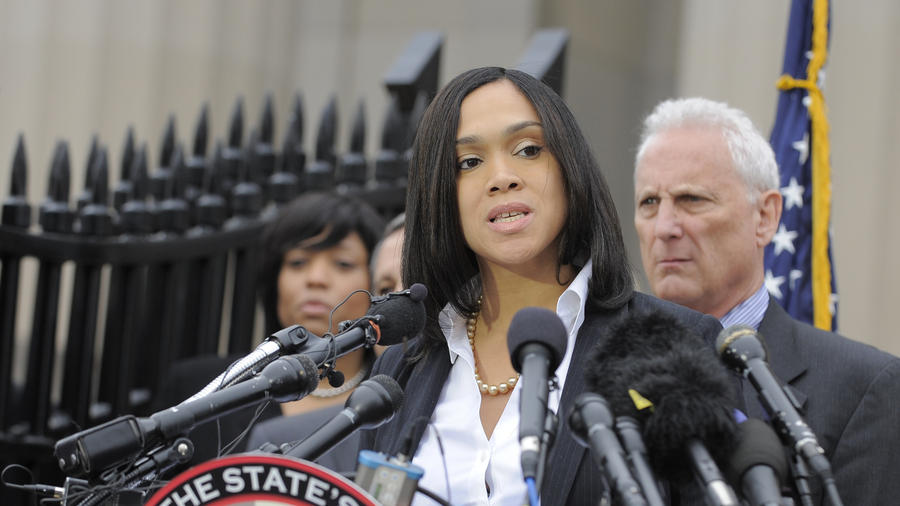
In a legal ethics seminar I taught this week for government attorneys, the vast majority of them voted that Marilyn Mosby’s vainglorious announcement of charges against six officers in the death of Freddie Gray was prosecutorial abuse, and a blatant violation of professional ethics rule 3.8, which directs that (this is the Maryland version)…

The prosecutor in a criminal case shall:

(a) refrain from prosecuting a charge that the prosecutor knows is not supported by probable cause;


(e) except for statements that are necessary to inform the public of the nature and extent of the prosecutor’s action and that serve a legitimate law enforcement purpose, refrain from making extrajudicial comments that have a substantial likelihood of heightening public condemnation of the accused and exercise reasonable care to prevent an employee or other person under the control of the prosecutor in a criminal case from making an extrajudicial statement that the prosecutor would be prohibited from making under Rule 3.6 or this Rule.

Of course it was a breach of ethics, and an outrageous one. Her statement, which I discussed here, not only overstated her justification for bringing the charges, which were rushed and announced before a careful investigation was completed, it also stated that the officers were guilty, and worse, that the charges were being brought because the demonstrating and rioting protesters has demanded it. Mosby’s words suggested that she stood with the mob. Continue reading

Statutory Rape Case Study: The Ethical Necessity Of Prosecutorial Discretion

animal-house-1

Reason tells the troubling story of computer science majoring college student Zach Anderson, 19, who made the acquaintance of a girl  on the “Hot or Not?” app. He was in Indiana, she was in Michigan, a short drive away. They arranged a sexual liaison, a one-time hook-up. The girl lied about her age, though, in person and on her website profile: she was really just 14, just like innocent Larry “Pinto” Kroger’s seductive girl friend in “Animal House” (shown above in her last-second moment of candor*) and thus unable to legally consent to sex. Unlike Pinto, Zach’s fate wasn’t amusing. He  was arrested and tried.

The girl admitted that she lied about her age, and her parents didn’t blame Zach. They asked that the case be dropped. It wasn’t. Without a defense on the facts of the case, Zach made a plea bargain, pleading guilty in exchange for the prosecutor’s promise not to oppose his request for leniency under a Michigan provision for first-time sex offenders under 21 that allows them to avoid off the sex offender registry. The prosecutor then double-crossed him, technically not opposing leniency but reminding the judge that he had rejected such appeals to the leniency provision in the past. (Yes, that is opposing it. Yes, that’s unethical. Yes, the prosecutor is an asshole.)

Then Berrien County District Court Judge Dennis Wiley sentenced Anderson to 90 days in jail and placed him on the Sex Offender Registry for 25 years, lecturing him: Continue reading

Obama Administration Ethics Train Wreck Update: The James Clapper Perjury Follies

NSA head James Clapper testifying, forgetting, speaking in code, misleading or lying. Something. Whatever.

NSA head James Clapper testifying, forgetting, speaking in code, misleading or lying. Something. Whatever.

The Obama Administration not only lies, but encourages and rewards lying. This is an inescapable conclusion. The saga of James Clapper’s perjury before Congress is a perfect, and depressing example.

At a March 2013 Senate hearing, Senator Ron Wyden, prompted by the leaks of classified information through Edward Snowdon, asked head of the NSA James Clapper, “Does the NSA collect any type of data at all on millions or hundreds of millions of Americans?”

“No, sir,” Clapper replied. “Not wittingly.”

That means, by any assessment, “If we do, it’s not intentional.” That was a lie. Clapper knew it was false. Wyden later said that he had sent his question to Clapper’s office a day before the hearing, and after the hearing had given Clapper’s office a chance to correct the misstatement after the hearing, but it did not. In June, the nation learned that the agency was routinely collecting data on the phone calls of millions of Americans. (This was the program just declared illegal by a federal court.)

NOTE: The original post erroneously attributed the decision to the Supreme Court. It hasn’t heard the case yet. That was a bad and careless mistake, and I apologize for it. Nothing like not checking your own links, Jack.

The government, including Clapper, has now attempted a dizzying array of rationalizations, excuses and obfuscations to avoid the unavoidable conclusion that Clapper lied to Congress while under oath, that he should be prosecuted, or at very least be fired by that leader of the Most Transparent Administration in History That Somehow Manages To Lie every Time A Mouth Open, Barack Obama. Even by the standards of this sorry administration, it’s an ugly journey into the cold heart of an untrustworthy government. Continue reading

A Particularly Dangerous Ethics Dunce Display: State’s Attorney Marilyn Mosby’s Unethical Statement Regarding Charges In The Death Of Freddie Gray

State’s Attorney Marilyn Mosby announced today that the six Baltimore police officers involved in the arrest and subsequent death of Freddie Gray  have been charged with criminal charges  second-degree murder, manslaughter, second-degree assault, vehicular manslaughter , and misconduct in office. I have no comment on that: I haven’t seen the evidence. I will assume the charges are justified base on what evidence there is.

Nonetheless, Mosby’s announcement and related statements from  the steps of Baltimore’s War Memorial Building were unethical, and indeed  constituted a professional ethics breach:

  • Mosby said she told Gray’s family that “no one is above the law and I would pursue justice upon their behalf.” Unethical. Her client isn’t the family. Her client is the state. If the evidence appears too weak to get a conviction based on any new revelations, her duty to her client, which only requires justice, not justice for any party, would be to drop the case. Telling the family that she is working “on their behalf” is either a lie, or, if true, unethical. She is not their lawyer or the victim’s lawyer.
  • “I heard your call for ‘no justice, no peace,'” she said. “Your peace is sincerely needed as I work to deliver justice on behalf of this young man.”

Ugh. Again the “on behalf of” misstatement. Worse, though, is “I heard your call for ‘no justice, no peace.” What are we to take from this statement, other than the disgraceful admission that the indictment is in response to mob violence and threats of more? She may not say that. By saying it, she has undermined the rule of law. Prosecutors must not”hear” demands that a citizen be prosecuted, or not prosecuted. They are ethically obligated to ignore them, and do what the evidence dictates.

The demonstrators obviously got her meaning. Desmond Taylor, 29, shouted to the crowd,  “This day means that your actions bring consequences in Baltimore City.”

Imagine what else riots and arson might bring! Continue reading

Acting Ethics: Why We Don’t Want Actors Being Too Picky About Their Roles

FergusonX

In the strange ethics category of “Conduct That Isn’t Exactly Wrong But That Will Have Nothing But Bad Consequences To Society If There Is A  Lot Of It” (CTIEWBTWHNBBCTSITIALOI for short) is actors rejecting roles because they have philosophical or political disagreements with the script.

We’ve had two high profile examples of this occur lately. All we can do is hope that it’s a coincidence. The first was when about a dozen Native American actors, including an adviser on Native American culture, left the set of Adam Sandler’s first original movie with Netflix, “The Ridiculous Six,”a western send-up of “The Magnificent Seven,” claiming some of the film’s content was offensive.

Really? An Adam Sandler movie offensive?

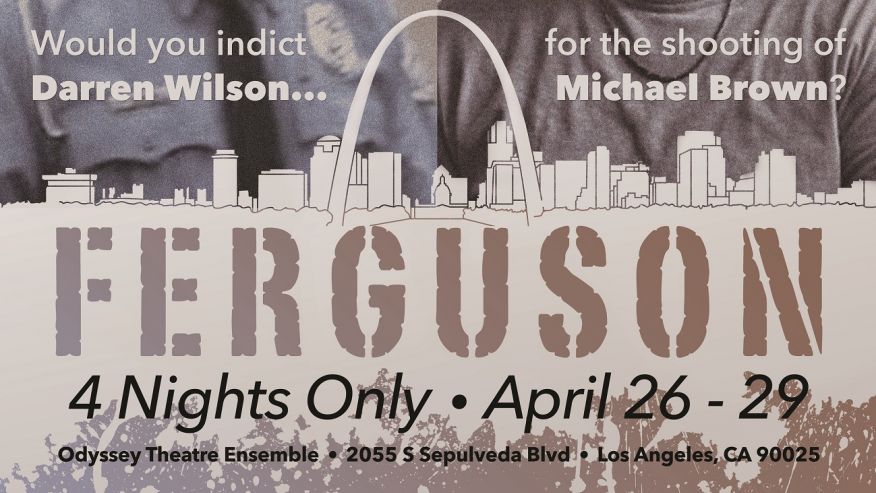
The second and more troubling was in LA,  where five actors quit the cast of the new play “Ferguson,” which consists entirely of dramatizations of the Michael Brown murder grand jury testimony, because the actors apparently felt that it did not appropriately support the “Hands Up! Don’t Shoot!” narrative.

That’s really stupid, but I’m not getting into that again.

We don’t see many examples of professional actors doing this for several reasons. One is that they can’t afford to. Acting, except for the top fraction of a per cent, is anything but lucrative; it’s a subsistence level job, redeemable because it is, or can be, art, and tolerable as long as the actor doesn’t have a family to support, or has a trust fund.

The main reason this is unusual, however, is that an actor isn’t responsible for the content of the play, movie or TV show he or she acts in, but only the skill with he or she helps present that content to an audience. Actors—and technical artists like costume and light designers—are the conduits through which a writer’s work of performance art gets to live. They don’t have to like a show, agree with it or understand it, which is a good thing, since many excellent actors don’t have the  education, experience or intellect to understand complex and profound works. As one realistic actor friend once told me, “If we were that smart, we’d be smart enough to be in another profession.” Continue reading

Inevitable, Unethical, Technological Incompetence By Our Governments

Hey, what could go wrong?

Hey, what could go wrong?

The legal profession is in the midst of an ethics crisis not of its own making. New technologies, including social media, have created opportunities for vastly improved legal services, to such an extent that the American Bar Association has decreed that an ethical, competent lawyer, must use them. It has also made it clear that using them carelessly to the detriment of clients is unethical as well. It all sounds reasonable, except for this: few lawyers are equipped by education, training or nature to be adept at technology. Worse, technology is now changing so fast that few lawyers can keep up with it.

Thus they make mistakes. Costly mistakes, disastrous mistakes, stupid mistakes, and there is no learning curve, because by the time lawyers understand and master a new technology, it is no longer new, and it has taken on a different form that requires them to start all over again. The ABA and other bar associations have acknowledged this through inaction. After numerous instances where their ethical guidelines regarding the use of technology were obsolete or wrong from the moment they were issued, these bodies have resorted to general edicts only, essentially saying, “You must master available legal practice technology, and you must not screw it up. Don’t ask us how, we’re as confused as you are.”

Gee, thanks.

Unfortunately, it is not just the legal profession that is in peril from technological overload, unrealistic expectations and the speed of innovation. Our various levels of governments are, if anything, in even worse peril from the same phenomenon.

One week ago, the Virginia State Board of Elections frantically voted to  decertify use of the AVS WinVote touch-screen Direct Recording Electronic voting machine, meaning that the machines, which were used by dozens of cities and towns in Virginia, are effectively banned. Virginia is holding primaries  just two months from now, so this has thrown those local governments into a panic. The decision was unavoidable, however, after a shocking a report that demonstrated that the machines could be hacked, and elections rigged, by a 12-year-old…that is, anyone with more technological expertise than local government officials.

Continue reading

Typo Ethics: Early Accountability Check For Candidate Clinton

“From her mother’s own childhood – in which she was abandoned by her parents – to her work going door-to-door for the Children’s Defense Fund to her battling to create the Children’s Health Insurance Program, she’s fought children and families all her career.”


That doesn't mean they don't matter, however...

That doesn’t mean they don’t matter, however…

That was the startling news in Hillary Clinton’s long-awaited presidential candidacy announcement: that Hillary has fought families and children all her career. As an ethicist, I find the candor laudable, but I am surprised that Mrs. Clinton is making such a strong bid for the anti-family and child-hating voting bloc.

OK, it’s a typo. The Clinton campaign website fixed it, and her spokespeople reassured the news media “that the former secretary of state has not been secretly fighting children all these years.”

I almost passed on this story, being seldom able to post a typo-free 800 words myself despite reading the damn things repeatedly, but that would have been cowardly. This is not necessarily trivial. This bears some watching. I know that the large Hillary Zombie Squad, which appears to care only about the former First Lady’s chromosomes and nothing else, won’t give a second’s thought to this if her destruction of e-mail evidence and willful skirting of her own agency’s transparency and security policies don’t trouble them, but it is not insignificant. Continue reading

Slager’s Lawyer Unethically Throws Him Under The Bus (Not That He Doesn’t Belong There)

Professional Tip: Lawyers, it's unethical to do this to your clients!

Professional Tip: Lawyers, it’s unethical to do this to your clients!

When a lawyer believes that representing a client is something that he or she cannot do effectively, either because of a deep personal bias against the client, another conflict of interest, a reasonable belief that the client is untrustworthy or unmanageable, or some other good reason, his duty is to withdraw from the representation. Believing or even knowing that the client is guilty is not a good reason. Guilty clients have rights, the system demands a competent defense, and sometimes—rarely, but it happens—a lawyer can be surprised to find out that his “guilty” client isn’t guilty after all.

Withdrawal from a representation is appropriate and allowed in the circumstances defined by ABA Rule 1.16: Continue reading

A Remorseful Prosecutor Apologizes

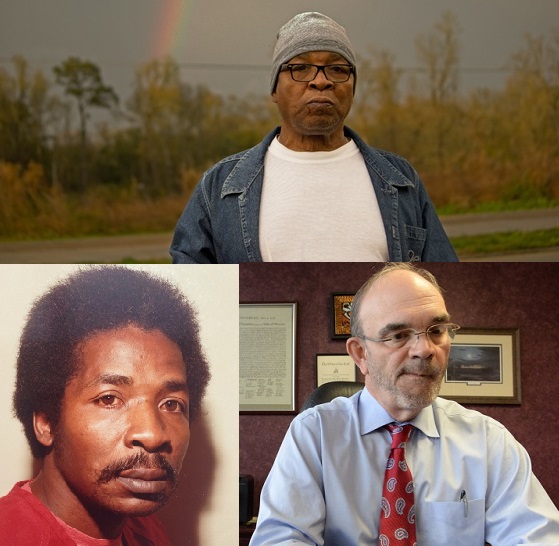
Above: Glenn Ford Today. L-Ford in 1983 R-The apologetic prosecutor

Above: Glenn Ford Today. L-Ford in 1983 R-The apologetic prosecutor

Now THIS is a #1 Level apology on the Ethics Alarms Apology Scale.

It’s more than an apology, really: it approaches self-flagellation. The tragic aspect of the confession and apology of former prosecutor  A.M. “Marty” Stroud III,  is that no one can really apologize for what he did, not after 30 years. For Stroud was the lead prosecutor in the December 1984 first-degree murder trial of Glenn Ford, who was convicted and sentenced to death for murdering Isadore Rozeman. Ford was innocent, and was finally released a year ago. His is a classic, horror story of justice derailed. Continue reading

Ethical! Funny! But Stupid: Kentucky’s Risible Same-Sex Marriage Ban Defense.

laughing Scotus

Supreme Court justices deserve to have a good laugh now and then.

Michigan, Ohio, Kentucky, and Tennessee are all defending their legislative bans on gay marriage in briefs before the U. S. Supreme Court. Only one of their legal teams came up with—-or had the guts to include—the novel argument contained in the Bluegrass State’s brief, which explains why a ban on gay marriage does not “discriminate on the basis of sexual orientation”:

Kentucky’s marriage laws treat homosexuals and heterosexuals the same and are facially neutral. Men and women, whether heterosexual or homosexual, are free to marry persons of the opposite sex under Kentucky law, and men and women, whether heterosexual or homosexual, cannot marry persons of the same sex under Kentucky law.

This is in the amusing category of arguments that make technical sense in legal terms—well yes, come to think of it, if you look at it that way, you’ve defined discrimination right out of the case!— but no sense whatever in the real world. Gays can’t marry their intended life partner but heterosexuals can; that’s obviously unequal treatment and constitutes discrimination. The defense deceitfully pretends that the whole reason for the emotional controversy doesn’t exist: “Love? What’s that? We know nothing of this thing you call love!”

These come up all the time when legal teams are brainstorming which theories to pursue in an appellate brief, and are virtually always discarded after some general amusement and admiration for the Clintonian who devised it. There is nothing unethical about including a dubious argument along with better ones in a brief, even a Supreme Court brief: consider the position that carried the day in the Obamacare case, when Chief Justice Roberts adopted a rationale for the individual mandate that the Obama Administration had repeatedly rejected and denied. The problem is that such an off-the-wall argument is risky:

1. It pulls time, attention and consideration from more promising arguments.

2. It makes the client look foolish or unserious to the public.

3.  Worse, it might make the client look foolish to the justices.

4. Some justice might react to it as an insult to his or her intelligence.

More than all of that, however,the argument is not going to work. Can you imagine what the reaction would be if the Supreme Court endorsed gay marriage bans relying on that logic? The argument is a non-starter, so including it in the brief sends a loud and clear message that no appellate lawyer ever wants a judge to hear:

“We got nothin’.”