The Sixth Annual Ethics Alarms Awards: The Worst of Ethics 2014 (Part 2)

Rice and Janay

Ethics Corrupter of the Year

(Awarded to the unethical public figure whose prominence, popularity and success most corrupts the public’s ethical values)

Janay Palmer Rice, beloved punching bag of NFL star Ray Rice, who was caught on camera smooching with her man shortly after being cold-cocked by him in a hotel elevator, married him, and has repeatedly defended her husband, prompting confused female pundits to defend her. She is not only the embodiment of Rationalization #42. The Hillary Inoculation, or “If he/she doesn’t care, why should anyone else?”, she is also a good bet to get some young women killed by giving them a role model who stands for standing by your abusive man with the hard right hook.

Double Standard Of The Year

In a year of double standards, the treatment of soccer star (and accused child abuser) Hope Solo by her sport, feminists, the media and the public takes the prize. The standard, as I understand it, is that big, strong female athletes can beat up smaller, weaker family members with impunity, and it’s no big deal, but when a male athlete does the same, he is scum. Got it.

Uncivil U.S. Official of the Year

Victoria Nuland, Assistant Secretary of State for European and Eurasian Affairs and the top American diplomat in Europe, was caught saying in a viral Youtube video saying “Fuck the EU.”  Now that’s diplomatic. Of course, she wasn’t fired, because she works for the Obama Administration

The Jesse Jackson Award 

(For the Year’s Worst Amateur Diplomat)
mo_selfie_lg

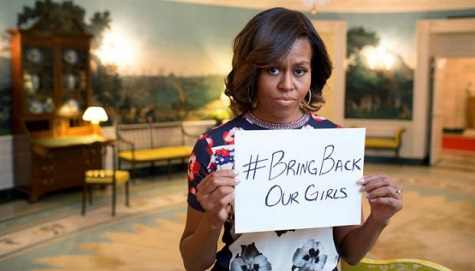
First Lady Michelle Obama, who helped her husband make the U.S. look weak and ineffectual (he needs no help), by engaging in this ridiculous effort at hashtag diplomacy. Those kidnapped girls were never found, and Boko Haram, the Nigerian terrorist group that took them, I learned today, just killed a reported 2000 more victims. Time for another sad picture, Michelle!

Most Unethical Sports League

The NFL, last year’s winner, was even more unethical this year, with the Ray Rice and Adrian Peterson fiascos, Commissioner Roger Goodell showing no innate instinct for right and wrong and both the league and its teams making up rules and policies according to talk show calls, polls and wet fingers in the air. Meanwhile, it’s still making billions paying young men to lobotomize themselves. What a great sport.

Sports Cheat of the Year

Alex Rodriguez, suspended Yankee star, had denied, denied, denied, threatened to sue Major League Baseball and the union, and insisted that he had not, as an investigation had determined, used performance enhancing drugs supplied by Biogenesis. Then, just as his season-long suspension was lifted, it was revealed that A-Rod had, under oath, admitted using steroids from 2010 to 2012.

Annual Sports Ethics Controversy That Gets Worse Every Year

Steroid cheats (like Rodriquez) and their fitness for admission to Baseball’s Hall of Fame

Unethical Lawyer of the Year

Michael Fine, the Ohio lawyer who allegedly hypnotized female clients in order to sexually molest them.  Runner Up Alexa Van Brunt. She didn’t do anything unethical; she just advocates ethics rules that would eliminate the core of legal ethics, proving that she doesn’t understand her own profession.

Unethical Judge of the Year

judge_mccree

Wade McCree, the handsome devil pictured above (he circulated this selfie), who, presiding over a felony child-support case, conducted a secret sexual relationship with the woman seeking support from the defendant. This was just the latest of his embarrassments.  Runner up: Texas District Judge Jeanine Howard, who handed down a stunningly lenient sentence of probation and 250 hours of community service at a rape crisis center for a man who confessed raping a 14-year old girl at her school.


Unethical National Broadcast Journalist Of The Year

CNN’s Carol Costello. She was biased, smug and incompetent all year long, but reached her nadir when she gleefully played a recording of Bristol Palin explaining to police how she had been assaulted, saying to her viewers, “You can thank me later.” She refused to apologize on the air, or to Palin. Continue reading

Observations On The ACLU And “Grand Juror Doe’s” Power Play

Juror Doe now, but trying to become a household name...

Juror Doe now, but trying to become a household name…

In a move that tarnishes the reputation of the ALCU and reveals the deep ideological bias in its ranks, the Missouri chapter of the esteemed organization has encouraged a Ferguson grand juror to sue in order to end the lifetime ban on grand  jurors revealing what occurs during proceedings, allowing the juror to become a media star and, presumably, undermining the credibility of the deliberations that resulted in no indictment against Officer Wilson for his fatal shooting of Michael Brown.

Observations:

1. Grand jury proceedings have to be confidential, or the system will not work (yes, it worked as well as it possibly could have in Ferguson.) Secrecy prevents those who are being investigated from interfering with witnesses and otherwise tampering with and attempting to corrupt the investigation. It protects witnesses who might be reluctant to testify if they believed their comments would be made public. It decreases the likelihood that one who is about to be indicted by a grand jury will flee and thereby avoid being brought to trial on those charges. It also protects innocent individuals whose names may be implicated in a grand jury investigation but who will never be indicted.

2. The prohibition on participants in grand jury proceedings revealing what occurs there is not a restriction on free speech any more than a government employee being prohibited from revealing national security information. This is a necessary restriction based on due process and the functioning of the rule of law, and grand jurors agree to the prohibition as a condition of service.

3. The ACLU is grandstanding for its progressive, civil rights zealot fans and contributors. This is an irresponsible case: if it prevailed, the justice system would be thrown into chaos.

3. If even one grand jury is able to have the ban on secrecy lifted, every grand jury will labor under the fear of those involved that jurors will speak to the media and reveal harmful details. I will be shocked if the ACLU lawsuit succeeds. I think it is a frivolous suit, and a violation of legal ethics Rule 3.1 that prohibits such actions.

4. The grand juror who is seeking the lifting of the ban has arguably already revealed more than he is allowed to do legally under the law, which prohibits disclosing “matters occurring before the grand jury.”

5. The supposed explosive revelations the juror wants to expand upon are nothing at all, just ignorant and biased complaints that have already been thoroughly explored and debated by legal experts. The likes of progressive website Think Progress falsely represents the juror’s views as “significant” because progressives so, so desperately want to prove that Michael Brown was executed by a racist cop who was corruptly exonerated by a biased prosecutor. But as Gertrude Stein said of Oakland, there is no there there.

Here are Grand Juror Doe’s “concerns”: Continue reading

Prosecutor Ethics, “What The Hell Were You Thinking?” Dept: Dog-Whistling “Dixie” To The Jury

"Wait...WHAT did you just say??"

“Wait…WHAT did you just say??”

Canyon County Deputy Prosecutor Erica Kallin wanted to make the point that the defense attorney for the African American defendant, James D. Kirk, was trying to lead the jury to ignore the evidence that pointed to his guilt in his trial for lewd conduct with a 17-year-old girl and sexual battery of a 13-year-old girl—making them, in effect,”look away” from the truth. How could she make that argument in a vivid way? Clarence Darrow used to use poems in his famous closing arguments; was there a memorable poem that used the phrase, “look away”?

“Eureka!” Erica thought. She found it! So she said to jury deliberating on the case:

“‘Oh I wish I was in the land of cotton. Good times not forgotten. Look away. Look away. Look away,’ And isn’t that really what you’ve kind of been asked to do? Look away from the two eyewitnesses. Look away from the two victims. Look away from the nurse and her medical opinion. Look away. Look away.”

The jury convicted Kirk, on both counts; the evidence against him was indeed strong. He was sentenced to 20 years in prison. Continue reading

A Lawyer Argues “Do No Harm” Should Be Added To The Legal Ethics Rules, Thus Proving Herself To Be A Hopelessly Unethical Lawyer

This is Alexa. She'll let you know if your client is good or bad, and whether you should help him. Just ask.

This is Alexa. She’ll let you know if your client is good or bad, and whether you should help him. Just ask.

Lawyer Alexa Van Brunt contributed a jaw-dropping op-ed to the Washington Post over the holidays. It was titled “The ‘torture’ memos prove America’s lawyers don’t know how to be ethical,” and argued that the legal profession needs the equivalent of the medical profession’s “First do no harm” ethical standard.

It was irresponsible for the Post to print such a piece, because it made its readers, most of whom are thoroughly confused about legal ethics already, even more confused. So far, I have yet to find any lawyer who regards Van Brunt’s theory as anything other than laughable, tragic, shocking, or proof that ideology rots the brain. She cannot possibly understand legal ethics or even what the duties of the legal profession are and compose such an embarrassing piece.

Alexa Van Brunt is, we are told, an attorney at the Roderick and Solange MacArthur Justice Center, a Clinical Assistant Professor at Northwestern University Law School and Center, and a Public Voices Fellow with The OpEd Project. This explains a lot. She is a public interest lawyer on a mission, and thus represents only causes that she thinks are good, right and important. Apparently she missed the part of law school where you learn that one of a lawyer’s jobs is to assist non-lawyer clients as they try to accomplish their goals, which they believe are good, right, and important. These often involve engaging in controversies with others, and zero-sum results. Someone is going to suffer “harm.”

In medicine, what “do no harm” means is frequently clear: make the patient better, not worse. There are usually not competing patients, where a limited amount of health must be allotted among suffering human beings. Thus a doctor will not ethically take a healthy heart from a living patient to give to another. In law, however, “Do no harm” would render many disputes beyond legal assistance. Is a defense lawyer who refuses to let a guilty client be convicted by insufficient evidence, jury bias and wrongful interpretation of the law doing harm by freeing a criminal, or is it harm to allow prosecutions to violate due process? Is a real estate lawyer who assists as a company purchases virgin land for the building of a factory doing harm to the environment, or is the lawyer for the environmental group that tries to block it doing harm to the economy?

Van Brunt’s primary focus is the torture issue, but even there, what is “harm” is muddy. Those who supported the use of torture believed that precluding it would place the U.S. population at risk. Alexa defines “harm” as violating international law and the Constitution, but the Constitution, some scholars believe, does not prohibit torture as the CIA practiced it, and in war, doing harm is necessary to win. Who decides whether a litigant who wants to sue for police brutality is going to do harm to public safety, or whether defending a police officer accused of murder will encourage police executions of unarmed men? Who decides, when it comes to  finding that a lawyer violated this new, sensitive ethics rule, what constitutes “harm”?

Why Alexa, of course! She and all those other good people who know with absolute certainty what is right and just in every case—they know what harm is. Just ask them. Meanwhile, client confidentiality is out, because sometimes a lawyer keeping his client’s secrets may cause harm to others. Providing legal advice to banks, defense contractors, auto manufacturers, gun-makers, processed food manufacturers, McDonalds, pharmaceuticals, the Defense Department, the CIA, pro-life organizations (abortion providers don’t harm anyone, of course), the NRA, the Republican Party, this all causes harm…by Alexa’s standards, and she knows best. We don’t need judges or juries, just let the consciences of lawyer and their associations decide which clients are virtuous enough to be worthy of legal representation.

The op-ed is not just absurd, but ignorant and alarming. How can anyone this warped and lacking in understanding of the law and the ethical duties of the profession be teaching at a law school, where she can assist in the minting of new lawyers as ignorant, arrogant and unethical as she is?

Talk about doing harm.


Is It Ethical For Professors To Date Students?

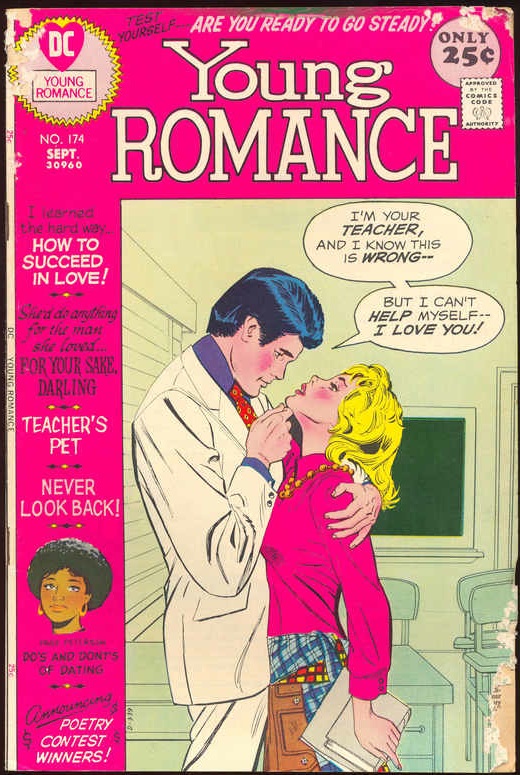
teacher-student datingProfsBlog asks the question regarding law professors and law students, but the question doesn’t change by narrowing the definition. The question is really, and only, “Is it ethical for teachers to have romantic relationships with students?” The answer is, has been, and forever shall be, “No.”

The answer to an ethics question sometimes becomes obvious when it is apparent that every argument on one side is either a logical fallacy, an unethical rationalization, or the application of an invalid ethics principle. Such is the case here, and thus I somewhat question the motives of the author of the post, Kelly Anders. Wishful thinking, perhaps? Asking the question creates the illusion that there is a real controversy. In this case, there isn’t.

I addressed this question a long time ago, in an early post here barely seen at the time but among the most frequently visited since. I wrote:

[P]rofessors [are] obligated to maintain a position of authority, objectivity and judgment as mentors and teachers of the whole student body, and [have] a duty to their schools not to allow their trustworthiness to be undermined by having intimate relationships among the same group that they [are] supposed to be supervising and advising. Dating a student is a professional breach of trust, and one that adversely effects the integrity of the entire educational institution…. The appearance created when a supervisor/manager/leader indulges in intimate relations with someone over whom they have authority, status and power—and every professor has authority over every student, in class or out— undermines the institution and the profession, by sending the false message that such relationships are standard, approved, and implicitly desirable in the culture where they occur…A professor has a potential teacher-student relationship with all students at a university, not just those in his or her classes.

Dating a student who happens not to be in one of those classes is what lawyers call “a distinction without a difference.” Many students and professors will reasonably assume that the pairing arose out of the student-teacher relationship, and in some ways it almost certainly did. A teacher always has superior power over any student by virtue of his or her position of authority, and it is an abuse of that power to use it to entice students into dates or bed…

[It] is naive to ignore the extended conflicts such relationships create. Might the professor’s best friends on the faculty be more generous when grading their friend’s significant other if he or she is one of their students? Will the professor consciously or subconsciously be easier on the friends of his student lover if they are in his class? The fact that the question can be asked shows that the situation should not occur where it can be asked.

Students, all students, must be off-limits as romantic partners for professors and administrators in universities, regardless of what rules are in place.Professors who date students risk their jobs because a student body is not their sexual smorgasbord, and it is a breach of trust and duty to treat it like one.

I wouldn’t change a word, except that typo I just noticed, and just fixed in the original. Nor is anything I wrote then revolutionary or new. These are the realities of authority, professionalism, leadership and power. It’s just that sometimes people really, really wish they were not. Continue reading

Now THIS Is An Unethical Lawyer!

"Not there, you idiot! Remember, my cousin said to find those drugs he planted UNDER the car!"

“Not there, you idiot! Remember, my cousin said to find those drugs he planted UNDER the car!”

To give you further faith that our justice system is in good hands, this guy was formerly a judge, too. In fact, it was his forced resignation from the bench that inspired him…well, let me begin at the beginning.

Georgia’s Judicial Qualifications Commission investigated Bryant Cochran, then the chief judge of Murray County’s Magistrate Court, after a woman said Cochran had made inappropriate sexual advances toward her when she came to his chambers to seek some warrants. She alleged that Cochran told her he needed a mistress and wanted her to come to his office wearing a dress and no underwear.

Smoooooth.

The results of the inquiry led to Cochran’s  resignation from the bench in August of 2012. To get his revenge, Cochran persuaded one of his tenants to plant a box containing meth under the car of his accuser. Cochran then called police with a tip that she was carrying drugs. Police stopped her car and used a drug-sniffing dog to  turn up the illegal substance, but the dog’s sniffing came to naught. A police officer who just happened to be Cochran’s cousin—hmmmmmm—  informed his colleagues that the drugs were in a magnetic container attached under the vehicle. Continue reading

Here’s A First: Kansas Suspends A Lawyer For Facebook Bullying

It's unethical for a lawyer to play a sad violin over Facebook??? Why yes, it is!

It’s unethical for a lawyer to play a sad violin over Facebook???  Why yes, it is!

Eric Michael Gamble was representing a biological father opposed to the adoption of his daughter, which had been approved by the 18-year-old mother.

After Gamble deposed the young woman, he messaged her on Facebook in a shamelessly manipulative fashion, saying…

‘I wish to offer you some reasons why you should stand up and fight for your daughter. As you know, I am the attorney for [the biological father]. We held your deposition in my office. I wanted to give you the chance to make things right. This may be your last opportunity to be a mom for [the baby]. As I told you after your deposition in my office, it is not too late. You still have a wonderful opportunity to have a real relationship with your daughter if you so choose. I have attached a document for you to consider signing and bringing to court or to my office. It is a revocation of your consent to adopt. If you sign this document there is a very good chance that you will be able to call [the baby] your own and [the baby] will call you her mom. I can’t begin to explain how beautiful and wonderful parenthood is. I have a little girl myself and she is my world just like you are your dad’s world. [The baby] deserves to know her parents. She deserves to know that you love her and care for her as well. Do not let this opportunity pass you by because you will live with this decision the rest of your life and [the baby] will know someday what happened. [The adoptive parents] do not legally have to ever let you see her again after court (although they are probably trying to convince you otherwise with the idea of an ‘open adoption’). The reason why you don’t know about the trial was because they don’t want you there because that doesn’t help [the adoptive parents] case. This is your time to get rid of the guilt and standup and do what is right and what [the baby] deserves. She deserves to have her parents love and care for her. She deserves to know her grandparents and extended family. If she’s adopted, she won’t have that chance. [The biological father] wants to be her dad and to love her. She deserves that. I urge you to print, sign, and notarize this document and bring it to my office before court. Trial is June 27, 2013, at 9:00 a.m. at the Johnson County Courthouse, Division 15. I hope to see you and your father there.’

What’s wrong with this? The legal ethics rules protect unrepresented parties in a matter from exactly this sort of pressure. Rule 4.3, in Kansas and elsewhere, prohibits a lawyer from giving advice to adversaries of his or her client, which statements like “This is your time to get rid of the guilt and standup and do what is right and what [the baby] deserves” clearly are. The rules also require lawyers to treat all participants in the justice system with fairness and respect. That message constitutes neither. Rule 4.4 says that “In representing a client, a lawyer shall not use means that have no substantial purpose other than to embarrass, delay, or burden a third person.” Gamble has a defense, of course: his substantial purpose was to have the adoption dropped like his client wanted, but since he wasn’t supposed to be talking to her anyway (other than to advise her to get a lawyer), that wasn’t going to fly. Rule 8.4, meanwhile, says that a lawyer must not “engage in conduct that is prejudicial to the administration of justice.”

After he lost the case, Gamble reported himself for the Rule 4.3 violation. This is usually a good tactic to encourage lenient treatment, but in this case, it didn’t work. In suspending Gamble for six months, the Kansas Supreme Court seemed to invoke all three of the violated rules, as it wrote,

“…As the hearing panel noted, respondent “attempted to manipulate the biological mother and, as a result, interfered with justice.” Respondent’s conduct “amounted to emotional blackmail” of an unrepresented 18-year-old who was dealing with a process that was already “’emotionally exhausting.'” His “electronic message was designed to embarrass, burden, and create guilt in the mind of the biological mother.” These “bullying tactics directly reflect on [respondent’s] fitness to practice law as an attorney.” Consequently, we hold that the respondent should be suspended for a period of 6 months. A minority of the court would impose a longer period of suspension. We unanimously order a reinstatement hearing under Rule 219.”

And the social media claims another victim.

Addendum: I was remiss, in posting this, not noting that the underlying issue in the lawsuit is a far more serious and complex ethical and legal one than the topic of this post: the matter of unwed mothers putting their new borns up for adoption without the father’s consent or participation. That has been a battle royale on Ethics Alarms twice, and you can review it here.

_________________________

Pointer: ABA Journal

Facts: Legal Profession Blog

Are His Accusers’ Lawyers Blackmailing Poor Bill Cosby?

Poor Bill!

Poor Bill!

From ABC, as the Bill Cosby horror continues:

The 77-year-old comedian filed a lawsuit today against Judy Huth, who claims Cosby forced her to perform a sex act in 1974 at the Playboy Mansion, when she was 15.

In documents obtained by ABC News, Cosby alleges that not only is Huth lying but that she filed the lawsuit after failing to extort money from him. Cosby is asking a judge to dismiss the lawsuit and is seeking monetary damages from Huth and her attorney.

In his filing today, Cosby says Huth’s lawyer approached the comedian’s attorney, Marty Singer, last month and made “ominous references” to ‘criminal penalties.'” According to the lawsuit, Huth’s lawyer demanded $100,000 for her silence, and later increased the amount to $250,000 as additional women came forward.

“Through her lawyer, Plaintiff made extortionate claims to Mr. Cosby (through his counsel) about criminal penalties, coupled with ever-increasing demands for a six-figure payday to keep quiet about her long-since-expired claims,” the documents state.

The suit claims that after Cosby’s attorney rejected Huth’s claims and accused her of extortion, her attorney filed a lawsuit two days ago against the comedian.

In relation to this development, my indispensable story scout, Fred, asks:

“The legal profession must have some ancient and passionately held standards for how to offer a confidential settlement without sliding into blackmail, which Cosby’s lawyers accuse the plaintiff of doing. How do those work, and which side’s lawyers (if either) are most likely to be acting ethically?”

The issue is pretty ancient, all right, but it’s also murky, and has become murkier with passing years. Once upon a time, the American Bar Association had an ethics rule that said, “A lawyer shall not present, participate in presenting, or threaten to present criminal charges solely to obtain an advantage in a civil matter.” Later the provision was dropped, on the theory that it was too vague and could constrain legitimate negotiation. Some jurisdictions, like the District of Columbia, New York and Connecticut, retained it, but they also emphasize the word “solely.” That means that a lawyer who says, “Pay my client $25,000 or we’ll get you charged for rape, and that will ruin you!” has probably breached the rule, while one who says, “Look, we want to handle this as quietly as possible, but if you won’t be fair, you’ll leave us no choice but to seek a criminal indictment. Just thought you should know” has tiptoed within the rule’s bounds. What’s the difference? Not much. Continue reading

New Link: Behavioral Legal Ethics Blog

One of these days I’m going to highlight some of the excellent websites and blogs among the Ethics Alarms links (to your left!), but for the moment I’m directing your attention to a new one: the Behavioral Legal Ethics Blog. The three professors who contribute to the blog describe it, accurately, like this:

“Behavioral Legal Ethics is a place for a wide-ranging discussion about the intersection between behavioral science, law and ethics.  The conversations will appeal to anyone interested in the ways in which empirical psychological research can inform questions about how legal institutions and practices encourage ethical behaviors in legal and non-legal actors.”

I had intended to add this superb blog to my links for some time. I confess that the fact that the current post quotes me did prompt me to finally act.

_________________

Pointer: Legal Ethics Forum


If Bill Cosby Were An Incredibly Unethical Lawyer…

"Hypnotism 101" isn't required in law school, but it's recommended...

“Hypnotism 101” isn’t required in law school, but it’s recommended…

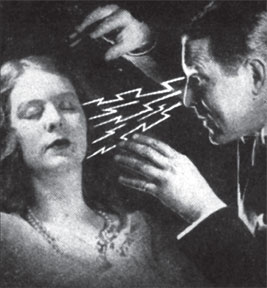
…he might be Michael Fine, 57, a Sheffield, Ohio attorney who has an even more effective method for raping women that the Cos’s drug-and-drink trick.  Police say that Fine convinced female clients to let him hypnotize them, and then had sex with them while instructing them to forget everything but their legal discussions. He  agreed to have his law license suspended temporarily while the Lorain County Bar Association and  the Ohio Supreme Court deal with the results of the police investigation, or perhaps until he can hypnotize all of them and make them forget the whole thing. Or believe they are chickens or something.

Fine allegedly told the women that his hypnotic machinations were a meditation and relaxation technique that he used to help his clients. Bear with me: I don’t want to make light of rape, but this whole story sounds like a really silly Charlie Chan movie. Unfortunately, it appears to be true. Continue reading