In Massachusetts, The Unethical Kind Of Prosecutorial Discretion

The DA explains why he's glad the law was broken. Wait...WHAT?

The DA explains why he’s glad the law was broken. Wait…WHAT?

Prosecutorial discretion is a critical aspect of the prosecutorial function. There are many good reasons for a prosecutor  to charge an individual with a crime in a particular case, and among the factors a prosecutor may legitimately consider in making this decision are, according to the American Bar Association’s ethical guidelines:

  • whether there is evidence of the existence of criminal conduct;
  • the nature and seriousness of the problem or alleged offense, including the risk or degree of harm from ongoing criminal conduct;
  • a history of prior violations of the same or similar laws and whether those violations have previously been addressed through law enforcement or other means;
  • the motive, interest, bias or other improper factors that may influence those seeking to initiate or cause the initiation of a criminal investigation;
  • the need for, and expected impact of, criminal enforcement to punish blameworthy behavior; provide specific and/or general deterrence;
  • provide protection to the community; reinforce norms embodied in the criminal law; prevent unauthorized private action to enforce the law;
  • preserve the credibility of the criminal justice system; and other legitimate public interests.
  • whether the costs and benefits of the investigation and of particular investigative tools and techniques are justified in consideration of, among other things, the nature of the criminal activity as well as the impact of conducting the investigation on other enforcement priorities and resources
  • the collateral effects of the investigation on witnesses, subjects, targets and non-culpable third parties, including financial damage and harm to reputation
  • the probability of obtaining sufficient evidence for a successful prosecution of the matter in question, including, if there is a trial, the probability of obtaining a conviction and having the conviction upheld upon appellate review; and
  • whether society’s interest in the matter might be better or equally vindicated by available civil, regulatory, administrative, or private remedies.

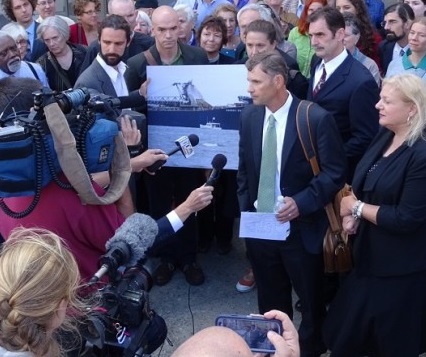
None of these suggest that the prosecutor’s personal sympathy with the motives of the lawbreaker is a sufficient or ethical reason not to charge when a serious crime has been committed. That, however, appears to be how Bristol County (Massachusetts) District Attorney Sam Sutter sees his role: arbiter and enabler of righteous criminal activity. Continue reading →
Today’s Ethics Understatement: “This Story Does Not Encourage Trust In The Legal Profession”

photoshoppinglawyer_screenshot

Svitlana and her fake friends

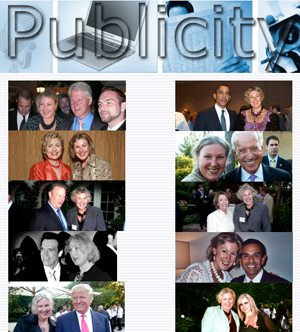
The ABA Journal informs me this morning that a California bar court judge has recommended a six-month suspension for attorney Svitlana Sangary. Oh, she has some client ethics complaints against her, but that was the least of her problems.

On her firm website, she had posted photographs showing Sangary with politicians and celebrities, including President Obama, Bill Clinton, Hillary Clinton, George Clooney, Donald Trump, Arnold Schwarzenegger, Morgan Freeman and Paris Hilton. An expert testified that most or all of the images were photoshopped, making them visual lies. A lawyer is not allowed to lie on her website, or anywhere else when it may mislead clients and the public.

Paris Hilton? Continue reading →

Kansas Politics Ethics Sludge (Cont.): In Taylor v. Kobach, The Court Rules That The Statute Was Violated In Compliance With The Statute…

quote-i-have-seen-the-truth-and-it-makes-no-sense-anonymous

I write here often that we must distinguish between law and ethics, and as a lawyer, I am comfortable with the reality that a decision required by the law may be unethical, in that the results may harmful and undermine the broad goal of what a law or laws are supposed to accomplish: a healthy society, a functioning government, a safe and happy public and justice. Just as doctors need to develop emotional armor that allows them to go on practicing medicine when the operation is a success but the patient dies, so must judges learn to move on when interpreting a law as written has an absurd result, and they must allow that result to occur. I understand all that.

I still can’t understand the opinion in Taylor v. Kobach, however.Maybe someone can explain it to me with a straight face. The opinion itself is beyond reproach, clear and unassailable. The problem is that it ignores the Mastodon in the courtroom: the letter that the opinion deems sufficient to meet the requirements of the statute in question embodies a lie, and defeats the intent of the very statute that the court is using to declare the letter valid.

How can judges do that? How can they stand doing that? Continue reading →

When Does A Prosecutor’s Personal Life Become Relevant To Professional Performance? I Believe This Would Be An Example…

Love is blind.

Love is blind.

In Washington State, a Spokane County deputy prosecutor named Marriya Wright has resigned her position following the discovery of a photograph of her in a bikini (posing in a bodybuilding competition) in the possession of  Matthew Baumrucker, an inmate in the Spokane County Jail notable for having the word “criminal” tattooed on his forehead.

Police have determined that Baumrucker and Wright corresponded via text or phone calls 1,280 times between February 6 and March 5, during the time that the inmate was being investigated for his alleged role in an assault. On March 3, police were trying to find Baumrucker in connection with the assault charge, and found him in an apartment with a woman who later told police that Baumrucker had received legal advice from a woman he called  “Marriya.” Baumrucker told the woman that “Marriya told him she didn’t have to let the police in to search if they did not have a search warrant.” Another witness told police that they saw Baumrucker meet Wright in a car at a nearby gas station, and “overheard Marriya telling Baumrucker he needed to get his warrants taken care of.”   Surveillance video obtained by police confirms Baumrucker got into Wright’s vehicle at that gas station. Continue reading →

More On The Perry Indictment: The Mark Of Hack Partisan Journalism

H

The unethical indictment of Republican Texas Governor Rick Perry in Travis County (Austin) for the “crime” of trying to force a drunk, power abusing, ethically corrupt district attorney from continuing to head the Public Integrity Unit—quick, now, Democrats…why is this a bad thing?—is a rare opportunity for otherwise incorrigibly biased journalists to show some token integrity and fairness. What is forfeited, after all, by admitting the obvious, that Perry is being railroaded by an abuse of prosecutorial power to derail him politically? Perry is no real threat to win the Presidency, no matter how high his stock is now. We all saw why in 2012.

So the liberal media has no need to play gotcha, and could, for a change, actually do its job: show the public why the indictment is nothing but a political hit job; why it’s a breach of legal ethics, how disgracefully Travis County DA Rosemary Lehmberg has conducted herself; why she is obligated to resign after breaking the law, trying to use her position to intimidate police officers on video, having her law license suspended, and apparently doing nothing about the fact that she is a raging drunk; why having such an individual heading up the agency responsible for public integrity is a threat to the public well-being and the public trust; and why a Governor of any political affiliation doing everything he can to pressure such a miserable and incompetent DA to resign as she had a professional obligation to do is, not merely not criminal, but admirable.

But most of them just can’t bring themselves to do it. So here is the Daily Beast partisan hack news commentary website, the yin on the left to the yang of Tucker Carlson’s partisan hack Daily Caller on the right, which wouldn’t be necessary if there weren’t a Daily Beast,  publishing this piece by its partisan hack staffer Mark McKinnon, implying that there may be validity to the indictment, suggesting that Perry did something wrong, and glossing over how disgusting it is that Lehmberg  still holds office. Continue reading →

Ethics Dunces: ABC News, Jonathan Karl and the Sunday Morning “Roundtable”

Republican Texas Governor Rick Perry is being threatened with prison by a per se unethical and illegal grand jury indictment, obtained by special prosecutor Michael McCrum, that attempts to criminalize not merely political tactics, which is how critics are describing it, but the essential and obligatory efforts of a state’s elected leader  to remove a corrupt and unqualified district attorney who is unfit to serve, corrupt,defiant….and drunk as a skunk.

You can read various eviscerations of the indictment here, here and here; there are many more. So far, I can’t find a respectable legal source that finds the indictment anything better than jaw-droppingly absurd and an abuse of prosecution. Jonathan Chait, a left-ish pundit and far from a Perry fan (much like me, except for the left-ish part), nicely expresses his contempt of the charge here. A short hand version would be that Perry has been threatened with jail based on what he said about vetoing a bill, which seems like a First Amendment violation to me.

The reason for the Ethics Dunce call on ABC is that this morning, the network reported on the indictment of Perry and its effect on his Presidential prospects in 2016 without explaining the reason for the Governor’s actions that the prosecutor is straining to call illegal. A simple, thorough, clear explanation would be sufficient to cause any reasonable reader or listener to cry “What? You’re kidding! That’s not possible!” That explanation, however, was not forthcoming on ABC, and has been missing from other reporting as well. Continue reading →

Is There An “Almost Naked Lovely Lawyer Principle”?

cathy-mccarthy

Not really.

But it’s complicated.

Cathy McCarthy (above) is a 2013 graduate of Loyola Law School-Los Angeles, and she is sounding the clarion call for the right of bikini model-lawyers to be taken seriously. She wrote…

I graduated law school a year ago after receiving an academic scholarship and passed the California Bar last November on my first try. I am also a model and have had moderate success, building fan base of over 26,000 people where I do mostly bikini promotions. Does this make me better or worse at my job? According to some people, it makes me unable to be taken “seriously” in the business community. In fact, two weeks ago, I was reprimanded by a coworker for my online presence and was told to “handle the situation.”I fought back and was ultimately let off the hook, but this is not the first time that I have faced backlash from colleagues who think that a lawyer should not also get the privilege of “looking hot in a bikini.”

Unlike the case with primary and secondary school teachers, where a published presence on the web that is sexually provocative can interfere with a healthy student-teacher relationship, there is no automatic impediment to a lawyer client relationship posed by the lawyer moonlighting as a bikini model, a fold-out, or even a porn star. The profession acknowledges this in several legal ethics opinions affirming lawyers’ First Amendment rights. Lawyers can express themselves any way they choose, provided that it does not undermine their ability to represent their clients in any way. Continue reading →

Ethics No-Show In Neosho

intimidation-graphicYikes. This story was sent to me under the heading of “Most Unbelievable Ethics Flub Ever.” I don’t know about that, but to paraphrase Tommy Lee Jones says in “No Country For Old Men, “If it ain’t, it’ll do till the ethics flub gets here.”

Neosho City Council Member Steve Hart objected to the fact that a constituent in the small Missouri town was given a ticket for driving a lawn mower on the public street. In a conversation surreptitiously recorded by Neosho City Attorney Steve Hays, he tried everything from threats to verbal abuse to accusations of corruption to bully Hays into dropping the charge.
The highlight of the conversation, though there are many candidates, is probably this gem from Hart:
“You know how we are. Just become our little bitch , city attorney. Do a good job, and everything will be fine.”

Continue reading →

Passenger List On The Deadly General Motors Ethics Train Wreck

"Oops! There goes G.M again!"

“Oops! There goes G.M again!”

That great, big, all-American motor car company that the Obama Administration took bows for saving five years ago has been revealed as a thoroughly corrupt, incompetent and deadly enterprise. As the full extent of the General Motors safety scandal unfolds—and it could get worse—this is a good time to take stock of the ethics lessons and miscreants involved, on the off chance that we are interested in learning something.

Did that sound bitter? It is. There is little in this terrible story of corporate ineptitude and corruption that wasn’t known and understood decades ago. Yet here we are again.

The manifest:

  • G.M. management. It pursued the policy of paying large settlements with confidentiality agreements to those injured by ignition switch defects in their cars, never fixing the defect itself. This is the old Pinto calculation, reasoning that if it is cheaper to pay for the deaths and injuries from a design defect than to fix the defect itself, then it makes good business sense to keep doing that, indefinitely. There are three problems with this logic, of course. First, it kills people. Second, it is stupid: eventually the facts will get out, and the whole company will be endangered. Third, it is wrong.
  • The plaintiffs’ attorneys. The trial lawyers association, way back when I worked for it two decades ago, adopted the unofficial position that the practice of accepting settlements from large corporations in product liability cases that included agreements not to reveal the damages and the defects involved to regulators, the news media, and endangered consumers was unethical. Members were urged to make a rejection of such terms a condition of agreeing to represent injured parties. Speeches were given, pledges were made. All agreed that the practice undermined the mission of the plaintiffs’ bar to make America safer through the civil justice system. What happened? Greed, that’s what. Just as every plaintiff has a price, so do many trial attorneys, who received up to 40% of those secret settlements. Every single one of the lawyers who guided their clients to accepting hush money in exchange for letting unsuspecting owners of G.M. cars risk their lives and those of their families were members of the American Association for Justice, which changed its name from the Association of Trial Lawyers of America because a survey showed the term “trial lawyers” was too negative. This is why the term is negative.

Continue reading →

A Shocking Legal Ethics Violation In Utah

So...would you like to revise your testimony about the harmless electric shock, Professor?

“So…would you like to revise your testimony about the ‘harmless electric shock,’ Professor?”

(The title is an uncreative and obvious pun, but on the other hand, how often do I have a chance to make it?)

I always advise lawyers that whenever they have a sudden inspiration that involves a trial tactic that they have never heard of anyone else trying, they need to stop and examine whether there are ethical issues involved. Here is a good example of why that’s a good idea.

Electricity expert Athanasios Meliopoulos, while testifying to dispute the claim of Utah dairy farmers who had sued a power company alleging that current from its plant harmed cattle grazing nearby,  said under oath that 1.5 volts could not be detected by a human being.

Don Howarth, an experienced Los Angeles litigator who represented the farmers, decided to undermine the expert’s testimony on cross-examination by giving Meliopoulos  a joke shop pen that was rigged to deliver an electric shock. Howarth told the witness that the retractable pen contained a 1.5-volt AAA battery and challenged him to click it and “tell the jury whether you feel it or not.” What he did not tell the witness, or the jury, or the judge, was that in addition to the AAA battery, the pen also contained a transformer that boosted the battery voltage to up to 750 volts, enough to deliver “a harmless powerful shock,” according to the pen’s packaging.

Meliopoulos, a Georgia Tech professor, pushed the ball-point pen’s button  and was indeed shocked enough to cause  his body to jerk and force him to drop the pen.

How unethical is this? The judge, in fining the lawyer $3000 and issuing other sanctions, listed the breaches: Continue reading →