
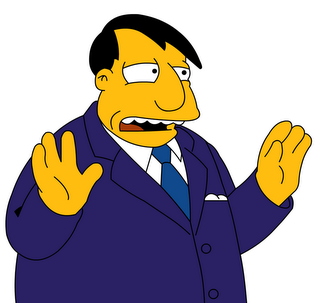
Mayor Quimby is honest about being corrupt. Isn't that good enough?
Rescuing the states’ power to insist on more ethical conduct from their elected legislators, The U.S. Supreme Court ruled Monday that there was no Constitutional prohibition on state rules against legislators voting on issues in which they have a private, personal interests.
The unanimous decision upheld a Nevada ethics law that governs when lawmakers recuse themselves from voting on official business because they might have conflicts of interest. The challenge to the law came from Michael Carrigan, a conflicted city council member from the Sparks, Nev., who was reprimanded by the state ethics commission after he voted on a casino proposal though his campaign manager had been hired as a consultant to the project.
The law prohibits a public official from voting on an issue when a “reasonable person” would suspect a conflict because of financial ties or the interest of a spouse or family member. This is the essence of “the appearance of impropriety.” It also includes “any other commitment or relationship that is substantially similar” to those spelled out. Carrigan had argued that the Nevada’s law was overly broad and that he should be able to vote on the project, so long as he disclosed his relationship with the consultant.
Ah, disclosure! Continue reading →


 Ethics Alarms