Unethical Quote Of The Week: Jeff Shesol

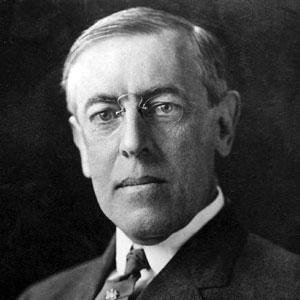
“Berg is not uncritical of Wilson’s biggest lapses — his tolerance of segregation, his suppression of civil liberties and his “highly questionable” actions (or paralytic inaction) after the stroke he suffered in 1919, during his grueling campaign to win Senate approval of the League of Nations.”

—Former Clinton Speechwriter and author Jeff Shesol, in his Washington Post book review of historian Scott Berg’s new biography of Woodrow Wilson, “Wilson.”

All right, he was a racist, but he was GREAT racist, right, Jeff?

All right, he was a racist, but he was GREAT racist, right, Jeff?

There is a nasty piece of dishonesty in this quote, all the more sinister because it slides right by, altering your understanding of history and reality without you even knowing it. (Is it any surprise that Shesol wrote speeches for Bill Clinton?) Did you catch it?

It is the phrase, “[President Woodrow Wilson’s] tolerance of segregation.”] Continue reading

Comment of the Day: “No, It’s Actually Allison Benedikt Who’s A Bad Person”

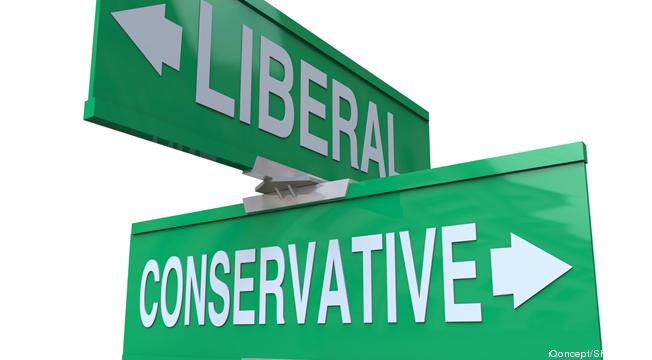
Liberal-Conservative

Here is David Shuster’s superb Comment of the Day, which is wise and greatly appreciated, on the post No, It’s Actually Allison Benedikt Who’s A Bad Person.

“Can we please drop/reform the “liberal” and “conservative” labels already? You state that Benedikt is a bad liberal; not quite true, she is utterly illiberal. She argues for state-compelled coercion circumventing individuals’ choice of how to raise their children. Her argument rests on illogical Marxist claptrap that prioritizes “the good of society” ie: the collective, over individual free will. I take back my previous statement, she is not illiberal, she is positively anti-liberal.

“I realize that this is quibbling over semantics, but in this case a rose by any other name really does smell differently. The Left and Democrats in general have self-identified for decades as “liberal”. While this label may have been appropriate 50 years ago, it certainly is not now. The Republicans’ social conservatism is rightly derided as illiberal in that it expects individuals’ sexual preferences to be dictated by the state. However, the Democrats’ claims of being “liberal” are becoming more laughable everyday; so much so that they have essentially become a parody of the classical liberal values they assure the population that they stand for. In fact, it appears as though the only things the Democrats envision people being free to do are the things the social conservatives oppose; in short, the Republicans want the state in your bedroom, the Democrats want the state everywhere else.

“We don’t have a “conservative” party and a “liberal” party, we have two statist parties with no alternative. Take gay marriage. I gave tentative applause for the Obama admin taking an explicit stand in support of it (truth be told, IMO the true “liberal” stand on this issue would be for the state to get out of the marriage business altogether, straight, gay, polygamous, whatever and let freedom of association dictate how people live with one another, but I guess that makes me a radical…). However, look at the illiberal consequences of this stance; wedding vendors with an admitted religious opposition to gay marriage but no prejudice against gays personally being forced by the government to render services against their will to gay weddings (see NM supreme court case). It’s beyond belief and IMO a violation of the 13th amendment; how can that be considered “liberal”? Continue reading

Poll: 84% Don’t Have a Clue What “Ethical” Means

Was Norman Bates unethical or sentimental? Well..wait, WHAT?

OK, that was a somewhat misleading headline. According to a poll run by ABC News, 84% of the public thinks that cloning dead pets is unethical. But since there is absolutely nothing unethical about cloning dead pets, I think the headline above is accurate. Well, maybe 84% accurate.

The story is over at Sodahead, which is dedicated to dumb polls. The analysis of the poll, if one can call it analysis, is almost totally bereft of anything remotely connected with ethics or ethical theory. In a previous poll on the subject, Sodahead asked those polled to choose whether the practice was “unethical” or “sentimental”, which is a choice akin to, “Do you like baseball, or can you swim?” Of course cloning a pet is sentimental—why else would someone do it? Who came up with the boneheaded idea that sentimental and unethical were mutually exclusive? Norman Bates dressing up as his beloved mother and killing people was sentimental, but I’d also say it was less than ethical. Continue reading

Distracted Driving, Pot, and “The Great Debate”

As balm for Christiane Amanpour’s bruises from being kicked off her ABC Sunday show back to CNN, the network honchos let her try a different format this weekend (since nobody was watching anyway.) Styled “the Great Debate,” it pitted conservatives Paul Ryan, the GOP House intellectual, and columnist George Will against soon-to-be-retired Democratic Congressman Barney Frank and Clinton’s former Labor Secretary and perpetual Munchkin Robert Reich for the full hour, exchanging familiar talking points on the usual suspect national issues. The debate wasn’t so great, for several reasons, prime among them being the natural motor-mouth tendencies of Reich and Frank, who, I would guess, took up approximately twice the air time as the conservative pair. The teams were similarly unbalanced in cheer, with Reich as perky as his Lollipop Guild training would suggest, and Frank full of his trademark wisecracks, while Will was dour as ever (when faced with liberal cant, the columnist always looks like my high school Latin teacher did when I was botching the day’s translation) and Ryan radiated the charisma of a certified public accountant.

The most interesting exchange was when George Will derided proposed federal regulations against “distracted driving” as the latest installment of the nanny state encroachment on personal rights, saying that individual freedom should trump the government’s concern for public safety except in the most extreme circumstances. One of the good uses of absolutist reasoning is that it raises a very high bar before breaching a valid principle can even be considered, since it has to be considered as an exception if it is to be contemplated at all. Barring unsafe conduct that increases the likelihood of automobile accidents, however, is not the place for absolutism, but for utilitarianism—rational balancing. Continue reading

Ethics Quote of the Week: Washington Post Columnist Michael Gerson

“In determining who is a “major” candidate for president, let’s begin here. Those who support the legalization of heroin while mocking addicts are marginal. It is difficult to be a first-tier candidate while holding second-rate values.”

—-Washington Post columnist and former Bush advisor Michael Gerson, pronouncing presidential candidate Rep. Ron Paul’s Libertarian endorsement of drug legalization ethically unacceptable.

Gerson’s deconstruction of the all-too-common and increasingly ominous calls for legalizing addictive drugs nicely captures the trio of ethical flaws of the advocacy: it denies the crucial and legitimate government role defining responsible conduct for society, it embraces the myth that recreational drug use “does no harm,” and it is arrogant and selfish, condemning the poor and reckless to problems that their fragile resources cope with, in order to bestow a dubious “freedom” that the drug advocates do not need. Continue reading

Integrity, Lost Perfection, and the Midget at the Bat

Suddenly, a lot of writers, baseball players and commentators are calling for Major League Baseball Commissioner Bud Selig to step in and reverse umpire Jim Joyce’s blown call that cost Armando Galarraga a history-making perfect game on what should have been the last play of the game. Disturbingly, it seems that the Commissioner might be listening. The argument: the Commissioner has broad power to take action “in the best interest of baseball.”

The problem with this argument: it wouldn’t be in the best interests of baseball, or the principles of ethics, either. Continue reading

The Acceptable Slur

Reason Magazine’s website has an article today by Steve Chapman describing New Jersey Governor Jon Corzine’s tactic of ridiculing his opponent Chris Christie’s weight (among other barbs, Corzine has used an ad showing Christie looking unusually large with a voice-over about him “throwing his weight around.” Har Har.) as politically maladroit. He’s right, but Chapman neglects to discuss the ethical issue involved. Attacking someone for his or her physical attributes is unethical: rude, mean-spirited, unkind and uncivil, a pure violation of the Golden Rule. Suggesting that a person’s worth can be discerned from his or her physical attributes is, quite simply, bigotry. Corzine, a proud liberal, would never dream of attacking an opponent for his race, or a physical disability like a missing leg. But calling an opponent fat in a manner designed to appeal to the bigotry of others is acceptable to him, indeed, acceptable to many. Why is that?

This is an oddly popular form of bigotry for liberals, journalists (I know I’m approaching redundancy here) and media commentators. The most popular target of fat attacks is conservative talk show host Rush Limbaugh. Despite the fact that  Limbaugh has been in one of his svelte periods for some time, many newspapers and websites continue to accompany stories about his latest rants with an especially unflattering photo showing him roughly 100 pounds heavier.  John Kerry and other Limbaugh critics routinely include physical insults as they respond to his critiques. (They also frequently reference his problems with prescription pill addiction, an AMA-decreed medical malady. Their excuse for this is that Limbaugh has been unsympathetic to drug abusers in the past, an example of the unethical rationalization known here as the Tit for Tat excuse)  The junior U.S. senator from Minnesota got his job in part by making liberals giggle with his book entitled  “Rush Limbaugh is a Big, Fat, Idiot.”   But Limbaugh is just one target of many. The late, liberal Washington Post cartoonist Herb Block always drew the characters he didn’t like—Republicans, conservatives, bankers, “corporate interests,” “industrialists”—as human beach balls, to contrast with his poor, downtrodden, attractively thin liberal archetypes. Conservatives are guilty of fat-baiting too, of course; when they weren’t  using Mary Jo Kopechne to ridicule the late Sen. Edward Kennedy, they called him a tub of lard. Conservatives often have a more difficult time getting away with it, because liberals will rise in indignation to condemn such a tactic on the Right, especially if the target is a woman, as when conservative radio talk show Laura Ingraham was pilloried for referring to John McCain’s daughter Meaghan as “plus-sized.” Liberals appear to understand that using physical characteristics to deride and diminish someone is unethical, but believe there is an exception when the fat person in question is “bad,” as in “disagrees with them.”

Here is the sad truth. Many people, liberals and conservatives, are bigoted against fat people, and even those who are repulsed by bigotry based on race, religion or physical malady manage to rationalize regarding excessive weight as a sign of bad character, greed, gluttony, laziness, or, in the most recent trend, having too large a carbon footprint. Good, responsible people jog and exercise, like Jon Corzine. True, Corzine is a millionaire, and studies show that the higher correlation is not between wealth and fat, but rather poverty and fat, but never mind.  Though the culture now strongly reinforces the message that it is wrong for a white man to feel superior to a black man, it has yet assimilate the concept that a thin, fit, attractive American isn’t inherently preferable to a fat one, no matter what else the corpulent individual has to offer.

It’s time; indeed, it is past time. I think there is even  a case to be made that a fat individual may be overweight for ethical reasons. You can spend a couple hours a day jogging and pumping iron—14 hours a week, 56 hours a month, 672 hours a year—or you can spend the same time on pursuits that benefit people other than yourself, like your family, the poor, or society. Extra weight may be a form of sacrifice, a badge of honor.  What justification does Al Franken or Laura Ingraham, or a Hollywood actor who gets paid to be fit, have to question that choice or feel superior? If Oprah Winfrey wants to call herself fat, fine, but who can criticize how she uses her time? She cares about other things more than the scale and the mirror. Good for her.

But that’s just an argument that fat bigotry is unjustified. The primary point is that it is wrong, as wrong as any other form of bigotry. I don’t think Jon Corzine should necessarily lose the governorship because of it, because American culture, so far, has told him that fat bigotry is still tolerated. Still, if Corzine did lose, and lost in part because of his bigoted campaign, it would send an important  message—the message is that the “acceptable slur”  isn’t acceptable any more, no matter who the target is.