Playwright David Mamet on Abuse of Power, Government and Gun Control

Mamet

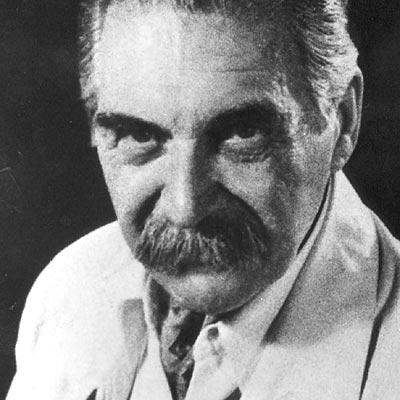
I have wrestled over whether to feature Pulitzer Prize winning playwright ( author, screenwriter, director, teacher) David Mamet’s recent essay in what is left of Newsweek on Ethics Alarms. The essay is at least 50% political/ideological, maybe more, and I try, often unsuccessfully, to keep the ethical analysis of political events as separate as possible from the political analysis—some would argue not hard enough, and not well. I also don’t agree with a lot of his piece, but that’s the least important factor. I decided that the essay, titled “Gun Laws and the Fools of Chelm” belongs here because I know, from his plays, his screenplays and his essays, that Mamet is driven by a pursuit of ethical thought and action, and it is a theme underlying most of what he writes. He is also a vivid and expressive writer, one of the very best alive, in my view. Mamet is blisteringly smart as well. That doesn’t mean he is always right—he is, after all, a conservative, and in the prevailing view that puts his presumed  brain capacity somewhere between Hulk Hogan and Todd Akin—but he is always thoughtful, and to those few with open minds and good reading comprehension, potentially persuasive and necessarily enlightening.

Mamet’s essay is relevant to current events, of course, due to the sweeping gun ownership restrictions being proposed by Sen. Diane Feinstein, and the hysterical over-reaction to the Newtown tragedy, fanned by a shameless media and demagogues of all stripes that cleared the way for it. I’ve written plenty about all that already, alas not as well as David Mamet could. I am less alarmed at the prospect of Feinstein’s effort succeeding (because it won’t) than I am at what its sudden leap to the fore of Obama Administration priorities indicates beyond question: these people really have no intention of taking any serious, responsible and courageous efforts to address the debt and deficit. To only slightly paraphrase the excitable Matt Hooper in “Jaws” speaking to the pusillanimous mayor of Amity,  I think that I am now familiar with the fact that our current leaders  are going to ignore this particular problem until it swims up and bites us on the ass. This is unconscionable, incompetent, weak and despicable…but I digress.

The money quote in Mamet’s essay, I think, is this:

“Disarmament rests on the assumption that all people are good, and, basically, want the same things. But if all people were basically good, why would we, increasingly, pass more and more elaborate laws? The individual is not only best qualified to provide his own personal defense, he is the only one qualified to do so: and his right to do so is guaranteed by the Constitution.”

What ever your thoughts are regarding gun control policies, you should read Mr. Mamet’s essay, and you can, here.

___________________________________

Graphic: All Music
Ethics Quotes of the Day: On Liberty, Freedom, and Democracy

“Hurrah for the flag of the free!
May it wave as our standard forever,
The gem of the land and the sea,
The banner of the right.

“Let despots remember the day
When our fathers with mighty endeavor
Proclaimed as they marched to the fray
That by their might and by their right
It waves forever.”

—–John Phillip Sousa, “The Stars and Stripes Forever”

“Democracy is like sex. When it is good, it is very very good. And when its is bad, it is still pretty good.

—–Anonymous.

“The real democratic American idea is, not that every man shall be on a level with every other man, but that every man shall have liberty to be what God made him, without hindrance.”

—-Henry Ward Beecher, American preacher

“Democracy is moral before it is political.”

—- Louis Brandeis, Supreme Court Justice

“The experience of democracy is like the experience of life itself-always changing, infinite in its variety, sometimes turbulent and all the more valuable for having been tested by adversity.”

—-  Jimmy  Carter

“A constitutional democracy like ours is perhaps the most difficult of man’s social arrangements to manage successfully. Our scheme of society is more dependent than any other form of government on knowledge and wisdom and self-discipline for the achievement of its aims. For our democracy implies the reign of reason on the most extensive scale. The Founders of this Nation were not imbued with the modern cynicism that the only thing that history teaches is that it teaches nothing. They acted on the conviction that the experience of man sheds a good deal of light on his nature. It sheds a good deal of light not merely on the need for effective power if a society is to be at once cohesive and civilized, but also on the need for limitations on the power of governors over the governed.”

—- Felix Frankfurter, Supreme Court Justice

“In contrast to totalitarianism, democracy can face and live with the truth about itself.”

—-Sidney Hook, American philosopher and historian

“America’s experiment with government of the people, by the people, and for the people depends not only on constitutional structure and organization but also on the commitment, person to person, that we make to each other.”

—-Robert Hutchins Continue reading

Comment of the Day: “The Ethics of Bloomberg’s Soft Drink Ban”

Peter, who is a physician, a libertarian, and one of my oldest friends (we met in the 6th grade) from Arlington, Massachusetts, generously responded to my request for his professional expertise and philosophical perspective regarding the New York City soda ban.  Here is his thoughtful response, the Comment of the Day, on the post The Ethics of Bloomberg’s Soft Drink Ban: 

“It has become a reflex response to answer adverse circumstances with more regulation. To a lawyer, there is always a law, or regulation for any and every misstep in human behavior. Of course, we forget that we cannot predict the unintended consequences, not even to mention reviewing the effects of the laws we pass to determine if they are even having the INTENDED effect. Somehow, we believe that it is appropriate to pass laws to deny other people’s freedoms due to the “discomfort” of whiny types who have the connections and persistence to keep whining until they can get someone to pass a law. The consequence of such legislation’s continued passage, at ever more confiscatory levels of our liberties, is that we are legislating our way into a police state, and the widespread acceptance of the idea that it’s OK to deny personal liberty because it makes someone else “uncomfortable.” Again, as RR so aptly pointed out, “the government that is big enough to give you everything you want, is big enough to take away everything you have.” And this goes for not just your personal assets, but your freedoms as well.

“That said, in this context, yes, drinking lots of sugary sodas will make you fat, smoking will kill you, too much alcohol will kill you, doing extreme sports can kill you, and so on. And as long as one’s decisions affect only himself, have at it. However, when you want me to pay, through my insurance premiums, and my taxes, for the consequences of your stupidity, you cede the sovereignty of your decision to others beside yourself. If you want to ride your motorcycle without a helmet, while drunk, sure, do it. Just don’t expect me to pay the costs of your head injury. Continue reading

The Ethics of Bloomberg’s Soft Drink Ban

It’s a serious problem.”

“Something needs to be done.”

“This is a public health issue.”

The media defenses of New York Mayor Bloomberg’s controversial decision to ban the sale of large soft drink servings in New York City, and Bloomberg’s defense as well, set up a classic utilitarian argument for a government intrusion into personal choice and lifestyle. It is, simply, that the ends justify the means, and as we all know, sometimes they do.

Sometimes, however, those means sacrifice too much: lives, dignity, fairness, liberty, fun. Sometimes employing those means require crossing lines that have not been crossed before, opening the door to more and greater sacrifices that even advocates of the particular measure would find objectionable and wrong. This leads to the slippery slope dilemma, and invokes absolutism. Some things must never be considered as just means, no matter what the ends being sought may be. Immanuel Kant’s philosophy of absolutism declared that it was always wrong to use human beings against their wills to solve problems, no matter how great the problems are. The Declaration of Independence holds that a human being’s rights to life, liberty and the pursuit of happiness must never be breached by government. Continue reading

Amendment 1: When Apathy Is Unethical

As you probably know by now, North Carolina voters went to the polls yesterday and passed a constitutional amendment that made same-sex marriages and even civil unions invalid under the law. Amendment 1, as it is called, is unusually brutal, as it will almost certainly take away the health insurance of many individuals in long-term committed relationships who were covered by their partner’s workplace insurance, and if they have pre-existing conditions, it will be difficult and expensive finding new coverage. Even that however, is less harmful and hurtful than having their home state declare that they are a second-class citizens, which is what this and similar provisions around the country do. Continue reading

Unethical Quote of the Week: Herman Cain

Stick to pizza, Herman.

“Here’s what I would have – I would have done a better job of determining who the opposition is and I’m sure that our intelligence people have some of that information. Based upon who made up that opposition, OK, based upon who made up that opposition, might have caused me to make some different decisions about how we participated. Secondly, no, I did not agree with Qadhafi killing his citizens. Absolutely not. So something would have had to been – I would have supported many of the things they did in order to help stop that. It’s not a simple yes-no, because there are different pieces and I would have gone about assessing the situation differently, which might have caused us to end up in the same place. But where I think more could have been done was, what’s the nature of the opposition?”

—–Republican Presidential hopeful Herman Cain, responding to a reporter’s question asking for his opinion of President Obama’s handling of Libya. The comment followed an eleven second pause and one false start, as Cain appeared confused and unprepared for the question.

The ethical problem with Cain’s answer was not that he fumbled it, but that like his stated position on abortion, it is unethical and intellectually lazy. Continue reading

Ethics Quote of the Era: Thomas Jefferson and the Continental Congress of 1776

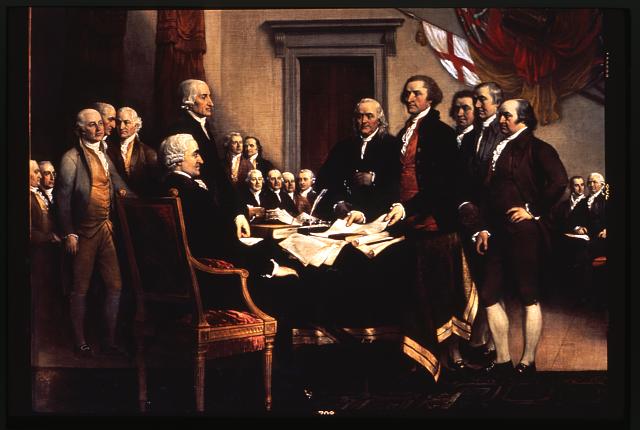
“We hold these truths to be self-evident, that all men are created equal, that they are endowed by their Creator with certain unalienable Rights, that among these are Life, Liberty and the pursuit of Happiness.–That to secure these rights, Governments are instituted among Men, deriving their just powers from the consent of the governed, –That whenever any Form of Government becomes destructive of these ends, it is the Right of the People to alter or to abolish it, and to institute new Government, laying its foundation on such principles and organizing its powers in such form, as to them shall seem most likely to effect their Safety and Happiness.”

—-The Declaration of Independence, authored by Thomas Jefferson, edited, ratified and signed by him,  Button Gwinnett, Lyman Hall, George Walton, William Hooper, Joseph Hewes, John Penn, Edward Rutledge, Thomas Heyward, Jr., Thomas Lynch, Jr., Arthur Middleton, John Hancock, Samuel Chase William Paca, Thomas Stone, Charles Carroll, George Wythe, Richard Henry Lee, Benjamin Harrison Thomas Nelson, Jr., Francis Lightfoot Lee, Carter Braxton, Robert Morris, Benjamin Rush, Benjamin Franklin, John Morton, George Clymer, James Smith, George Taylor, James Wilson, George Ross, Caesar Rodney, George Read, Thomas McKean, William Floyd, Philip Livingston, Francis Lewis, Lewis Morris, Richard Stockton, John Witherspoon, Francis Hopkinson, John Hart, Abraham Clark, Josiah Bartlett, William Whipple, Samuel Adams, John Adams, Robert Treat Paine, Elbridge Gerry, Stephen Hopkin,  William Ellery, Roger Sherman, Samuel Huntington, William Williams, Oliver Wolcott
Matthew Thornton.

Ethics Heroes all.

Thank you, guys.

(You can read the entire document that changed the world…undeniably for the better…here.)

Remember Gettysburg

Today is July 1, which is being treated across the United States as the gateway to a long weekend and the Fourth of July, and little more. July 1 is also, however, the anniversary of the first day of the Battle of Gettysburg, the most important and most deadly battle of the many important and deadly conflicts in the American Civil War. The two American armies that clashed in the Pennsylvania town sustained more than 50,000 casualties on the Gettysburg battlefield, which may be the saddest and noblest place in America.

If you have not made at least one pilgrimage to the battlefield, you owe it to yourself, and to the memory of the combatants, to go. Continue reading

How the Lack of Ethics Cripples Democracy, Reason #2: Corporate Executive Greed


"Let's see...that's one schilling for Cratchet, 280 for me..."

The average compensation for chief executives of the 500 largest U.S. corporations is going up again.

According to Governance Metrics International, the average compensation for the CEOs, including salary, bonus and benefits plus the exercise of stock options, the vesting of stock grants and retirement benefits, was just under $12 million in 2010, up 18 percent from 2009. As Washington Post business writer Steve Pearlstein observes in his column this week, if you believe this is justified by market forces and common sense, “then you must also believe two things: First, that none of these guys would do the same job for a nickel less. Second, that the value of the chief executive went up 18 percent last year while the value of average workers in their companies changed very little.”  “And,” concludes Pearlstein, “if you believe that, you are a fool and an ideal candidate for an open seat on an S&P company board of directors.” Continue reading

Home-Grown Mengeles, And What We Must Learn From Them

Josef Mengele: researcher, utilitarian, monster

We knew, or should have known, that this extremely ugly shoe was bound to drop eventually.

Last autumn, when the U.S. apologized for federal doctors infecting prisoners and mental patients in Guatemala with syphilis 65 years ago, it put us on notice that a vile and unethical cultural standard had taken hold of the American medical and scientific communities in the 20th century, one that held  it was “right” for the weakest, most powerless and most disposable of human beings to be tricked, coerced or bribed into serving as subjects for experiments that could lead to miraculous cures and treatments for the rest of the population. This–depriving human beings of their rights and lives in the interest of science—is “the ends justify the means” at its worst. But the Guatemala experiments proved that this was once flourishing and respectable in the U.S. scientific and medical research communities, so it would have been surprising if there weren’t more stories of home-grown Mengeles, and sure enough, there were. The U.S. acknowledged as much when it apologized for the Guatemalan tests. Now we have details. Continue reading