The Bad Judges And The Law Dog

The legal commentariat is much amused by a case out of Louisiana involving  the right to counsel. I don’t think it’s funny at all.

( Oh all right, it’s a little funny.)

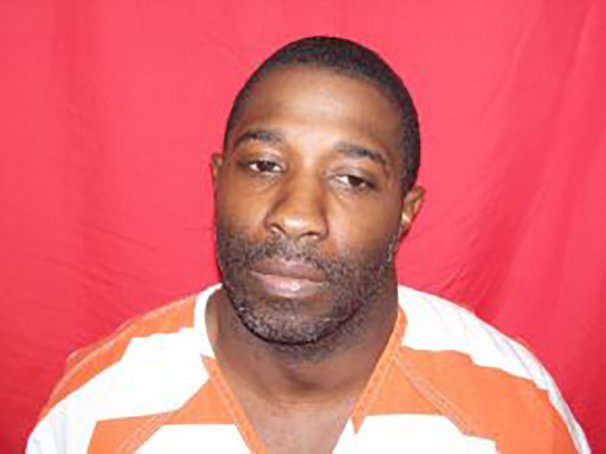
Warren Demesme was being interviewed by detectives, not for the first time, about some alleged sexual misconduct with minors. He was read his rights, “Mirandized,” as they say, and said that he understood, and waived those rights. (He could, however, choose to invoke them at any time, per several Supreme Court rulings.)

At some point the interview got tense, and the suspect said,

“If y’all, this is how I feel, if y’all think I did it, I know that I didn’t do it so why don’t you just give me a lawyer dog cause this is not what’s up.”

He was not, however, given access to a lawyer, and when he appealed his subsequent conviction on the grounds that he requested legal assistance and was not accommodated, the lower court rejected his argument, saying that he had not made his desire for a lawyer clear and unambiguous. Incredibly, the Louisiana Supreme Court agreed, writing in part,

The defendant argues he invoked his right to counsel. And the basis for this comes from the second interview, where I believe the defendant ambiguously referenced a lawyer..As this Court has written, “[i]f a suspect makes a reference to an attorney that is ambiguous or equivocal in that a reasonable police officer in light of the circumstances would have understood only that the suspect might be invoking his right to counsel, the cessation of questioning is not required.” State v. Payne (La. 2002); see also Davis v. United States (1994) (agreeing with the lower courts’ conclusion that the statement “[m]aybe I should talk to a lawyer” is not an unambiguous request for a lawyer). In my view, the defendant’s ambiguous and equivocal reference to a “lawyer dog” does not constitute an invocation of counsel that warrants termination of the interview and does not violate Edwards v. Arizona (1981).

Right.

And the vote on the Supreme Court in favor of this indefensible ruling was 8 to 1. 8 to 1!

Forget it, Jack. It’s Louisianatown. Continue reading

Wait, WHAT? I Don’t Understand This Case At All: The Louisiana Lawyer’s Betrayal

Robert McCoy (above), facing trial for a triple murder in Louisiana, told his lawyer, Larry English, that he was innocent. Someone else had killed the victims, he insisted. English, however, knew better. He wasn’t buying any of it.

“I met with Robert at the courthouse and explained to him that I intended to concede that he had killed the three victims,” Mr. English stated in a sworn statement. “Robert was furious and it was a very intense meeting. He told me not to make that concession, but I told him that I was going to do so….I know that Robert was completely opposed to me telling the jury that he was guilty of killing the three victims,” Mr. English said. “But I believed that this was the only way to save his life.”

English’s theory was that in the state’s two-phase trail system, he would lose credibility with the jury if he insisted McCoy was wrongly charged in the face of overwhelming evidence He wanted to have the trust of the jurors in the second phase, when he would have to argue that they should spare Mr. McCoy’s life.

After the meeting, Mr. McCoy tried to fire his lawyer, saying he would rather represent himself—So would I— but Judge Jeff Cox refused to let English off the case. So, as promised, English told the jury during his opening statement that his client was a triple murderer. McCoy objected in court, protesting, “I did not murder my family, your honor ! I had alibis of me being out of state. Your honor, this is unconstitutional for you to keep an attorney on my case when this attorney is completely selling me out.”

The objection was over-ruled.  McCoy’s lawyer, the judge apparently believed, knew better than his client what his client’s best interests were.

He didn’t though. McCoy was convicted and sentenced to death despite all of that supposed good will, credibility and trust English had built up by throwing his own client under the criminal justice bus.  The victim of this Bizarro World representation appealed the conviction to the Louisiana Supreme Court, saying his lawyer had turned on him. The court ruled against him,  holding that

“Given the circumstances of this crime and the overwhelming evidence incriminating the defendant admitting guilt in an attempt to avoid the imposition of the death penalty appears to constitute reasonable trial strategy.”

Now the United States Supreme Court is going to consider the case, McCoy v. Louisiana, and the question of whether a lawyer who disregards a client’s explicit instruction to plead not guilty has breached the Constitutional right to counsel.

I am stunned.  What question? Apparently this is a thing in Louisiana. “Counsel’s strategic choices should not be impeded by a rigid blanket rule demanding the defendant’s consent,” Louisiana’s lawyers  wrote in a brief urging the court to pass on the case. Since 2000, the Louisiana Supreme Court has allowed defense lawyers to concede their clients’ guilt in four other capital cases over the clients’ express objections.

Good grief. Continue reading

Incompetent Elected Official Of The Month: Louisiana State Senator Troy Brown

troy-brownYet another ridiculous example of bizarre people with bizarre values being elected to office, calling into question  the competence of the voting public. The populace at issue in this case is Napoleonville, Louisiana, who elected Democrat Troy Brown as a State Senator.

Brown has pleaded no contest in two separate domestic violence cases in recent months. He beat up his girl friend, and later bit his wife. He also doesn’t live in the district he represents, but the Senate was preparing to expel him based on the fact that he is a serial domestic abuser.

Brown does not understand this at all.

“I think my actions warranted a punishment. I think my punishment should be commensurate with what occurred,” Brown said adding that the expulsion proceedings were the equivalent of “an execution.” His argument is that the two episodes of violence against women were only charged as misdemeanors, not felonies, and the legislative body’s rules specify removal for a felony conviction, but do not define other conduct that is ground for expulsion, other than “conduct unbecoming a Senator.”

And really now, is punching your mistress of ten years and biting your wife “conduct unbecoming a Senator”? Come on. Be reasonable.

After admitting in court to punching his girl friend, Brown blamed blackouts he experienced when drinking alcohol, a malady which he said was  brought on by brain damage sustained in a past car accident.

Ah!

Well that’s OK then!

To paraphrase Dean Wormer in “Animal House”, “Drunk, violent and brain damaged is no way to be a State Senator, son.”

After Brown was arrested  last year for biting his wife and again pleaded no contest, he apologized  to his constituents for his behavior, announcing he had started taking anger management classes.

Ah! He’s angry, violent, drunk and brain damaged.

This guy has a grrrrrreat future in politics! Continue reading

Ethics Quote Of The Day: Ann Althouse

politifact_photos_Obama_speaking_in_Poland

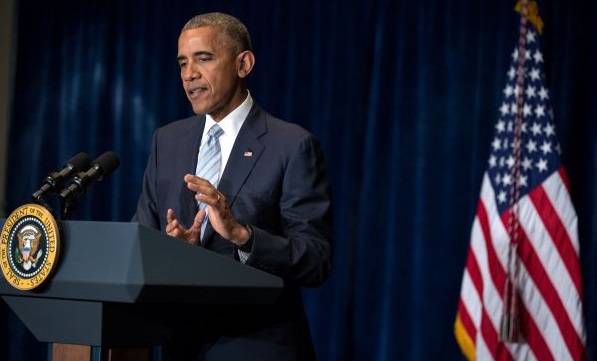
Why is racial discord the problem of the summer 2016? If anyone has what it takes to unify the country over race it is Barack Obama, who is President right now and who had been President for 7 1/2 years. If it makes any sense to be deciding the current presidential election on this issue, if this longed-for capacity is something that can possibly exist, then Barack Obama would be doing it now and would have been doing it for years.

Before you push us to judge whether Hillary Clinton or Donald Trump would do better in bringing us together in racial harmony, Mr. Healy, please say a few words about why President Obama has failed. Of course, neither Clinton nor Trump inspires hope for a new opportunity at racial harmony. That’s what Obama did in 2008. He was ideal for that issue and we voted for the hope. Now, so many years later, things seem even worse. Can you analyze how that happened? Because that did happen. I don’t see how we can begin to think about what more Trump or Clinton could do unless we understand why President Obama failed.

—–Law professor Ann Althouse, on her blog, responding to an op-ed piece in the New York Times by Pat Healy bemoaning the inability of either Trump of Clinton to respond to the Dallas shootings in a manner that unifies rather than divides.

1. I admit it: sometimes I look for other commentators who have discerned what I have discerned and use their quotes to state what I would normally be writing myself. Althouse is a left-leaning eccentric moderate who is not overtly political, and who is skilled at overcoming her own biases. She voted for Obama (at least once), and she plies her craft as a law professor in Madison, Wisconsin, as progressive a community as there is. I have found Obama’s leadership ability and Presidential performance wanting in almost all respects since early in his administration and have explained my analysis here.  The price I pay for this is that those who are in denial over what should be obvious (though terribly disappointing and sad) feel that my consistent  criticism gives them the opportunity to mask their denial by  labeling me an Obama-hater, a partisan (as if I wouldn’t be equally critical of an incompetent Republican President with a flat learning curve) and even a racist. A quote like Althouse’s is not so much an appeal to authority—I disagree with Professor Althouse a lot, though not her dislike of men wearing shorts—but choosing to allow someone else to say well what I may not have said any better, and to prove that I’m not the only one coming to such conclusions.

2. The President’s comments on the shooting deaths of officer-involved deaths of Alton Sterling in Baton Rouge, Louisiana and Philando Castile, in Falcon Heights, Minnesota were irresponsible, inflammatory, and typical of his approach to race relations from the very beginning, when he stuck his influential nose into a controversy between a competent white Cambridge police officer and a race-baiting black Harvard professor. Then, without knowing any of the underlying facts, he suggested that the white police officer was at fault and the black professor (a friend of his) was blameless. His remarks about the police shootings in Louisiana and Minnesota issued from the same bias. I’ll just comment on the beginning of his statement, which is enough to make the point: Continue reading

Broadcasting Poison: An Irresponsible News Media Warps Public Opinion And Politics On Cop Shootings

Wiat...how can this guy be a police shooting victim? I don't understand.

Wiat…how can this guy be a police shooting victim? I don’t understand.

There have been two disturbing police shootings of black men in recent days, both incidents partially recorded on cell phones.

In Falcon Heights, Minnesota, an officer fatally shot  32-year-old Philando Castile as he sat in a car with a woman and a child. A day earlier, 37-year-old Alton Sterling was shot and killed during a confrontation with two police officers outside a Baton Rouge, Louisiana, convenience store where he was CDs. Neither of these cases have been investigated yet; the officers involved have been placed on administrative leave. In both cases, however, the initial impressions of the incidents were those of relatives of the deceased: Castile’s wife and Sterling’s mother. Guess what they had to say about their deceased loved ones and the police who shot them

This is, as a judge would say in a trial, extremely prejudicial. The emotional and angry reactions of the mothers of Trayvon Martin and Michael Brown seized and controlled the “narratives” in those two cases before the facts were confirmed and the fatal encounters clarified. Today, CNN presented Mrs. Castile, who  declared that placing the officer involved in her husband’s death on administrative leave with pay was proof of the low value placed on black lives. She, of course, knows what happened, and that her husband couldn’t possibly have been responsible in any way for his demise. The shooter should be punished now, by loss of his income, before any investigation has been undertaken or completed. He’s guilty—of racism, of murder. Continue reading

McDonald’s And The Blind Man: Why Law Is A Lousy Substitute For Ethics

mcdonalds drive-thru

Thirty-five-year-old Scott Magee is blind, and he resents the fact that McDonald’s has a policy denying walk-up customers at the  drive-through window at his local Louisiana Mickey D’s, as well as everywhere else.  The policy, let us stipulate, is objectively reasonable. McDonald’s has a right to designate a window for drive-through customers and to choose not to offer a walk-up service like Dairy Queens. (Come to think of it, I don’t know that DQ has that any more. Does it?)  It also has a right not to subject itself and its drive-though customers to liability for inadvertently hitting stoned fools who stumble over to the window late at night seeking munchies.

Magee and his Jackie Chiles-emulating New Orleans lawyer, however, are suing the burger chain, arguing that its refusal to accommodate non-drivers who are blind is a violation of the Americans with Disabilities Act.

Now a class-action lawsuit, filed last week  in Chicago’s federal court, alleges that McDonald’s has no “concern whatsoever for the accessibility of the late-night drive-thrus to the disabled.”

Oh, thank-you, George H.W Bush!* The ADA has always been an overly broad and mischievous law that endorses and enables the tyranny of the minority. I have often wondered how often all those wheelchair lifts the law forced financially strapped public transportation departments to install in their buses have been used, and what the cost per use is. I am certain it would have been far cheaper for the cities to just pay for cabs to drive the handicapped commuters door to door, but that would have stigmatized them.

Bush caved to the lobbying for  cultural acceptance of the very debatable concept that citizens have a right to force others, including the government, to solve all of their individual problems, and the cost to the rest of society just doesn’t matter. That idea, a really bad one and a slippery slope to boot, has taken hold with a vengeance, the most prominent recent example being the theory that because less than 1% of the humanity faces a dilemma when choosing which bathroom to use, the rest of the public must forego the comforting privacy of gender-segregated bathrooms and dressing rooms. All girls should learn to be comfortable looking at male genitalia, that’s all, says the Charlotte Observer. How did we reach teh absurd point where that proposition can be seen as more reasonable, equitable and  fair than asking transgender Americans  to endure the occasional discomfort of using the “wrong” bathroom so his or her fellow citizens are comfortable? Why is it preferable to launch a divisive and nasty cultural and legal battle over the issue?

Unless Magee’s case gets thrown out of court, and don’t bet on it, all fast food restaurants will be forced to set up and staff walk-up windows, eliminate drive-up windows, or close down their drive-through service when inside service is shut down for the night. (If Scott can’t have that convenience, no one should.) Either over-head will rise for all fast food chains, causing job losses and higher prices, or everybody will lose the convenience of after-hours drive-up service because there is no safe, reasonable, affordable policy that will satisfy Mr. Scott Magee ‘s late night cravings for McNuggets.

Yes, it would have been nice, and ethical, if the owner of the McDonald’s in question played a little ethics chess and worked out a quiet, compassionate way to make Scott feel loved and catered to. It would have been worth it to agree to just deliver Scott whatever he wanted when the munchies struck, even giving him a special number to call. It would also have been ethical–responsible, considerate, fair, proportional—if Scott just planned ahead and got his Big Mac before the place closed it’s doors. A little mutual consideration and flexibility, some sacrifice and concern for others, a willingness to see things from the other side’s perspective, and this could have been avoided. Instead, jobs may be lost, a convenient service may be sacrificed, prices will rise, business will be lost, and all because one blind man feels that the whole world should adapt to his needs, and not the other way around.

Yes, thanks Papa Bush!

Thanks, McDonalds!

And a special thanks to Scott Magee.

I sure hope he enjoys his burger.

It’s going to cost enough.

*In a moment of momentary amnesia and stupidity, I wrongly blamed the ADA on President Carter. I apologize to Jimmy, though I’m certain he was a supporter.  It’s still an overly broad, ethically muddled, pandering law.

Now THAT’S An Unethical Lawyer!

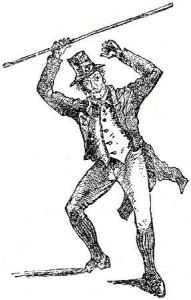
"Ay, ye fekin' eejit, I'll be reefing ye with me shillelagh!"  TRANSLATION: "Disbar me, quick!"

“Ay, ye fekin’ eejit, I’ll be reefing ye with me shillelagh!” TRANSLATION: “Disbar me, quick!”

Yesterday I posted on Facebook a real news story about an Australian teen who plotted to plant explosives on a kangaroo and sent it hopping to a terrorism target. This story, about a Louisiana lawyer who is either trying to get disbarred (with apparent success) or has lost his mind struck me about the same way. Everything seems to spinning out of control.

The Louisiana Bar Disciplinary Board  has recommended permanent disbarment for lawyer Ashton O’Dwyer Jr. This passage of its report particularly appealed to me: During a June 2012 hearing by the committee, O’Dwyer “had to be admonished for brandishing about his shillelagh, his action clearly inappropriate for a disciplinary proceeding.”

Clearly.

That’s just a sample. Here’s a random selection of some examples of how this spunky Irishman has behaved,  from the “How To Get Disbarred” handbook.

O’Dwyer first ran afoul of the ethics rules  in federal court in New Orleans during Hurricane Katrina litigation, when he engaged in personal attacks on the judge and opposing counsel, and engaged in other irregularities “prejudicial to the administration of justice.”  He was suspended by that court in 2008 for his  conduct. In response, he…

….filed a “Declaration of His Intentionally Contemptuous Non-Compliance with the Court’s Order”…

….called the Louisiana Supreme Court a “bunch of kids”…

…referred to the chief justice with a “sexual and offensive nickname,” according to hearing board’s findings of fact.

O’Dwyer then sent an email to the disciplinary counsel in which he implausibly denied the use of racially disparaging terms, which the bar found to be “disingenuous.” Then he sent another email the same day calling the disciplinary counsel a “pimp,” a “puppet,”  “Uncle Tom” and an “Oreo.”

Nothing racially disparaging about any of that, right? All of this got him disbarred for a minimum of two years. Continue reading

A Remorseful Prosecutor Apologizes

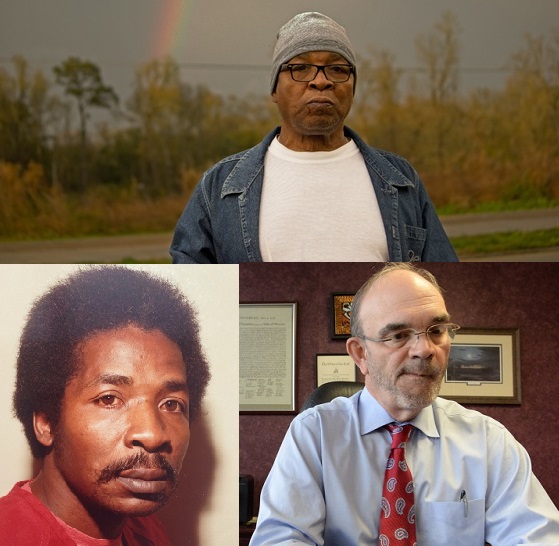
Above: Glenn Ford Today. L-Ford in 1983 R-The apologetic prosecutor

Above: Glenn Ford Today. L-Ford in 1983 R-The apologetic prosecutor

Now THIS is a #1 Level apology on the Ethics Alarms Apology Scale.

It’s more than an apology, really: it approaches self-flagellation. The tragic aspect of the confession and apology of former prosecutor  A.M. “Marty” Stroud III,  is that no one can really apologize for what he did, not after 30 years. For Stroud was the lead prosecutor in the December 1984 first-degree murder trial of Glenn Ford, who was convicted and sentenced to death for murdering Isadore Rozeman. Ford was innocent, and was finally released a year ago. His is a classic, horror story of justice derailed. Continue reading

Senator Landrieu’s Corrupting Lie

Moon and Mary. If home is where the heart is, she's probably OK.

Moon and Mary. If home is where the heart is, she’s probably OK.

This is a fact: Mary Landrieu, the Democratic senator from  Louisiana, doesn’t live in that state, hasn’t for years, and nobody believes she does.

She and her husband, who, unlike the Senator, doesn’t even pretend to live in the Bayou State, live in what the Washington Post calls “a stately, $2.5 million brick manse she and her husband built on Capitol Hill.”  The problem, or what should be a problem, is that Louisiana, by law, requires its U.S. Senators to really and truly live there. Louisiana’s Election Code states that a U.S. senator must be “an inhabitant of Louisiana when elected,” and Landrieu is hoping to be elected, which in her case means re-elected in November.

They are clever in Louisiana, so Landrieu, wink-wink-nudge-nudge, claims that she resides in the New Orleans neighborhood of Broadmoor in the home where her  parents, Moon (yes, Moon) and Verna live.  The Post explains that Verna Landrieu jointly owns the house with Nineland Partnership, a limited liability corporation the family set up for the estate planning purposes. Senator Landrieu and her eight siblings, who all grew up in the house, have equal stakes in the partnership.

She does not, in fact, live there. The other families ion the neighborhood all admit that they have never seen her.  Yet when she signed papers, under oath, establishing that she was running again for U.S. Senator, though Senator Landrieu’s  statement of candidacy filed with the Federal Election Commission  listed her Capitol Hill home as her address,  she listed her parents home as her residence to qualify for the ballot in Louisiana last week. Continue reading

And Here’s Why The Supreme Court Majority Was Right In Shelby v. Holder…

Ok, if you don't buy the theory that they hurt the public schools, how about this: they're racist!

Ok, if you don’t buy the theory that they hurt the public schools, how about this: they’re racist!

In its much maligned decision in Shelby v. Holder, the Supreme Court declared that the Justice Department could not interfere with state legislative decisions affecting voting rights based on 60 year old data about racist practices prior to the 1965 Voting Rights Act. The Federal government should not be able to over-ride the will of the people and its elected legislatures without a compelling and overwhelming interest, and allowing the large list of states designated as subject to the Act invited abuse of power. What kind of abuse? This kind:

The U.S. Justice Department has filed a lawsuit to stop the Louisiana from distributing school vouchers to poor black families in any district that remains under a desegregation court order. Over 600 public schools are affected. The argument of Holder’s Justice Department  is just as ridiculous as it reads: it is that “many of those vouchers impeded the desegregation process.” You see, if black children are able to go to better, private schools thanks to the vouchers, the percentage of whites to blacks in failing but desegregated public schools will go up, “impeding” desegregation. Can’t have that! What citizens would want politicized, absurd bureaucrats who reason like this second-guessing their legislature?

As the Washington Post noted in an incredulous editorial it called, pulling no punches, Justice Department bids to trap poor, black children in ineffective schools: Continue reading