When Business Rejects Ethics: the Sorabella Story

"So sorry about your wife's cancer, Carl. Let me know if there's anything we can do. Oh, by the way...you're fired."

I usually feel that organized labor rhetoric about cruel and heartless employers is archaic and exaggerated for political effect. This story, however, is almost enough to make me pick up a sign and start picketing.

Carl Sorabella, 43, got a merit raise in November for Haynes Management,  a real estate company in Wellesley, Mass., where he has worked as an accountant for almost 14 years. Then he learned that his wife, Kathy, had been diagnosed with advanced cancer. Told that the likelihood was that she had only months to live, Carl approached his boss. Sorabella explained that his wife’s illness would require him to have flexible hours as he supported her during her tests and treatment. He assured her that he would do whatever was necessary to keep his work up-to-date and complete his duties.

She fired him anyway. Continue reading →

Ethics Dunce: Ex-Washington Nationals Manager Jim Riggleman

Jim Riggleman is a major league baseball manager of modest accomplishments, one of the forty or so men in the rotating pool that teams will use to fill manager vacancies with low-risk options rather than try someone promising but with little experience. He had a one-year contract with the hapless Washington Nationals that included a team option for a second, which the manager felt the team should pick up now, rather than at the end of the season.

Riggleman believed that he had some leverage. The Nationals have been surging since star third baseman Ryan Zimmerman has returned from an injury, and are, for the first time in the team’s  short time in Washington (they were once the Montreal Expos), flirting with a winning record more than half-way through the schedule. But as is often the case with players when a club option is involved, the Nationals saw no reason to make a decision on Riggleman’s contract until the season was over. A lot can happen in three months. General manager Mike Rizzo told Riggleman he would just have to wait. That’s what a team option is, after all. The team’s option. Continue reading →

Ethics Heroes: Newt Gingrich’s (Ex-) Campaign Staff

"So, Newt: you'd rather be tanned than be President? Fine. Bye!"

One can tell a great deal about leaders from the quality of those who choose to follow them, and one can tell a great deal about followers by whom they choose as their leader. When Rick Tyler, a longtime Newt Gingrich spokesman, Rob Johnson, Gingrich’s campaign manager, Dave Carney and Katon Dawson, senior strategists to the former House Speaker’s presidential campaign, media consultant Sam Dawson, Iowa strategist Craig Schoenfeld, South Carolina operative Walter Whetsell and adviser Scott Rials resigned en masse from the Gingrich campaign organization last week, we learned a lot. Continue reading →

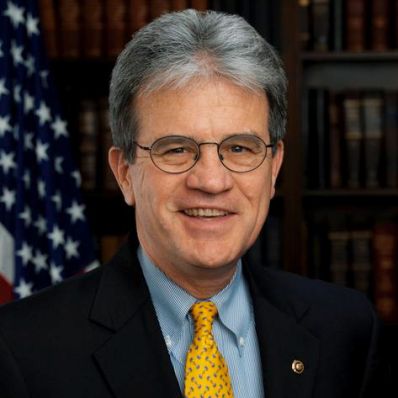
Ensign Scandal Revelations: Sen. Coburn’s Betrayal

Oh dear, Sen. Coburn...didn't anyone tell you that corruption is contagious?

The bipartisan Senate committee, investigating the sexual harassment/ extortion/ lobbying scandals that led Sen John Ensign (R-Nev.) to resign his seat issued its report this week. It found “substantial credible evidence that provides substantial cause to conclude that Senator Ensign violated Senate Rules and federal civil and criminal laws, and engaged in improper conduct reflecting upon the Senate, thus betraying the public trust and bringing discredit to the Senate.” The committee referred the matter to the Justice Department and the Federal Election Commission.

The report also found, however, that another Republican Senator, Tom Coburn of Oklahoma, was hip-deep in the  mess, serving as an intermediary between Ensign and his top aide, Doug Hampton, who was in the process of extorting  Ensign  for having an affair with Hampton’s wife. Sen. Coburn also played a central role in arranging for Ensign’s parents to cough up the hush money to satisfy Hampton’s demands.  Whether Coburn knew about the more serious offenses that Ensign seems to have committed, such as lying to investigators and using his influence to create business for Hampton’s lobbying firm as part of the pay-off for Ensign sleeping with Hampton’s wife, is unknown, but never mind: helping with the cover-up is bad enough. Continue reading →

Legal Ethics Train Wreck on “The Good Wife”

Oh, Alicia, Alicia...what have they done to you?

The CBS legal drama “The Good Wife” continues to show the seamy side of big firm legal practice, with heroine Alicia Florrick’s firm, Lockhart, Gardner and Bond, its adversaries, and even Good Alicia herself violating legal ethics rules with abandon, and at an accelerating rate, based on recent episodes. There is nothing wrong with this as entertainment, as long as the Rules themselves are not being misrepresented (they aren’t), the misconduct isn’t being presented as ethical (it isn’t, though it is sometimes hard to tell), and viewers don’t get the idea that this is how most law firms behave. Unfortunately, like most legal shows, “The Good Wife” fails in this important realm. I work with many large law firms, and they are all very aware on the ethical lines, bold or fuzzy, that they must not cross, and take their obligations seriously.

The most recent episode of “The Good Wife,” entitled “Getting Off” included a full-fledged ethics train wreck sparked by the firm’s habitually unethical adversary, the fecund Patti Nyholm. In the middle of representing the defendant hospital in a lawsuit brought by a Lockhart, Gardner and Bond, Nyholm is fired by her firm and removed from the case. With a twinkle in her eye, she approaches none other than the Lockhart firm to represent her in a multi-million dollar lawsuit against her former firm for discrimination and wrongful termination, on the theory that it fired her because she was pregnant. Continue reading →

Mother’s Day Reflections On A Wonderful Mother With Flawed Ethics

My mom and Ma Barker had some things in common.

I am spending this Mothers Day in mourning, as today is the first time I have had to experience the holiday without a mother. My mom died earlier this year, as I mentioned here at the time, and she has been buried for less than a month. My mother used to be a regular feature of my ethics seminars, as I would reference her whenever I talked about the so-called “Mom Test,” one of the three famous ethics tests that are useful to set off sluggish ethics alarms, the other two being the Gut Test (“Does this feel wrong?”) and the New York Times Test (“Would I be willing to see my conduct on the front page of the New York Times?”). The “Mom Test” is whether you could tell your mother about your ethically-dubious conduct without hesitation or shame, and I often told my classes that with some mothers, like my own, this test didn’t work very well. “My mother,” I would explain, “has the ethics of Ma Barker.” I was only partially kidding. Continue reading →

Loop-Hole Ethics and The New York Times

The NYT’s website paywall plan floats in a sea of holes.

Ariel Kaminer, author of “The Ethicist” column in The New York Times Magazine, made an interesting assertion in her answer to a reader who asked about whether he could exploit several loop-holes in the Times’ new paywall plan for its website.

Noting that he was a struggling freelance journalist who visits the Times website often, he asked if it was unethical for him to use his parents’ free access to the content, since they are subscribers.  Then he Mused about other scenarios. “If I buy online access, can I share the password with my live-in girlfriend, even if I move to New York for the summer? What about our other housemates?” Continue reading →

Donald Trump, Birther

Classy as ever, Donald!

Donald Trump, whose pseudo-entry into the Republican presidential sweepstakes has had the effect of making all the other candidates and near-candidates look classy by comparison, now is playing the despicable “birther” card. It figures. Everything about Trump’s career, personal life and properties, even his hairstyle, has been an exercise in bad taste.

This tactic plays to the lowest lights in the Republican party, about 70% of whose members harbor serious doubts about President Obama’s place of birth. This is not surprising: it is pure confirmation bias. Most Republicans don’t like Obama, and so don’t trust him. The confusion about his birth certificate feeds that distrust, and confirms it. It seems plausible to them that such an untrustworthy sort is hiding his true place of birth. To someone who trusts the President, this is not plausible. The slow-motion furor over his citizenship confirms their already formed beliefs too: that the Republicans are fools and racists. Continue reading →

Manny Post Script: The Signature of a Jerk

Manny Ramirez, the now-retired ex-baseball slugger, provoked the predictable responses from the media and fellow players in the wake of his sudden retirement after being notified that he would be the first major league player to face a 100 game suspension for failing a mandated PED test (that’s “performance enhancing drugs” for all of you who don’t know who Barry Bonds is), because no player had ever been caught TWICE before.

Everyone was in agreement that this meant: Continue reading →

Manny Ramirez’s Perfect Exit

The most unethical baseball player since the Black Sox

From  Major League Baseball:

“Major League Baseball recently notified Manny Ramirez of an issue under Major League Baseball’s Joint Drug Prevention and Treatment Program. Rather than continue with the process under the Program, Ramirez has informed MLB that he is retiring as an active player. If Ramirez seeks reinstatement in the future, the process under the Drug Program will be completed. MLB will not have any further comment on this matter.”

Perfect. Perfect.

Manny Ramirez was an impressively talented baseball player with discipline of an untrained Irish Setter, and the selfishness of a six-year-old. Throughout his career, he was a textbook example of the management fallacy known as the star principle, in which an extremely talented individual is allowed to break the rules and defy an organization’s culture in direct proportion to his perceived value. Continue reading →