
Unethical Quote of the Week: U.S. Attorney General Eric Holder

Trick Question: Who are the U.S. Attorney General's people?

“When you compare what people endured in the South in the 60s to try to get the right to vote for African-Americans, and to compare what people were subjected to there to what happened in Philadelphia–which was inappropriate, certainly that—to describe it in those terms I think does a great disservice to people who put their lives on the line, who risked all, for my people.”

—-U.S. Attorney General Eric Holder, testifying in a Congressional hearing regarding allegations of race-based enforcement in the Justice Department, and taking issue with Rep. John Culberson, who was questioning Holder about the New Black Panther Party voter-intimidation case. Culberson quoted a Democratic activist who called the incident the most serious act of voter intimidation he had witnessed in his career, prompting Holder’s statement.

I am willing to give the Attorney General the benefit of the doubt and regard this is a slip of the tongue. It would be unfair to conclude, based on this statement, that Holder is biased. But his use of the term “my people” certainly raises the question of bias. As the Attorney General of the United States, Eric Holder is obligated to regard all American citizens as “his people.” Suggesting otherwise undermines his credibility and the people’s trust, and is at best careless, and at worst suspicious.

[Thanks to WSJ blogger James Taranto for flagging the quote.]
Obama’s DOMA Decision: Ethical?

The talk show guest was fuming. “It’s a power grab,” he said, referring to President Obama’s decision that his Justice Department would no longer defend legal attacks on the Defense of Marriage Act, because he regarded the federal ban on gay marriage unconstitutional. “Worse yet, it’s a violation of his oath to defend the law of the land!”

AHA! An ethical argument to go with the legal and political ones! Is Obama violating his oath, which would be a breach of his duties of loyalty, responsibility, honesty and integrity? Continue reading

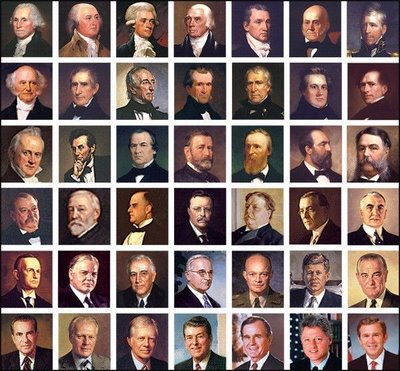
Presidents Day Ethics: The Presidents of the United States on Ethics and Leadership

In commemoration of President’s Day, Ethics Alarms presents the ethics wisdom of the remarkable men who have served their country in the most challenging, difficult, and ethically complicated of all jobs, the U.S. Presidency.

Ladies and Gentlemen, the Presidents of the United States:

George Washington: “I hope I shall possess firmness and virtue enough to maintain what I consider the most enviable of all titles, the character of an honest man.” Continue reading

Unethically Leaked Unethical Manuscript Shows That Sarah Palin Is Unethical

The Anchorage Daily News has obtained a leaked (read: stolen) manuscript of an unpublished book detailing a close former aide to Sarah Palin’s discovery of the Republican star’s many character flaws. Among other items, the book suggests that she knowingly violated federal election laws.

Now what? Let’s run down the ethical docket: Continue reading

Lara Logan’s Cairo Ordeal Starts An Ethics Train Wreck

A female CBS correspondent gets cut off from her security while doing live coverage of the demonstrations in Cairo, is surrounded by a group of Egyptians in the crowd, attacked, and sexually assaulted. She is rescued by Egyptian police and flown back to the U.S., where she is hospitalized.

This what happened to “60 Minutes” Correspondent Lara Logan, and you wouldn’t think such an unambiguous example of brutality and criminal conduct would raise any ethical controversies. But the already nasty incident has metastasized into a full-fledged Ethics Train Wreck, with both the Left and the Right taking turns disgracing themselves.

And the media, of course. Continue reading

Ethics Quiz: Can You Undo A Past Confict of Interest or Appearance of Impropriety?

In November, Ethics Alarms noted that Melanie Sloan, the head of the ethics watchdog group Citizens for Responsibility and Ethics in Washington, was involved in exactly the kind of Washington insider conflict of interest that the group typically slams politicians for engaging in:

“Melanie Sloan, long the leader and public face of CREW, announced that she is joining the new firm of lobbyist Lanny Davis, a long-time Democratic ally and famous for being Bill Clinton’s most ubiquitous apologist during the Monica Lewinsky scandal…Over the summer,  CREW aligned itself with the for-profit schools industry.  “Today, Citizens for Responsibility and Ethics in Washington (CREW) sent a letter to Sen. Tom Harkin (D-IA), Chairman of the Committee on Health, Education, Labor and Pensions (“HELP”), asking the committee to consider the financial motives of critics of the for-profit education industry,” a July CREW press release began. Later, Sloan again attacked the motives of for-profit school critics in a CREW blog post that linked to an op-ed piece Davis had written defending the for-profit industry. That industry then became a client of Davis’s lobbying firm.

“Got that? Sloan and CREW pushed the interests of Davis’s clients, then Sloan went to work for Davis, where she will, in part, be enriched by the very people whom she assisted in the name of ethics—by attacking the financial motives of for-profit school opponents! This is precisely the kind of D.C. two-step that CREW mercilessly exposes when elected officials do it, and now here is the very same CREW leader who once condemned such corrupt practices, doing it herself.”

Now, for reasons yet undisclosed. Sloan will not be leaving CREW after all.

Does that make everything all right, obliterating the conflict of interest exposed by her decision to take the lobbying job for a firm representing the same interests that CREW had defended? Is the stain of that apparent conflict now erased? Continue reading

Michael Palmer’s Ethics No-Brainer

Physician/novelist Michael Palmer is something of the new Michael Crichton, though unlike the eclectic late author of “Jurassic Park,” Palmer generally restricts himself to medical thrillers. He is promoting his latest novel, “A Heartbeat Away,” with a series of “ethics brainteasers,” as he called them in a recent Twitter post. Here is the latest, which he posted on his Facebook page and asked fans to discuss:

“What if a close friend confides to you that he/she has committed a heinous crime and you promise that you’ll never tell. However, you soon discover that an innocent person has been accused of the crime and is possibly facing significant jail time. You plead with your friend to give him/herself up, but he/she refuses and reminds you of the promise. What should you do? What if the if jail time was only a few months? What if the sentence was death?” Continue reading

Baseball’s Free Agent Follies: Dumb Clients, Conflicted Agent

Baseball’s super-agent Scott Boras has his annual off-season conflict of interest problem, and as usual, neither Major League Baseball, nor the Players’ Union, nor the legal profession, not his trusting but foolish clients seem to care. Nevertheless, he is operating under circumstances that make it impossible for him to be fair to his clients.

This year, Boras has three aging outfielders in his stable, all with some Hall of Fame credentials, all with fading skills, and all without jobs. Their names are Manny Ramirez, Johnny Damon and Andruw Jones. Thanks to a glut of unsigned hitters still on the market, the price for each of these three—once, when they were young, in the 8-figures a year range—is falling fast. According to an analysis by ESPN, only six, and possibly as few as three, possible teams are still looking to fill slots on their rosters suitable for Ramirez, Damon, and Jones, and none of them will sign more than one, if any. Continue reading

Boseman v. Jarrell: A Gay Mother Tries to Use Legal Discrimination To Her Advantage

Julia Boseman and Melissa Jarrell were domestic partners in Wilmington, North Carolina, and always wanted to raise a child together. In May of 2000, they decided to make their dream a reality, and began the process of having a baby. They decided that Melissa would do the child-bearing, but Julia would be equally involved in the process in every other respect. They  chose an anonymous sperm donor together after researching and discussing various options. They jointly attended the medical session necessary to conceive their child and to administer proper prenatal care. Julia read to the gestating child in Melissa’s womb and played music for him; she also cared for Melissa during her pregnancy and was present at the birth. Melissa and Julia jointly chose their son’s first name, and agreed that he should have a hyphenated last name composed of their surnames. In every way, they behaved publicly and privately as the parents of the child, introducing him into their respective extended families.

But North Carolina refuses to recognize same-sex marriages, so in the eyes of the state, Julia was not legally a parent. To remedy this obstacle, she sought and received a court order adopting the child without severing her partner’s legally recognized parental rights. Officially, their child now had two, same-sex parents. Then the couple split acrimoniously, with the acrimony greatly magnified when Melissa sought to limit Julia’s contact with her son.

Julia sued, arguing that she was the child’s parent as much as Melissa. Continue reading

“True Grit” Ethics

I haven’t seen the remake of “True Grit,” but I know I will, and like many other fans of the original 1969 version, I’m trying to conquer my biases. The latest effort by the usually brilliant Coen brothers creates ethical conflicts for me, and I am hoping I can resolve them right now. Can I be fair to their work, while being loyal to a film that is important to me for many reasons?

The original, 1969 “True Grit” won John Wayne his only Oscar for his self-mocking portrayal of fat, seedy law man Rooster Cogburn, 

who is hired by a young girl to track down her father’s murderer. I love the film; I saw it on the big screen nine times, in fact. Remaking it with anyone else in the starring role feels like an insult, somehow, as if the Duke’s version was somehow inadequate.

Intellectually, I know that’s nonsense. Artists have a right to revisit classic stories and put their personal stamp on them, and they should be encouraged to do it. Every new version of a good story, if done well, will discover some unmined treasure in the material. Why discourage the exploration? Continue reading