North Carolina’s Conflicted, Disloyal, Unethical Attorney General, Roy Cooper

A candidate masquerading as a lawyer...

A candidate masquerading as a lawyer…

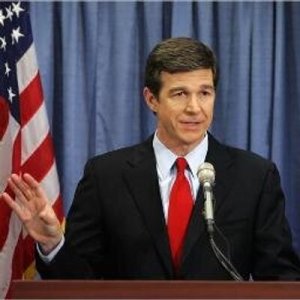
Roy Cooper, North Carolina’s elected Attorney General, has so many conflicts of interest that he can’t credibly do his job in an ethical manner. Fortunately for him doing his job ethically seems to hold no interest for him.

To start with, he is an announced political opponent of the current Republican governor, Pat McCrory. This situation is not unique, but if an Attorney General is going to do his job ethically, for remember he is the state’s lawyer, he has to make an effort to put his political interests aside and not allow them to interfere with his duty to represent his client the state, whose voters have made McCrory its top decision-maker.

Cooper, however, isn’t making any such effort. House Bill 2, a state law passed last week that bars local governments from enacting nondiscrimination protections for the LGBT community, is anathema to Cooper’s constituency, so he is refusing to defend it in court against a federal lawsuit. If he were a private attorney whose beliefs rendered it impossible for him to represent his client, Cooper would have to resign. Since he is elected, he need not do that, but he can’t actively interfere with his client’s legal needs either. His proper course under the legal ethics rules governing all lawyers would be to find an outside counsel to do his job in this case, since he is incapable of doing it, and to defend the law.

Instead, Cooper is actively undermining his client’s legitimate objectives.  Cooper said in a news conference that the law is a “national embarrassment” and it “will set North Carolina’s economy back if we don’t repeal it.” That’s the candidate talking, not the state’s lawyer, and thus the state’s lawyer is engaged in a bright-line breach of loyalty by talking like that in public. His duty, and his only ethical option, is to shut up. He may not be able to support his client’s objectives, but he absolutely must not impede them.

Cooper has even gone beyond that ethical violation to a massive conflict of interest breach. Instead of defending McCrory, the Board of Governors and the others being sued in the federal lawsuit, Cooper has announced that he will defend the two LGBT people and the lesbian professor bringing the lawsuit against the state! Continue reading

Adam LaRoche Drama Epilogue: A Reflection On Life, Kids, Baseball And Ethics

drake-adam-laroche-

Well, I don’t recall anyone leaving baseball like this before.

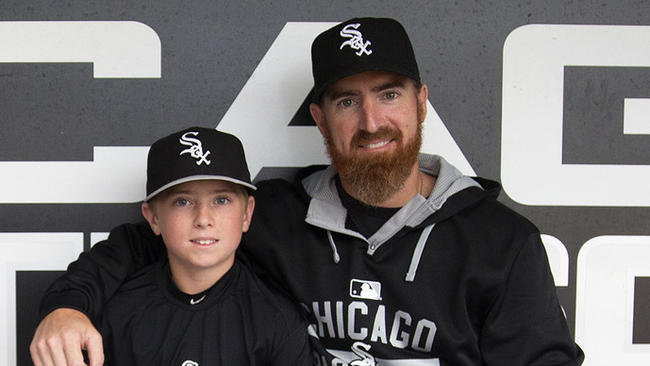
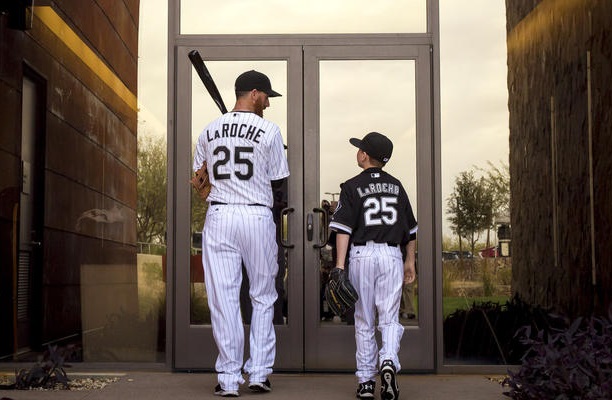
When last we visited Adam LaRoche a couple of days ago, he was retiring from baseball (and abandoning his 13 million dollar 2016 contract  to play for the Chicago White Sox) because team executive Kenny Williams asked that he not have his 14-year-old son Drake living and traveling with the team, as well as being being perpetually in the clubhouse, as he was all last year. Today LaRoche released a remarkable statement explaining his decision.

It is well worth reading. I’ll have some comments at the end about the bolded sections, marked by me with letters. Now, here’s Adam:
Continue reading

Loyalty Drama: The Strange, Sudden, Ethical, Unethical Retirement Of White Sox First Baseman Adam LaRoche

chi-adam-laroche

Yesterday,  baseball’s Spring Training was shaken when Chicago White Sox first baseman Adam LaRoche unexpectedly announced that he was retiring, effectively giving up his guaranteed 13 million dollar salary. LaRoche had suffered a down year in 2015, but he was healthy, and assured of a place in the ChiSox line-up. The reason for the precipitous decision was mysteriously and ominously reported as caused by a “personal matter.”  Was there dire illness in the family? What would make a healthy athlete walk away from his team mates and so much money?

Today, the club revealed the surprisng answer. Last year, LaRoche’s son, Drake, 14, spent most of the season with his father and the team and even had his own locker in the home clubhouse at U.S. Cellular Field. Drake was with also with the team in this year’s spring training. White Sox executive vice president Ken Williams told LaRoche that he would have to limit the amount of time his son spent in the clubhouse this season, and in response, LaRoche announced he was quitting.

Again, the threshold question to so much ethical analysis is crucial: What’s going on here?
Continue reading

Post-Debate Ethics, Part I (of 4): The New York Times And The Biased Media’s Disrespect For Mitt Romney

"Boy, what a jerk, warning the public against a power-mad, narcissist blow-hard before they make him President...."

“Boy, what a jerk, warning the public against a power-mad, narcissist blow-hard before they make him President….”

Since the last GOP debate, several ethics issues have emerged, for those inclined to see them:

1. The New York Times and the Media’s Anti-Romney Bias

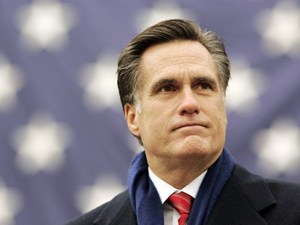
The biased news media helped sink Mitt Romney’s chances four years ago, and now, perhaps by habit, it can’t stop itself from bashing him even for doing something indisputably good. Though Mitt did a thoroughly statesmanlike, honest, accurate and unprecedented job eviscerating any argument for supporting Donald Trump, his own party’s front-runner for the nomination, most of the media couldn’t bring themselves to give him credit. Democratic operative Matt Lauer, on the “Today Show,” asked Romney if his direct attack was “betrayal,” as Trump portrayed it. (Hint, Matt: any time Trump stakes out an ethics position, you can assume it’s either self-serving or stupid.). The theory behind Matt’s Mistake is that Romney asked and received Trump’s endorsement in 2008, so he owed Trump the same in 2016. Let me explain to you Matt, the concepts of patriotism and statesmanship, as well as truth-telling, and how loyalty works.

You see, Matt, Mitt Romney’s loyalties in this matter, in order of priority, are individual, party, and country. If returning Trump’s courtesy had no negative impact on the Republican Party or the future of our nation, then yes, he would be ethically obligated to return Trump’s courtesy. That is not the situation, however, as I’m sure you know, but want to pretend otherwise in order to try to blunt Romney’s message and ensure that the  Democratic nominee, either the unqualified Bernie Sanders or the corrupt Hillary Clinton, has to face the weakest opponent possible, now that Ben Carson has finally withdrawn.

When Romney sought and got Trump’s endorsement, Trump didn’t predicate it on a future endorsement when Donald ran, because nobody in their right mind, even Trump, would have seriously suggested that Trump would or could mount as credible campaign. Mitt was seeking the endorsement of a businessman, a reality TV figure with high visibility, celebrity and a potential donor, and that’s all he was doing. That doesn’t obligate Romney to return the favor. Lauer apparently thinks Mitt is in “The Godfather” : accept the favor from the Don(ald), and you must do whatever you are asked at a later date, even if it means shooting someone. No, you are not obligated to do anything. What you asked before was a favor; what is being asked of you now is a wrong.

For nominating Trump will wreck the Republican party. It will dissolve its values, embarrass its members, soil its reputation and legacy, and when Trump turns out to be the new Silvio Berlusconi, or a modern day Huey Long, or an American Hitler, or, as I suspect, being an optimist, just a more destructive version of Evan Meacham, the car salesman turned Arizona Governor who became the first U.S. governor to simultaneously face removal from office through impeachment, a scheduled recall election, and a felony indictment, or, in the best case scenario, a national version of Jesse Ventura. Under any of these scenarios, however, the GOP will be crippled, accountable and ultimately doomed, and that’s just what journalists like Lauer want in their heart of hearts. What they don’t seem to realize is that there is a real risk that Trump could win.

Romney owes his first loyalty in this matter to his party, and his highest to his fellow citizens. His speech was not a betrayal of either of these, but an ethical act to its core.

Even worse than Lauer was the New York Times editors, who wrote yet another embarrassing editorial, one of many they have authored in the past 12 months or so as the paper has almost completely shed its mantle as the exemplar of U.S. journalism. Rather than an objective and fair editorial praising Romney’s courageous and well-aimed broadside at a juggernaut, the Times used the opportunity to play partisan politics while expanding and re-using old cheap shots at Romney: Continue reading

Encore! Presidents Day Ethics: The Presidents of the United States on Ethics and Leadership

It’s President’s Day, and I see that it has been five years since the most popular Ethics Alarms President’s Day post was published. That one, from 2011, reminds us of the ethics wisdom and leadership acumen of the remarkable men who have served their country in the most challenging, difficult, and ethically complicated of all jobs, the U.S. Presidency.

In the middle of a campaign season littered with some disturbingly unethical candidates, it seems especially appropriate to re-post that entry now….with some updates. In 2011, I left out three Presidents, including the current one. Now all are represented, most of them well.

So…

Ladies and Gentlemen, the Presidents of the United States of America:


George Washington: “I hope I shall possess firmness and virtue enough to maintain what I consider the most enviable of all titles, the character of an honest man.”

John Adams: “Because power corrupts, society’s demands for moral authority and character increase as the importance of the position increases.” 

Thomas Jefferson: “On great occasions every good officer must be ready to risk himself in going beyond the strict line of law, when the public preservation requires it; his motives will be a justification…”

James Madison: “No government any more than any individual will long be respected without being truly respectable.”

James Monroe: “The best form of government is that which is most likely to prevent the greatest sum of evil.”

John Quincy Adams: “Always vote for principle, though you may vote alone, and you may cherish the sweetest reflection that your vote is never lost.”

Andrew Jackson: “One man with courage makes a majority.”   (Attributed)

Martin Van Buren: “No evil can result from its inhibition more pernicious than its toleration.”

William Henry Harrison: “There is nothing more corrupting, nothing more destructive of the noblest and finest feelings of our nature, than the exercise of unlimited power.” Continue reading

The Loyalty Problem: Fundamental Ethics Confusion at Mount St. Mary’s University

Mt st mary

Loyalty is an ethical virtue; the whole concept of duty often depends on it. Loyalty is also the most dangerous of all ethical principles. Misapplied, misinterpreted, followed blindly or carried to extremes, it can lead to absolute wrong. A current controversy at Maryland’s Mount St. Mary’s University illustrates how.

A reliable source obtained information that the school’s president, Simon Newman had argued that the school needed to be ruthless in maintaining high standards by getting rid of less competitive students, and had done so by telling colleagues opposing him, “This is hard for you because you think of the students as cuddly bunnies, but you can’t. You just have to drown the bunnies…Put a Glock to their heads.”

The student newspaper reported the conversation, which Newman hasn’t denied, and it was duly published in The Mountain Echo, the student newspaper.

Shortly after the “scoop,” The Mountain Echo’s faculty advisor Ed Egan was fired by Newman for violating the “code of conduct and acceptable use policies.” During the same period in which Egan was fired,  Newman did a Michael Corleone on some other “disloyal” lieutenants.” Thane Naberhaus, an associate professor of philosophy, was dismissed after criticizing Newman’s policies, and David Rehm, was stripped of his role as provost after questioning university policies.

The dismissal letter to Naberhaus, signed by Newman, said “As an employee of Mount St. Mary’s University, you owe a duty of loyalty to this university and to act in a manner consistent with the duty. However, your recent actions, in my opinion and that of others, have violated that duty and clearly justify your termination.”  Ed Egan says that he was also told that he had been “disloyal.”

I can’t speak to the dismissals of the other employees, but in the case of Egan, his loyalty was where it should be. President Newman doesn’t understand his own job, or the ethical principles applicable in academia. Continue reading

The Seventh Annual Ethics Alarms Awards: The Best of Ethics 2015, Part I

Sweet Briar montage

Welcome to the Seventh Annual Ethics Alarms Awards, our blog’s retrospective of the best and worst in ethics over the past year, 2015.

It was a rotten year in ethics again, it’s fair to say, and Ethics Alarms, which by its nature and mission must concentrate on episodes that have lessons to convey and cautionary tales to consider probably made it seem even more rotten that it was. Even with that admission, I didn’t come close to covering the field. My scouts, who I will honor anon, sent me many more wonderfully disturbing news stories than I could post on, and there were many more beyond them. I did not write about the drug company CEO, for example, who suddenly raised the price of an anti-AIDS drug to obscene levels, in part, it seems, to keep an investment fraud scheme afloat. (He’ll get his prize anyway.)

What was really best about 2o15 on Ethics Alarms was the commentary. I always envisioned the site as a cyber-symposium where interested, articulate and analytical readers could discuss current events and issues in an ethics context. Every year since the blog was launched has brought us closer to that goal. Commenters come and go, unfortunately (I take it personally when they go, which is silly), but the quality of commentary continues to be outstanding. It is also gratifying to check posts from 2010 and see such stalwarts who check in still, like Tim Levier, Neil Dorr, Julian Hung, Michael R, and King Kool.  There are a few blogs that have as consistently substantive, passionate and informative commenters as Ethics Alarms, but not many. Very frequently the comments materially enhance and expand on the original post. That was my hope and objective. Thank you.

The Best of Ethics 2015 is going to be a bit more self-congratulatory this year, beginning with the very first category. Among other virtues, this approach has the advantage of closing the gap in volume between the Best and the Worst, which last year was depressing. I’m also going to post the awards in more installments, to help me get them out faster. With that said….

Here are the 2015 Ethics Alarms Awards

For the Best in Ethics:

Most Encouraging Sign That Enough People Pay Attention For Ethics Alarms To Occasionally Have Some Impact…

The Sweet Briar College Rescue. In March, I read the shocking story of how Sweet Briar College, a remarkable and storied all-women’s college in Virginia, had been closed by a craven and duplicitous board that never informed alums or students that such action was imminent. I responded with a tough post titled “The Sweet Briar Betrayal,” and some passionate alumnae determined to fight for the school’s survival used it to inform others about the issues involved and to build support. Through the ensuing months before the school’s ultimate reversal of the closing and the triumph of its supporters, I was honored to exchange many e-mails with Sweet Briar grads, and gratified by their insistence that Ethics Alarms played a significant role in turning the tide. You can follow the saga in my posts, here.

Ethics Heroes Of The Year

Dog Train

Eugene and Corky Bostick, Dog Train Proprietors. OK, maybe this is just my favorite Ethics Hero story of the year, about two retired seniors who decided to adopt old  dogs abandoned on their property to die, and came up with the wacky idea of giving them regular rides on a ‘dog train” of their own design.

Ethical Mayor Of The Year

Thomas F. Williams. When the Ferguson-driven attacks on police as racist killers was at its peak (though it’s not far from that peak now) the mayor of Norwood, Ohio, Thomas F. Williams, did exactly the opposite of New York Mayor Bill de Blasio in response to activist attacks on the integrity of his police department. He released a letter supporting his police department without qualification. At the time, I criticized him for his simultaneously attacking activists as “race-baiters.” In the perspective of the year past, I hereby withdraw that criticism.

Most Ethical Celebrity

Actor Tom Selleck. In a terrible year for this category, Selleck wins for bravely pushing his TV show “Blue Bloods” into politically incorrect territory, examining issues like racial profiling and police shootings with surprising even-handedness. The show also has maintained its openly Catholic, pro-religion perspective. Yes, this is a redundant award, as “Blue Bloods” is also a winner, but the alternative in this horrific year when an unethical celebrity is threatening to be a major party’s nominee for the presidency is not to give the award at all.

Most Ethical Talk Show Host

Stephen Colbert, who, while maintaining most of his progressive bias from his previous Comedy Central show as the successor to David Letterman, set a high standard of fairness and civility, notably when he admonished his knee-jerk liberal audience for booing  Senator Ted Cruz

Sportsman of the Year

CC Sabathia

New York Yankee pitcher C.C. Sabathia, who courageously checked himself into rehab for alcohol abuse just as baseball’s play-offs were beginning, saying in part,

“Being an adult means being accountable. Being a baseball player means that others look up to you. I want my kids — and others who may have become fans of mine over the years — to know that I am not too big of a man to ask for help. I want to hold my head up high, have a full heart and be the type of person again that I can be proud of. And that’s exactly what I am going to do.”

Runner-up: MLB Commissioner Rob Manfred, who dismissed the ethically-addled arguments of Pete Rose fans to reject his appeal to be have his lifetime ban for gambling lifted.  For those who wonder why football never seems to figure in this category: You’ve got to be kidding.

Ethics Movie of the Year

SpotlightTIFF2015

“Spotlight”

Runner-up: “Concussion”

Most Ethical Corporation

Tesla Motors, the anti-GM, which recalled all of its models with a particular seatbelt because one belt had failed and they couldn’t determine why. Continue reading

New Rule For 2016: Elected Officials, Politician And Presidential Candidates Will Be Accountable For What They Say, Not What They “Meant To Say”

You know that quote time machine that politicians keep using? It doesn't exist. Stop letting them act as if it does.

You know that quote time machine that politicians keep using? It doesn’t exist. Stop letting them act as if it does.

We have a growing mass of public figures in politics and government who increasingly communicate in sloppy, vague, hyperbolic and ambiguous language and assume that they can wait and see how the public reacts to it before they, their spokespersons, defenders, enablers or friendly pundits need to clarify what they “really meant.”

Well, the hell with that.

Communication precision is more crucial than ever in the new, technology-driven public media, when tweets can be circulated to millions within minutes, and on-camera statements live on YouTube forever. This habit of allowing influential figures to spout lies, nonsense , smoking gun revelations about their character and worse and then insist on a do-over when they are called on the obvious meaning of their own words must stop. Among other things, it appears to be killing the little switch in the brains of these people that is supposed to stop human beings from saying stupid things before they say them. That switch goes by the name Prudence, which  encompasses common sense, respect, responsibility, restraint, honesty in communication, and more. We should want our leaders to have that switch working perfectly. Unfortunately, most of our most prominent leaders and would-be leaders appear not to have a functioning switch at all. Continue reading

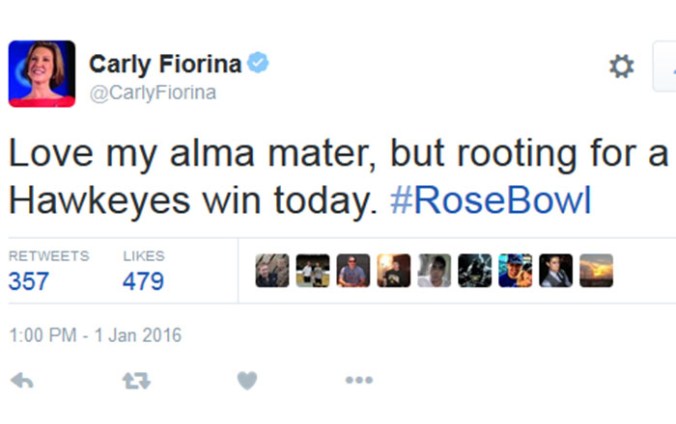
Unethical Tweet Of The Month: Carly Fiorina

carly tweetThe above New Year’s Day tweet was issued by Republican Presidential hopeful Carly Fiorina, now campaigning in Iowa for February’s caucuses, as Stanford and Iowa prepared to do battle in the Rose Bowl. (It was a rout: Iowa got clobbered.)

Fiorina is a  Stanford alum, and the tweet backfired, it seemed, with many on Twitter finding the tweet revealing, and not at all in a good way.

Are there any plausible translations of the tweet that reflect well on Carly’s character? Let’s see: Continue reading

Update On “The Worst Aunt Ever” Debate

Auntie Maim and Nephew Maimer...

Auntie Maim and Nephew Maimer…

Remember the Ethics Alarms post about the favorite aunt who sued her 12-year old nephew for damages based on her injury when he jumped into her arms at his birthday party when he was 8? Remember the indignant plaintiffs lawyer who couldn’t get his mind around the fact that normal people don’t (ande shouldn’t) always see right and wrong like lawyers do, or that “it’s done all the time” (that is, The Golden Rationalization, #1 on the Rationalizations list, “Everybody does it”) and “there are worse lawsuits” ( or the worst of all rationalizations, #22, “Comparative Virtue” or “Its not the worst thing”) are not sufficient ethical defenses of a woman who voluntarily traumatizes a child who trusts her and who just lost his mother?

The Weekly Standard looks at the episode from some different angles, and writer Charlotte Allen does an excellent job providing a balanced analysis of the case (which I am now using in my ethics seminars to explain to lawyers how legal ethics alone is often not enough to make lawyers ethical). I am awash with regret that I didn’t think of the gag  “Auntie Maim” in the original post, which admittedly went a bit overboard in its condemnation as it was. Mostly, however, I am gratified that I was quoted in the piece after a well-handled interview with Charlotte, and indeed that she used my perspective to sum up the significance of the episode.

You can read it all here.