“The 1% Contingency of Bad Management and Bad Luck”

That’s a quote from the late futurist Herman Kahn, the smartest person I ever talked to (which is saying something). Herman was always optimistic about the future, but regularly warned that his rosy predictions were always subject to being derailed by the 1% contingency of bad management and bad luck. Indeed virtually every disaster in history can be explained by that 1% contingency.

I thought about this today as I read the infuriating Washington Post story, Kerr County did not use its most far-reaching alert system in deadly Texas floods…Local officials used the system more than two days after the recorded height of the floods.”

The short version is that officials had at their disposal the technology to turn every cellphone in the river valley into a screaming alarm, but, inexplicably didn’t use it before river levels rose to record heights, causing widespread destruction and killing more than a hundred people. Why? So far, nobody is talking. Two days after the rain storm that caused the river to rise 30 feet, Kerr County officials used the system to warn residents that there could be another round of river flooding. This is akin to Pompeii officials going house to house to warn survivors that Mt. Vesuvius might erupt again. But no county officials have responded to emails, texts and other requests from The Post to explain what happened. State and local officials said in a statement that county leaders have been focusing on rescue and reunification and are “committed to a transparent and full review of processes and protocols.”

Continue reading

A Manager’s Baseball Decision Has Lessons For The Non-Baseball World.

In a game over the weekend between the Boston Red Sox and Detroit Tigers, Red Sox starting pitcher Cooper Criswell was pitching the game of his life. In a 0-0 tie through four innings, the Tigers had no base-runners at all. Criswell, a rare breaking-ball and control specialist who serves as Boston’s fifth starter now that those above him on the depth chart have been injured, appeared to have perfect command of his pitches, as evidenced by the large number of strikeouts he was getting, and he is not a strike-out pitcher. Criswell also threw just 52 pitches in his four innings, and that is well-below any likely fatigue level.

Nonetheless, despite being literally perfect that far, Cooper Criswell did not come out to the mound for the fifth inning. Red Sox manager Alex Cora replaced him with lefty Rich Hill, because the Tigers had three tough lefties coming up to bat (left-handed batters typically hit right-handed pitchers like Criswell better than they hit lefties like Hill).

Hill walked one of the left-handed batters, and the first right-handed batter he faced as a result hit a two-run homer. The Red Sox never caught up.

After the game, Cora had no regrets, telling the press that pulling Criswell was part of a predetermined plan. “We drew it up, they had a bunch of lefties,” Cora said.. “He gave us enough. We went to Rich in that situation. We had a big pocket of lefties. Just the righty burned us.”

There are two ethics issues here.

Continue reading

The Elon Musk-Twitter Ethics Roller-Coaster Ride Continues

(I hate roller-coasters.)

The last week has demonstrated clearly, I think we can all agree, that 1) there is an urgent need for Twitter to be de-politicized, stripped of partisan censorship, and become a trustworthy platform for the unfettered distribution of news, information and opinion to the public, and 2) Elon Musk is too much of a loose cannon to be the manager of Twitter’s reform.

Yesterday almost qualified as a meltdown, or a tantrum, or something. Maybe a joke. Who knows with him? He teased his withdrawal from the daily management of the reeling social media giant. He hinted that the company was teetering on bankruptcy. He put his continued tenure as CEO up for a vote, pledging to abide by the results.

Chaos. Musk is quite a bit like Donald Trump, which shouldn’t be surprising: the successful entrepreneur/ CEO/ autocrat/narcissist is a well-understood personality type, and management by chaos is a management style that can be very effective for the short term in a private company (but not the U.S. government). I worked for a chaos manager for seven years, and he was brilliant at it, but I decided then and there that I could never operate that way. It is hard on subordinates, employees and stake-holders; only the chaotic manager enjoys the pressure. It is a non-Golden Rule management style that relies entirely on utilitarianism as its ethical justification. Yes, the methods causes breakdowns, anxiety and constant crisis, but if it “works,” it’s worth the pain. That’s what Musk has been doing.

Continue reading

The Entitled Working Mother’s Christmas Lament

For some reason I’ve been getting accounts of a lot of overseas ethics controversies of late, like the German hospital patient who shut off her roommate’s oxygen machine because it was “too noisy.” The source of this ethics quiz is the UK, where a frustrated mother argues on a parenting site that it was selfish for a childless colleague to compete with her for a day off on Christmas, because she was a mother.

“Ok I feel terrible about this,” the indignant mom wrote in a thread on UK-based parenting site Mumsnet, as she explained that their manager told the two women to work out their conflict themselves, and let him know their solution. Continue reading

Comment Of The Day: “Comment Of The Day: ‘Catching Up: Professional Ethics And The Challenger Disaster’”

Matthew B. scored a Comment of the Day by raising an issue I had never thought about before: how the misapplication of PowerPoint leads to inadequate training and information dissemination within organizations and bureaucracies. He also references the reluctance of managers to know when to hand over decision-making to subordinates. That is something I have thought about, a great deal.

Two of my favorite movies illustrate how competent leaders and managers know when to delegate a crucial decision down. “Topsy-Turvy,” the superb 1999 film depicting the creation of “The Mikado” by Gilbert and Sullivan, accurately depicts the real incident when, after the final rehearsal, W.S. Gilbert told the “Mikado” cast that he was cutting “My Object All Sublime,” also known as “The Mikado’s Song.” Gilbert was a tyrannical director, and the cast was terrified of incurring his wrath. This time, however, they stood up to him. The cast as one told him that he was making a mistake. The soloist, Richard Temple, they told their shocked and steaming director who also had conceived of the song, should have the chance to perform it in front of an audience. His fellow cast members  were certain it would be a hit. Gilbert, recognizing the certitude the cast must have had to risk his fury at being contradicted, decided that his performers might have a clearer understanding of the show even that he had, and relented. Temple would sing about letting “the punishment fit the crime” on opening night.

The song was an instant sensation, like “The Mikado” itself, and is still one of the most quoted of all G&S songs.

The other example is at the climax of “Hoosiers,” the great basketball film based on the true story of the miraculous Indiana state championship won by a tiny school from Milan, Ind. in 1954. During the last time-out before the team’s last chance to score, which would, if successful, give the team a one-point victory over their greatly favored competition in the championship game, the coach (Gene Hackman), who has led the ragtag group this far by emphasizing teamwork over individual achievement, lays out a play in which the team’s superstar, Jimmy Chitwood will be a decoy. He plans for another player to take the final shot, but the team doesn’t move. “What’s the matter with you?” he shouts as his players just stare, looking hesitant. “If I get the shot, I’ll make it,” Jimmy says, after a long pause. So the coach, who has insisted all season that his word was law, makes the same decision Gilbert did. When your subordinates are that sure, trust them. They know better than you.

Jimmy shoots and scores the winning basket as time runs out.

Here is Matthew B.’s Comment of the Day on “Comment Of The Day: ‘Catching Up: Professional Ethics And The Challenger Disaster’”:

Continue reading

Unethical Email Of The Month: Chicago Mayor Lori Lightfoot

Lightfoot email

That obnoxious, bullying, uncivil and unprofessional memo from Chicago mayor Lori Lightfoot, is signature significance. Competent and effective managers don’t write and send memos like that, not even once. As a subordinate, I would resign after receiving such an email. As a supervisor, I would place a staffer who sent that memo on probation after requiring her to apologize to the recipient.

Chicago is one of the most difficult American cities to govern. Lightfoot is currently facing legal problems as a consequence of her discriminatory announcement that she would only do interviews with “journalists of color.” The email, just another of many pieces of evidence showing Lightfoot’s arrogance and incompetence.

This is what happens when voters elect officials based not on their management experience and revealed leadership skills, but on their gender and skin shade.

[Instapundit’s Ed Driscoll had a funny line about the email: “CHICAGO’S MAYOR MORPHED INTO JACK TORRANCE SO SLOWLY, I HARDLY EVEN NOTICED…”

Ellen DeGeneris Meets The Cognitive Dissonance Scale

Ellen DeGeneres’s brand and reputation have always been built on the illusion that she was nice. She was called the “Be Kind” Lady. Then, last July, BuzzFeed reported that several of her popular daytime talk show’s former and current staff members said they had been subjected to “racism, fear and intimidation” on the set. Other staff members said producers had sexually harassed them. Warner Bros. investigated the complaints and concluded that there were major problems. Three of the show’s producers were fired. When DeGeneres returned from the show’s summer hiatus to open its 18th season, she began with a vague and deeply unsatisfying apology. “I learned that things happen here that never should have happened,” she said in part. “I take that very seriously. And I want to say I am so sorry to the people who were affected.”

Well wait a minute: whose name is on the title card? Who believes that Ellen DeGeneres had no idea what was going on in the management of the Ellen DeGeneres show? How is that even possible? And if it is possible, it’s still unforgivable. She is accountable.

There were also increasingly frequent accounts suggesting that Ellen herself wasn’t so nice. (I am reminded of my late night conversation with the late Broadway choreographer Thommie Walsh, who said, “You have to remember, Jack, that virtually all star performers are horrible people.”) Among the disturbing allegations was the claim that staff on DeGeneres’ show were instructed not to talk to her. She supposedly tried to get a waitress fired who chipped one of Ellen’s nail. There were leaks that she expressed contempt for her audience behind the scenes.

Sometimes the public surprises me: after all, it voted for Joe Biden to be President, and Joe has a completely phony nice-guy image that has been exposed again and again as a cynical facade. Yet in Ellen’s case, her hypocrisy was rejected. “Ellen,” the ratings companies report, has lost more than a million viewers since September, averaging 1.5 million viewers over the last six months, down from 2.6 million in the same period last year.

Continue reading

“What’s Going On Here?”: The Rasmussen “Production Error”

What the hell?

In 2016 around this time I took Ethics Alarms to the woodshed for using unflattering photos of Hillary Clinton, like these.

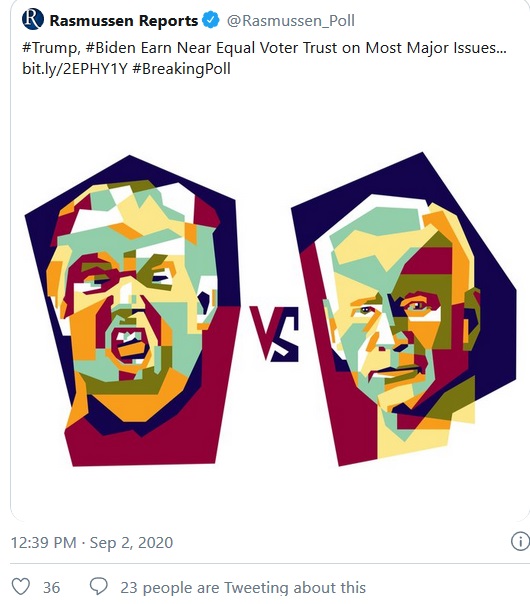
It’s a dirty trick, essentially. Photos capture a split second of life and falsify it by freezing it forever. The news media has been using this tactic against Donald Trump with wild abandon, having essentially given up any pretense of fairness and objectivity. However, the Rasmussen graphic above wasn’t a photograph, and it was employed by the supposedly conservative-leaning polling service. Yet it could have been designed by the Democratic National Committee at its most nasty, portraying the President as a snarling, vicious threat, and Joe Biden as a calm and professional statesman.

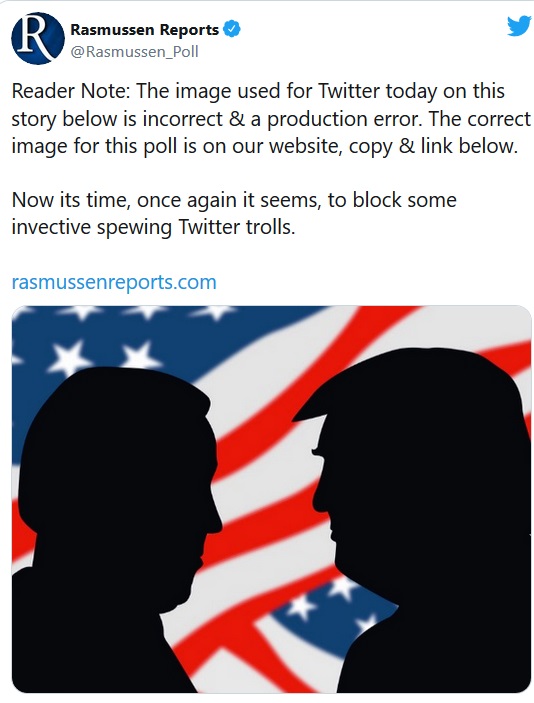
Rasmussen was quick with a retraction that raised more questions that it answered:

  • Why did Rasmussen have the snarling Trump graphic at all?
  • What kind of “production error” would cause that?
  • If the company is so careless with its tweets, what else is it careless about?
  • Was a “rogue employee” the culprit? Again, this does not speak well for the company’s management, trustworthiness or culture.
  • Any organization that sends out tweets without a vetting and review process is incompetent. Yes, that includes the White House. Especially the White House.
  • Is Rasmussen really blaming the social media criticism of its botch? Or Trump supporters who have seen enough flagrant anti-Trump bias for a lifetime, and who expressed their anger at this example? The company needs to apologize, not blame the victims of its own system breakdown  ineptitude.

________________________________

Pointer: Althouse

Baseball Ethics The Dodgers’ Insane, Incompetent, Mookie Betts Contract

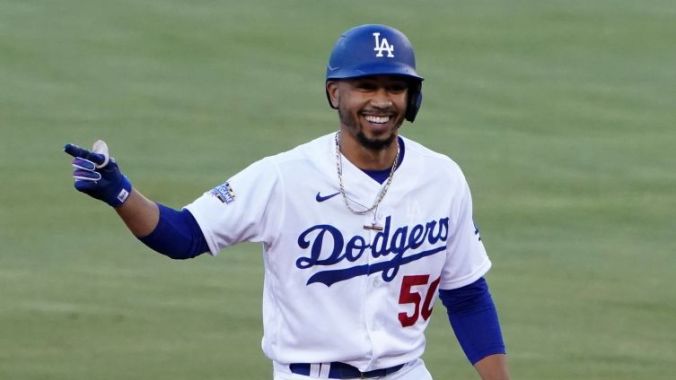
It is being reported that the Los Angeles Dodgers are about to sign an extension with new right-fielder Mookie Betts, acquired over the winter in a stunning trade with the Boston Red Sox, for an estimated 12-13 year contract at about 35 million dollars a year.

When I was giving my lecture to the Smithsonian about baseball this week, I mentioned writer Bill James’ argument that baseball is not “just a business” as detractors like to say. He has pointed out that because baseball’s market does not treat it as a business, but as a pastime, entertainment, a cultural touchpoint and a community institution, baseball teams are not run as rational businesses. Indeed, they are frequently run irresponsibly and incompetently, based on emotion and sentiment.

‘Twas not always thus. In the early days of professional baseball right up the end of the Calvin Griffith era in Minnesota, many teams were run as the sole sources of income by their owners, though by the time Griffith died, he was the last of that species. Beginning with Tom Yawkey’s purchase of the then perennial doormat Red Sox, however, the baseball owner as community philanthropist was born. Yawkey was a rich lumber tycoon, and he spent money lavishly on Boston teams to win games and make fans happy. He certainly increased the value of his sports franchise asset, but from a business standpoint his management was often irrational.

The Dodgers contract with Betts is in this tradition. Betts is a free agent after this year; that’s why the Red Sox traded him, because he was going to put himself up for sale to the largest bidder. The Dodgers sensed that the virus-truncated season changed the equation for them and the player: Mookie, one of the most talented, productive and likable players in the game, would not have a chance in 60 games to enhance his value, and each year passed  for a player is depreciation. Betts will be 28 this season, and most players peak at that age. Continue reading

One More Time: Leadership, Moral Luck, Accountability, And Scapegoating, Baseball-Style.

Here is part of the statement released by  Boston Red Sox owner John Henry yesterday after the team fired its head of Baseball Operations, essentially the team’s General Manager, Dave Dombrowksi:

“Four years ago, we were faced with a critical decision about the direction of the franchise. We were extraordinarily fortunate to be able to bring Dave in to lead baseball operations. With a World Series championship and three consecutive American League East titles, he has cemented what was already a Hall of Fame career.”

Wait…HUH? He was hired four years ago, the team won three consecutive American League East titles (for the first time in the franchise’s history), a World Series Championship (following an epic 2018 season that saw Boston win 108 games) and he’s fired? What did he do, sexually harass players? Flash the owner’s daughter? Continue reading