Ethics Observations On The Washington Post’s Hit Piece On Bernie Sanders

Today the Washington Post presented “Inside Bernie Sanders’s 1988 10-day ‘honeymoon’ in the Soviet Union,” an oddly timed hit piece—yes, I think that’s fair—showing a deluded, middle-aged ,anti-American  politician gawking with approval at the marvels of Communism while slamming his own country and ignoring the obvious signs that the worker’s paradise is crumbling around him. Here’s a sample:

The just-married socialist mayor from Vermont was on what he called “a very strange honeymoon,” an official 10-day visit to the communist country, and he was enthralled with the hospitality and the lessons that could be brought home. “Let’s take the strengths of both systems,” he said upon completing the trip. “Let’s learn from each other.”…As he stood on Soviet soil, Sanders, then 46 years old, criticized the cost of housing and health care in the United States, while lauding the lower prices — but not the quality — of that available in the Soviet Union. Then, at a banquet attended by about 100 people, Sanders blasted the way the United States had intervened in other countries, stunning one of those who had accompanied him.

“I got really upset and walked out,” said David F. Kelley, who had helped arrange the trip and was the only Republican in Sanders’s entourage. “When you are a critic of your country, you can say anything you want on home soil. At that point, the Cold War wasn’t over, the arms race wasn’t over, and I just wasn’t comfortable with it.”

…Sanders had visited Nicaragua in 1985 and hailed the revolution led by Daniel Ortega, which President Ronald Reagan opposed. “I was impressed,” Sanders said then of Ortega, while allowing that “I will be attacked by every editorial writer for being a dumb dope.” At the same time, Sanders voiced admiration for the Cuban revolution led by Fidel Castro, whom Reagan and many others in both parties routinely denounced.

Sanders, in turn, said Americans dismissed socialist and communist regimes because they didn’t understand the poverty faced by many in Third World countries. “The American people, many of us, are intellectually lazy,” Sanders said in a 1985 interview with a Burlington television station.

Do read the whole thing. Then explain to me how any party that has substantial numbers of supporters enthralled by someone like this can be trusted…well, to take care of a cat over a weekend. Bernie wasn’t 17 when he acted and spoke this way; it was  31 years ago, but there are no signs that he has changed. He was young leftist fool then, and is an old one now. Yet he is currently second only to clueless old Joe Biden in polls of Democratic Presidential candidates, and worse, his demonstrably bad ideas are the ones most of the rest of the field are advocating to appeal to the young programmed  leftists the colleges are vomiting into the voter pools.

Some related observations: Continue reading

Morning Ethics Warm-Up, 5/16/ 2018: The Fake Moussaka Edition

Gooood morning Pyongyang!

…and everyone else too, of course.

1. ” Winning.” How many in “the resistance” and the news media are rooting, secretly or openly, for the North Korean talks to fail? Based on the tone of some premature gloating on social media and news reports after North Korea threatened to pull out of talks, I think “many” is the fair answer. Other recent headlines and news stories also point in this direction, like “Improving Economy A Problem For Democrats.” (No, an improving economy is not a problem for any Americans, unless they care about their own power more than their country.)

This is especially revolting ( and hypocritical) from the same people who 1)  falsely attributed Rush Limbaugh’s indefensible statement in 2008 that he wanted Obama to fail to the entire Republican Party (I condemned Limbaugh’s statement at the time) and 2) used it to feed the narrative that conservatives who opposed that Presidents left-ward policies were doing so out of personal and racial antipathy.

A President’s success–as in “being proved correct” or “getting lucky,” it doesn’t matter which— makes it more likely that policies you don’t like will be continued? Suck it up and cheer like the good citizen you are. His accomplishments make it less likely that your favorite politician will get elected? Cry me a river: your duty is to care about your nation and fellow citizens first. That you are on record that—okay, still think that—this Presdent has crap for brains and you wouldn’t shake his hand without gloves makes you look less wise and prescient than you would have if he fell flat on his face? Cue the world’s smallest violin, have some integrity, and grow the hell up.

2. Ken Burns ethics, and FDR. In this post earlier this year, I scored documentary whiz Ken Burns for the hagiography of Franklin Roosevelt that marred his otherwise superb “The Roosevelts.”  “The smoking gun for me,” I wrote, “is that despite ten and half hours, Burns somehow never found time to highlight FDR’s internment of American citizens solely because they were of Japanese ancestry. The civil rights outrage is only alluded to in passing, as part of a list from a biographer preceding the nostrum, ‘All great leaders make mistakes.’” That critique stands, but it is slightly unfair, I subsequently discovered. Burns covered the internment of Japanese Americans extensively in an earlier, also excellent, PBS series, 2007′ s “The War.”  Even that section, however, avoided laying proper accountability for the debacle at President Roosevelt’s feet.  I watched the documentary over the past two days, and the deceit is really extraordinary.  The narration keeps referring to Executive Order 9066, without specifically saying whose order it was, like the thing appeared on its own. Here, Ken, let me fix this for you:

President Franklin D. Roosevelt ordered the imprisonment of tens of thousands of American citizens of Japanese ancestry and resident aliens from Japan in concentration camps (“internment” is a euphemism and a cover word, like “pro-choice”) with towers and guards with loaded rifles. Though some German-Americans and Italian-Americans were imprisoned as well, far fewer were taken. The risk they posed was not considered as great, because they were white.’

Executive Order 9066 wasn’t rescinded, incredibly, until February 19, 1976, by President Ford. The Supreme Court decision upholding the order, Korematsu v. United States, 323 U.S. 214 (1944),has never been overturned. In that case’s 6–3 decision approving the abrogation of American citizen rights with fear as the justification, six of FDR’s eight appointees—you know, the liberals—  sided with Roosevelt, and against the Bill of Rights. Continue reading

Morning Ethics Warm-Up, 1/16/18: “Murder at 1600 Pennsylvania Avenue,” The Institution Of The Presidency, And Thought Control

Good Morning, Ethics World!

1 “Murder at 1600 Pennsylvania Avenue” Yesterday, finding myself in desperate straits thanks to our recent decision that premium cable TV stations were not worth the money, I watched the film version of “Murder at 1600 Pennsylvania Avenue.” How time flies! The always excellent Diane Lane was still playing ingenues, instead of the unusually lovely mothers she plays now. Wesley Snipes still had a career.

And this: after a bloodily murdered young woman is discovered in a White House bathroom, the head of security explains to the police why it is crucial to shield the President from any speculation or hint of scandal, saying,

“You won’t question the President! The Presidency is an institution, not a person.  And that institution will be protected at all costs.”

Gee, how old IS that movie? I just checked: it’s 20 years old. The novel was written by one-time first daughter Margaret Truman, who once lived at at 1600 Pennsylvania Avenue with her Democratic President father. The quote wasn’t considered remarkable at the time: it didn’t even make it into the IMDB’s quotes page for the film. The quote is certainly striking today. All it took was 20 years, a shocking upset and a President who “breaches norms” to make the Democrats, Republicans, the news media and much of the public forget that is in our interests as a nation to protect and respect the institution, and that the person occupying it is secondary.

I knew there was a reason I liked that movie, other than Diane Lane.

There’s another interesting quote from the film too:

“I think President Teddy Roosevelt said it best: ‘If I must choose between righteousness and peace, I choose righteousness.'” 

Continue reading

Social Media Ethics: Speaking Of “Rigged” Elections….

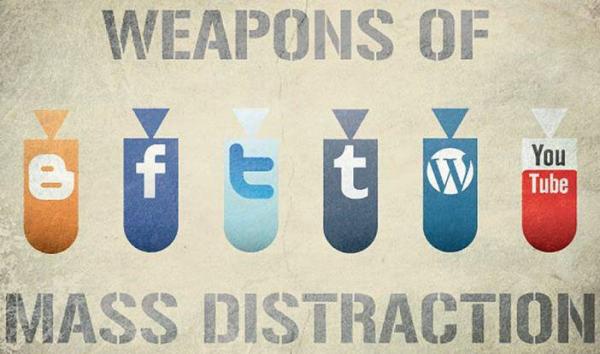
social-media

Can someone give me a benign explanation for this?

From Zero Hedge:

“Does anyone else find it odd that ‘FBI Emails’ does not appear to be a hot topic, trending, big deal on any social media?”

Facebook… “Trending”…


Continue reading

A Hung Ethics Jury On Fox’s Broadcast Of The Isis Burning Video

jordan-pilot

The burning ethics issue of the moment is in the field of broadcast journalism, and Ethics Alarms is obligated to weigh in.

Who is right, the pundits are asking: Fox News, for defiantly posting on its website the 22-minute video from the Islamic State terror group that shows Jordanian pilot Lt. Muath al-Kaseasbeh being burned to death, or all the other U.S. news organizations that have refused to do so?

Fox’s decision has been criticized by its own media ethics watchdog, Howard Kurtz, as excessive and unnecessary, and by anti-terrorism experts, who unanimously say that this plays into the ISIS strategy. Malcolm Nance of the Terror Asymmetrics Project on Strategy, Tactics and Radical Ideology said the Fox was “literally – literally – working for al-Qaida and Isis’s media arm. They might as well start sending them royalty checks.”

Here are the Ethics Alarms observations on the controversy. The short version: I doubt everyone’s motives here, and nobody on any side of the journalism ethics debate is consistent or trustworthy. Unlike me.

1. Here are the relevant tenets of the Code of Conduct of the Society of Professional Journalists. Continue reading

Zeynep Tufekci Thinks We Should Trust Journalists To Protect Us From Mass Murderers Like Elliot Rodger, And Yet Restrain Themselves From “Protecting” Us From Other Things They Don’t Want Us To Know. And She Is A Fool.

Zeynep Tufekci: so thoughtful, so gentle, so concerned, so dangerous, so terribly, terribly WRONG.

Zeynep Tufekci: so thoughtful, so gentle, so concerned, so dangerous, so terribly, terribly WRONG.

Zeynep Tufekci is a fellow at the Center for Information Technology Policy at Princeton University, an assistant professor at the School of Information and Department of Sociology at the University of North Carolina, and a faculty associate at the Harvard Berkman Center for Internet and Society. She wants  journalists to censor the news and information they publish for our own good, to protect us from mad killers like Elliot Rodger. Because she has surfaced again, as before, to spread her “solution” to mass killings, this well-meaning, sensitive, smug and utterly deluded academic is once again getting respectful quotes, interviews and nods of approval from the likes of The Atlantic, Vox and National Public Radio. Since the hysterics can’t seem to take down the Second Amendment, now they want to use the latest mass shooting (it was a stabbing too) to wound the principles underlying First.

I have been waiting for someone with more influence than me to point out how dangerous and wrong-headed her “solutions” are. So far, nothing. I guess I have to do it myself.

Tufekci laid out her plan in detail two years ago, and it is being resurrected now. In an article for the Atlantic, she opined that the media is complicit in mass murders like the Santa Barbara shooting, because such deranged killers are primarily seeking fame and publicity as they exit this cruel world in blood and bullets. For the sake of time and argument, let us accept her dubious premise that this is indeed the driving motive behind these incidents. (I am sure that this is the motive in some such cases; it is certainly not the motive in all of them, as with the University of Texas tower shooter Charles Whitman.)

Here were her five recommendations: Continue reading

Nuclear Crisis Ethics

Meltdown! Radiation! Mutations! Well, I guess that's all we have to know.

I just heard, for the twelfth time, Sen. Joe Lieberman telling “Face the Nation” that the United States should put the brakes on nuclear energy plant construction “right now until we understand the ramifications of what’s happening in Japan.” Meanwhile, the anti-nukes crowd is out in full force, seeing Japan’s crisis as their opportunity to scare the bejesus out of the public, which is nervous about nuclear energy anyway since they know nothing about it, other than that something bad happened at Three-Mile Island, the Russians had a catastrophe at Chernobyl,  Jane Fonda made that scary movie, “The China Syndrome,” where they shot Jack Lemmon— “And don’t they make bombs with that nuclear stuff?”—and the fact that Homer Simpson works for a nuclear plant that creates three-eyed fish and is run by that evil old Montgomery Burns. Continue reading

Ethics Dunce: Rep. Dennis Kucinich

Muslim women, in ethical garb

During last week’s hearings on the alleged radicalization of Muslim-Americans, Congressman Dennis Kucinich, protesting that the hearings were an example of prosecution and bigotry, said:

“Islam is a religion based upon peace, goodwill and the ethical treatment of all people on this planet.”

Politics involves advocacy, and zealous advocacy sometimes metastasizes into exaggerations, overstatements, and lies. Determined governors are called dictators and criminals; those questioning global warming models are compared to Holocaust deniers. Believing that an attack on an enemy nation is in the best interests of America, leaders who should be saying, “We have good reason to believe that this nation has weapons of mass destruction and is inclined to use them,” say instead, “We know where the weapons are and the threat is imminent.” Other leaders who are trying to get important health care reforms passed say, “Don’t worry—if you like your current plan, you’ll be able to keep it!”, neglecting to add the caveat that that plan you like may be forced out of existence if the bill is passed.

These excesses range from deceitful to outright lying, but they are all unethical, all disrespectful of the truth and the public that has a right to it, all aimed at manipulating public opinion with falsity.

I find Kucinich’s statement especially indefensible, because the degree of his presumably misstatement of the truth was completely unnecessary if his motives were good. Continue reading