Morning Ethics Warm-Up, 1/2/2018: Cheaters, Stoners And Head Explosions

good morning

(i lived in e e cummings’ old dorm room as a college freshman. never got him at all, but it would be great not to have to worry about the shift key)

1 Three wrongs don’t make a right. They track baseball’s Hall of Fame votes as they come in now, using those ballots that the baseball writers make public (not all of them do). It looks like neither Barry Bonds, nor Roger Clemens, the all-time “greats”—cheaters cannot be fairly considered great—who sullied the game and its records by using performance enhancing drugs, are not gaining support to the extent than many predicted, and will fall short again.

Good. That makes six years down and only four more to go before the two are no longer eligible for this method of entering Cooperstown. Not so good is the development that the newer and younger voters tend to support Barry and the Rocket while the older sportswriters they replace as voters did not. Why is this? Well, the young Turks don’t see anything wrong with illegal drugs, for one thing: they probably used–use?— them themselves. Next, they have been hearing the routine rationalizations and flawed arguments defending Bonds for 20 years, which can rot one’s brain—I know they have nearly rotted mine, and I know they are worthless. Mostly, I think, each succeeding American generation has less ethical literacy and competence than the one before. The field isn’t taught in grade school, is barely mentioned in the media, and unlike the good ol’ days of “The Lone Ranger,” “Father Knows Best”  and “The Defenders,” popular culture undermines an ethical culture more than it nurtures one.

There is also a new bad argument for letting in Bonds and Clemens, which would then open the floodgates for arguably worse baseball deplorables like Alex Rodriguez and Manny Ramirez—who knows? Maybe even Pete Rose. That line of reasoning  is that since the Baseball Commissioner, Bud Selig, who averted his gaze while the steroid epidemic was infecting every team and the evidence was undeniable, was admitted to the Hall last year by his complicit cronies, the cheating players he enabled should be forgiven too.

That this is increasingly being cited a justification by the younger writers tells us that mothers aren’t teaching their kids that two wrongs don’t make a right any more.

2.Three wrongs don’t make a right, Part II. In related news, California went all-pot-head at midnight New Years Eve. My conviction that legalizing marijuana is an abdication of government’s responsibility to protect society, a leap down a deadly slippery slope, and the product of greed and cowardice hasn’t abated one iota, but I’m happy to have a large-scale experiment to prove me wrong—or right. Now we can expect a wave of stoners as well as illegal immigrants into the Golden State—ah, what a paradise it will be! This creeping crud in U.S. culture is also in part the result of a terrible example of “two wrongs make a right” fallacy—I’m sure you have either heard it or—yecchh—used it yourself. “Alcohol and tobacco are worse than marijuana, and they are legal!”

Yes, about that: guess what is on the rise and killing more people? From the New York Times a few days ago:

[A]lcohol overuse remains a persistent public health problem and is responsible for more deaths, as many as 88,000 per year. … [T]here has been about a 50 percent uptick in emergency room visits related to heavy drinking. After declining for three decades, deaths from cirrhosis, often linked to alcohol consumption, have been on the rise since 2006….[B]inge drinking — often defined as five per day for men and four per day for women — is on the rise among women, older Americans and minorities. Behind those figures there’s the personal toll — measured in relationships strained or broken, career goals not met and the many nights that college students can’t remember.

3. Gee, thanks, David, I love starting a new year with my brains on the ceiling...David Leonhardt, one of the many Democratic operatives with press credentials (Instapundit calls them)  writing for New York Times, exploded my head with his New Years column, “7 Wishes for 2018.” His wishes 1, 2, 6 and 7 each would have done the trick by themselves, but collectively it was Krakatoa all over again.

Here are David’s four wishes: Continue reading

Morning Ethics Warm-Up: 6/25/17

1. On the same New York Times front page (June 21) that announced the Georgia 6 result, surrounded by Times’ agenda-advancing stories with slanted headlines (climate change, North Korea, the Obamacare overhaul,  the “divided GOP,” and Michael Flynn) was the kind of story that once made the Times’ reputation. It was headlined, “Haven for Recovery Becomes A Relapse Capitol,” Will this story be discussed today by the Sunday talking-head shows? Of course not. The implications of it are not friendly to progressive mythology.

The story explains how Delray Beach, Florida has become a Mecca for drug addicts and a bonanza for treatment centers and “sober houses,” group living facilities for addicts. Some quotes will provide a sense of the report, but you should read it all:

Unlike other places in the United States that have been clobbered by the opioid crisis, most of the young people who overdose in Delray Beach are not from here. They are visitors, mostly from the Northeast and Midwest, and they come for opioid addiction treatment and recovery help to a town that has long been hailed as a lifeline for substance abusers. But what many of these addicts find here today is a crippled and dangerous system, fueled in the past three years by insurance fraud, abuse, minimal oversight and lax laws. The result in Palm Beach County has been the rapid proliferation of troubled treatment centers, labs and group homes where unknowing addicts, exploited for insurance money, fall deeper into addiction.

Hundreds of sober homes — some reputable, many of them fraud mills and flop houses for drug users — sprawl across Delray Beach and several surrounding cities. No one knows exactly how many exist because they do not require certification, only city approval if they want to house more than three unrelated people. Hoping for a fresh start, thousands of young addicts from outside Florida wind up here in places that benefit from relapse rather than the recovery they advertise.

…the proliferation of fraudulent sober homes was in part also the result of two well-intentioned federal laws. First came a 2008 law that gave addicts more generous insurance benefits; then the Affordable Care Act, which permits adults under 26 to use their parents’ insurance, requires insurance companies to cover people with pre-existing conditions and allows for multiple drug relapses.

The result was a whole new category of young addicts with access to insurance benefits. This gave rise to a new class of abusive operator, as painstakingly chronicled in The Palm Beach Post: the corrupt sober house owner. Many drug treatment centers — which also treated inpatients — started paying sober-home owners “bonuses” from insurance money and fees for referring outpatients to their centers while they underwent therapy, according to law enforcement, a grand jury report and court records.

Sober homes, which are not covered by insurance, can get thousands of dollars a month for each recovering addict, in large part from treatment providers, law enforcement and city officials said. Much of it goes into the owners’ pockets. But it is also used to pay rent so patients can live free and to provide perks that lure patients from other sober houses: manicures, mopeds, gym memberships and, worst of all, drugs. Relapses are welcome because they restart the benefits clock.

To increase profits, many treatment centers and labs overbill insurance companies for unnecessary tests, including of urine, blood and DNA. Some have billed insurance companies thousands of dollars for a urine test screen. Patients often unnecessarily undergo multiple urine tests a week.

Ah, glorious compassion! So those of us who managed to not break laws and cripple ourselves while doing so get to pay for not only the self-inflicted problems of those who did, but also get to enrich  the scam-artists who live off of their addictions, protected by compassionate, expensive insurance guarantees that require no personal responsibility or accountability. Meanwhile, “federal disability and housing anti-discrimination laws offer strong protections to recovering addicts who live in them.”

This is the better “treatment” alternative to the “war on drugs” that the compassionate people harangued us about for decades. Continue reading

Two Stories To Look Back Upon Ruefully When The Nation Has Gone To Pot And It’s Too Late To Reverse Course

Once heroin is legal, there will be no more heroin problem...

Once heroin is legal, there will be no more heroin problem...

One of the horrible results of the coming election—not as horrible as the possibility of electing Ben Carson, Hillary Clinton, Bernie Sanders or Donald Trump President, perhaps, but horrible still—will be the nation’s final capitulation to the movement started in the 1960’s to keep the country, the culture and the poor stoned. Cognitive dissonance will ensure it on the Republican side, as opponents to legal pot will be the same old fogeys who proclaim that gay marriage will destroy the earth, causing a valid and correct argument to be destroyed by a senseless one. Others in the party, caring about staying in power more than our society’s welfare, will just give in, citing the usual ethically inert rationalizations that legalizing drugs is the lesser of two evils and that we need to use treatment, not punishment. Meanwhile, Democrats will pander to its pot-loving base, while also stumping for state governments legalizing the crap to close budget deficits created by their fiscally irresponsible policies. Heck, even I would rather see the pot industry taxed instead of me.

And we will be bombarded by the pairing of pot legalization with the allegedly racist “mass incarceration problem,” which is really and truly the “too many African Americans break laws and expect to get away with it because their parents and culture don’t send the message that its a big deal” problem. The big deal they, and we, are now being told is that they get punished for breaking laws, which is racist because Black Lives Matter.

I was in court watching sentencings a couple months back in Northern Virginia. While the crimes the defendants being sentenced for were not drug related, every single one of those sentenced–-every one—had either  a pot charge dropped in favor of a guilty plea for a more serious crime, had record of drug arrests, or had tested positive for pot during while awaiting sentence or on parole. Bernie and Hillary and the gang (the gang including journalists, who like their weed) would have us believe that the prisons are just teeming with otherwise law-abiding black citizens who are there because they engaged in harmless recreational drug use and nothing else. The new paradigm, pushed by the President (of course), is that prison should only be for violent felons, not habitual scoff-laws who often dabble in violence too.

Ah, yes, this is all going to work out so well.

I  encountered two stories on the web that show the path we are on as well as the muddled thinking and dishonesty that got us there. Continue reading

Let Us All Bow In Gratitude To Colorado For Generously Sacrificing Its Children And The Safety And Welfare of Its Citizens To Prove What Responsible People Knew Already: Pot Should Stay Illegal

Hey, Que pasa! You idiot...

Hey, Que pasa! You idiot…

I’m probably going to stray a bit from strictly professional rhetoric here, but this really makes me angry.

According to a report released this month by the Rocky Mountain High Intensity Drug Trafficking Area, there has been a 29% increase in marijuana-related emergency room visits and a 38 % increase in pot-related hospitalizations during retail marijuana’s first year in Colorado.

[ NOTE: This is a correction. The original version of the post gave the wrong impression that hospitalizations were up: this was not my intent. Thanks to Humble Talent for being persistent. Ethics Alarms apologizes for the error. We’ll try to do better.]

Now 11% of Colorado’s 12 to 17 year-olds use pot,  56% higher than the national average.There has also been a 40% increase in drug-related suspensions and expulsions in school, primarily from marijuana.

Mercy, what a surprise! Who could have predicted that? Well me, for one, as well as others neither dedicated to getting their periodic recreational buzz nor addled by moldy Sixties cant.

Of course making pot legal and widely available for adults would cause an epidemic of use by kids, who, the evidence increasingly shows, may suffer long term adverse effectsOf course it is causing accidents. Of course adding a third harmful legal drug to the devastating and deadly duo of alcohol and tobacco is going to make society dumber, less safe and less productive. Continue reading

March 1 Is “Remember What Drugs Cost Society Day”

Belushi

The District of Columbia is poised to completely legalize pot, which will be the most ringing of government endorsements of  societally destructive personal conduct, in a malfunctioning culture that should not be placed at further risk. This overwhelmingly black, poor, educationally-challenged and struggling population needs competent, trustworthy leadership and an injection of values.  It is a community, after all, that idolized the late Marion Barry, a mayor who smoked crack on the job, and never apologized for it. It’s not surprising that the adults in the District would tell the young African-Americans that it’s cool to spend their your money to get stupid, to avoid clear thought rather than practice it.

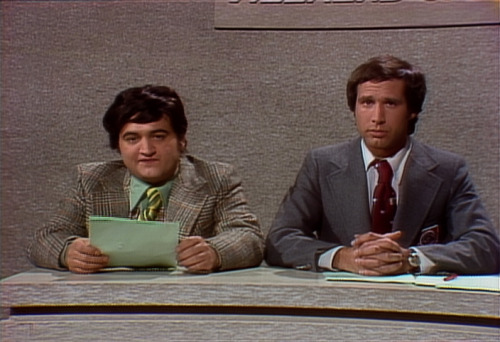
Every March 1, I watch this old clip (below) from Saturday Night Live  (it’s not on YouTube, so I can only link to it) , featuring the great, and thanks to recreational drugs, late John Belushi. It unfailingly makes me laugh out loud. It also makes me furious that a talent like this gave himself so little time to entertain us, because he killed himself with an insatiable appetite for illegal drugs.

For me, March 1 is “Remember What Drugs Cost Society Day.” Those arguing for our government placing a societal  seal of approval on these costs have yet to persuade me that it is ethical, wise or even sane to not just accept them, but to multiply them by a number unknown.

Here’s John Belushi (1949-1982), enlightening us about March around the world.

Prediction: Stories Like This Will Be Compared To “Reefer Madness”

ReeferMadness_04

Because elite potheads love their weed, nobody has the guts to stand in their way, and consequences be damned.

The CNN story describes a new study that suggests that smoking a lot of pot, especially if you are young, makes you dumber.

It’s not conclusive, of course. Research seldom is. It also doesn’t matter, since a combination of relentless pro-stoner advocacy, resulting contempt for the law and the fact that a disproportionate number of minorities and poor are getting caught with the drug and going to jail—making the prohibition itself racist in today’s “race trumps everything” political culture—has assured that marijuana will join tobacco, alcohol and legalized gambling as socially destructive—but lucrative! Profits! Taxes! Yum Yum!—forces in our society. Lives will be ruined, shattered and lost, real costs in money and productivity will be huge, and little positive will be gained in exchange.

It just seems so obvious that we should know how harmful these kinds of things are before we legalize them, and not start looking into it after the horse is gone, the genie is out and Pandora’s Box is open and lying on the floor.

It just seems dumb to…Hey! Wait a minute…

________________

Pointer: Fark

Facts: CNN

“How Can People Consider Voting For Candidates This Unethical?”: New York State Assembly Candidate Charles Barron (D) and Peoria Mayor Jim Ardis (R)

Barron (top); Ardis (bottom). Do your civic duty and vote: cyanide will be handed out when you leave...

Barron (top); Ardis (bottom). Do your civic duty and vote: cyanide will be handed out when you leave…

(“How Can People Consider Voting For Candidates This Unethical?” or HCPCVFCTU for short will flag the worst of the worst, the really awful politicians  whose lack of ethics should be a source of humiliation to all who support them.)

I have pledged to keep this category balanced between Republicans and Democrats, and since the first candidate featured was a Democrat and the utterly horrific candidate who came to may attention this morning also belonged to that party, I am featuring two politicians this morning to avoid the inevitable accusations that I take my orders from Glenn Beck and Fox News:

  • Charles Barron (D)  Barron is a New York City Councilman who is expected to coast to an easy victory after winning a Democratic primary for an open seat on the New York State legislature. He is an outspoken fan of Third World military dictators, Communist thugs and murderers, among them the late Libyan leader Muammar el-Quaddafi and former Cuban President Fidel Castro. “All my heroes were America’s enemies,” Barron proudly told the New York Observer in a recent interview. One of his favorite role models is Zimbabwe’s repressive President Robert Mugabe, whom he compares to Nelson Mandela. “I would love for him to come to Albany. I would love for him to come anywhere in the United States, really,”  Barron says. “I think he’s a shining example of an African leader on the African continent.”

Continue reading

Comment Of The Day: “US Priorities: Make War On Cheese, Not On Drugs”

smoking_weedThe articulate squid commenter, Extradimensional Cephalopod, weighed into the contentious discussion over the wisdom of pot use and government approval there-of with this thought-provoking piece.

Here is his Comment of the Day on the post: US Priorities: Make War On Cheese, Not On Drugs.

I’ll have a few comments at the end.

Full disclosure: I have not used marijuana, but I have had its effects described to me in detail by people who have. My understanding of it is that it has at least two separate and notable effects, which can vary based on the particular strain. One of them is a relaxing effect, although some strains actually increase anxiety at some point after use. However, the relaxing effect makes it suitable for medical purposes such as treating seizures. The other effect I am aware of is an increase in the brain’s divergent thinking patterns; that is, it increases random association, enhancing creativity and making experiences more vivid. A user can increase this effect deliberately by increasing the quantity inhaled or ingested to the point where coherent thought is difficult, but this requires very high levels of intake. I am told that it is not chemically addictive, or toxic except inasmuch as inhaling smoke in general is toxic, but more on the level of incense rather than cigarettes.

In my opinion, people have a right to use the substance provided they do not take actions that put others at risk by doing so, such as driving. I see no reason to ban the substance, but one can certainly ban taking actions that become dangerous under its effects. As a transhumanist, I see nothing inherently wrong with using a form of technology to alter one’s mental state artificially. Marijuana does not seem like a harmful or dangerous way to do so, as long as one is responsible. I agree that people who use marijuana, or alcohol, for that matter, can become very boring and less able to have interesting conversations, although sometimes the opposite happens; it depends on who the person was to begin with and how they react.

On the other hand, the ethics system that I subscribe to and through which I come to the above conclusions is based on promoting consciousness. One of the root problems with this world is that humans get very easily addicted to mindsets, experiences, or control. Addictions are blind spots, limitations that a consciousness has picked up that allow it to be manipulated by the world instead of being its own master. An addiction occurs when a mindset, experience, or form of control automatically becomes a person’s first priority in certain situations even where the person would intellectually judge it to be subordinate to a more important goal. It is possible to get mentally addicted to pretty much anything: alcohol, marijuana, candy, sex, adrenaline, attention, solitude, et cetera. To a certain extent we all have addictions in that when our lives are changed we feel uncomfortable and stressed, but toning addictions down is part of empowering ourselves.

That being said, my ethics system leads me to disapprove of the use of marijuana (or other drugs, for that matter) as a means to induce apathy to escape the stress that would otherwise lead a person to self-improvement. My worldview draws a distinction between joy and well-being. Joy is a positive feeling towards one’s current circumstances. Well-being, however, I define as regularly developing new abilities or improving one’s point of view, or any sort of change that results in a person having a more harmonious relationship with the world and being able to promote harmony for other individuals. Here is where the “it’s the journey, not the destination” cliche comes in. Joy may be the destination that people try to reach because it is associated with a state of increased harmony, but consciousness, the process by which people try to reach asymptotically-increasing states of harmony, is what makes us people in the first place, with all the associated awareness and abilities, and it is consciousness that I prioritize.

Long story short: it’s okay to use drugs to augment one’s ability to improve oneself (especially if one has a disability that requires the use of drugs to bring mental functions within human normal), as a tool (yes, sometimes a crutch) to access mindsets you want to use but can’t invoke at will, or as a neutral form of recreation. Using drugs as a substitute for self-improvement so that one can stagnate without feeling bad about it is pathetic and not empowering at all.

I hope this post has been coherent, but I have an internal vocabulary that has developed in partial isolation, so if there is any confusion that you want resolved, please let me know.

It’s me again. Just a few notes:

  • One thing I always appreciate about EC is that he never makes a typo. I am awash in envy.
  • I have been shocked at how many commenters on the main post never have used pot. Either I am not as strange as I always thought I was, or this blog does not attract anything close to a representative cross-section of America.
  • I should have mentioned in the original post that the Federal government still regards pot as illegal. However, with its first confirmed former pot-head as President ( Clinton didn’t inhale, remember), and the “base” of the Democratic party as well as most reporters clearly in favor of Stoned America, I think the eventual legalization is a certainty.
  • Alcohol is not chemically addictive either, except for the minority of the population that doesn’t metabolize booze properly, those we call alcoholics. However, there are many alcohol addicts who are not alcoholics, and they are psychologically addicted, and seriously so. Psychological addiction to a drug can be and often is both indistinguishable from the physical kind, and just as destructive to them and those who depend on them.
  • I am dubious about the substantive beneficial effects of pot, John Lennon and Timothy Leary notwithstanding. The use of marijuana for genuine palliative purposes is obviously valid; it is also obviously being abused.
  • I endorse the Squid’s penultimate sentence, but I think that this kind of drug use should never be discussed without the adjective “irresponsible” prominently displayed. For this is why discouraging such use is a legitimate, indeed crucial, government function, and a function the government cannot perform while approving the conduct, and, as we all know is coming, profiting by it. The government has to promote responsible conduct from its citizens, because irresponsible conduct does material harm to society.

US Priorities: Make War On Cheese, Not On Drugs

wisconsin-cheese-headsUSA Today reports that the increase in state-approved marijuana use is being accompanied by an increase in pot-related auto fatalities.

Gee…who could have seen that coming? Well, I did, among others, but never mind: far worse lies ahead. The consensus of American society is now that being able to get stupid for recreation is worth more death and addiction, and our cowardly political leaders have neither the wit nor the fortitude to swat away the lame rationalizations that have driven that position–“Hey, alcohol is worse, so why not add another destructive, useless drug to our societal pathologies?”—that have led to the dawning of a perpetually stoned America.

But not to worry: when the threat to our health posed by other non-essential pleasures looms, the government nannies are on it like piranha. The FDA, for example, has moved to make sure American can’t buy and eat cheese aged on wooden boards, because it, well, there really isn’t a good reason. Because they can, I guess. It couldn’t be because board-aged cheeses cause automobile accidents, workplace deaths and kids to fail at school, because we know our culture no longer cares about any of that.

Cheese-heads are out, pot-heads are in.

Cool.

It’s comforting that we have our priorities straight.

__________________________

Sources: USA Today, Overlawyered

Comment of the Day: “Ethics Dunce: Columbia, South Carolina Police Chief Ruben Santiago”

A few quick points, before I present Chris Marschner’s excellent Comment of the Day:

  • You know you’re posting too much when a you’ve completely forgotten an essay less than a month old, like this one.
  • Why didn’t someone tell me that I left the “l” out of “Columbia”?
  • I’m going to have to start working on my proof-reading again, clearly. There were a couple more typos in this post.
  • Chris just started commenting, and this is the third carefully written, well-reasoned substantive piece he has produced. I am grateful; such debuts raise everyone’s game.
  • I liked this post, and not many people read it or commented on it. I am increasingly worried about the trend in law enforcement and in government generally, especially the schools, to brush off free speech as an inconvenience. I’m grateful to Chris for raising the issue again.

Here is his Comment of the Day on the post, “Ethics Dunce: Columbia, South Carolina Police Chief Ruben Santiago”: Continue reading