Take Mark Zuckerberg, Add A.I., and the Result…[Link Fixed]

Unethical conduct, of course!

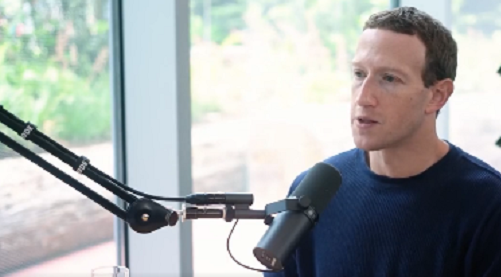
Lawyer-novelist Scott Turow has joined publishers Hachette, Macmillan, McGraw Hill, Elsevier and Cengage in a class-action copyright infringement lawsuit against Meta and Mark Zuckerberg, its CEO and founder. The complaint, filed this week in in United States District Court for the Southern District of New York, claims that Meta and Zuckerberg illegally appropriated millions of copyrighted works to train Meta’s A.I. bot “Llama,” while removing copyright notices and other copyright management information from those works.

The lawsuit is hardly the first of its kind. Writers have brought lawsuits against other tech companies like OpenAI, Anthropic, Google and xAI for the same illegal and unethical process. Anthropic agreed to pay $1.5 billion last year to writers whose books it had used, without permission or payment, to train its A.I. program.

Amusingly, one star witness for the plaintiffs is Llama itself. Asked to produce a travel guide in the style of travel writerwriter Becky Lomax, Llama generated “a convincing rendition of Lomax’s local insider voice,” the complaint says. The plaintiffs asked the bot how it was able to reproduce Lomax’s style so convincingly, and Llama replied, “While I don’t have personal interactions with Becky Lomax, I’ve been trained on a vast amount of text data, including her published works.”

Well thank you for your candor, Llama. A whistleblower bot! What will they think of next?

A.I. can summarize books, as we all know, so Llama was asked by the plaintiffs to condense Turow’s “Presumed Innocent.” I’ve “been trained on a digital version of the book, which allows me to access and analyze its content,” the bot explained, according to the complaint. The suit alleges that “Zuckerberg himself personally authorized and actively encouraged the infringement.”

They should ask Llama about that too.

Maybe the bot should be re-named “Rat.”

“A.I. is powering transformative innovations, productivity and creativity for individuals and companies, and courts have rightly found that training A.I. on copyrighted material can qualify as fair use,” a Meta spokesman said. “We will fight this lawsuit aggressively.”

The plaintiffs say that Meta’s A.I. program threatens the livelihoods of writers and publishers. The technology can quickly produce A.I.-generated copycat books. Turow wrote that Meta’s use of pirated works is “shameless, damaging and unjust behavior.” “I find it distressing and infuriating that one of the top-10 richest corporations in the world knowingly used pirated copies of my books, and thousands of other authors, to train Llama, which can and has produced competing material, including works supposedly in my style,” Turow wrote.

Stay tuned.
And As Long As We Are Talking About Doing The Right Things For (Perhaps) the Wrong Reasons: Zuckerberg and Meta

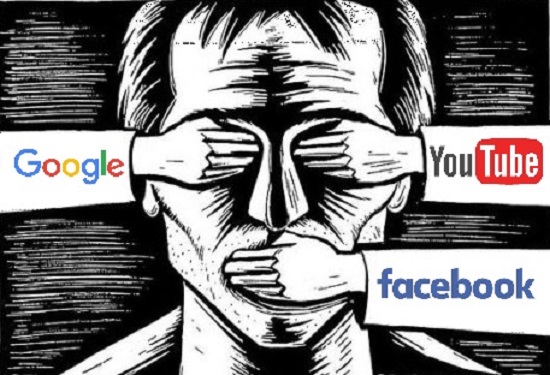
Mark Zuckerberg, the Facebook founder and its alter-ego Meta’s chief executive, announced that his flagship social media platform, along with Instagram and Threads, will end its longstanding (and biased, and flawed) fact-checking program, moving instead to a “community notes” system like the one employed by Elon Musk’s reinvention of Twitter.

Good. What took so long?

“It’s time to get back to our roots around free expression,” Zuckerberg said. The company’s current fact-checking system had “reached a point where it’s just too many mistakes and too much censorship.” “The reality is that this is a trade-off,” he said. “It means that we’re going to catch less bad stuff, but we’ll also reduce the number of innocent people’s posts and accounts that we accidentally take down.”

In truth, anyone should have been able to figure out that Facebook’s “fact checkers” were progressive, dishonest, partisan hacks. The censors included Snopes (EA dossier here) and PolitiFact (even worse dossier here), which Ethics Alarms, among many others, had marked as biased and untrustworthy years ago, indeed well before Facebook turned to them as censors. The truth is that one person’s “bad stuff” is another’s stimulating opinion or analysis. This shouldn’t be a difficult concept, but in the Age of the Great Stupid, it is. The 21st Century Left likes censorship, indeed has relied on it to hold power, and has embraced the practice on college campuses, social media, and in the news. Sad but true.

Continue reading

Regarding “The Appeaser’s Apology”

In last week’s open forum, there was discussion regarding this incident:

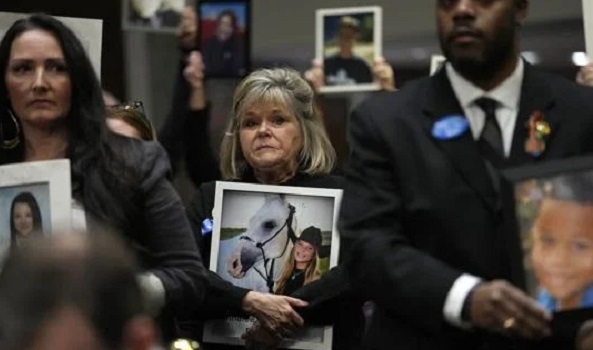
During his testimony in a U.S. Senate hearing on social media and its negative effect on children, Meta founder and CEO Mark Zuckerberg responded to a question inquiring whether he had taken any action to mitigate the problem, such as firing employees, providing compensation to alleged victims or apologizing to the families of people who were harmed by posts on Facebook or Instagram, which his company also owns. In response, Zuckerberg stood up, turned to an audience including parents holding up pictures of loved ones, and said,

“I am sorry for everything that you have gone through. It’s terrible. No one should have to go through the things your family has suffered. And this is why we invested so much and will continue doing industry leading efforts to make sure that no one has to go through the types of things your families have had to suffer.”

Tasked (by himself) with deciding where this statement falls on the Ethics Alarms Apology Scale, commenter JutGory opined,

It almost looks like a Number 8 (A forced apology for a rightful or legitimate act, in capitulation to bullying, fear, threats, desperation or other coercion.), except that Zuckerberg is not apologizing for a rightful or legitimate act. The Legislators were ascribing acts to him when he did nothing.

It also looks like a 10 (An insincere and dishonest apology designed to allow the wrongdoer to escape accountability cheaply, and to deceive his or her victims into forgiveness and trust, so they are vulnerable to future wrongdoing.), except that, again Zuckerberg is not apologizing for something he did.

I think the Apology Scale needs another collateral entry that does not actually fit on the scale: The Appeaser’s Apology: A forced apology offered in response to a baseless accusation of wrongdoing because the person demanding the apology is too stupid or self-righteous to bother reasoning with.

Continue reading

Call Me A Stickler, But I Don’t Want Anyone Who Talks Like This Deciding What Is Acceptable Speech, Discourse Or Opinion…

Mark Zuckerberg, the CEO of Meta, the parent company of Facebook and Instagram, said this during an interview on the “Lex Fridman Podcast”about his discovered wisdom about the difficulty of censoring social media:

“So misinformation, I think, has been a really tricky one because there are things that are obviously false, right, or they may be factual but may not be harmful. So are you gonna censor someone for just being wrong? If there’s no kind of harm implication of what they’re doing? There’s a bunch of real issues and challenges there.  Just take some of the stuff around COVID earlier in the pandemic where there were real health implications, but there hadn’t been time to fully vet a bunch of the scientific assumptions. Unfortunately, I think a lot of the kind of establishment on that kind of waffled on a bunch of facts and asked for a bunch of things to be censored that, in retrospect, ended up being more debatable or true. And that stuff is really tough, right? It really undermines trust,”

Oh for God’s sake….Observations:

Continue reading

Facebook, Meet The Slippery Slope. Slippery Slope, Facebook. Public, PAY ATTENTION!

censorship

This issue doesn’t need a lot of exposition—I hope, at least not among this enlightened and educated readership— but it is important.

Facebook CEO Mark Zuckerberg announced yesterday that his platform will now block posts and inks that argue that the Holocaust didn’t happen or has been exaggerated. , Facebook  is increasingly a taking action to undermine what it considers  conspiracy theories and misinformation, using the approaching U.S. presidential election as justification.

It isn’t. Facebook is too powerful a platform for public discourse and communication to engage in picking and choosing which opinions and assertions are worthy of being read and heard. In addition, Facebook is not objective, unbiased or trustworthy…or competent. I know this for a fact.

It bans Ethics Alarms. Case closed.

Holocaust survivors around the world have pushed Zuckerberg this summer to remove Holocaust denial posts from the social media site. The effort was coordinated by the Conference on Jewish Material Claims Against Germany, which used Facebook itself to promote its suppression efforts, posting one video per day urging him to remove Holocaust-denying groups, pages and posts as “hate speech.”

Once again, and this also is a fact, what is labelled “hate speech” is too often a matter of bias on the part of the hate speech accusers.

Continue reading

Sunday Ethics Reflections, 6/28/2020: For The Defense….

Greetings from the Ethics Alarms bunker…

1. I’m current reflecting on a personal and professional ethics conflict. A colleague and long-time professional competitor—I would never call him a friend—has been ousted from his leadership position in the very successful organization he founded as a result of unproven allegations of sexual harassment and assault. It was a “believe all victims” situation, as well as what feels like a successful coordinated effort to “get” someone who had accumulated a lot of enemies, resentment and envy in a notoriously nasty industry once his power was waning.

On one hand, I feel like I should reach out to him and offer my guidance and support (as an ethicist and sexual harassment trainer, not a lawyer, and gratis, of course). On the other, I am pretty certain that he is guilty of at least some of what has been alleged, based on confidential accounts I have recently heard from reliable sources. Ethically, however, his ousting (it appears that he was given the option of “retiring”) lacked due process and fairness, and the organization was guided by public relations motives rather than legal or ethical ones.

Whose side should I be on?

2. Stop making me defend Facebook! As if there wasn’t enough to worry about, the aggressive pandering mode of corporations right now is being exploited by would-be censors of political speech. Facebook CEO Mark Zuckerberg announced updated election policies and stricter “hate speech” rules in response to employee protests and pressure from activists, whose transparent objective is to silence or constrict any political views antithetical progressive positions and goals. In a message last week, Zuckerberg  outlined plans to police disinformation relating to voting and elections, to flag certain content that risked triggering violence (I wonder what  that standard is like today?) and concluded,

Continue reading

Morning Ethics Warm-Up, 4/21/2020: Groundhog Day

Hi.

I was talking with a colleague about the most relevant movie to watch these days. As readers here know, the outbreak of elected officials letting power go to their heads led me to designate Woody Allen’s “Bananas” for that honor.  (And yesterday I posited the relevance of “Airplane!” )Still, it’s hard to argue against my friend’s position that the right choice is “Groundhog Day.”

In the interest of sanity, I reject “Contagion” and especially “World War Z” or “Quaranteen.” (All good movies though.)

1. Right now it’s turned face to the wall, but today I’m putting a sheet over it…My college diploma becomes more embarrassing by the day. Harvard University has accepted nearly $9 million from the pandemic relief package. With a 40 billion dollar dollar endowment, Harvard is better off financially than the U.S. government.

[Notice of Correction: I wrote “million” instead of billion in the original post. Really stupid typo. I apologize.]

There is no excuse for the school accepting the money. It is getting widely criticized for taking it, and ought to be.

A spokesman for the U.S. Department of Education said ithat Education Secretary Betsy DeVos “shares the concern that sending millions to schools with significant endowments is a poor use of taxpayer money. In her letter to college and university presidents, Secretary DeVos asked them to determine if their institutions actually need the money and, if not, to send unneeded CARES Act funds to schools in need in their state or region.”

In an episode of Spokesman vs Spokesman, a mouthpiece for the Ivy said, disingenuously,

“By federal formula laid out in the CARES Act, Harvard was allocated $8.6 million, with 50% of those funds to be reserved for grants to students. Harvard is actually allocating 100% of the funds to financial assistance for students to meet their urgent needs in the face of this pandemic. Harvard will allocate the funds based on student financial need. This financial assistance will be on top of the significant support the University has already provided to students — including assistance with travel, providing direct aid for living expenses to those with need, and supporting students’ transition to online education.”

This is an exercise in deflection and rationalization. The only issue is that Harvard has plenty of money to do all of this without any hand-outs from the government, and many other institutions need the money more, which is an easy calculation because no institution needs money less than Harvard does. Continue reading

Morning Ethics Warm-Up, 11/4/2019: Ethics Alarms Threats, Lawsuits, Censors And Foes

Good morning!

I’m hoping that I can get back on a more regular schedule soon, and I want to express me thanks for everyone’s patience with the unexplained gaps in commentary and the “warm-ups” that have been turning up ad odd hours of the night.

1. Ethics Alarms defamation suit update! The banned Ethics Alarms commenter whose feelings I hurt received notice that his appeal of the trial judge’s rejection of his absurd defamation claims was rejected, as was his motion to file a non-conforning brief, and his motion for sanctions against me as a Massachusetts lawyer.  Within minutes he had filed a motion for reconsideration. This, of course, requires me to file a response. It is vengeance by pro se abuse, of course, and wildly unethical, but I assumed this was what I was in for.

2. More “Welcome to my world!” notes. A Democratic  candidate for Congress in Michigan whom I referenced as an aside in this post in June about one of Rep. Ocasio-Cortez’s dumb tweets invaded my in-box last night to ask that I take down the post, saying in part,

I am sending this email to you to formally request that you remove my name from this website. As you are aware AOC has received a number of death threats.  I am a candidate running for Congress in Michigan and I recently had someone shoot a bullet through the window of our headquarters.  We are in the process of getting security however your decision to place my name on a website with someone who is constantly in danger [is] extremely dangerous to my safety and the safety of others. I have contacted the police & I am also in the process of contacting the FBI.  I will be certain to point out your website.

To which I said, in essence, “Bring it on.” I don’t respond well to threats, especially stupid ones. This party really does have a problem with free speech, doesn’t it?

3. Here’s why I don’t belong to the American Bar Association…President Trump’s Ninth Circuit judicial nominee Lawrence VanDyke was called arrogant, lazy, ideological and an anti-LGBTQ bigot in the American Bar Association’s official evaluation of his qualifications for the post. This was based on accusations against the nominee from unnamed associates, sniping at him from the shadows of anonymity.

“Absolutely outrageous and couldn’t be further from the truth,” protested Nevada Attorney General Adam Laxalt. VanDyke served as state solicitor general under Laxalt, Others interviewed by the ABA for the reports said that their positive recommendations were greeted with perfunctory indifference by ABA personnel. Joseph Tartakovsky, Nevada deputy solicitor general for three years under VanDyke, said his ABA phone interview lasted  seven minutes at most, during which “it was clear to me that she was going through the motions.” Tartakovsky said he was “surprised and dismayed” when he read the ABA’s critical letter, as he  gave VanDyke a strong recommendation, saying he was an “exceptional lawyer” and “born to be a judge.”

I don’t know anything about VanDyke, who could be a legal genius or a judicial hack. I do know the American Bar Association has long been dominated by Democrats and progressives, and is among the many professional associations that has disgraced itself and its members by tacitly allying itself with the “resistance.” The ABA has been incapable of objective assessments of the qualifications of judicial nominees for decades, and should not be trusted with the assignment.

4. Facebook ethics, or what passes for them. Facebook honcho Mark Zuckerberg upset his troops when he announced that his social media platform would not fact-check political ads and censor them for being “false.” Facebook had been using the biased and untrustworthy PolitiFact and Snopes as fact-checkers, so obviously his was the right decision. His minions, however, have been vocal in dissent, even recruiting Hollywood Hard-Lefty Aaron Sorkin to write an “Open Letter” of protest.

I obviously have some experience with Facebook’s objectivity in deciding what information should be published or not, since Ethics Alarms has been banned from the site without any explanation. These people can’t distinguish “facts’ from opinions they don’t like, especially when the opinions contradict the agendas of the Axis of Unethical Conduct (Democrats, “the resistance,” and the mainstream media). Sorkin claims that he fears for children believing that “Kamala Harris ran dog fights out of the basement of a pizza place while Elizabeth Warren destroyed evidence that climate change is a hoax and the deep state sold meth to Rashida Tlaib and Colin Kaepernick.” but the sooner kids learn how to sniff out garbage, the more competent adults they will be. Who is Sorkin kidding? He knows it isn’t the crazy stuff he wants Facebook to smother: he doesn’t want ads that argue that Democrats have been trying to overthrow a President without winning an election, because when you are conducting a disinformation campaign you don’t want any opposition.


Mid-Day Ethics Overview, 10/24/2019: TV Ethics, Theater Ethics, Negotiation Ethics…You Know. Ethics.

This song is about ethics, right?

Well, to me it is…

1. Unethical non-traditional casting.  Harvey Fierstein is playing Bella Abzug on Broadway. I know that Harvey, being a very large, undisguisably gay, 65-year old actor with a voice that sounds like he gargles piranha, has a tough time finding outlets for his acting and comic ability (he can be terrific, as he was in his Emmy-winning performance in “Torch Song Trilogy”), but that’s no reason to take it out on the late New York Congresswoman. Abzug was a woman, and being a woman was central to her career, appeal, legend, and legacy. She was not, to say the least, an attractive woman, but that does not mean that it is fair or respectful to cast a 275 pound unattarctive MAN to play her on Broadway. Feirstein is an LGBTQ activist and icon, but he’s ethically confused here.

2. Trump shouldn’t have backed down from holding the Group of 7 Summit at the Trump luxery golf club in Miami. Apparently he did so because Republican members of Congress complained about it, and they complained about it because they knew it would spark more bogus accusations of Emoluments Clause violations (Impeachment Plan C).

Any and every negotiations specialist will tell you that holding a meeting of adversaries in your own territory is a massive advantage. That is why such meetings are often held in Switzerland, or other neutral sites. Holding the Summit at a Trump property makes the President stronger at the meeting, and that benefits the country.

It would have been nice—responsible, educational, fair, honest—if the news media explained this basic principle to the public, but it doesn’t want to justify the President’s decisions or find benign reasons for them. It is in thrall to “the resistance,” and doing a complete analysis of factors involved in a decision like where to hold the Summit just detracts from the effort to undermine President Trump and characterize him as a corrupt and crooked fascist who must be removed from office at all costs.

Republican joined the ignorant stampede because, unfortunately, they aren’t very bright, or very brave. Thus the U.S. voluntarily forfeited a diplomatic advantage because Republicans couldn’t articulate why there was nothing sinister, and much advantageous,  about a world leader holding a meeting at a property that bears his name. Continue reading

Saturday Ethics Warm-Up, 12/8/18: Last Weekend Before I Have To Decorate The %^&$! Christmas Tree Edition

Good morning!

1. How can this be? Based on the same documents, the President crowed that Mueller had nothin,’ and the mainstream Trump-hating media crowed that the walls were closing in. It’s a confirmation bias orgy! Charges aren’t evidence, and attempted contacts with a foreign power isn’t “collusion,” and we’ve already talked about the theory that paying off a floozy not to kiss and tell, which is 100% legal at all other times, is a stretch to call and election law violation when the rake is running for President. No such case has ever been brought; it’s dubious whether one would prevail; even if it did, this is a fining offense at most. [ For the record, this is the “resistance’s” Impeachment Plan K, in my view, one of the lamest.]

Both sides are jumping the gun. In the media’s case, it’s more fake new, future news and hype.

2. Stare decisis vs. the prohibition on double jeopardy. In Gamble v. US, just argued before the Supreme Court, the question is whether the federal government can try a citizen for the same crime a state court acquitted him of committing. I’ve always hated the rule that it can (the cops in the Rodney King case were jailed that way), because it seems clear to me that the Constitutional prohibition on double jeopardy (that’s the Fifth Amendment) was intended to prevent such trials. Still,  previous Supreme Court decisions have upheld the convictions.  In the current case, it appears from oral argument that a majority of the current justices agree with me, but are hesitant to so rule because of the doctrine of stare decisis,  which means respecting long-standing SCOTUS precedent.

A ruling to apply double jeopardy would be a ruling against stare decisis, meaning that Roe v. Wade might have less protection than many—including me–have thought. Stay tunes, and watch Justice Kavanaugh’s vote particularly.

3.  Is wanting to/needing to/ actually taking steps to changing one’s sex a mental disorder? There have been a lot of articles about this lately, especially in light of evidence that peer groups, the news media, LGBT advocacy and parents are making many young children want to change their sex before they even know what sex or gender is. The question is itself deceptive, because it pretends that “mental disorder” is anything but a label that can be used or removed with a change of attitude or political agendas. Vox writes,

Major medical organizations, like the American Medical Association and American Psychiatric Association, say being transgender is not a mental disorder. The APA explained this in explicit terms when it stopped using the term “gender identity disorder” in favor of “gender dysphoria”: “Part of removing stigma is about choosing the right words. Replacing ‘disorder’ with ‘dysphoria’ in the diagnostic label is not only more appropriate and consistent with familiar clinical sexology terminology, it also removes the connotation that the patient is ‘disordered.’”

Well, “removing a stigma” is hardly a valid criteria for deciding whether something is a malady or not. What being transgender “is” can’t be changed by what we call it. Recently narcissism was removed from the mental disorder list—that doesn’t change the fact that narcissists see the world and themselves in a way that most people do not, and that this perspective causes them and the people around them a lot of trouble during their lives. The process worked in reverse with alcoholism, where being officially labelled a disease removed a stigma.

I once directed the comedy/drama “Nuts,” which opines that “insanity” is just a view of reality not shared by the majority. It was on this basis that the Soviet Union sent dissidents to mental hospitals. I don’t care what various associations or professionals call these minority positions: we know that they are using bias and political agendas to devise the label. This is one area where a phrase I despise, “It is what it is,” may be appropriate. Continue reading