Historical Theft at the King Memorial

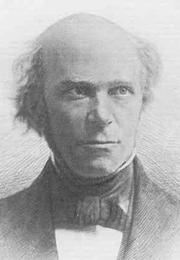
Rev. Theodore Parker

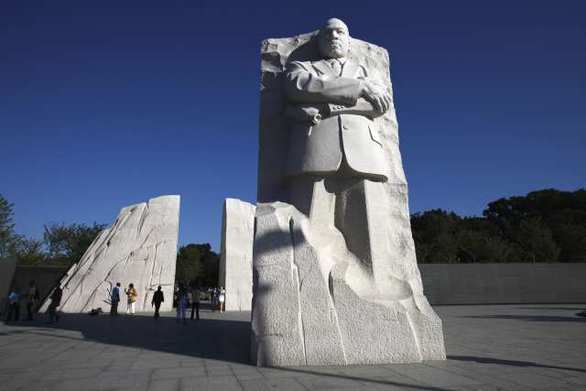
The new Martin Luther King Jr. Memorial is not just the King-in-Carbonite monolith that has caused so much controversy. There is much more to the National Mall’s latest addition, including inscriptions in marble of quotes from the martyred civil rights leader’s writings and speeches. There are more than a dozen examples of his oratory, a quotation from King’s 1963 “Letter From a Birmingham Jail,” and an excerpt from King’s Nobel Peace Prize acceptance speech in 1964.

Among them, this:

“The arc of the moral universe is long, but it bends toward justice.”

But Rev. King didn’t say it. Theodore Parker, an influential and eloquent Boston minister and abolitionist, did. King never pretended otherwise; it was one of his favorite quotes, and he used it often, but he usually credited its originator. Continue reading

Memorial Ethics,Part I: Recalling The Martin Luther King Memorial Controversy

  (For Memorial Ethics, Part Two, go here.)

[It is almost forgotten now, but when the design of the new Martin Luther King Jr. Memorial was chosen back in 2007, there was much unhappiness in the black community. A Chinese artist was chosen to design the memorial, and this raised issues both ethical and ironic. Now that the memorial is completed (the planned dedication this week has been postponed due to Hurricane Irene), it seems clear that critics aimed their objections in the wrong direction: the problem wasn’t the designer, but the design, an imposing piece of classic Socialist-Worker art that would look at home in Red Square. But, hey, there’s lots of bad art in Washington, covering an abundance of styles: the large bust of JFK in the Kennedy Center makes it look like President Kennedy was made out of chewing gum. At least some bad Communist statuary is a change of pace.

The debate over the choice of artist was interesting, and is even more so in retrospect. It is worth pondering as the new monument joins the National Mall. Here is my article on the matter, slightly edited from the original published on The Ethics Scoreboard in 2007, followed by a response from the artist selection’s most vocal critic.]

An intense controversy surrounds the choice of a statue’s sculptor, specifically the Chinese artist whose design was selected by the Martin Luther King Jr. National Memorial Project Foundation to become a major monument to the martyred civil rights leader in Washington, D.C. Continue reading

Fake Quote Ethics

"Osama? The SOB had it coming."---Gandhi

Among the wise commentators who tut-tutted the unseemly rejoicing among Americans upon learning of the death of Osama bin Laden was the Rev. Martin Luther King, who sagely remarked, “I mourn the loss of thousands of precious lives, but I will not rejoice in the death of one, not even an enemy.” Rev. King’s words were immediately picked up and quoted yesterday in hundreds of blogs and news commentary, grateful for the silver-tongued orator and civil rights warrior’s ability to find just the right way to sum up what was troubling—to some— about the post-bin Laden festivities.

Wait...how could he do that? Rev. King is as dead as Osama! Well, he could do that because somebody decided to give his or her own sentiments the added influence, credibility and moral authority of an American hero, put their words in Rev. King’s mouth, and tweeted them to the world. [UPDATE: Now we know that’s not  exactly what happened—this time. An American teacher in Japan introduced a genuine King quote with her own sentiments, and her careless Facebook friends lost the quotation marks. Thanks to Barry Deutsch for the sleuthing.] Continue reading

First Necklaces, Now Literary Magazines: On the Civility Deathwatch

Public civility is clearly on its deathbed.

As if it wasn’t bad enough to have a pop diva proudly wearing jewelry that says “Fuck You” to the world (see previous post), now it appears that gutter discourse is considered acceptable under the banner of one of America’s most distinguished  literary magazines, The Atlantic Monthly.  From the magazine’s online site: Continue reading

Ethics Dunce: Glenn Beck

No, it wasn’t a big lie, a harmful lie, or a malicious lie that Glenn Beck told at his recent rally. Beck had claimed that he held George Washington’s handwritten first Inaugural Address “in his hands” at the National Archives, but a spokeswoman at the institution denied it: they don’t allow that. After Keith Olbermann and other full-time Beck-bashers kept pressing the issue, Beck admitted that he had fabricated the story to cut through the extraneous details of the real process:

“…Yesterday I went to the National Archives, and they opened up the vault, and they put on their gloves and then they put [the document] on a tray. They wheeled it over and it’s all in this hard plastic and you’re sitting down at a table…you can’t actually touch any of the documents, these are very very rare. So … they have it in this plastic thing and they hold them right in front of you; you can’t touch them, but then you can say ‘can you turn it over,’ and then they turn it over for you and then you look at it.”

“I thought it was a little clumsy to explain it that way,” Beck told his cable audience, shrugging off the controversy. No, as lies go, it was about as harmless as it gets.

Except. Continue reading

Ethics Alarms Presents “The Mosquies”…the Best and Worst of the “Ground Zero Mosque” Ethics Train Wreck

As I previously noted, the “Ground Zero Mosque” controversy is an epic “ethics train wreck” that has spread its destruction far and wide, across regional, ideological and national borders, leaving confusion, misunderstanding and bad feelings in its wake. Now is as good a time as any to take stock of the situation, and to recognize those who have distinguished themselves during the carnage, for good or ill. To this end, Ethics Alarms presents its first annual  (and hopefully last ever) awards for outstanding ethical and unethical conduct during the whole mess, “The Mosquies.”

The envelope, please… Continue reading

What Was Right and Wrong With Glenn Beck’s “Restoring Honor” Rally

The pundits of the airwaves, newsprint and blogosphere have issued their assessments of the Glenn Beck rally at the Lincoln Memorial with predictable results: those who admired Beck before the rally liked it, and those who detest him ridiculed it. The New York Times, in its inimitable fashion, showed contempt for the proceedings by relegating its account to page 15, even though every past D.C. rally and march of equivalent or lesser size (especially those advocating social or political positions popular with the Times staff) received more prominent coverage. To Times columnist Frank Rich, Beck’s rally was part of a racist conspiracy hatched by billionaires—yes, Frank, sure it was. John Avlon, who long ago branded Beck as a wingnut, reasonably pointed out that it was a wee bit hypocritical for Beck to preach against divisiveness when his own cable show is one of the most polarizing, even by Fox news standards. And John Batchelor, who may be the most serious, erudite, and balanced public affairs radio talk show host in captivity, dismissed the rally as harmless and Beck as a clown:

“I think of him now and again as Quasimodo Lite, a deaf bell-ringer swinging from the Notre Dame of Fox, a man who is eager to confess his own unsightly warts—“I’ve screwed up most of my life”—and who is also heroically delighted to be our slightly stooped “Pope of Fools,” because this accidental role, in this Festival of Fools called 2010, wins the cheers of the crowd.”

Even less charitable was the Baltimore Sun’s TV critic, who accused Beck of “stealing Martin Luther King’s moral authority.” Less charitable still was MSNBC’s Chris Matthews, who seems to have been driven a little mad—or at least a little unprofessional, perhaps— by the fact that Beck had the audacity to hold his rally on the anniversary of King’s iconic “I have a dream” speech. Matthews’s hyperbole was, well, Beck-like:

“Can we imagine if King were physically here tomorrow, today, were he to reappear tomorrow on the very steps of the Lincoln Memorial? “I have a nightmare that one day a right wing talk show host will come to this spot, his people`s lips dripping with the words ‘interposition’ and ‘nullification.’ Little right wing boys and little right wing girls joining hands and singing their praise for Glenn Beck and Sarah Palin. I have a nightmare!”

Was Beck’s bash really a nightmare? Political biases aside (Chris), the question for Ethics Alarms is what was right and wrong about the “Restoring Honor” rally. Continue reading

The Ethics of Giving Up on Ethics

Paul Daugherty, a sportswriter for the Cincinnati Enquirer,recently wrote a column expressing a theme I hear all too often regarding politics, government, education, and society generally. Motivated by the steroid allegations against yet another hero, Lance Armstrong, Daugherty penned his surrender to a culture that doesn’t seem to care about ethics. Daugherty wrote:

“Everyone wants sports to be equitable. We all desire the level field. No one wants sports to be as drugged up as Woodstock in 1969. But it is. We’ve fought the ethical fight. We’ve lost. It could be time to let it go.
Even the athletes who lose still win. Mark McGwire got his, Barry Bonds got his, Brian Cushing got his. If you wait enough, deny enough, then rationalize believably, you get yours. Disgrace fades. Only Olympic athletes wear the stink of doping longer than the average 5-year-old’s attention span. In one respect, it’s not unlike the fight against legalizing marijuana. It has lasted so long, and now seems so pointless, I can’t even remember what we’ve been arguing about. We’ve become numb to it….It’s only a little outrageous now to suggest that a professional athlete be allowed to use performance-enhancing substances to his (enlarged) heart’s content, as long as he’s doing it legally….So what’s the point?”

“What’s the point?” Continue reading

Baseball and Civil Rights: Doing the Right Thing, Kicking and Screaming

“The Biz of Baseball” discusses a historical document proving that even as Jackie Robinson was preparing to make his color barrier-shattering debut with the Brooklyn Dodgers in 1946, an internal committee examining the race issue for Major League Baseball was arguing that integrating the teams at the time would be a mistake. Author Maury Brown concludes:

“As the 1946 steering committee document shows, there were those at the highest level of the sport that saw African-American players as beneath the quality of their White counterparts, and that they saw the influx of African-American fans as something that would lower franchise values. Take that in, as baseball takes credit for being at the front of the Civil Rights movement.”

Major League Baseball is engaged in just such a credit-taking exercise now, as it prepares to host its annual ” Civil Rights Game, “an  exhibition between the Cardinals and Reds in Cincinnati. Continue reading

Fat Ethics and Kevin Smith

Cult film director Kevin Smith was ejected from a Southwest Airlines flight last week for being fat. The talented  director (and sometime actor: he plays the character of “Silent Bob” in several of his own films) of “Clerks,” “Chasing Amy,” “Dogma,” and the Bruce Willis and Tracy Morgan comedy “Cop Out” was deemed too obese to fly, although he passed the supposedly definitive armrest test: he could lower both. Smith says this has never happened to him before, perhaps because he is in the habit of buying two seats—not because he needs them, but because he says he “hates people.” Although the airline apologized to him, Smith still hates Southwest, and is inclined not to let the matter drop.

Apparently a lot of people hate him too, just because of his weight.  Continue reading