The Kevin Coffay Tragedy Revisited: Not Vengeance…Survival

Kevin Coffay took the wheel with four of his teenaged friends as passengers. All four were drunk, and by the end of the evening only Coffay and another were alive, three young people having perished when Coffay’s intoxicated driving caused the car to go airborn into a bloody crash. He was convicted by a Montgomery County (Maryland) court of involuntary manslaughter in January and sentenced to 20 years, not in small part because he had fled the scene of the accident, running and hiding in the woods as his friends bled and died in the wreck.

Today he is in court arguing, through his lawyers, that his sentence is too long. I didn’t think it was too long when I first wrote about the tragedy in January, but after reading his arguments and those of his defenders, I have come to believe that the sentence may not be long enough. Continue reading

Why “He’s Suffered Enough” Is Not Enough

Not enough.

“He’s suffered enough” is one of the more popular and effective rationalizations, usually put into use in defense of white collar criminals and the likes of Roman Polanski, wealthy or once-respectable criminals for whom remorse and humiliation are deemed to be as devastating as incarceration.  Yet it is still a rationalization—a deceptive representation of the truth—and shows a misunderstanding of what official punishment needs to accomplish.

A sad drama has played out in a Montgomery County Maryland court, where twenty-year old Kevin Coffay was sentenced to twenty years in prison for fleeing the scene of a May auto accident that he had caused by being drunk behind the wheel, as Spencer Datt, 18; John Hoover, 20; and Haeley McGuire, 18, remained in the wreck after Coffay fled.  All three died.

Coffay was stunned by the sentence, and news reports say that the case has torn the community apart, with the families of the victims seeking retribution, and supporters of Coffay pleading for compassion and mercy. Their argument, as it always is in such tragedies, is that “he’s suffered enough”. This misses the point of the trial, the sentence, and the societal ritual that such events demand. Continue reading

Incompetent Elected Official of the Week: Maryland State Senator Ulysses Currie

"I am not a crook!" ---Richard Nixon; "I am not a crook, I am an idiot!"----Ulysses Currie

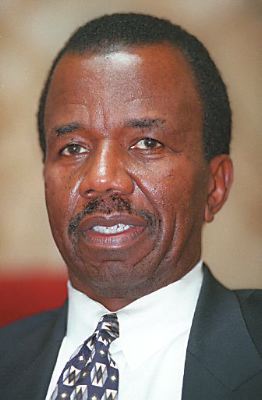
Blatantly incompetent elected officials stand as indictments of the ethics of more than the officials themselves. The fact that they are in high office reflects poorly on the political parties that support them, the voters who elect them, and the democratic system itself. It is difficult to imagine a more vivid example of this than: Maryland State Senator Ulysses Currie (D), currently standing trial on federal corruption charges. Continue reading

Comment of the Day: “Murder House Ethics and the Validity of Feelings”

"Oh THAT! You would have cared about THAT?"

Tgt, the ghosts of whose earlier argument in series of comments haunted me prompted a revisit to the issue of murder houses and a seller’s obligation to reveal their history to potential buyers, came back with this Comment of the Day, thought-provoking, as usual:

“…I still want to know the line that determines what ethically does and does not need to be disclosed. It was never settled. This post generally boils down to another emotional appeal that something should be done in some cases. I want to know which cases and why those. Otherwise, my argument holds fast. I don’t see multiple murders (the latest clearly having nothing to do with the earlier ones) as being any more relevant than one murder.

“I also believe Jack misrepresented my position on emotion in general. Us rational humanists still mourn our dead, though we try to celebrate their lives more than anything else. While humans are not special in the concept of the Universe, we understand that we are special to ourselves and in our relations with other people. Humanism is about celebrating human life and relationships.

“As for death specifically, I see no need of a grave or burial rites. A dead body is just decomposing flesh. It does not need to be prayed for and cleansed. The person though, the lasting effects they have had on others, the memories of them – these are all important. I cried when a somewhat distant high school friend died in a freak accident at 17. I sent his family flowers on the anniversary of his death for the next 2 years. Why? Because it let his family know that he wasn’t forgotten, that he made an impact on other lives. It let them knew that people cared… people they only knew by name. I cherish the cards they sent in response. Continue reading

Murder House Ethics and the Validity of Feelings

We last visited the issue of the ethical selling of murder houses in February, when  the Jon Benet Ramsey house went on sale. I opined that even though Colorado doesn’t have a legal requirement that a seller must reveal the history of the house as long as it has no structural implications, there is an ethical obligation to let prospective buyers know about house-related events that might cause them to reconsider their decision to buy it:

“The truth is still this: there is something about the $2,300,000 house that makes it undesirable to a lot of prospects, and that means that even if the law doesn’t require the seller to tell interested house-hunters the story of the little dead girl in the basement, fairness and the Golden Rule do.”

The debate over this issue was unexpectedly intense. Ethics Alarms’ resident rational humanist “tgt” objected strenuously, writing,

“I don’t see how you can avoid the slippery slope question. Your basis is 50% of the population having a desire. Is that the cutoff? I think over 50% of people would prefer to live in a house where there hasn’t been child abuse. Go back a few years, and I bet a significant portion of the population would prefer to live in a house that had never had black occupants. Back in today’s world, more than 50% of the population doesn’t want to live in a haunted house. If a previous tenant thought the house was haunted, does the complete nonexistence of ghosts make not mentioning this a material representation? If an event is uncommon, does a realtor need to take a poll before deciding what is material and what isn’t?”

Karl Penny, however, bolstered my position:

“…the question is, does the realtor have an ethical obligation to fully reveal the history of this house. Well, the funny thing about behaving ethically is, it often requires us to act in ways that are not in our own immediate best interest… this may give a potential buyer a leverage point to negotiate a lower price for the house, to the detriment of the realtor, who could end up taking a lower commission as a result. No surprise, then, that the realtor would love to find a reason not to opt for full disclosure. But, if that realtor successfully conceals the house’s history from an actual buyer, one who would not have bought had they known otherwise? The realtor had a simple, human duty to disclose, even if it cost him money (and, yes, even if it cost me money, were I the realtor)….Jack’s right: this is Golden Rule time. If I am willing to treat with someone else in a way that I would not want anyone to treat with me, is that logically consistent (much less ethically consistent)? And would any of us want to live in the resulting society should everyone behave in that fashion?”

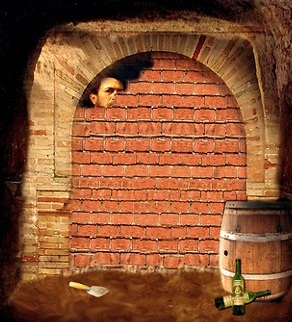
Now another house with a Hitchcock-worthy past is on the market: 9337 Columbia Boulevard in Silver Spring, Maryland, a state that also doesn’t require its realtors to disclose when a house has been the scene of a murder…or, in this case, three murders in the last decade. Continue reading

The MacDonald’s Beating Video, Another Dead Canary in The Ethics Mine

Vernon Hacket: videographer, violence afficianado, shameless bystander

Last week, In the early hours of  April 18,two teenaged patrons at a Rosedale, Maryland MacDonald’s brutally beat Chrissy Lee Polis, 22, into a seizure. The attack was captured on a video recorded by Vernon Hackett, one of the MacDonald’s workers, on a cellphone camera. Other employees can be heard laughing on the video, and Hackett apparently is heard warning the attackers that the police are coming. He has been fired by the restaurant’s proprietor.  (More on this here.)

His firing was well-deserved, but it doesn’t begin to address the disturbing implications of the incident. Continue reading

Nefredo v. Montgomery County: Ethical Treatment for Fortune-tellers

Or should that be “ethical treatment for charlatans”?

In the case of Nefredo v. Montgomery County, the Maryland Court of Appeals ruled that it was an infringement of the Right of Free Speech for the Montgomery County, Md., to deny a business license to a fortune-teller on the basis of a County ordinance that declared charging a fee for fortune-telling services was a crime. The ordinance states:

“Every person who shall demand or accept any remuneration or gratuity for forecasting or foretelling or for
pretending to forecast or foretell the future by cards, palm reading or any other scheme, practice or device shall be subject to punishment for a class B violation as set forth in section 1-19 of chapter 1 of the County Code; and in any warrant for a violation of the above provisions, it shall be sufficient to allege that the defendant forecast or foretold or pretended to forecast or foretell the future by a certain scheme, practice or device
without setting forth the particular scheme, practice or device employed…” Continue reading

The Not-So-Baffling Mystery of the Missing Ethics Rule

ABA  Model Rule 7.6: Political Contributions To Obtain Legal Engagements Or Appointments By Judges
A lawyer or law firm shall not accept a government legal engagement or an appointment by a judge if the lawyer or law firm makes a political contribution or solicits political contributions for the purpose of obtaining or being considered for that type of legal engagement or appointment.

That’s pretty clear, is it not? The American Bar Association, in its Model Rules of Professional Conduct, now followed (in various, eccentric forms, to be sure) by 49 states, the District of Columbia and Puerto Rico, emphatically declares that “pay-to-play” arrangements are unethical for lawyers even in states where the sleazy practice might be legal. “Pay-to play” is, after all, classic corruption, older than Mayor Curley, Richard Daley, Boss Tweed and Mister Potter. Lawyers contribute big bucks to the campaign funds of state and local powerbrokers, including Attorneys General and judges, and get big state contracts in return. It is indefensible ethically, although you can find plenty of people who will defend it, their tongues crossed tightly behind their backs all the while. Continue reading