Disrespect And Assault In The Operating Room: Our Nightmares Are Real

clown-in-the-operating-room

“A few moments later, the anesthesiologist walks in the room and asks, ‘What do you got?’ Dr. Canby says, ‘Vaginal delivery. Uterine atony. External massage failed. Give her some ketamine.’”…I look at Mrs. Lopez—her eyes are half-closed and vacant. Dr. Canby instructs me to hold her knee. A fellow medical student holds her other knee….Canby then performs an internal bimanual uterine massage. He places his left hand inside her vagina, makes a fist, and presses it against her uterus. I look down and see only his wrist; his entire hand is inside her. Canby puts his right hand on her abdomen and then massages her uterus between his hands. After a few minutes, he feels the uterus contract and harden. He says something like, ‘Atta girl. That’s what I like. A nice, tight uterus.’ And the bleeding stops. The guy saved her life…But then something happened that I’ll never forget. Dr. Canby raises his right hand into the air. He starts to sing ‘La Cucaracha.’ He sings, ‘La Cucaracha, la cucaracha, dada, dada, dada-daaa.’ It looks like he is dancing with her. He stomps his feet, twists his body, and waves his right arm above his head. All the while, he holds her, his whole hand still inside her vagina. He starts laughing. He keeps dancing. And then he looks at me. I begin to sway to his beat. My feet shuffle. I hum and laugh along with him. Moments later, the anesthesiologist yells, ‘Knock it off, assholes!’ And we stop.”

This is an operating room anecdote related in an anonymously authored article published this week in the Annals of Internal Medicine, a respected medical journal. The publication says that the piece is intended to shine light in a dark corner of the medical profession. Oh-oh. The essay is anonymous, I assume, because the author is afraid that there would be professional repercussions from his revealing this—what? Bad habit? Dirty secret? Crime? Reason for us to go stark, raving mad? Continue reading

When Law Co-Opts Ethics: Florida’s Unconstitutional Pro-Gun Doctor Gag Law Upheld

Unbelievable!

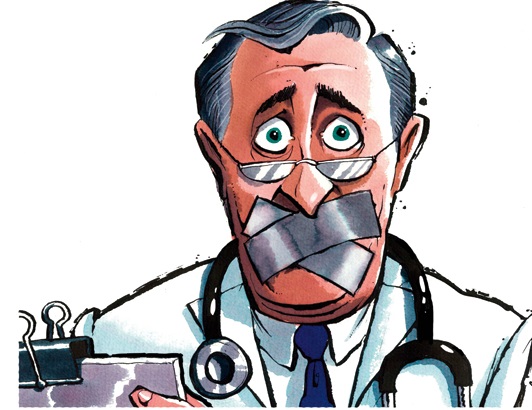
“See doc? That’s what you get for shooting your mouth off! Get it?”

A federal appeals court this week upheld an NRA-crafted Florida law making it illegal for doctors to ask questions and record information about a patient’s gun ownership. Medical groups had challenged the law, arguing that it infringed on doctors’ First Amendment rights.

Which it does. The law is an outrageous incursion on free speech in order to protect gun owners from unwelcome anti-gun lobbying by their physicians.

Among other restrictions, the law says doctors must refrain from asking about gun ownership by patients or family members unless the they believe in “good faith” that the information is relevant to medical care or safety. It also prevent doctors from discriminating against patients or “harassing” them because of owning firearms, which presumably means that it is illegal for a doctor to tell a patient, “You’re too clumsy to own a gun, and if you blow your damn face off, don’t come crying to me.”

“The purpose of the act, as we read it, is not to protect patient privacy by shielding patients from any and all discussion about firearms with their physicians; the act merely requires physicians to refrain from broaching a concededly sensitive topic when they lack any good-faith belief that such information is relevant to the medical care or safety of their patients or others,” said the 2-1 majority opinion, written by Judge Gerald Tjoflat and joined by Judge L. Scott Coogler.

Dissenting Judge Charles Wilson argued that the law violates the First Amendment rights of physicians:

“Simply put, the act is a gag order that prevents doctors from even asking the first question in a conversation about firearms. The act prohibits or significantly chills doctors from expressing their views and providing information to patients about one topic and one topic only, firearms.”

I don’t see how anyone can dispute that analysis. I especially don’t see how the other two judges dispute it.

Doctors shouldn’t use their position of influence to try to impose their political, social and life-style views on patients. If the American Medical Association wants to declare that to be an unethical abuse of a doctor’s status and a patient’s trust, I wouldn’t complain. The law, however, has no more business telling doctors that they can’t advise their patients that owning guns may be bad for their health or their neighbor’s health than it has making it illegal for doctors to tell patients that Donald Trump is just what this country needs in the White House. What’s next, telling dentists that they can’t tell you about their brilliant kids while they’re poking around your mouth?

The state doesn’t have to get involved in what patients and doctors talk about, shouldn’t, and mustn’t. This is a job for ethics, not law. If a doctor won’t stop telling you that the Second Amendment should be repealed, the remedy is easy: tell him to shut up, or you’ll find a new doctor.

Or just shoot him.

Kidding.

_____________________
Pointer: Legal Ethics Forum

The Case Of The Trash-Talking Doctors, And The Price Of Trust

So, did you hear the one about why surgeons wear those masks?

So, did you hear the one about why surgeons wear those masks?

When I first heard about this case, I thought the jury award of $500,000 was ridiculous. The more I think about it, the more I begin to think it was appropriate.

Before his colonoscopy, a Vienna, Virginia patient pressed record on his smartphone, not intending to record everything that was said but ending up with the entire proceedings anyway. That was a half-million dollar stroke of luck for him, and the confirmation of dark suspicions for the rest of us. The resulting recording revealed that the surgical team amused itself by insulting and demeaning the semi-conscious anesthetized man throughout the procedure.

The anesthesiologist, Tiffany M. Ingham, was the ringleader and the primary offender.  Among her inspired bon motsContinue reading

Another TV Doctor, Another Breach: Dr. Sanjay Gupta’s Heroic And Self-serving Ethics Blindness

Are TV doctors entertainers, journalists or doctors? In a way the question doesn’t matter: if they are doctors, then they are obligated to follow medical ethics and the standards of their profession at all times, no matter what else they may be taking compensation for. This is why “Dr. Oz” is ducking the issue when he tries to avoid accountability for pushing quack remedies on his TV show (if it ducks like a quack…) by arguing that he isn’t practicing medicine, but engaging in entertainment. He’s still a doctor, every second of his life, once he takes that oath.

CNN’s Dr. Sanjay Gupta has largely steered clear of ethical issues in his tenure as the network’s medical expert. Not entirely, however; for example, in 2009, he was prominently mentioned as a possible Surgeon General, and was in discussions with the White House while continuing his reporting on the air, raising real and potential conflict of interest concerns. The most recent controversy is more serious. Continue reading

Religion + The Right Of A Woman To Control Her Own Body=Murder

[I am tired, having engaged in a knockdown, drag-out session on legal ethics with a lively group of Federal bar practitioners. This was not the issue I wanted to come home to for the last post of the day. In fact, I gave up and am posting it this morning. Funny, the issue isn’t any easier now than it was yesterday.]

Charles Taze Russell, founder of Jehovah's Witnesses, and still getting kids killed since 1879.

Charles Taze Russell, founder of Jehovah’s Witnesses, and still getting kids killed since 1879.

A pregnant woman who was a Jehovah’s Witness checked into a Sydney, Australia hospital suffering from leukemia. She directed the staff that her treatment could not include blood transfusions, as her religious beliefs forbade them. She suffered from acute promyelocytic leukemia (APL), which is treatable, and often successfully. According to The American Cancer Society, “more than 90% of patients with APL go into remission with standard induction treatment.” Pregnant women with the cancer have an 83 percent remission rate, and their babies have a high rate of survival when their mothers are diagnosed in their second or third trimesters.

In the end, the fetus and the mother died for want of proper treatment.  “Staff were distressed, grappling with what was perceived as two ‘avoidable’ deaths,” doctors at the Prince of Wales Hospital in Australia wrote in a letter published this month in the Internal Medicine Journal.

Well, they should be distressed: they aided and abetted negligent homicide.  Continue reading

Ick, Not Ethics: The Incredible Head Transplant

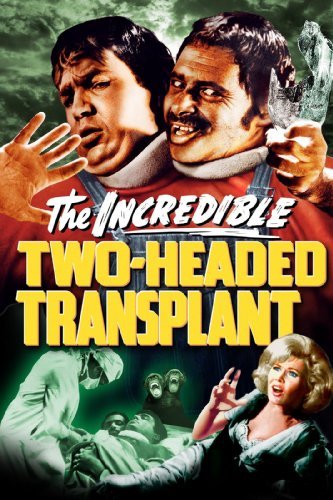
OK, this looks unethical...

OK, this looks unethical…

I adore stories that clarify ethical distinctions, and this is the third one we’ve had recently. First we had the classic “Awww! Factor” case of the Down Syndrome cheerleader. Then, close on its heels, we got “Downton Abbey’s” finale, which illustrated the ethics fallacy of Consequentialism as deftly as any textbook.

Now we have the startling report of impending head transplants:

The world’s first attempt to transplant a human head will be launched this year at a surgical conference in the US. The move is a call to arms to get interested parties together to work towards the surgery.

The idea was first proposed in 2013 by Sergio Canavero of the Turin Advanced Neuromodulation Group in Italy. He wants to use the surgery to extend the lives of people whose muscles and nerves have degenerated or whose organs are riddled with cancer. Now he claims the major hurdles, such as fusing the spinal cord and preventing the body’s immune system from rejecting the head, are surmountable, and the surgery could be ready as early as 2017.

Canavero plans to announce the project at the annual conference of the American Academy of Neurological and Orthopaedic Surgeons (AANOS) in Annapolis, Maryland, in June.

Predictably, this news prompted a wave of “Futurama” jokes and bad puns. It also prompted dozens of hysterical stories online and in print pronouncing the yet-to-be performed operation as “a terrible idea” and obviously unethical. A Daily Beast “expert” with the trust-inspiring name “Docbastard” condemned the practice with this wisdom:

That’s the funny thing about ethics—it may be impossible to say why something is wrong, but can be easy to see that it isn’t.

Yeah, that is funny. It is also false, and incredibly stupid. If one cannot say “why” something is wrong–you know, things like interracial marriage, interracial adoption, homosexuality, gay marriage, plastic surgery, income tax, integration, eating meat on a Friday…gee, let’s see how far back into cultural history we need to go to get the list up to a thousand! My guess: no further than 1900, if that far—there’s an excellent chance that it only seems wrong because 1) nobody’s bothered to analyze it thoroughly and objectively, and 2) the Ick Factor, which is when we mistake strangeness, shock and surprise, all visceral, emotional reactions, for ethics.

Let’s actually think about the “Doc’s” provocative questions about the theoretical procedure that he seems to think clinch the argument that head transplants are “easy” to identify as unethical. He writes, Continue reading

Note To Dr. Vesna Roi: Homophobes Can’t Be Doctors….Ethical Ones, Anyway

First, do no harm. Second, don't be a gratuitously cruel asshole.

First, do no harm. Second, don’t be a gratuitously cruel asshole.

Jami and Krista Contreras waited in the exam room for their newborn child’s first checkup. Then they were informed that the doctor they had asked to see had decided, after “much prayer,” that she could not treat the baby because its parents are lesbians.

Presumably the doctor,Vesna Roi, does not habitually require her patients’ parents to fill out a questionnaire to prove the are sufficiently morally worthy to have their infant receive medical care. Nonetheless, so vile does she consider this couple that she feels it is the Lord’s will that she withhold her services from the innocent child they have undertaken to love and raise.

I probably do not need to tell you, and I certainly should not have to remind “Dr”–and I use the title advisedly–Roi that this cruel and hateful conduct is a flaming breach of medical ethics, though no rules should be necessary to persuade a medical professional to have a heart and a soul. Continue reading

Abortion, “The Fly” and the Ethics Incompleteness Theorem

"AWWW! He looks just like his father!"

“AWWW! He looks just like his father!”

The most interesting aspect of ethics is at the margins, those situations where absolutists are challenged to hold to their principles because of unforseen variations that no general analysis could anticipate. The absolute ban on torture as unethical becomes shaky under the “hidden nuclear bomb” scenario.  Capital punishment opponents find that their compassion evaporates when asked whether Hitler or bin Laden deserved execution.

This is the Ethics Incompleteness problem, which I last wrote about at length in March of 2014:

“The human language is not sufficiently precise to define a rule that will achieve its desired effects, that is work, in every instance. There are always anomalies around the periphery of every normative system, no matter how sound or well articulated. If one responds to an anomaly by trying to amend the rule or system to accommodate it, the integrity of the rule or system is disturbed, and perhaps ruined. Yet if one stubbornly applies the rule or system without amendment to the anomaly anyway, one may reach an absurd conclusion or an unjust result. The Ethics Incompleteness Principle suggests that when a system or rule doesn’t seem to work well when applied to an unexpected or unusual situation, the wise response is to temporarily abandon the system or rule and return to basic principles to find the solution. No system or rule is going to work equally well with every possible scenario, which is why committing to a single system is folly, and why it is important to keep basic ethical values in mind in case a pre-determined formula for determining what is right breaks down.”

I was watching the Jeff Goldblum remake of “The Fly” (written and directed by David Cronenberg) last night, and rather than being properly horrified by Geena Davis’s nightmare of giving birth to a yard long fly larva, I found myself wondering how anti-abortion absolutists would handle her unusual dilemma. The film follows the tragedy of scientist Seth Brundle (Goldblum ) who has developed a means of teleportation. The process involves a computer breaking down a body, then transmitting the atoms electronically to a receiving “pod,” and reassembling them there. Unfortunately, when Seth tests the device on himself, an unnoticed fly gets into the sending pod, and the result is a version of Brundle that has fly DNA mixed in. (In the memorably campy Vincent Price original, what arrived in the receiving pod was a man with a giant fly head and a fly with a tiny human head.) Gradually Brundle mutates in form and mind into a monstrous hybrid, but before he knows what has happened to him, he impregnates girl friend Davis. Soon she realizes that something with insect DNA is gestating inside of her, though all tests show a healthy human embryo. Not surprisingly, she wants an abortion.

Would those who argue that abortion is murder maintain that she shouldn’t be able to have one, or that aborting the fetus is wrong? Let’s make the problem harder: let’s say she only learns that she has a fly-baby in the third trimester, when our laws wil not permit abortions unless the mother’s life is in peril. Some questions: Continue reading

A Lawyer Argues “Do No Harm” Should Be Added To The Legal Ethics Rules, Thus Proving Herself To Be A Hopelessly Unethical Lawyer

This is Alexa. She'll let you know if your client is good or bad, and whether you should help him. Just ask.

This is Alexa. She’ll let you know if your client is good or bad, and whether you should help him. Just ask.

Lawyer Alexa Van Brunt contributed a jaw-dropping op-ed to the Washington Post over the holidays. It was titled “The ‘torture’ memos prove America’s lawyers don’t know how to be ethical,” and argued that the legal profession needs the equivalent of the medical profession’s “First do no harm” ethical standard.

It was irresponsible for the Post to print such a piece, because it made its readers, most of whom are thoroughly confused about legal ethics already, even more confused. So far, I have yet to find any lawyer who regards Van Brunt’s theory as anything other than laughable, tragic, shocking, or proof that ideology rots the brain. She cannot possibly understand legal ethics or even what the duties of the legal profession are and compose such an embarrassing piece.

Alexa Van Brunt is, we are told, an attorney at the Roderick and Solange MacArthur Justice Center, a Clinical Assistant Professor at Northwestern University Law School and Center, and a Public Voices Fellow with The OpEd Project. This explains a lot. She is a public interest lawyer on a mission, and thus represents only causes that she thinks are good, right and important. Apparently she missed the part of law school where you learn that one of a lawyer’s jobs is to assist non-lawyer clients as they try to accomplish their goals, which they believe are good, right, and important. These often involve engaging in controversies with others, and zero-sum results. Someone is going to suffer “harm.”

In medicine, what “do no harm” means is frequently clear: make the patient better, not worse. There are usually not competing patients, where a limited amount of health must be allotted among suffering human beings. Thus a doctor will not ethically take a healthy heart from a living patient to give to another. In law, however, “Do no harm” would render many disputes beyond legal assistance. Is a defense lawyer who refuses to let a guilty client be convicted by insufficient evidence, jury bias and wrongful interpretation of the law doing harm by freeing a criminal, or is it harm to allow prosecutions to violate due process? Is a real estate lawyer who assists as a company purchases virgin land for the building of a factory doing harm to the environment, or is the lawyer for the environmental group that tries to block it doing harm to the economy?

Van Brunt’s primary focus is the torture issue, but even there, what is “harm” is muddy. Those who supported the use of torture believed that precluding it would place the U.S. population at risk. Alexa defines “harm” as violating international law and the Constitution, but the Constitution, some scholars believe, does not prohibit torture as the CIA practiced it, and in war, doing harm is necessary to win. Who decides whether a litigant who wants to sue for police brutality is going to do harm to public safety, or whether defending a police officer accused of murder will encourage police executions of unarmed men? Who decides, when it comes to  finding that a lawyer violated this new, sensitive ethics rule, what constitutes “harm”?

Why Alexa, of course! She and all those other good people who know with absolute certainty what is right and just in every case—they know what harm is. Just ask them. Meanwhile, client confidentiality is out, because sometimes a lawyer keeping his client’s secrets may cause harm to others. Providing legal advice to banks, defense contractors, auto manufacturers, gun-makers, processed food manufacturers, McDonalds, pharmaceuticals, the Defense Department, the CIA, pro-life organizations (abortion providers don’t harm anyone, of course), the NRA, the Republican Party, this all causes harm…by Alexa’s standards, and she knows best. We don’t need judges or juries, just let the consciences of lawyer and their associations decide which clients are virtuous enough to be worthy of legal representation.

The op-ed is not just absurd, but ignorant and alarming. How can anyone this warped and lacking in understanding of the law and the ethical duties of the profession be teaching at a law school, where she can assist in the minting of new lawyers as ignorant, arrogant and unethical as she is?

Talk about doing harm.
 

Comment of the Day: “Three Breasted Ethics”

Alexander Cheezem contributed an informative and well-argued comment challenging my ethical conclusions in the case of “Jasmine Tridevil,” who supposedly had a surgically constructed third breast attached between her two natural ones in an effort to become a reality TV star. Her story turned out to be a scam, but the ethical analysis is still worthy of consideration. Ethics Alarms doesn’t have many medical ethics dilemmas to ponder, and it is a fascinating area. As I considered  Jasmine’s titillation, I suspected it might be a hoax, but from the standpoint of honing ethics alarms, it doesn’t matter. I’m kind of relieved, frankly. Continue reading