Stop Making Me Defend Lenny Dykstra!

It pains me to have to write this; after all, the 1986 World Series, best remembered for the  potential Series-winning game the Red Sox choked away for good when the ball rolled under Bill Buckner’s legs (it wasn’t Bill fault, but never mind), is one of the traumas of my life. That was a thoroughly dislikable (but great) Mets team that won in 1986, and centerfielder Lenny Dykstra was the worst of them.  Still, the perfidy, venality and cruelty of another member of that team requires me to take Lenny’s side.

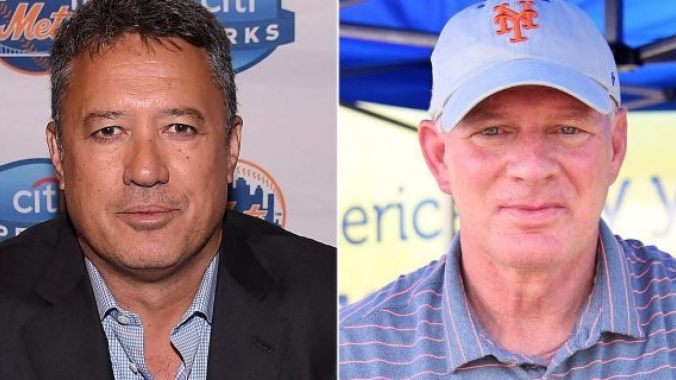
Dykstra was an obnoxious player and has been in constant trouble since his retirement. In a new book released this week, “108 Stitches: Loose Threads, Ripping Yarns, and the Darndest Characters from My Time in the Game,”  Dykstra’s team mate, turned broadcaster Ron Darling  (he’s on the left above, Lenny’s on the right) claims that Dykstra used racial epithets to unsettle Boston Red Sox pitcher Oil Can Boyd, an African American, before Game #3 of the 1986 World Series. Darling has now  repeated the accusation on three radio shows this week, as he wrote that Dykstra was “shouting every imaginable and unimaginable insult and expletive in his [Boyd’s] direction — foul, racist, hateful, hurtful stuff” when he was in the on-deck circle before leading off the game. Continue reading
The Astounding, Clueless, Unethical And Doomed Hiring Of Brodie Van Wagenen

‘Conflicts of interest? I have no idea what you mean…’

Disclaimer: This is NOT a baseball ethics post. This is a business ethics post about a major ethics issue,  and the business happens to be a major league baseball team.

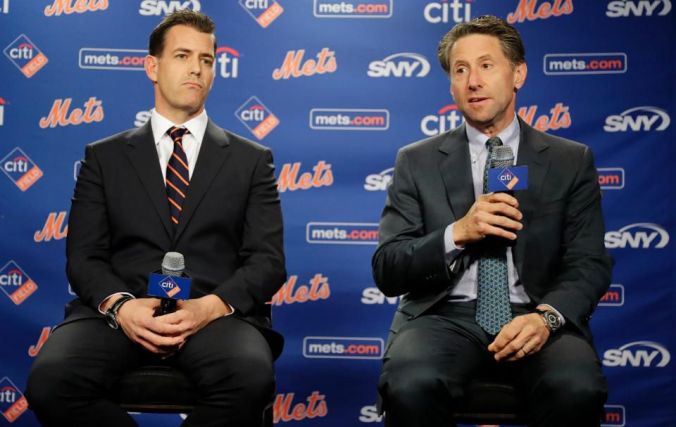
This week the New York Mets stunned the baseball world by hiring Brodie Van Wagenen—that’s him on the left—as its new general manager.

He is not only being hired to manage the business of a major league baseball team without having ever worked for a baseball organization in any capacity. That would be strange enough. He is also a player agent who has been the representative of several key players currently under contract to the Mets, meaning that he acted for them in negotiating against the team he now heads.Van Wagenen made $25 million in commissions last year on player contracts.

Anyone whose ethics alarms weren’t set ringing like the bells during the Great Chicago Fire by the Mets decision doesn’t understand what a conflict of interest is. Guess who this category includes. Yup: Van Wagenen and the New York Mets.

In a press conference at Citi Field, Mets executives were asked about the conflicts issue, which should have been predictable, mandating a careful, thorough answer.  As a player agent for Creative Artists Agency (Van Wagenen has divested himself of all shares in the company and future commissions…at least he figured out that much) Van Wageman’s responsibility was to negotiate the most lucrative contracts for his clients. As the a general manager for the New York Mets, his responsibility is to build a successful team within its resources, regardless of the best interests of his former clients, the players he worked with over the past 18 years. When the “C” word was raised bu reporters,  Mets President Fred Wilpon interrupted before Van Wagenen could answer  and said that he had spoken with the commissioner’s office and Major League Players Association chief Tony Clark, adding, “We have provisions in Brodie’s contract to deal with any conflicts of interest.”

Oh! Well never mind then! The contract deals with it, and the Mets have spoken to people! All taken care of!

Neither Wilpon nor Van Wagenen would say what those provisions were, but I guarantee this as an ethics specialist: the only provision that could effectively deal with Van Wagenen’s conflicts would be “Van Wagenen can’t be the Mets general manager.” Continue reading