Unethical Quote Of The Week: Nautika Harris

miami-teen-home-intruder

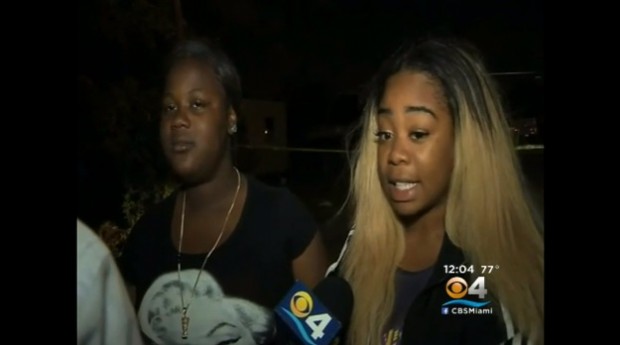
“You have to look at it from every child’s point of view that was raised in the hood. You have to understand … how he gonna get his money to have clothes to go to school? You have to look at it from his point of view.”

Nautika Harris (above, right), the cousin of a 17-year-old teen shot dead by a 54-year-old Miami woman as he tried to exit her home, which he had entered to burglarize.

Miami-Dade police say that Trevon Johnson, 17, burglarized the home of a 54-year-old old woman last week.

She was not in the house when the break-in occurred, but after being alerted by her surveillance system, she rushed home and found Johnson climbing out of a window. She shot him dead, and his relatives are outraged.

“I don’t care if she have her gun license or any of that. That is way beyond the law … way beyond,” Johnson’s cousin Nautika Harris told local radio station WFOR. “He was not supposed to die like this. He had a future ahead of him. Trevon had goals … he was a funny guy, very big on education, loved learning.”

And loved burglary, apparently. Continue reading

Desperately Seeking A Justification For The Unjustifiable Mizzou Meltdown, And Failing

protest-mizzou

Yesterday, the Washington Post’s Janelle Moss, an African American issues columnist, presented an aggressive, dishonest and insulting justification for the destructive black student protests at the University of Missouri. In an earlier essay, I described them as an “I’m mad at the world and somebody has to pay for it” tantrum. I’m sticking by that description, despite the ennobling spin being put on it by apologists, many of whom are trying to blunt the damage being done to civil rights advocacy by the events of the last several days.

[N]owhere in this still-young week has there been a better example of the tension between the conservative and liberal views of race and the politics around it than behind the podium where University of Missouri President Timothy M. Wolfe stood and resigned Monday,” she wrote.  This is setting up Wolfe’s speech as a straw man. He was forced to resign, and ordered to do it without making matters worse. He was also protecting himself, and, I believe, was a weak and inept leader. How nice to be able to take a hastily written statement by such a dubious representative of any group and declare it the exemplar of “conservative views on race.”

Moss’s introduction was smoking gun proof that this was an example of an advocate picking out evidence to support what she already was committed to supporting, and atrocious evidence at that.

“The Fix is aware that some Americans are inclined to reject, outright, the idea that some words — those that we choose to express our ideas, what we say at critical moments and that which we do not mention — have deeper, often multi-layered meaning, ” she writes.  I don’t know what she thinks she is saying. “Many Americans” reject the idea that words have meaning? “Multi-layered” meanings? Who? Who believes that? What she is trying to do is to justify her next “proof,” which is junk science.

She consulted two minority social scientists, who have clear biases of their own (but coincidentally aligned with hers)  to psychoanalyze what Wolfe said in resigning, and allowing her to use their self-serving diagnosis (one has a book out about “dog-whistle” racism; the other makes his living writing and teaching about how racist the U.S. is) of a short and quickly composed speech to read not just Wolfe’s thoughts but to attribute them to all “conservatives.” The result is, or should be embarrassing. Continue reading

Ten Ethics Observations On The Resignation Of University of Missouri President Tim Wolfe

dominoes2

…for nothing, as far as I can see, except being in the wrong job when an “I’m mad at the world and somebody has to pay for it” tantrum by some of the black students got out of control.

Observations:

1. I have searched and searched for a substantive reason for the upheaval. There is apparently nothing there. The university, the education of students and two men’s career’s (the University’s Chancellor has also been forced to resign) have all been disrupted, and for no good reason, except that some students decided it was a good time to grandstand. This makes the entire episode unjust by definition.

How ironic it is supposed to be about “justice.”

2. The main driver of events was graduate student Jonathan Butler, who started a hunger strike to force Wolfe to resign”for justice.” Given a chance to explain his position by the Washington Post, he had nothing definitive or constructive to offer, just vague dissatisfaction:

“I’m saying, even if you can’t really understand systemic oppression and systemic racism, is the fact we can’t be at a university where we have values like “Respect, Responsibility, Discovery and Excellence” and we don’t have any of those things being enacted on campus, especially in terms of respect. I’m on a campus where people feel free to call people the n-word, where people feel free as recently as last week, to used [their] own feces to smear a swastika in a residential hall. Everything that glitters is not gold. We really need to dig deep and be real with ourselves about the world we live in and understand that we’re not perfect but understand that just because we’re not perfect doesn’t mean we don’t start to understand and address the issues around us.”

Right. Some kids in a car that may not have been students and another individual on campus who has not been identified used  racial epithets. Some mentally deficient person, also unidentified, drew a swastika on campus using human excrement. (This type of incident tends to be a hoax  as often as not.) What exactly is the president of a university supposed to do about such things ? Wolfe mandated “sensitivity courses” for everyone on campus, which is already too much. I would refuse to attend. I would not respect anyone who did attend.

Heck, I might start a hunger strike.

It works. Continue reading

The AWOL Walter Fauntroy, Flawed Black Martyrs And The Duty Of Outrage

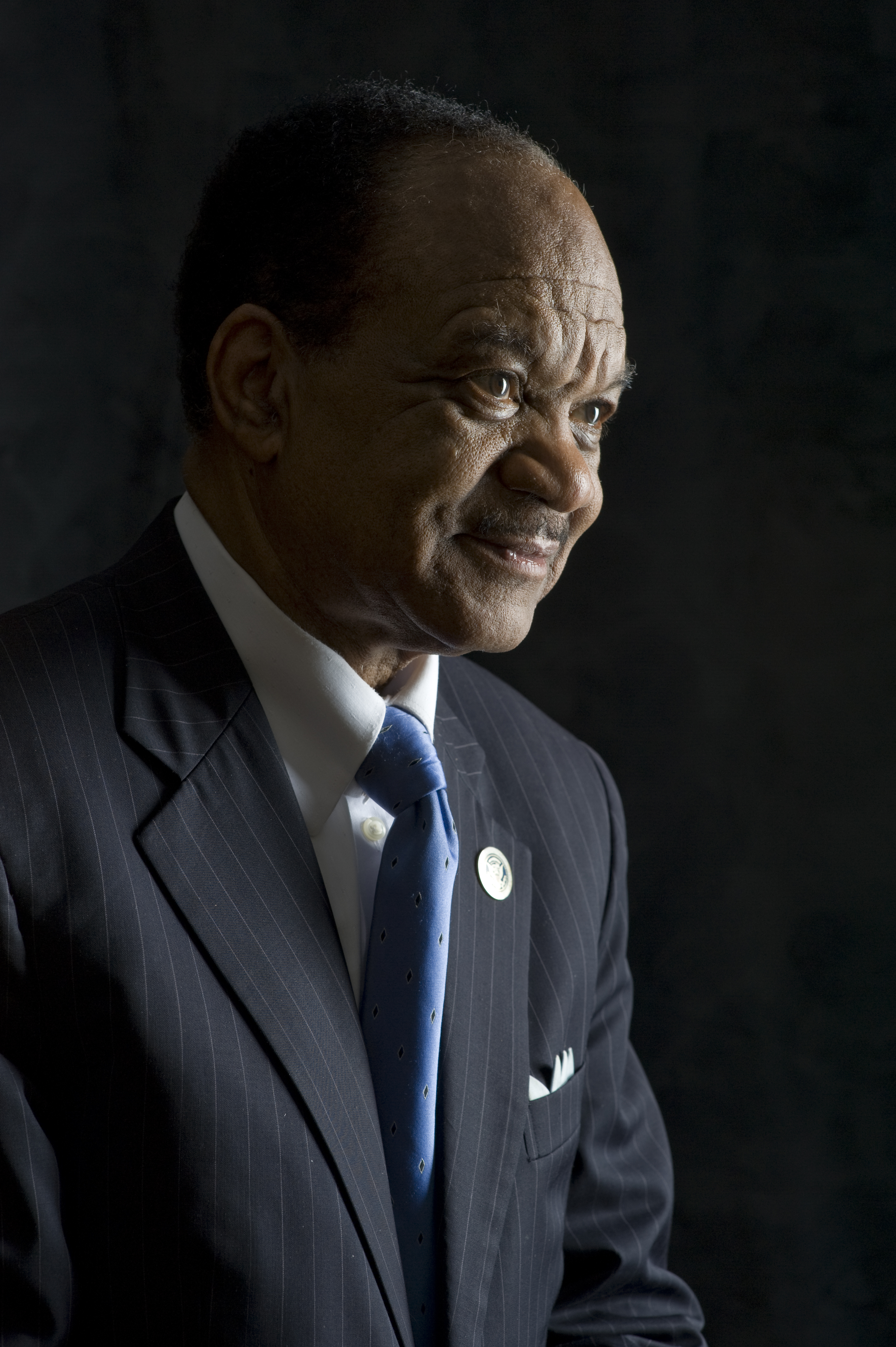
Walter Fauntroy, D.C. icon, civil rights hero, fugitive, coward, crook...but still a hero. Somehow.

Walter Fauntroy, D.C. icon, civil rights hero, fugitive, coward, crook…but still a hero. Somehow.

As I was composing this post in my head, I stumbled upon—and I mean that, because I normally avoid her columns like cheap Chinese food—Kathleen Parker’s latest column. Parker is the sort-of conservative, sort-of op-ed pundit who has mastered the art of compassionate equivocation, meaning that her opinions on public affairs usually consist of one long sigh. She was at it again here, except that the topic she was sighing about confounds me, he who does not shrink from assigning blame, almost as much as it does she who usually spreads blame so evenly that its ethical impact is nil.

Parker wrote…

At the same time that people avoid too-sensitive subjects, they seem to fear stating the obvious lest their thoughts be interpreted as an act of betrayal to “the group.” Politicians are the most risk-averse of all. Few are the Democratic women who will find (or express) fault with Clinton. It is the rare African American who finds fault with Obama. When Rawlings-Blake also said that she “gave those who wished to destroy space to do that,” her Democratic colleagues spoke only of her “poor choice of words.” Not poor thinking? Not lousy leadership? Republicans don’t get a pass. Heaven forbid they should call out someone who wants to inject biblical end-times into political debate.”

Ah, how it makes my chest fill with pride that I have flagged all three of the ethical breaches Parker mentions within the few daysHillary Clinton’s brazenly suspicious conduct and the disgraceful refusal of her cheering section to either acknowledge or question it…Rawlings-Blake’s “lousy leadership”… and Republicans who use religiosity as a prop. Parker being Parker, she had earlier used an example of missing outrage that sets my teeth on edge because, while correct, it calls to mind another area of missing outrage and societally-damaging martyrdom that I can’t quite figure out how to talk about.

Where is the outrage beyond the African American community about police brutality and the deaths of young black males? Where are members of Congress other than those belonging to the black caucus? My God, the list of those killed is staggering,” she writes, “yet this is not a new phenomenon. Baltimore’s Freddie Gray, the 25-year-old who suffered spinal injuries while in police custody and died, is but the most recent. Yet you see only the usual black activists speaking up.”

True. The missing paragraph, however,  is this: “Where are the African-American activists asking why so many young black men are constantly in positions that place them in conflict with the police? When protesters chant the names and carry photos of police victims like Freddie Gray, Walter Scott, yes, and Mike Brown, they are presenting in honored terms African-Americans who weren’t credits to their communities or examples for the next generation to emulate. Indeed this ritual sanctifies lives and backgrounds that are part of the same urban pathology as the police attitudes that killed them.”

Freddie Gray was only 25-years-old, and yet he already had a staggering 18 previous arrests since he turned 18-years-old. His mother was a heroin addict; he had no father in his life. Why was someone like this even out of jail, in a position to become yet another victim of police anger and contempt against the endless wave of young, irresponsible, law-defying young men who undermine the vitality of their own communities and the nation?

The fact that Gray’s death was undeniably the greater outrage shouldn’t allow the outrage of lives like his to be ignored. Black crime and police dysfunction are part of the same pathology. If only the Bill O’Reillys are going to ask the hard questions about black communities policing their young and changing their deadly culture—and are they really hard for O’Reilly, whose audience is inclined to look for ways to side with the police even when they commit murder?—then those questions and their equally hard answers, involving, among other things, avoidance of responsibility and accountability, can be and will be largely ignored.

This is part of the loyalty to “the group” phenomenon that cripples the African-American community and warps its values. It is especially powerful when prominent leaders, those African-Americans who should be leading the way away from self-destructive conduct and who have the power, visibility, and credibility to do so, demonstrate an atrocious lack of ethics themselves. Where are the black voices—those not belonging to black women he sexually assaulted, that is—condemning Bill Cosby? Or Al Sharpton? Charles Rangel?

Washington, D.C.’s overwhelmingly black population was conditioned to accept black leadership outrages by the late Marion Barry. I was not quite aware of the extent of this cultural purging of the ability to hold prominent African-Americans to ethical standards until I read a jaw-dropping Washington Post feature about the wife of local civil rights legend Walter E. Fauntroy, who helped Martin Luther King plan the 1963 March on Washington, and who served as the District’s congressional delegate for two decades. The tone of the article is enough to make a reader think he or she is going mad. The loving 80-year-old wife, Dorothy Fauntroy, speaks about her husband in glowing terms that nothing in the article suggests is inappropriate. Continue reading

The Michel Martin Question I Didn’t Answer This Morning, and More On The Bill Cosby Scandal

On pointIn the segment on “Beverly Johnson And The Bill Cosby Scandal” I just completed for NPR’s “On Point” program, out of Boston with the magnificent Michel Martin hosting, I emulated the Sunday morning talk show guests I so revile for answering questions by making their own points that have little or no relevance to what was asked. Michel asked me, as the time left in the hour-long program was ticking down, what ethical obligations consumers—that is, the audience for his concerts, TV shows and albums—have regarding Cosby, in light of the rape allegations against him.

I was still stunned by the comments made by three callers, encompassing several ethically confused assertions that you know I would find annoying:

  • That the victims should not be coming forward so late;
  • That Cosby is “innocent until proven guilty” (GRRRRR…);
  • That it’s “easy” for women to make unsubstantiated allegations against celebrities, and
  • That there is a parallel between the allegations against Cosby and the Rolling Stone campus rape story.

That last one especially had my head threatening to explode, which would not be good for my relationship with NPR, so I think I can be forgiven for missing Michel’s query. Yes, the UVA rape allegation is exactly like the Cosby scandal, other than the fact that the accusers in Cosby’s case have come forward publicly while “Jackie” has not; that its two dozen (so far) alleged victims for Cosby and one in the UVA case; that one situation is a classic example of abuse of power, wealth and influence and the other is not; that Cosby settled one claim rather than air the allegations in a court of law; and that virtually every part of “Jackie” claim has failed to hold  up under scrutiny and investigation, whereas Cosby, the one individual who could offer evidence to counter the allegations against him, has done nothing but have spokesmen and lawyers issue blanket protests and denials.

Yup. Identical.

My answer to Michel should have been this:

“It’s up to Cosby fans, If they still can still laugh and cheer at Cosby’s nice guy schtick and “America’s Dad” persona knowing that he’s a serial rapist, fine: laughter is good, get it where you can. Personally, I can’t laugh at someone whom I know has engaged in horrific acts, hurt women who admired and trusted them, and by his own conduct left another cultural hero lying face-down in the mud. I can’t forgive it, I can’t get past it, and I’m certainly not going to keep laughing. this is no different from the NFL fans who keep wearing Ray Rice jerseys, or for that matter, Democratic women who continue to swoon over Bill Clinton. If they do, they either:

  • Can’t get over their cognitive dissonance, and at some level refuse to believe what cannot be rationally denied, or…
  • Don’t think the conduct involved—punching women, exploiting women, raping women—is worth getting upset about, or…
  • Buy the absurd personal/public dichotomy, and can still cheer wife-beatering athletes, star-struck intern-exploiting leaders, and raping comedians.

All of these are sad and impossible to justify, but they are common. Does the continued support of a Cosby ratify his conduct? Not in the eyes of his undeterred fans, but in the culture? Of course it does. If Bill Cosby’s career escapes relatively unscathed by this, and he is not held accountable by society, the verdict of the culture will be a particularly extreme version of The King’s Pass: if you are rich enough, powerful enough and seen as contributing enough to society, then you will be held to a lower standard, and can get away with, if not murder, serial rape.”

Continue reading

Accountability Lessons, Oil Spill Ethics, and Obama’s Leadership Failure

President Obama has shown his inexperience and unfamiliarity with executive leadership ethics in many ways since he took office, but none are likely to be more damaging than his unease with accountability. He had better learn fast.

It is not surprising that so many mayors lose their jobs as the result of blizzards. Budget limitations guarantee that a city’s snow removal capabilities are set to the most likely levels of snowfall and not the extraordinary, once-in-a-decade event, yet when that once-in-a-decade event arrives, it will not do for the mayor to blame the budget or the weather or the City Council or the lack of a magic wand. The public doesn’t want to hear any of that: they want to be able to drive to work. They want the leader to fix the problem, because that’s what leaders are supposed to do. If a leader can’t fix the problem, he had better look as if he is doing everything possible and impossible to try. And he had better make it clear that he understands and accepts that it is his job. Continue reading