We Need a Little Christmas! Presenting the 2025 Ethics Companion To “Miracle On 34th Street” [Expanded and with a New Introduction]

[Johnny Mathis finally announced his retirement this year—he’s only 90. His has been one of the most recognizable, enjoyable, seductive voices in American popular music for almost 70 years. My college room mate always had his records on hand to create the proper mood for his dates. An old time crooner’s chances of being remembered rests now on whether there is a Christmas standard he can be associated with. Johnny’s best shots are “It’s Beginning to Lot Like Christmas,” and “We Need a Little Christmas” from “Mame.” He sings all the others beautifully too, but they are taken.]

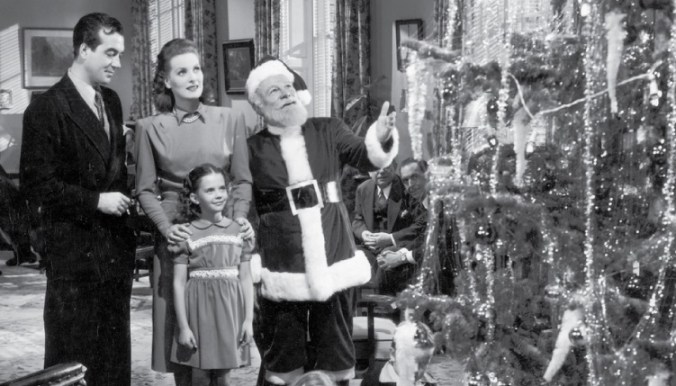
I was informed by a fellow Christmas movie fan that it is almost impossible to watch the original “Miracle on 34th Street” film on streaming services or the networks. They prefer to show the various remakes, all inferior in every way. What made  director-writer  George Seaton‘s  movie (it won him an Oscar) so superb in addition to the casting, his straight-forward style and his obvious love of Christmas  is that it instantly felt perfect despite its many suspension of disbelief challenges. Why do they feel this film has to be remade? Is it the lack of color? (“Miracle on 34th Street” was one of the first movies Ted Turner colorizes, and that version is unwatchable.)

As I’ve stated here before I believed in Santa Claus until I was 12. I didn’t want to give the fantasy up: I loved magic, and my parents always tried to make the season magical. My late wife Grace and I tried to do the same with Grant, now “Samantha,” but he was a non-believer by the third grade. Is there anything more joyful to see than the look on a child’s face as he or she wakes up to find what Santa has delivered? Will anything feel that wonderful again?

“Miracle on 34th Street” is an ethics movie in many ways. The movie is about the importance of believing in good things, hopeful things, even impossible things. The movie reminds us that wonderful things can happen even when they seem impossible, and that life is better when we believe that every day of our lives. I’m engaged in that right now: all of 2025 has required it. I’ve had serious injuries, successes, new projects and setbacks. My father taught me to be ready for the worst but to never to give up on the best.

One thing this film does well is to concentrate on the secular holiday without any allusions to the religious holy day, but not being obnoxious about it. “It’s a Wonderful Life” also straddles the line very cleverly: it begins in heaven, after all. All the “A Christmas Carol” films include Bob Cratchit telling his wife that Tiny Tim mused about how his disability reminded people of Jesus’s miracles at Christmastime, and that’s Dickens’ only reference to Jesus in his story.

On the offensive side is the Rankin-Bass animated “Rudolph the Red-Nosed Reindeer”—I can’t believe they still show that thing—when the “stormy Christmas Eve” causes Santa to decide to “cancel Christmas.” I’d say that’s above Santa’s pay grade, wouldn’t you agree? It also suggests that Christmas is only about gifts and children. (Do parents today explain that the singing snowman who narrates the story is based on, and looks like) the real person who also sings the most memorable songs? They should. Burl Ives had a fascinating life and a varied career, and those kids will probably be hearing him sing “Have a Holly Jolly Christmas” for the rest of theirs. 

Interestingly, all of the perennial Christmas movies have been made into stage musicals of varying success—“White Christmas,” “It’s a Wonderful Life,” “A Christmas Story,” “Elf”—- but “Miracle on 34th Street” flopped so badly when Meredith Willson [“The Music Man”] adapted it as “Here’s Love” on Broadway that nobody has tried again. The show included the song, “It’s Beginning to Look a Lot Like Christmas,” which Willson wrote long before the show was assembled.  But as with all the movie remakes, the show missed Edmund Gwynn, the best Kris Kringle of them all. He was a distinguished classical actor until that movie: he complained that after the film he wasn’t allowed to get rid of his bushy white beard and was type-cast as jolly old men.

I decided to post the Companion earlier this year; I also was moved by the fact that a number of EA readers had sought out the 2024 version today. When I’ve posted it on Christmas Eve, it has lacked views for the obvious reasons.

The 2025 companion reflects some additional thoughts upon my re-watching “Miracle on 34th Street” last week—I even took notes. Mostly, I though about how important the holiday, the stories, the music, the movies and what they signify taken as a whole is to our nation, our society and our culture. Thus it was that I decided that here was a good place to re-post “Christmas, the Ethical Holiday” Besides, I need to read it myself.

Christmas: the Ethical Holiday

Benjamin Franklin recognized the importance of regularly focusing one’s attention on ethical conduct rather than the usual non-ethical goals, needs, desires and impulses that usually occupy the thoughts of even the most virtuous among us. He suggested that every morning an individual should challenge himself to do good during the day. In the 21st century psychologists call this “priming,” a form of beneficial self-brain-washing that plants the seeds of future choices.

The Christmas season operates as an effective form of mass population priming, using tradition, lore, music, poetry, ritual, literature, art and entertainment to celebrate basic ethical virtues and exemplary conduct toward other human beings. Kindness, love, forgiveness, empathy, generosity, charity, sacrifice, selflessness, respect, caring, peacefulness…all of these are part of the message of Christmas, which has become more universal and influential in its societal and behavioral importance than its religious origins could have ever accomplished alone. Secular and cultural contributions have greatly strengthened the ethical lessons of Christmas. “It’s A Wonderful Life” urges us to value our ability to enrich the lives of others, and to appreciate the way they enrich ours.  “A Christmas Story” reminds us to make childhood a magical time when wishes can come true. O. Henry’s story “The Gift of the Magi” proves that it is not the value of gifts, but the love that motivates them that truly matters. Most powerful of all, Charles Dickens’ “A Christmas Carol” teaches that the admirable conduct the spirit of the season can inspire need not be short-lived, and that if we use Christmas properly, as Ben Franklin used his morning exhortation to good conduct, it can make all of us better, happier, more virtuous human beings.

At this point in civilization, the religious context of Christmas almost does more harm than good. Though the day chosen to celebrate Jesus of Nazareth’s birthday has been spectacularly successful in promoting the ethical and moral ideals he taught, the idea that Christmas is indistinguishable from the religion he founded has made it the object of yearly controversy, as if celebrating Christmas is an affront to other faiths.

This is a tragedy, because every human being, regardless of religious belief, can benefit from a culture-wide exhortation to be good and to do good. “Happy Holidays!”—the bland, generic, careful greeting of those afraid to offend those who should not be offended—does nothing to spur us toward love, kindness, peace and empathy. “Merry Christmas!” does.

This is not just a religious  holiday; it is the culture-wide ethical holiday, the time when everything should be aligned to remind us to take stock of our lives, think about everyone else who lives on earth with us, and to try to live for others as well as ourselves. Christians should be proud that their religion gave such a valuable gift to humanity, and non-Christians should be eager to accept that gift, with thanks.

It is foolish and self-destructive for there to be a “war on Christmas.” Charles Dickens understood. There is hardly a word about religion anywhere in his story.  There doesn’t need to be. Christmas is the ethical holiday. Christians and non-Christians can celebrate it or not as they choose, but whether they do or not, the Christmas season is more important than any one religion, even the one that gives the holiday its name.

Christmas is important because it primes us to be good, be better, be more ethical, for the rest of the year. There should be nothing controversial about that.

***

And now, back to “Miracle on 34th Street”….
Continue reading

The 2024 Ethics Companion To “Miracle On 34th Street” [Updated, Expanded and with a New Introduction]

2024 Introduction

When I look back on what I wrote to introduce the greatest of all Christmas movies last year, I almost have to laugh, if I could laugh.

“What makes ‘Miracle on 34th Street” the most appropriate classic Christmas film for 2023 is its theme: the importance of conquering cynicism and  pessimism, and always keeping one’s mind and heart open to hope…. I know my year has been especially miserable on multiple fronts. Nonetheless, I remain, at heart, about 12 years old. The same things make me laugh; my level of optimism remains high; I believe in this nation’s miraculous ability to somehow get out of the fixes it gets itself into; I’m still a romantic, and, yes, I think with a little luck and one more starting pitcher, the Boston Red Sox can make it to the World Series next year. I am being constantly confronted with old friends, some much younger than me, who have suddenly decided to be old: they think old, they act old, and they seem to have given up the future as irrelevant. The Santa Claus myth represents faith in the possible, or rather the impossible. Yes, its easier when you are a child, but it is worth the fight to never lose the part of you that still believes in magic and miracles.”

What a joke on me. My wife died unexpectedly in February. Hidden financial horrors were uncovered that she had been hiding from me. My son decided he was trans; a lot of those friends who were acting old ended up acting dead, and rather convincingly. I lost my last connection to my mother’s family when Aunt Bea died at 96; my mentor and Most Unforgettable Person, Tom Donohue of the U.S. Chamber of Commerce, died as well; one of my closest lawyer clients died too. Another loss that I felt: Luis Taint, the Boston Red Sox pitcher who was at the center of some of my most cherished baseball memories, died this year. A big theatrical project I had been working on for six months was abruptly cancelled (the theater was condemned as structurally unsound). Worst of all, the Red Sox had a star-crossed, frustrating season: if there’s anything worse than watching baseball alone, it’s watching your team lose alone.

Indeed, I do, as Auntie Mame sang, “need a little Christmas,”  but it is very little indeed this year. Luckily for me, there’s a song for that: “Have Yourself a Merry Little Christmas,” from “Meet Me in St. Louis.”

So the Christmas movies are about it for me this holiday season. I’ve seen “It’s a Wonderful Life,” “White Christmas,” my favorite version of “A Christmas Carol,” “The Santa Clause,” and even “Holiday Inn.” (No, “Die Hard” and “Die Hard 2” are not “Christmas Movies.) “Elf” doesn’t make the cut; I suppose that I’ll see “A Christmas Story” eventually, though I am sick of it, and Grace’s complaints about Melinda Dillon’s hair haunt me. I will revisit “Home Alone” and “Home Alone 2.” I’m saving “Miracle on 34th Street” for tonight, Christmas Eve.

I confess, I believed n Santa Claus until I was 12. I didn’t want to give the fantasy up: I loved magic, and my parents always tried to make the season magical. (More of that later.) Grace and I tried to do the same with Grant, now “Samantha,” but he was a non-believer by the third grade. Is there anything more joyful to see than the look on a child’s face as he or she sees what Santa has delivered? Will anything feel that wonderful again?

“Miracle on 34th Street” is an ethics movie in part because its artists committed to telling a magical story and charming audiences by working as an ensemble selflessly and  efficiently. The director,  George Seaton also  wrote the screenplay, and it won him an Oscar. He cast his movie brilliantly, and making the correct but bold decision to stick with a matter-of-fact, realistic, unadorned style that keeps the story grounded in reality while it spins off into fantasy.

“Miracle on 34th Street” is about the importance of believing in good things, hopeful things, even impossible things. The movie reminds us that wonderful things can happen even when they seem impossible, and that life is better when we believe that every day of our lives. I’m trying.

One thing this film does well is to concentrate on the secular holiday without any allusions to the religious holy day, but not being obnoxious about it. “It’s a Wonderful Life” straddles the line very cleverly: it begins in heaven, after all. All the “A Christmas Carol” films include Bob Cratchit telling his wife that Tiny Tim mused about how his disability reminded people of Jesus’s miracles at Christmastime, and that’s Dickens’ only reference to Jesus in his story. On the offensive side is the Rankin-Bass animated “Rudolph the Red-Nosed Reindeer”—I can’t believe they still show that thing—when the “stormy Christmas Eve” causes Santa to decide to “cancel Christmas.” I’d say that’s above Santa’s pay grade, wouldn’t you agree? It also suggests that Christmas is only about gifts and children. (Do parents today explain that the singing snowman who narrates the story is based on (and looks like) the real person who also sings the most memorable songs? They should. Burl Ives had a fascinating life and a varied career, and those kids will probably be hearing him sing “Have a Holly Jolly Christmas” for the rest of theirs.

Last year I discussed the many remakes and the fact that they all fail to equal the original. I wonder why this, of all the Christmas classics, has inspired so many remakes. Nobody would dare remake “It’s a Wonderful Life.” I think it’s because the story connects with children as well as adults, and there is a sense that a black and white movie very obviously set in the 1940s seems too distant. 

Interestingly, all of the perennial Christmas movies have been made into stage musicals of varying success—“White Christmas,” “It’s a Wonderful Life,” “A Christmas Story,” “Elf”—- but “Miracle on 34th Street” flopped so badly when Meredith Willson [“The Music Man”] adapted it as “Here’s Love” on Broadway that nobody has tried again. The show included the song, “It’s Beginning to Look a Lot Like Christmas,” which Willson wrote long before the show was assembled, and it was still the best song in the weak score. At one point John Payne took over the part of Fred Gailey, reprising his role in the film. But as with all the movie remakes, the show missed Edmund Gwynn, the best Kris Kringle of them all.
Continue reading

The 2023 Ethics Companion To “Miracle On 34th Street” [Updated and Expanded]

2023 Introduction

What makes “Miracle on 34th Street” the most appropriate classic Christmas film for 2023 is its theme: the importance of conquering cynicism and  pessimism, and always keeping one’s mind and heart open to hope. This has been a truly awful year, not one of the worst in our history but to a lot of Americans it seems that way (because they “don’t know much about history,” like Sam Cooke), but bad enough that we should be glad to see it go. I know my year has been especially miserable on multiple fronts. Nonetheless, I remain, at heart, about 12 years old. The same things make me laugh; my level of optimism remains high; I believe in this nation’s miraculous ability to somehow get out of the fixes it gets itself into; I’m still a romantic, and, yes, I think with a little luck and one more starting pitcher, the Boston Red Sox can make it to the World Series next year. I am being constantly confronted with old friends, some much younger than me, who have suddenly decided to be old: they think old, they act old, and they seem to have given up the future as irrelevant. The Santa Claus myth represents faith in the possible, or rather the impossible. Yes, its easier when you are a child, but it is worth the fight to never lose the part of you that still believes in magic and miracles. Kris Kringle really isn’t Santa Clause: he’s nuts, basically. But somehow that tiny wisp of a hope that he might be the real Santa is alive at the end of the movie. It’s really quite wonderful. It’s also important.

The production of “Miracle on 34th Street” itself epitomizes the ethical values of competence and integrity. Watch any of the attempts to remake the film over the years; some aren’t bad, but none equal the original, or even justify a remake that places the story in contemporary times.There have been four remakes starring, as Kris Kringle, Thomas Mitchell, Ed Wynn, Sebastian Cabot, and Richard Attenborough. That’s a distinguished crew to be sure. Mitchell was one of the greatest character actors in Hollywood history. Wynn was nominated for an Academy Award (for “The Diary of Ann Frank”) and Attenborough won one, Best Supporting Actor Award in 1967 for “The Sand Pebbles.” Cabot wasn’t quite in their class, but he was a solid pro, and looked more like Santa Clause than Mitchell,  Wynn, or Attenborough.

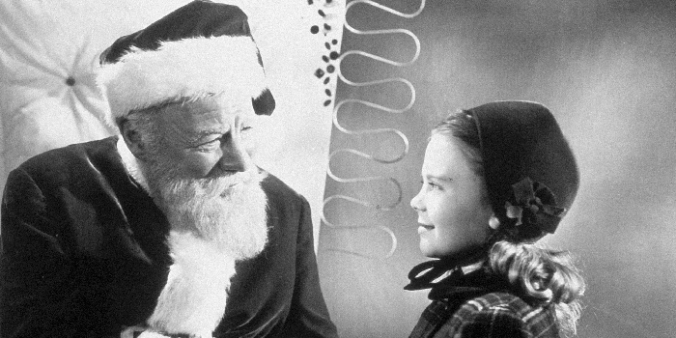
None of them, however, were as convincing as Edmund Gwenn. He made many movies—all without a white beard— and had a distinguished career in films and on stage, but even audience members who knew his work had a hard time reminding themselves that he wasn’t Kris Kringle while they watched the movie. I still have a hard time.

 The film is one more example of the special, unappreciated talent of Maureen O’Hara, who never was quite regarded as a top rank a movie star, as lovely and strong an on-screen presence as she was. Her ability to anchor great movies while never dominating them is the epitome of the “collaborative art” they always blather about during the Oscars, but which is seldom truly honored.  O’Hara was the female lead in four genuine classics: “The Hunchback of Notre Dame,” “The Quiet Man,” “How Green Was My Valley,” and “Miracle on 34th Street.” She also starred in the original “The Parent Trap” for Disney.

“Miracle on 34th Street” is an ethics movie in part because its artists committed to telling a magical story and charming audiences by working as an ensemble selflessly and  efficiently. John Payne, as the idealistic lawyer in love with Maureen, is never flashy, just completely convincing. One reason may have been that, as he told an interviewer once, the role of Fred Gaily perfectly matched his own ideals and beliefs.  This is the magic of performing talent: they make audiences suspend disbelief because they seem to believe in the story and characters too. The director,  George Seaton (who also directed “Airport,” which is NOT an ethics movie), also wrote the script that won him an Oscar. He cast his movie brilliantly, and making the correct but bold decision to stick with a matter-of-fact, realistic, unadorned style that keeps the story grounded. There are none of the corny features or inexplicable gaffes in this film that make other holiday-themed classics inherently unbelievable, like the cheesy battlefield sets in “White Christmas” or the heavenly dialogues in “It’s a Wonderful Life.”

“Miracle on 34th Street” is, as I said at the start, about the importance of believing in good things, hopeful things, even impossible things. Today many of my friends, colleagues and associates are depressed and fearful of the future—their future, the future of the nation, even the future of the planet. (The planet will be fine…the rest? As Samuel L. Jackson says in “Jurassic Park, “Hold on to your butts.”) “Miracle on 34th Street” reminds us that wonderful things can happen even when they seem impossible, and that life is better when we believe that every day of our lives. Of course, some days are easier than others.

Never mind. As the Fairy Godmother in the musical version of “Cinderella” sings, “Impossible things are happening every day.” Continue reading

Comment Of The Day: “The 2022 Ethics Alarms Companion To ‘Miracle On 34th Street'”

Of the three Ethics Alarms ethics companions to classic Christmas movies, the “Miracle on 34th St.” edition has attracted the most criticism. That’s strange, because 1) it is my favorite of the three and 2) I am more critical of the ethics features of “It’s a Wonderful Life,” and even “Miracle’s” biggest fans ( I’me one of them) have to concede that IAWL is a great work of art, while the tale of Kris Kringle is “just” excellent entertainment. P.M. Lawrence is the only Ethics Alarms reader who attempted to jot down substantive objections to the post, and that alone made his comment COTD-worthy. He also did a good job, as usual, and his critique did not include a hint of “How dare you?”

I addressed those critics in a coda last year that I omitted in the 2022 version, beginning with one commenter’s  I suspect we could poke holes in any film with respect to morality and ethics if we wanted to,” a commenter wrote last year”.

My retort:

  • I want to, because it’s my job
  • Movies are excellent for tuning up ethics alarms
  • Christmas movies, which are seen by children, have a special obligation to teach the right lessons, both prominently and subliminally, and
  • No, in fact you can’t poke holes in any film, at least not fairly.

I agree that this film is a classic. It is also clear that the story was constructed to reach the climactic trial gimmick, and scant attention was given to consistency or playing fair. I am a legal ethics specialist, after all. You can’t expect me not to analyze a crazy trial like that.

I will never try to “poke holes” in the greatest of all Christmas stories or its film adaptations,  arguably the greatest ethics story of them all, “A Christmas Carol.” That is because it is pretty close to perfect. There are other holiday films and ethics films that are written superbly, and have few if any ethics holes to find. Among these are “Toy Story,” “Finding Nemo,” “Mary Poppins,” “The Sound of Music,” “Babe,” and even “Groundhog Day.”

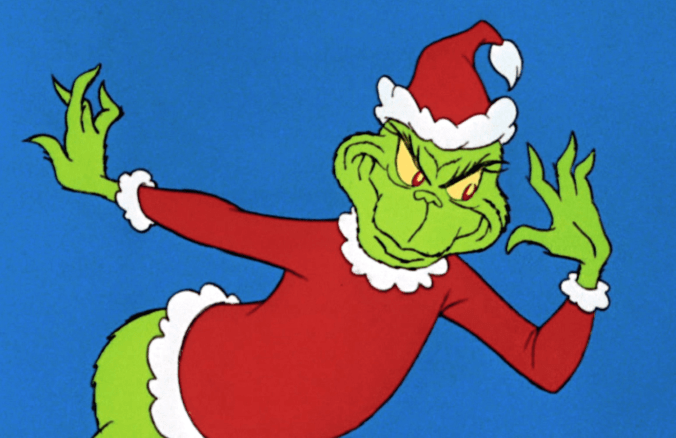
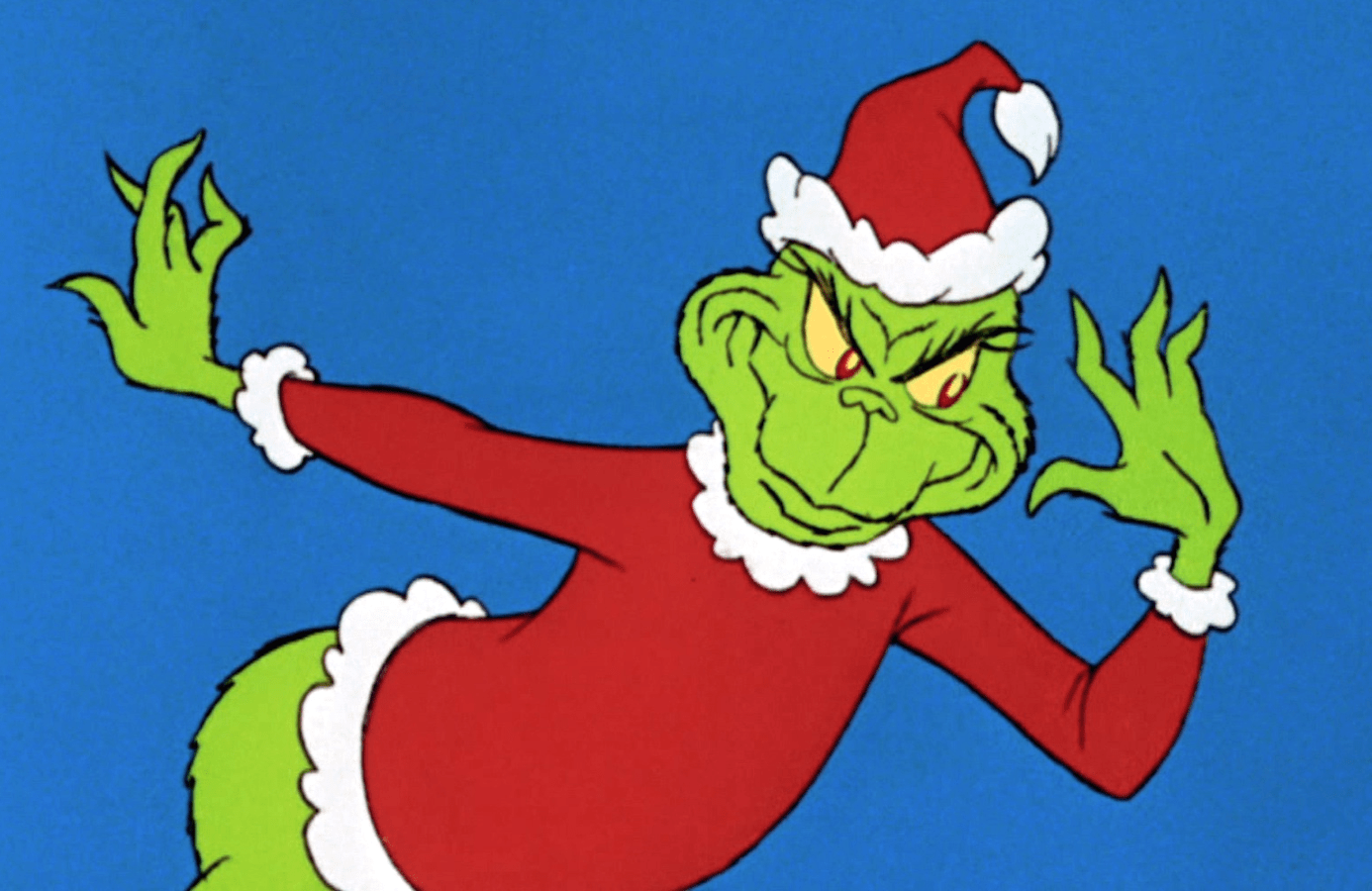
I’m not the Grinch, as even a perfunctory perusal of this blog’s endorsement of the Christmas holiday over the years will show. If you set out to make an ethics movie, though, you had better pay attention to ethics.

Here is P.M. Lawrence’s Comment of the Day on the post, “The 2022 Ethics Alarms Companion To ‘Miracle On 34th Street'”:

***

Continue reading

Merry Christmas! And Here’s The Ethics Alarms 2022 Companion To “Miracle On 34th Street” [Updated And Revised]

2022 Introduction

Our ethical standards and ethics alarms are affected by what we see, hear, like and respond to, and this is why even a wonderful holiday classic like “Miracle on 34th Street” has to be looked at critically. If popular holiday movies inject bad ethics habits and rationalizations into our character, especially at a young age, that is something we should at least be aware of by the tenth or eleventh time we watch one of them. Parents are wise to talk about films and the lessons contained in them with their children. I’m not sure what the right age is to show this movie to children: probably as soon after they express skepticism about Santa Claus as possible.

The production of “Miracle on 34th Street” itself epitomizes the ethical values of competence and integrity. Watch any of the attempts to remake the film over the years; some aren’t bad, but none equal the original, or even justify a remake that places the story in contemporary times.There have been four remakes starring, as Kris Kringle, Thomas Mitchell, Ed Wynn, Sebastian Cabot, and Richard Attenborough. That’s a distinguished crew, to be sure. Mitchell was one of the greatest character actors in Hollywood history. Wynn was nominated for an Academy Award (for “The Diary of Ann Frank”) and Attenborough won one, Best Supporting Actor Award in 1967 for “The Sand Pebbles.” Cabot wasn’t quite in their class, but he was a solid pro, and looked more like Santa Clause than Mitchell,  Wynn, or Richard Attenborough.

None of them, however, were as convincing as Edmund Gwenn. He made many movies—all without a white beard— and had a distinguished career in films and on stage, but even audience members who knew his work had a hard time reminding themselves that he wasn’t Kris Kringle while they watched the movie. I still have a hard time.

 The film is one more example of the special, unappreciated talent of Maureen O’Hara, who never seemed like a movie star, as lovely and strong an on-screen presence as she was. Her ability to anchor great movies while never dominating them is the epitome of the “collaborative art” they always blather about during the Oscars, but which is seldom truly honored.  O’Hara was the female lead in four genuine classics: “The Hunchback of Notre Dame,” “The Quiet Man,” “How Green Was My Valley,” and “Miracle on 34th Street.”

“Miracle on 34th Street” is an ethics movie in part because its artists committed to telling a magical story and charming audiences by working as an ensemble selflessly and  efficiently. John Payne, as the idealistic lawyer in love with Maureen, is never flashy, just completely convincing. One reason may have been that, as he told an interviewer once, the role of Fred Gaily perfectly matched his own ideals and beliefs.  This is the magic of performing talent: they make audiences suspend disbelief because they seem to believe in the story and characters too. The director,  George Seaton (who also directed “Airport,” which is NOT an ethics movie), also wrote the script that won him an Oscar. He cast his movie brilliantly, and also made the correct decision to stick with a matter-of-fact, realistic, unadorned style that keeps the story grounded. There are none of the corny features or inexplicable gaffes in this film that make other holiday-themed classics inherently unbelievable, like the cheesy battlefield sets in “White Christmas” or the heavenly dialogues in “It’s a Wonderful Life.”

I think this is the best Christmas holidays movie for 2022. It is about the importance of believing in good things, hopeful things, even impossible things. Today many of my friends, colleagues and associates are depressed and fearful of the future—their future, the future of the nation, even the future of the planet. (The planet will be fine…the rest? As Samuel L. Jackson says in “Jurassic Park, “Hold on to your butts.”) “Miracle on 34th Street” stands for the idealistic proposition that wonderful things can happen even when they seem impossible, and that life is better when we believe that every day of our lives.

After all, as the Fairy Godmother in the musical version of “Cinderella” sings, “Impossible things are happening every day.”

Chapter 1.

Meet Kris Kringle

The movie tells us right at the start that 1) the charming old man in the white beard can’t possibly be Santa Claus, and 2) that he’s nuts. He tells adults who are paying attention this as soon as he starts complaining to a New York City storekeeper that his window display has the reindeer mixed up: “You’ve got Cupid where Blitzen should be. And Dasher should be on my right-hand side. And another thing…Donner’s antlers have got four points instead of three!”

Let’s see:

  • No Christmas display has ever distinguished between Santa’s reindeer (except for Rudolph), because the individual reindeer have never had any identifying characteristics in reality or myth. Are we to assume that there are name-tags on the models? If so, why wouldn’t Kris be complaining about the features of all of them, not just “Donner’s” antlers?
  • The names of the reindeer, even if there are flying reindeer, were 100% the invention of the poem “A Visit from St. Nicholas,” or “The Night Before Christmas,” originally published in 1823.  No one has ever claimed that the author had some kind of special info on the actual names of the reindeer when he wrote,

    More rapid than eagles his coursers they came,
    And he whistled, and shouted, and called them by name;

    “Now, DASHER! now, DANCER! now, PRANCER and VIXEN!
    On, COMET! on CUPID! on, DUNDER and BLIXEN!

    …and anyway, if he did, those were their names 120 years before the movie takes place. Nobody has ever claimed the reindeer were immortal, either. I suppose Santa Claus, in a nod to the poem’s popularity (it has been called the most famous poem of all time), could have adopted the practice of always having the reindeer named after the poem’s versions, and when one Vixen dropped of old age, the young reindeer that took her place became the new Vixen.

I suppose.

  • A bigger problem is that the movie’s alleged “St. Nicholas” calls the seventh reindeer “Donner.” It gets confusing here. The original St. Nicholas was Greek, the Christian bishop of Myra, now Demre, in Lycia.  Nicholas gave gifts to the poor, in particular presenting three impoverished daughters of a pious Christian with dowries so that they would not have to become prostitutes.  THAT would be neat poem! Saint Nicholas is buried in Italy. He was later claimed as a patron saint of children (also archers, sailors,  pawnbrokers, and the cities of Amsterdam and Moscow). The name “Santa Claus” is derived from the Netherlands version of St. Nick called Sinterklaas,  or “the Christmas man,” de Kerstman in Dutch. This explains “Dunder and Blixen,” meaning thunder and lightning in Dutch, and the movie later confirms Kris’s Dutch origins. (But why does he speak in a British accent?)

Never mind that: why would he call Dunder “Donner”? The “real” Santa wouldn’t. Though the original version of the poem got the names right (we know it’s Blixen and not “Blitzen” because it rhymes with Vixen), various editors, transcribers and  the author himself kept changing the names in subsequent printings. Dunder became “Donder” and eventually “Donner,” which is a meaningless Anglicizing of “Dunder.”

Santa Clause, aka Sinterklaas,wouldn’t be confused: he named the beasts. He’s correcting the shop-keeper while passing along a misnomer?

Baloney.

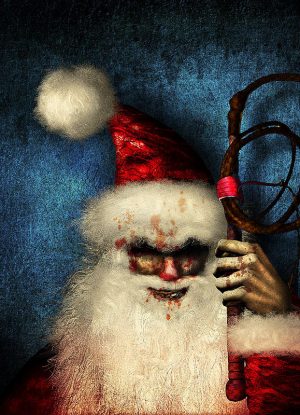
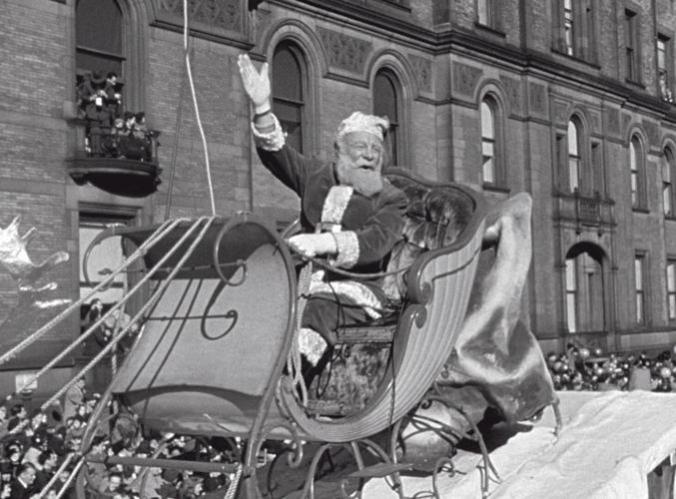
Well, enough of that. The next scene shows Kris encountering the Macy’s Thanksgiving Day Parade Santa pre-parade. He instructs him in the use of his whip on the reindeer! In the German Santa mythology, the jolly old elf used the whip on naughty children, but nowadays, using a whip on either kids or reindeer is pretty much excised from Santa’s methods, and should have been in 1947. It’s an unethical image…

…even though artists have worked hard to confuse us….

No, an ethical Santa Claus wouldn’t use a whip. He also wouldn’t put a poor old guy with a drinking problem out of work during the holidays, but that’s what Kris does next. He smells liquor on the costumed Santa, and shows no mercy:

“Don’t you realize there are thousands of children… lining the streets waiting to see you… children who have been dreaming of this moment for weeks? You’re a disgrace to the tradition of Christmas… and I refuse to have you malign me in this fashion. Disgusting!”

Then he tracks down Doris Walker, who is in charge of the parade, and gets the man fired. That’s just mean; there’s no way around it. I bet a lot of Macy Santas have had a few nips before and during the parade, and so what? How hard is it to say “Ho Ho Ho”?

Kris manages to get Drunk Santa’s job, having single-handedly gotten him sacked, no pun intended.

Why is Kris, if he’s the real Santa Claus, hanging around New York City and moonlighting in the Macy’s parade when the big night is just around the corner? This is no time for a vacation or boondoggles. If he’s really Santa, he’s goofing off, and he has the gall to tell a temporary parade Santa that he’s risking disappointing children!

Kris is not off to a good start. Continue reading

The Complete, Updated Ethics Companion To “Miracle On 34th Street”!

Introduction

The holiday season traditionally kicks off with Macy’s Thanksgiving Day Parade, and so does this iconic holiday movie. As with most holiday movies, but perhaps more than most, the entire concept of digging into the ethics of the plot of “Miracle on 34th Street”  can be criticized as beside the point. Indeed, this ethics analysis of a classic Chritsmas movie received more flack than the previous two (“White Christmas” and “It’s a Wonderful Life” ) combined. The movie, at least the 1947 original, is a classic; I don’t dispute it. It works dramatically and emotionally, it makes people feel good, and it has held up over time. That’s all a Christmas movie is supposed to do, and if it does it without really making sense or avoiding ethics potholes along the way, so what?

I sympathize with this view. However, our ethical standards and ethics alarms are affected by what we see, hear, like and respond to. If popular holiday movies inject bad ethics habits and rationalizations into our character, especially at a young age, that is something we should at least be aware of by the tenth or eleventh time we watch one of them.

One ethical aspect of “Miracle on 34th Street” that must be flagged at the outset is competence. The film is so effortlessly engrossing and convincing that it is easy to forget how easily it could have failed miserably. Actually, it is also easy to remind oneself: just watch any of the attempts to remake the film. There have been four of these, starring, as Kris Kringle, Thomas Mitchell, Ed Wynn, Sebastian Cabot, and Richard Attenborough. That’s a distinguished crew, to be sure. Mitchell was one of the greatest character actors in Hollywood history. Wynn was nominated for an Academy Award (for “The Diary of Ann Frank”) and Attenborough won one, Best Supporting Actor Award in 1967 for “The Sand Pebbles.” Cabot wasn’t quite in their class, but he was a solid pro, and looked more like Santa Clause than Mitchell,  Wynn, or Richard Attenborough.

None of them, however, were as convincing as Edmund Gwenn. He made many movies—all without a white beard— and had a distinguished career in films and on stage, but even audience members who knew his work had a hard time reminding themselves that he wasn’t Kris Kringle while they watched the movie. I still have a hard time.

The rest of the cast is almost as perfect.  The film is one more example of the special, unappreciated talent of Maureen O’Hara, who never seemed like a movie star, as lovely and strong an on-screen presence as she was. Her ability to anchor great movies while never dominating them is the epitome of the “collaborative art” they always blather about during the Oscars, but which is seldom truly honored. There were Katherine Hepburn movies and Bette Davis movies; there are Meryl Streep movies. Nobody ever talked about Maureen O’Hara movies, just great movies that had Maureen O’Hara essential to making them great. O’Hara was the female lead in four genuine classics: “The Hunchback of Notre Dame,” “The Quite Man,” “How Green Was My Valley,” and “Miracle on 34th Street.” She never won any Academy Awards, nor is she ever named when the greatest Hollywood actresses are named, but how many actresses delivered four classics—not classic performances, but classic films?  Hepburn ties Maureen with four: The Philadelphia Story,” “Bringing Up Baby,” “Adams’s Rib” and “The African Queen.”  Streep maaay be credited with one, if you count “Sophie’s Choice”; personally, I wouldn’t.

“Miracle on 34th Street” is an ethics movie in part because its artists committed to telling a magical story and charming audiences by working as an ensemble selflessly and  efficiently. John Payne, as the idealistic lawyer in love with Maureen, is never flashy, just completely convincing. One reason may be that, as he told an interviewer once, the role of Fred Gaily perfectly matched his own ideals and beliefs. Payne never made another memorable movie in his long career; he was the classic bland, B movie leading man. He made Glenn Ford seem exciting. But he was the perfect choice for this story.  Similarly, there have been more impressive child actresses than young Natalie Wood—Margaret O’Brien, to name one; Dakota Fanning, to name another—but none who was better at simultaneously nailing her scenes while never taking a viewer out of the film by making him think, “Wow, she’s so precocious! I wonder if she’s a midget?”

This is the magic of performing talent: they make audiences suspend disbelief because they seem to believe in the story and characters too. The director,  George Seaton (who also directed “Airport”), not only wrote the script (that won him an Oscar, and deservedly so)  and cast his movie brilliantly, he also made the correct decision to stick with a matter-of-fact, realistic, unadorned style that keeps the story grounded. There are none of the features and gaffes in this film that make other holiday-themed movies inherently unbelievable, like the cheesy battlefield sets in “White Christmas” or the heavenly dialogues in “It’s a Wonderful Life.”

This is why the awful colorized version that Ted Turner inflicted on the world—this was one of the first movies to be subjected to Ted’s “improvement”—was such a disaster. The colored version looks fake, because it is. The original black and white version is set in a mundane, grey world like Doris’s—Maureen’s–view of life itself: no excitement, no romance, no fantasy, just cold, unadorned reality. No heaven, no magic, ghosts, nobody breaking into song and sounding like Bing Crosby. There’s no child’s point of view, like in “A Christmas Story.” No, all of us live in the world we are shown in “Miracle on 34th Street.” We would love the magic to be real, but we don’t believe in it any more.

We want it to be, though—and that’s why this movie works.

Chapter 1.

Meet Kris Kringle

The movie tells us right at the start that 1) the charming old man in the white beard can’t possibly be Santa Claus, and 2) that he’s nuts. That is, he tells adults who are paying attention this as soon as he starts complaining to a New York City storekeeper that his window display has the reindeer mixed up: “You’ve got Cupid where Blitzen should be. And Dasher should be on my right-hand side. And another thing…Donner’s antlers have got four points instead of three!”

Let’s see:

  • No Christmas display has ever distinguished between Santa’s reindeer (except for Rudolph), because the individual reindeer have never had any identifying characteristics in reality or myth. Are we to assume that there are name-tags on the models? If so, why wouldn’t Kris be complaining about the features of all of them, not just “Donner’s” antlers?
  • The names of the reindeer, even if there are flying reindeer, were 100% the invention of the poem “A Visit from St. Nicholas,” or “The Night Before Christmas,” originally published in 1823.  No one has ever claimed that the author had some kind of special info on the actual names of the reindeer when he wrote,

    More rapid than eagles his coursers they came,
    And he whistled, and shouted, and called them by name;

    “Now, DASHER! now, DANCER! now, PRANCER and VIXEN!
    On, COMET! on CUPID! on, DUNDER and BLIXEN!

    …and anyway, if he did, those were their names 120 years before the movie takes place. Nobody has ever claimed the reindeer were immortal, either. I suppose Santa Claus, in a nod to the poem’s popularity (it has been called the most famous poem of all time), could have adopted the practice of always having the reindeer named after the poem’s versions, and when one Vixen dropped of old age, the young reindeer that took her place became the new Vixen.

I suppose.

  • A bigger problem is that the movie’s alleged “St. Nicholas” calls the seventh reindeer “Donner.” It gets confusing here. The original St. Nicholas was Greek, the Christian bishop of Myra, now Demre, in Lycia.  Nicholas gave gifts to the poor, in particular presenting three impoverished daughters of a pious Christian with dowries so that they would not have to become prostitutes.  THAT would be neat poem! Saint Nicholas is buried in Italy. He was later claimed as a patron saint of children (also archers, sailors,  pawnbrokers, and the cities of Amsterdam and Moscow). The name “Santa Claus” is derived from the Netherlands version of St. Nick called Sinterklaas,  or “the Christmas man,” de Kerstman in Dutch. This explains “Dunder and Blixen,” meaning thunder and lightning in Dutch, and the movie later confirms Kris’s Dutch origins. (But why does he speak in a British accent?)

Never mind that: why would he call Dunder “Donner”? The “real” Santa wouldn’t. Though the original version of the poem got the names right (we know it’s Blixen and not “Blitzen” because it rhymes with Vixen), various editors, transcribers and  the author himself kept changing the names in subsequent printings. Dunder became “Donder” and eventually “Donner,” which is a meaningless Anglicizing of “Dunder.”

Santa Clause, aka Sinterklaas,wouldn’t be confused: he named the beasts. He’s correcting the shop-keeper while passing along a misnomer?

Baloney.

Well, enough of that. The next scene shows Kris encountering the Macy’s Thanksgiving Day Parade Santa pre-parade. He instructs him in the use of his whip on the reindeer! In the German Santa mythology, the jolly old elf used the whip on naughty children, but nowadays, using a whip on either kids or reindeer is pretty much excised from Santa’s methods, and should have been in 1947. It’s an unethical image…

…even though artists have worked hard to confuse us….

No, an ethical Santa Claus wouldn’t use a whip. He also wouldn’t put a poor old guy with a drinking problem out of work during the holidays, but that’s what Kris does next. He smells liquor on the costumed Santa, and shows no mercy:

“Don’t you realize there are thousands of children… lining the streets waiting to see you… children who have been dreaming of this moment for weeks? You’re a disgrace to the tradition of Christmas… and I refuse to have you malign me in this fashion. Disgusting!”

Then he tracks down Doris Walker, who is in charge of the parade, and gets the man fired. That’s just mean; there’s no way around it. I bet a lot of Macy Santas have had a few nips before and during the parade, and so what? How hard is it to say “Ho Ho Ho”?

Kris manages to get Drunk Santa’s job, having single-handedly gotten him sacked, no pun intended.

Why is Kris, if he’s the real Santa Claus, hanging around New York City and moonlighting in the Macy’s parade when the big night is just around the corner? This is no time for a vacation or boondoggles. If he’s really Santa, he’s goofing off, and he has the gall to tell a temporary parade Santa that he’s risking disappointing children!

Kris is not off to a good start. Continue reading

Merry Christmas, Everyone! And Here Is the Final Chapter of “Miracle On 34th Street,”An Ethics Companion, As Kris Kringle Gets His Day In Court [Updated]

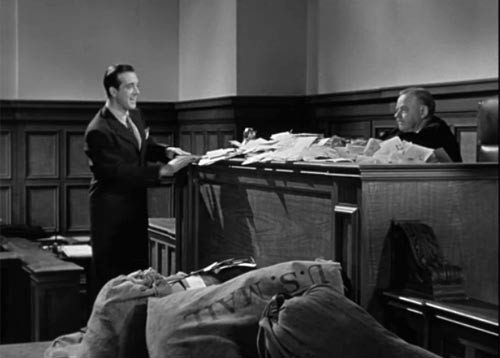
It could be argued that the hearing (it’s not a trial) that serves as the dramatic climax to “Miracle on 34th Street” is the most memorable courtroom scene in movie history. That tells us something, though I’m not sure what. A more legally and ethically absurd spectacle would be difficult to imagine.

When we last saw Kris Kringle—if that indeed is his name—he was preparing to go to a hearing in which his sanity would be determined by a judge. (Insert Marx Brothers “Sanity Clause” joke here.) Lawyer Fred Gailey actually quits his law firm to take on the case, which he is handling pro bono. The hearing will he presided over by a judge played by Gene Lockhart, who has impeccable Christmas movie credentials, having played Bob Cratchit in one of the adaptations of “A Christmas Carol.”

The logical, legal and ethical aspects of the story go off the rails quickly, never to return. Mr. Macy orders Sawyer to have the case dropped, which makes no sense: if Sawyer were suing Kris for assault and battery, of if Macy’s had pressed criminal charges, Macy would have some say. But this is the state of New York saying that Kris is a threat to himself and others because he’s deluded. It’s a state matter now.

Sawyer goes to Fred and tries to get him to drop the case, saying “I represent Mr. Macy.” What, he’s a lawyer now? Not only does Macy have no role in this matter, Fred’s defending Kris, not prosecuting the case.

When Sawyer mentions that Macy’s wants to avoid publicity, Fred sees a little light bulb go on in his skull. “Very interesting,” he says out loud. “Publicity. Hmm. That’s not a bad idea! If I’m going to win this case… I’ll have to have plenty of public opinion!” Except that’s unethical. From New York’s Code of Professional Conduct, which wasn’t in force when the film was made but the principles were:

DR 7-107 [1200.38] Trial Publicity.
A. A lawyer participating in or associated with a criminal or civil matter, or associated in a law firm or government agency with a lawyer participating in or associated with a criminal or civil matter, shall not make an extrajudicial statement that a reasonable person would expect to be disseminated by means of public communication if the lawyer knows or reasonably should know that it will have a substantial likelihood of materially prejudicing an adjudicative proceeding in that matter….

Saying that one’s client will need publicity to influence public opinion is a clear statement of intent to violate the spirit if not the letter of the ethics rules. Fred breaches the rules again when he goes to see the judge to persuade him not to sign Kris’s commitment papers. In an adversary proceeding, a lawyer must not meet with a judge without opposing counsel present; that an ex parte communication, and strictly forbidden. Of course, it’s also unethical for the judge to let him do it.

That’s not all in the realm of judicial ethics. After suggesting that the fact that Kris says he’s Santa Claus makes his insanity a forgone conclusion, Judge Harper, who is apparently an elected judge (a situation I regard as a “pre-unethical condition”) is visited by his campaign manager, Charlie, an old pol played by none other than William Frawley, now immortal for co-starring in “I Love Lucy” as Fred Mertz. He suggest that Harper withdraw from the case:

“This Kringle case is dynamite. Let some judge handle it that isn’t coming up for reelection..I’m no legal brain trust. I don’t know a habeas from a corpus. But I do know politics. That’s my racket. I got you elected, didn’t I? And I’m gonna try to get you reelected….You’re a Pontius Pilate the minute you start!”

Then the judge’s grandchildren make a convenient entrance, and snub him because he’s being mean to Santa. Later, when the hearing somehow is turned into a referendum on whether Santa is real, Charlie returns with a dire warning:

Continue reading

“Miracle On 34th Street,”An Ethics Companion,Chapter 5: Boy, This Guy Sure Doesn’t ACT Like He’s Santa!

Bellevue ride

(The Introduction is here.; Chapter I is here.;Chapter 2 is here; Chapter 3 is here; Chapter 4 is here.)

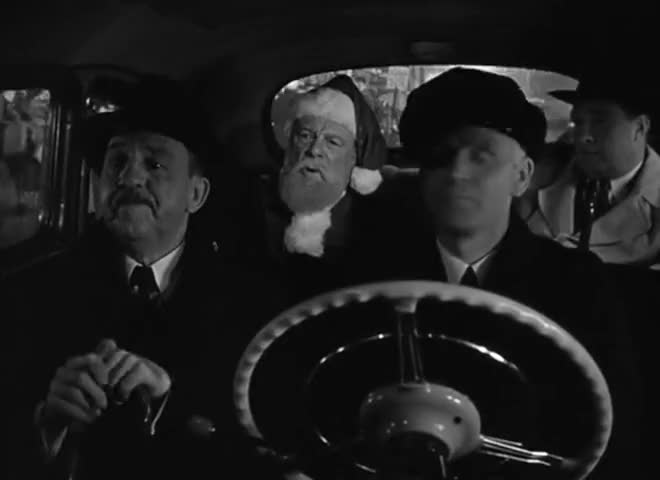
Everything so far has been laying the foundation for the climactic and justly famous courtroom scene. But before that can happen, there needs to be a pretext for getting the story into court. Of course, the fact that Kris committed assault and battery on Mr. Sawyer would normally be enough to get him there on a criminal charge, but that wouldn’t have anything to do with Santa Claus, so we have a lot of dubious plot machinations that make no sense at all. in rapid succession—got to get to that courtroom scene!—we get…

Sawyer’s Perfidy

First, Sawyer acts like he’s been grievously wounded so he can credibly insist that Kris be committed. He’s a liar as well as a weasel. He’s also not very bright. He knows Macy’s has been using Kris a public relations cornucopia. He has to know that in any feud with a store Santa Claus who has made money for Macy’s, he’ll lose. Sawyer’s antipathy towards Kris to his own likely detriment makes no sense at all.

Doris’s Failure

Doris refuses to have anything to do with sending Kris to Bellevue, the NYC mental hospital, to be examined. She is, however, unlike Sawyer, responsible for Kris, and has said as much. Her duty is to Macy’s, and her employee attacked someone. This is where conflicts of interest get you in the workplace, and she should have seen this coming. Her job is to fix the problem, and instead she acts helpless. I find this to be nascent sexism in the film: “just like a woman,” Doris is being sentimental when she needs to be practical and decisive.

Actress Maureen O’Hara, a notorious tough proto-feminist, must have been seething.

Continue reading

Comment Of The Day: “’Miracle On 34th Street,’An Ethics Companion,Chapter 3: Kris Joins The Macy’s Family!” And An Explanatory Note On The Holiday Movie Ethics Guides

Grinch

As promised, I am finally completing the “’Miracle On 34th Street’ Ethics Companion,” which I began a year ago and took so long to complete that I ran out of 2019 holidays. As a refresher, I am also, in this post, presenting a Comment of the Day on Chapter Three from all the way back to January 1 of 2020, an excellent analysis of a feature of the story that I missed, by A.M. Golden.

Yesterday’s latest installment attracted some flack from commenters. “Wow, what a Christmas downer, Jack. Channeling Scrooge or the Grinch?” wrote one. “I suspect we could poke holes in any film with respect to morality and ethics if we wanted to.” On the last observation,

  • I want to, because it’s my job
  • Movies are excellent for tuning up ethics alarms
  • Christmas movies, which are seen by children, have a special obligation to teach the right lessons, both prominently and subliminally, and
  • No, in fact you can’t poke holes in any film, at least not fairly.

I suspect this will be the last of the traditional holiday film fare to get the ethics work-over, along with “It’s A Wonderful Life” and “White Christmas,” which will have the annual Christmas season re-posting with updated text up today. The three classics were chosen for different reasons. IAWL was designed as an ethics movie with very important and profound ethics messages, and the more one examines it, the more there is to think about. Nonetheless, its cheats on the way to its most important messages are pretty flagrant—justified, but flagrant—and deserve to be flagged. “White Christmas” is different: it’s a musical, for one thing, and musicals never make sense (why are these people singing?), but it also is story about ethics, so it is fair to examine it on that basis. Moreover, one doesn’t need to poke holes in it, the story is full of ethics holes. None of them bothered me before I became a full time ethicist: Bing Crosby and Danny Kaye are two of my favorite entertainers of all time, and the ending still moistens my eye. But the movie is almost impossible to watch now, with my ethics alarms on, and even with my brain on. I had an obligation to dissect it. As for “Miracle,” I accept it as a classic, but the story was constructed to reach the climactic trial gimmick, and scant attention was given to consistency or playing fair. Moreover, I am a legal ethics expert, after all. You can’t honestly expect me not to analyze a trial like that.

You will never see me try to “poke holes” in the greatest of all Christmas stories, and arguably the best ethics story period, “A Christmas Carol,” because it is pretty close to perfect. (AND I now see that the link to the text on the home page has gone bad; I’ll be fixing it ASAP!). “A Christmas Story” is off my list because it is seen through a child’s eyes, and ethics has nothing to do with it. Critiquing “Holiday Inn” would be like shooting ethics eels in a barrel, but it’s just not worth the trouble.

There are also holiday films and ethics films that are written superbly, and have few if any ethics holes to find. Among these are “Toy Story,” “Finding Nemo” (most of the Pixar movies, in fact), “Mary Poppins,” “The Sound of Music,” “Babe,” and even “Groundhog Day.” I’m not the Grinch, but if you set out to make an ethics movie, you had better pay attention to ethics.

Now here almost a year late, is A.M. Golden’s Comment of the Day on the post, “’Miracle On 34th Street,’An Ethics Companion, Continued…Chapter 3: Kris Joins The Macy’s Family!”

Continue reading

“Miracle On 34th Street,”An Ethics Companion, Continued…Chapter 3: Kris Joins The Macy’s Family! [REVISED and CORRECTED!]

(The Introduction is here.; Chapter I is here.;Chapter 2 is here.)

 Kris takes Santa’s throne

Kris’s rave reviews as Santa in the Thanksgiving Day Parade are so good,  Doris hires him play Santa at Macy’s flagship New York City store on 34th Street. He agrees, which is strange, when you think about how busy he should be at this time of year, supervising the elves and all. If he really is Santa, or even if he thinks he is, taking the job in New York is irresponsible.

His supervisor gives him a list of toys to “push”—toys that are overstocked. “Now, you’ll find that a great many children will be undecided as to what they want for Christmas. When that happens, you suggest one of these items,” Kris is told. “You understand?”

Kris says he understands, but later makes it clear in his comments to a co-worker, that he has no intention of “pushing” the merchandise.:

“Imagine…making a child take something it doesn’t want…just because he bought too many of the wrong toys.That’s what I’ve been fighting against for years!”

That being the case, there is exactly one thing Kris needs to do. He needs to quit. What he cannot do, and must not do, and has a clear ethical obligation not to do, is to accept a job when he has no intention of doing what the job requires. This is a sales job. If Kris doesn’t want to sell, then he will be accepting a pay check under false pretenses. This isn’t noble conduct, as the film would have you believe. It’s unethical conduct. It’s wrong.

Kris needs to put himself on his own naughty list. Continue reading