The Maryland Supreme Court Clearly Doesn’t Believe In Signature Significance

PeepingTom

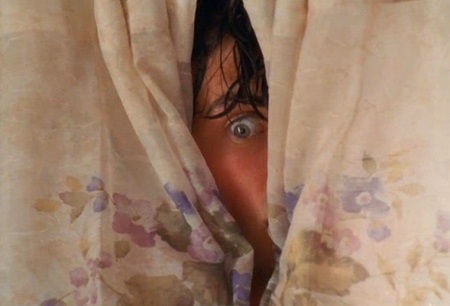
But I do.

The Maryland Supreme Court just reinstated a Clayton W. Boulware, a Montgomery County attorney who had been suspended for six months after being convicted of covertly filming up the skirts of two women, one of whom was a minor, in a public place.  Boulware was suspended in September for six months with a three-year probationary period to follow the suspension.

In his defense, Boulware blamed his upskirt peeping on an “open relationship” with a younger woman, introducing him to a “swinging lifestyle” that included filming themselves having sex. But that relationship is over now, the court notes, so, hey, no problem.

The bar disciplinary board noted in its report to the court that it believed  a more lenient approach to punishing Boulware was called for because of those “mitigating circumstances.”  Lawyers are, as everyone knows, putty in the hands of swinging young women, and this always results in them shooting up other women’s skirts.

I feel like I am losing my mind. Continue reading

Post-Sandy Hook No-Tolerance Encore: Another Finger-Gun Massacre

"Level One or Level Two gun? Wait...I'm sorry! It's just a finger!"

“Level One or Level Two gun? Wait…I’m sorry! It’s just a finger!”

Should Ethics Alarms post on substantially the same ethics stories every time they occur? The news that an Ohio fifth grader has been suspended from school for three days for the offense of making an imaginary gun out of his fingers is just such a repeat. I wrote about a similar no-tolerance episode in Montgomery County a year ago, here and here. What is left to say, and why say it again?

I think you have to say it again, in this case at least, because it didn’t sink in the first time. In Montgomery County, Maryland, the school system was forced to revoke the suspension and even apologized to the boy as a result of the ridicule that showered down on the hapless administrators who inflicted the absurd punishment. Officials at Devonshire Alternative Elementary School, where ten-year-old Nathan Entingh wielded his deadly digits “execution-style,” couldn’t have missed the Maryland fiasco, yet they failed to absorb its lesson, which seems extremely obvious to the reasonable, the fair and the responsible: “This is stupid, cruel and abusive treatment. Don’t do it.”

Why didn’t they heed the lesson? I think one reason may be that such hysterical policies are now less about hysteria than they are about thoughtful anti-gun indoctrination. Continue reading

Public School Ethics: The Assassin Game

"All right, class, Answer this: in the term 'assassin game.' which word describes the actual nature of what is being described? No seriously, help me here, because I can't figure it out..."

“All right, class, Answer this: in the term ‘assassin game.’ which word describes the actual nature of what is being described? No seriously, help me here, because I can’t figure it out…”

Montgomery  County Maryland’s Blair High School is embroiled in a controversy over the popularity of a student game known as “Assassin,” a role playing elimination game where players “kill” competitors using fake weapons, or, as in the Blair version of the game, their fingers. The game in various forms—it is also known as Gotcha, KAOS (Killing as organized sport), Juggernaut, Battle Royal, Paranoia, Killer, Elimination, or Circle of Death—has been around for decades. Proof: I played it in college, and had a blast. If you like that sort of thing, the game is fun, and whether you like it or not, it is harmless.

Ah, but some kinds of fun are no longer acceptable in large swathes of post-Newtown, thought-controlling, anti-gun, hysteric-dominated America, especially liberal enclaves like the Maryland suburbs. As a result, you get sentiments  like these:

  •   “I don’t think a game called Assassin is appropriate in schools. I want kids to be social with each other, but not in a ‘Gotcha’ . . . sort of way. It’s just inappropriate in our society.”—Blair Principal Renay Johnson

What’s “inappropriate?” Fantasy? Role playing games? Games that evoke entertainment and fiction portraying conflict and violence? Fun? Thoughts and attitudes that you don’t agree with or approve of? Continue reading

Update: Six-Year-Old Deadly Finger-Shooter Exonerated! (But It Doesn’t Matter)


Montgomery County school officials really think this picture is relevant to this story!

Montgomery County school officials really think this picture is relevant to this story!

Responding to community and media pressure, not to mention internet, radio talk show and cable TV ridicule, school officials in Montgomery County rescinded the suspension of a 6-year-old Silver Spring boy who they said had endangered the school when he pointed his finger like a gun.  I think the harm is done, and the fact of the suspension is signature significance that the administrators lack judgment, reason and proportion.

We learn some new facts in the Post story. The boy had apparently been reprimanded for using objects as imaginary guns in class, so there was an element of legitimate discipline in his punishment. There is some controversy over whether he may have said “Pow!” when he pointed his finger. If anyone thinks that should make any difference whatsoever, please sit in the back of the class with the silly Montgomery County administrators. Sure…saying “Pow!” makes that finger-gun even more realistic.

Idiots. Continue reading

The Montgomery County Finger-Gun Massacre of 2013: Who Didn’t See THIS Coming?

And speaking of the Curmies…

If finger guns are made illegal, only those with fingers will have guns. No, wait..if finger's that can be be made into guns are illegal, only criminals will have fingers. No, that can't be right...

If finger guns are made illegal, only those with fingers will have guns. No, wait..if fingers that can be made into guns are illegal, only criminals will have fingers. No, that can’t be right…Stop me when we made our kids dumb enough…

Take post-Sandy Hook hysteria, add school no-tolerance idiocy, mix well in one of the most knee-jerk liberal communities in the nation, and what do you get?

A six-year-old in Maryland’s Montgomery County suspended from school for making a finger and thumb gun gesture, of course.

The NBC story concentrates on  “whether the boy understands the implications of the gesture.” What implications of the gesture? That he is about to shoot bullets out of his finger? That he intends to kill someone with all the firepower an unarmed 6-year-old can muster? That he is making a mimed reference to a Connecticut school massacre he probably doesn’t know a thing about? Why should it matter what his “intent is? It’s a hand gesture! It isn’t vulgar or threatening except to silly phobics in the school system.

This is, in order of importance,

  1. Child abuse. This young boy is being treated like a wrongdoer because the adults around him are acting like babies. Will they suspend him for making really scary faces next? Biting his pizza slice into threatening shapes?
  2. Proof of incompetence on the part of the school administrators. Why incompetence? They are stupid, that’s why. Only certifiably stupid people would think it is fair, sensible or reasonable to punish a First-grader for making a gesture kids have been making on playgrounds for hundreds of years, without a single casualty.
  3. Why many people lose respect for anti-gun zealots early in life. They forfeit all respect by acting like ninnies.

The dismaying aspect of this is ridiculous episode is that it has happened before in other schools, and clearly the message wasn’t sent clearly enough to the previous offenders–that is, the fools who victimized innocent children for miming, drawing or otherwise suggesting guns—that this kind of conduct is a career-ender. It should be; it has to be. Such irrational fearfulness, bad judgment, panic, disregard for the sensibilities of the young, lack of proportion and brain dysfunction forfeits all right to trust, and such fools must not be allowed to have power over young bodies and minds.

UPDATE: The school rescinded the suspension.
The Eventual Firing of Daniel Picca: Why Our Children Are Not Safe In Public School

Wait…is that a CHILD’S hand?

Today, in a scathing editorial, the Washington Post related the shocking story of the firing of Daniel Picca, a Montgomery County, Maryland  elementary school teacher who was suspected by school officials of having inappropriate relations with male students since at least 1995. This was, said the Post, ” a stinging indictment of a school bureaucracy that for almost two decades believed it had a problem but reacted with a seemingly endless flow of ineffective warnings, letters, reprimands and — most appalling — reassignments of the teacher to other schools and other students.” Montgomery County, it should be noted, boasts of one of the finest public school systems in the nation….or so we have been told.

Picca, as was detailed by a hearing examiner  in 2010 and by an administrative law judge this year, had been warned for 17 years about his conduct with young boys, including inappropriate touching, having students sit on his lap, “wrestling” with the boys and inviting some to an extracurricular “Strong Boys Club” of his own invention, where he encouraged male students to remove their shirts, according to student testimony. In 1995, county child protective services  said that Picca was responsible for “indicated child abuse.”The school system now says it missed this, somehow—not that it didn’t have plenty of evidence already. Continue reading

A Last Word on the Kevin Coffay Sentence

Keven Coffay, the teen who drove drunk, killed three of his friends as a result and fled the wreck as they lay trapped and dying, has prevailed in his effort to get the original 20 year prison sentence (for involuntary manslaughter) reduced. Now he may be released as early as next spring, on parole from his new, lenient, 8 year sentence. I won’t re-iterate my views on Coffay’s case, which are already here and here. I will make this additional observation.

In his column today, George Will discusses the science behind the growing consensus that life sentences without the chance of parole qualify as “cruel and unusual punishment” prohibited by the 8th Amendment. I don’t disagree with his conclusion, nor do I doubt, as the father of a teen-age son, that the brain chemistry of teens dictate special calculations and analysis when trying to decide on what is just punishment for crimes arising from the recklessness and poor judgment of adolescents as opposed to adults. Continue reading

The Kevin Coffay Tragedy Revisited: Not Vengeance…Survival

Kevin Coffay took the wheel with four of his teenaged friends as passengers. All four were drunk, and by the end of the evening only Coffay and another were alive, three young people having perished when Coffay’s intoxicated driving caused the car to go airborn into a bloody crash. He was convicted by a Montgomery County (Maryland) court of involuntary manslaughter in January and sentenced to 20 years, not in small part because he had fled the scene of the accident, running and hiding in the woods as his friends bled and died in the wreck.

Today he is in court arguing, through his lawyers, that his sentence is too long. I didn’t think it was too long when I first wrote about the tragedy in January, but after reading his arguments and those of his defenders, I have come to believe that the sentence may not be long enough. Continue reading

Why “He’s Suffered Enough” Is Not Enough

Not enough.

“He’s suffered enough” is one of the more popular and effective rationalizations, usually put into use in defense of white collar criminals and the likes of Roman Polanski, wealthy or once-respectable criminals for whom remorse and humiliation are deemed to be as devastating as incarceration.  Yet it is still a rationalization—a deceptive representation of the truth—and shows a misunderstanding of what official punishment needs to accomplish.

A sad drama has played out in a Montgomery County Maryland court, where twenty-year old Kevin Coffay was sentenced to twenty years in prison for fleeing the scene of a May auto accident that he had caused by being drunk behind the wheel, as Spencer Datt, 18; John Hoover, 20; and Haeley McGuire, 18, remained in the wreck after Coffay fled.  All three died.

Coffay was stunned by the sentence, and news reports say that the case has torn the community apart, with the families of the victims seeking retribution, and supporters of Coffay pleading for compassion and mercy. Their argument, as it always is in such tragedies, is that “he’s suffered enough”. This misses the point of the trial, the sentence, and the societal ritual that such events demand. Continue reading

Nefredo v. Montgomery County: Ethical Treatment for Fortune-tellers

Or should that be “ethical treatment for charlatans”?

In the case of Nefredo v. Montgomery County, the Maryland Court of Appeals ruled that it was an infringement of the Right of Free Speech for the Montgomery County, Md., to deny a business license to a fortune-teller on the basis of a County ordinance that declared charging a fee for fortune-telling services was a crime. The ordinance states:

“Every person who shall demand or accept any remuneration or gratuity for forecasting or foretelling or for
pretending to forecast or foretell the future by cards, palm reading or any other scheme, practice or device shall be subject to punishment for a class B violation as set forth in section 1-19 of chapter 1 of the County Code; and in any warrant for a violation of the above provisions, it shall be sufficient to allege that the defendant forecast or foretold or pretended to forecast or foretell the future by a certain scheme, practice or device
without setting forth the particular scheme, practice or device employed…” Continue reading