Morning Ethics Warm-up: 8/19/17—-The St. Louis Rally Cat Edition

Good morning!

1. The still unfinished saga of the St. Louis Rally Cat illustrates nicely how the most innocent-seeming events can spin out of control when the participants don’t heed their ethics alarms, or lack the instruction manual to operate them competently. As an aside, this baseball season has yielded a bumper crop of ethics controversies, the most I have ever seen, and it is far from over. In general, Major League Baseball’s participants, including its sportswriters,  are not very good at ethics, and the simple-minded virtue-signaling in the Tom Yawkey controversy is a recent, and embarrassing example. As an aside to an aside, I used to provide baseball ethics commentary at little or no cost to a well-regarded stat-head website, until they made it clear that they neither appreciated the importance of ethics in the sport, nor were capable of practicing it. Too bad. Baseball ethics is a lot more valuable than knowing the exit velocity and launch angle of a home run.

But I digress. The Rally Cat…and let’s count the ethics breaches:

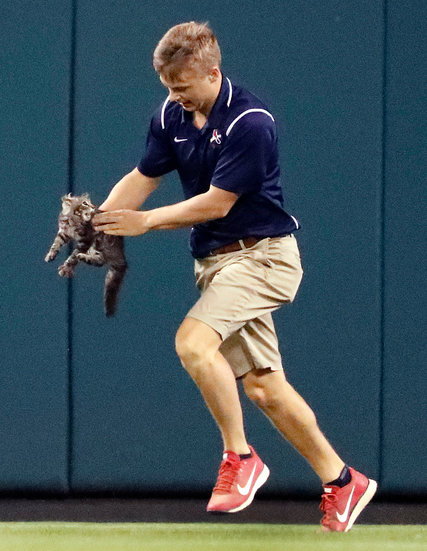
Last week, the St. Louis Cardinals, fighting to overtake the Cubs in the closely contested and mediocre National League Central, were trying to rally back from looming defeat. The bases were loaded with Cardinals at Busch Stadium when a juvenile cat raced onto the field and halted play. A groundskeeper captured the cat, which mauled him as he carried it off the field. This was shown on the video scoreboard, provoking laughter and applause from the crowd.

As soon as play finally resumed, Cardinals catcher Yadier Molina hit a grand slam, and the Cardinals won as a result. Baseball players are superstitious, as the game is an orgy of moral luck, and such incidents typically create unlikely and illogical totems. In Los Angeles, there is a video of a monkey going nuts, the Angels’ “Rally Monkey.” In Boston, it is the old Neil Diamond ear-worm “Sweet Caroline.” Last year, the Kansas City Royals had a good luck praying mantis-–I’m not making this up—dubbed “The Rally Mantis.”  Back in the politically incorrect Twenties, the New York Giants had a mentally-challenged man travel with club as a mascot, because the team won the day he arrived and told Manager John McGraw that he was a great pitcher. For laughs, McGraw told the poor man that he was starting the game, and he actually warmed up on the sidelines as the players guffawed. He didn’t pitch, but the Giants won, so McGraw had him warm up before every game, as the team went on a winning streak.

So, naturally, the St. Louis cat was given the name Rally Cat, and responsibility for the Cardinal’s fate this season was placed squarely on its fluffy shoulders.

Now came the ethics botches:

Ethics breach #1. Lucas Hackmann, the cat-grabbing groundskeeper, let go of the feline talisman to get his bites attended to. Foul. He works for a baseball club; he is obligated to be aware of the culture he serves. He had to know, or should have known, that the cat would be a media star, and that the team, if it won the game, would want to employ him, or her. It. He also should know that cats do not stay, like dogs. The cat ran away, endangering the Cardinals’ season/

Incompetence.

Ethics breach #2. The Rally Cat was picked up by a fan, Korie Harris, and she left the park with it. Cardinals security questioned her, and she said it was her cat. Again,  Incompetence. The cat now had potential value to the security personnel’s employers. Why did a fan have a cat? You can’t bring a cat into the ballpark.

Ethics breach #3 Of course, it wasn’t her cat.  She was lying.  Dishonesty.

Ethics breach #4, 5, 6 and 7. Then Lying Korie (I bet that’s what the President calls her) also lost the cat. Some animal lover she is. If she was going to take custody of the animal, she had accepted responsibility for its welfare. She could have adopted it. She could have advertised to find its owner. She could have returned it to the Cardinals. She could have given it to a shelter—anyone but PETA, which would have probably killed it. No, she just let it go. Feral cats live a fraction of the average life of a house cat. Four fouls: Lack of responsibility, incompetence, dishonesty, and lack of caring.

Ethics breach #8 The Cardinals released a statement hoping that the cat would be found so the team could “properly care for it.” Right. A traveling baseball team is the perfect place for a cat. The Kansas City Royals killed the Rally Mantis, and quietly replaced him, thinking nobody, including the Baseball Gods, would notice. Ha! They missed the play-offs.

Again, this is dishonesty. The Cardinals don’t care about cats; if the team did, it would be donating money to animal shelters. It cares about good luck charms that can be used to promote the team..

 Ethics breach #9 The cat was found and taken into custody by St. Louis Cat Outreach, a nonprofit organization. The Cardinals claimed ownership. “The St. Louis Feral Cat Outreach organization has assured us they will be returning our cat to us after a mandatory 10-day quarantine period,” Ron Watermon, the team’s vice president for communications, said in an email to The St. Louis Post-Dispatch. “Rally Cat will be cared for by our team, making the Cardinals clubhouse his home,” Watermon said. “Mike (Mike Matheny, the Cardinals manager) and our players are looking forward to loving and caring for him.” Outrageous Dishonesty!  The cat shelter denied the story, posting on its Facebook page: “It was a totally false statement that STLFCO has committed anything to the Cardinals. We have made no decisions about Rally’s long-term placement.” Moreover, anyone who thinks the baseball team was “looking forward to loving and caring for” a cat in the middle of a pennant race will believe anything.

2. That took longer than I expected. I assume you are sufficiently warmed up, though.

Here’s Lucas and the Rally Cat:
____________________________

Pointer and Facts: New York Times
Ethics Hero: The Chicago Cubs Organization

This was a wonderful gesture of kindness and reconciliation. It won’t mean much to those who don’t follow baseball, and that is Reason #478,653,222 why it’s a mistake not to follow baseball.

I’ve written about the Steve Bartman fiasco several times.  I am not in the “Steve Bartman was an innocent victim of circumstance” camp, though he was a victim of moral luck. He was an  incompetent baseball fan, not paying sufficient attention to the game and interfering with it as a direct result. On the other hand, for members of the 2003 Cubs to use him as a scapegoat for their blowing a lead,  the game, and the play-offs, and for Chicago fans to hound him out of town and into hiding, was far worse than his negligence, the most disproportionate and vindictive treatment of a fan in sports history.

Here was my summary of the saga to date before the Cubs finally won the World Series after more than a century of failure:

Bartman, for those of you who have lived in a bank vault since 2003, was the hapless young Chicago Cubs fan who unintentionally interfered with a foul ball that might have been catchable by Cubs outfielder Moises Alou in the decisive game of 2003 National League Championship Series. In a perfect display of the dangers of moral luck, Bartman’s mistake—it didn’t help that he was wearing earphones and watching the ball rather than the action on the field—began a chain of random events  that constituted a complete collapse by Chicago in that very same half-inning, sending the Miami Marlins and not the Cubs, who had seemed comfortably ahead, to the Series. Bartman, who issued a sincere and pitiful apology, was widely vilified and literally run out of town. He then became part of Cubs and baseball lore, one more chapter in the sad saga has been called “the Billy Goat Curse,” the uncanny inability of this team to win it all.

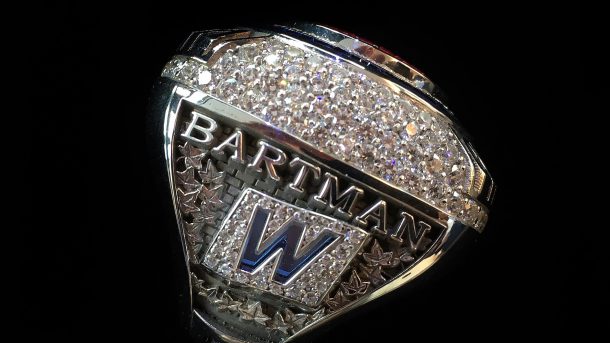
Yesterday the Cubs announced that the team had privately awarded Bartman  an official Chicago Cubs 2016 World Series Championship ring as a special gift from the the Cubs organization. These things contain 214 diamonds at 5.5 karats, three karats of genuine red rubies and 2.5 karats of genuine sapphires, and are worth about $70,000. Even so,  the symbolism is worth far more.

Tom Ricketts, the Cubs owner, issued a statement: Continue reading

Morning Ethics Warm-Up: 7/30/17

Good Morning!

(I’m starting this post just a few minutes before noon, thank to a WiFi outage. I’m sorry.)

1. I finally saw “Passengers,” which most people and critics seemed to hate. I see no obvious inferiority to the over-praised and honored “The Martian” or “Gravity,” especially the latter, which bored me to tears, but never mind: it’s an ethics movie. It is also a moral luck movie, and that drove me crazy. I’ll bet so many viewers (SPOILER ALERT!) saw the film and came out saying, “She had to forgive him, because if he hadn’t awakened her prematurely to keep him company, everyone would have died!”

No, no, no! His (Chris Pratt’s) conduct toward her (that’s Jennifer Lawrence, and anyone who wrongs Jennifer Lawrence deserves the torments of Hell) was just as bad–and it was horriblewhether it turned out well by chance or not. Subsequent discoveries or unpredictable events cannot make an unethical act retroactively ethical.

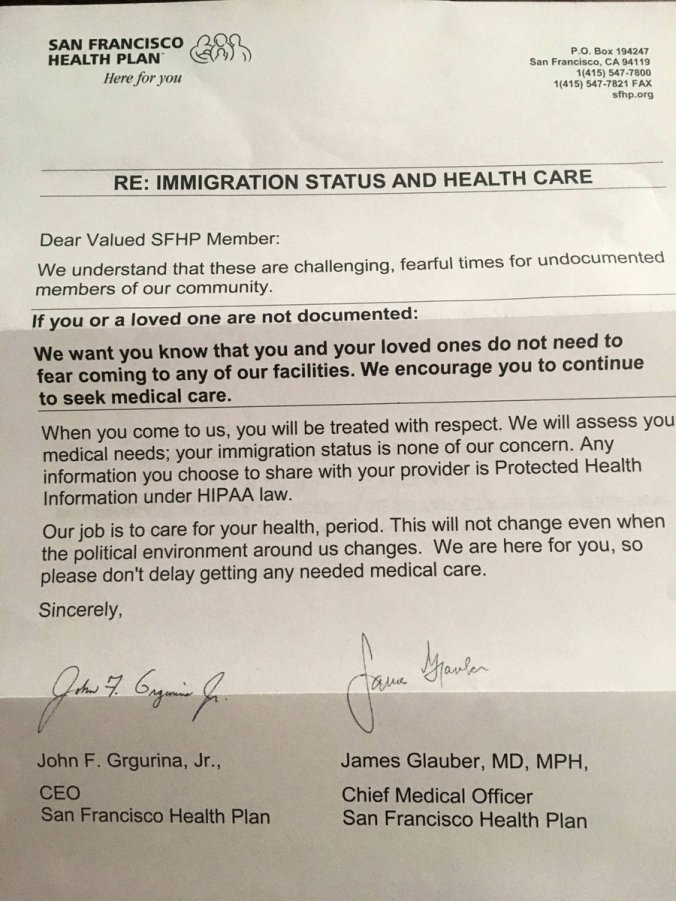
2. San Francisco’s Medicaid program sends illegal immigrants this letter:

When the anti-Trump deranged argue that the President is “crazy,” my stock answer is going to be that nothing he has said or done is as “crazy” as the position that it is right and just to officially encourage foreign citizens to breach our borders, defy our sovereignty and break our laws….and the people trying to use the 25th Amendment to execute a coup are exactly the people who think the letter above is compassionate and right. (Believing that a coup is in anyone’s interest is also demonstrably nutsy-cuckoo, but that’s another issue.)

3. I am really going to be disappointed if NPR and PBS don’t get zero-ed out of the budget. I may be stuck with biased and incompetent journalism, but I shouldn’t have to pay for it.

In a segment of NPR’s “All Things Considered” this week (Yes, I generally think the show is excellent, but that’s not the point) about the “restorative justice” approach to campus sexual assault, reporter Tovia Smith quoted Columbia University graduate Emma Sulkowiczs, aka “Mattress Girl,” as a “survivor” of rape.

She’s not a survivor; she was a harasser, and Columbia just paid a financial settlement to her victim for permitting her to proclaim him as a rapist when the evidence didn’t back the claim. Columbia doesn’t believe Sulkowiczs was raped, and her accusation has been thoroughly discredited. Why in the world would NPR choose this cruel and discredited woman to profile while discussing actual campus sexual assault, and how could it be ethical journalism to still refer to her as a rape survivor?

Smith’s tweeted response to criticism was as damning as the choice of “Mattress Girl” itself:

“Sulkowicz considers herself a survivor & we ID her as such. We’ve clarified that their school found the student she accused ‘not responsible.” Continue reading

The Unappreciated Home Depot Hero

It’s more exciting than you think!

Ethics Alarms has dealt with this issue multiple times: an employee violates policy by intervening to prevent a crime or serious injury, and is fired for it.  In 2009, a bank teller named Jim Nicholson turned Batman and foiled a bank robbery, then was fired.. A would-be robber had pushed a black backpack across the bank counter to Nicholson and demanded money. The teller threw the bag to the floor, lunged toward the man and demanded to see a weapon. The robber sprinted for the door with Nicholson in pursuit. Eventually Bat-Teller  knocked the man  to the ground and held him until the police arrived.

The bank had to fire him. The episode could have gone wrong many ways, some resulting in bank customers and employees being injured or killed. Law enforcement repeatedly cautions against such conduct, and the bank’s policies were clear.

In other cases, no-tolerance makes no sense, as no-tolerance often does. In 2012, Ryan Young, then working in the meat department of a Safeway grocery store in Del Rey Oaks, California, witnessed a man beating a pregnant woman, apparently his girlfriend. Young told the man to stop, but when he continued with his assault, shoving and kicking her, Young jumped over his counter, pushed the thug away, and ended the attack.

Safeway fired him. So what would it have had Young do, stand there and wag his finger? This crossed into duty to rescue territory. Young did the right thing, and rather than blindly following a policy that didn’t fit the facts, Safeway should have realized that an exception was called for.. (Eventually public opinion and bad publicity forced Safeway to re-hire the hero). A similar scenario involved a lifeguard who violated his employer’s policy by saving a drowning man off a beach adjacent to the property where he was stationed. Jeff Ellis Management, an Orlando, Florida-based company, fired  21-year-old Tomas Lopez for daring to save a life pro bono, and was similarly pilloried by public opinion. Two lifeguards quit in support of Lopez, and he was also eventually offered his job back. Lopez told Jeff Ellis Management to get bent, or words to that effect. Continue reading

Observations On The Trump Jr. “Collusion” Attempt [UPDATED]

1.  Preet Bharara, the ex-U.S. attorney fired by the Trump Administration, tweets…

Quick reminder: something doesn’t have to be illegal for it to be foolish, wrong and un-American.

True. When Donald Trump, Jr. was informed that a Russian lawyer wanted to meet with him to pass along damaging information about Hillary Clinton, he should have gone to the FBI immediately, because this could have been indicative of a national threat. Instead he said “Whoopie!” or words to that effect. Moron.

But we knew that.

*Notice of Correction: In the original post, I erroneously stated that Bharara had joined Mueller’s team investigating Russian interference with the election. That was incorrect. I apologize. I was confused by this headline from the Washington Examiner: Special counselor adds former Preet Bharara prosecutor to Russia probe: Reports. It’s a bad headline, but I should have read the whole article. Careless.

2. Similarly, if Danny Jr told Kushner and Manafort what he was told the meeting would be about, THEY should have told him that the meeting was a bad idea, and to report it. They are slime-bags, and none too bright either.

We knew that, too.

3. It may be pure moral luck that this didn’t turn into a serious breach of election laws. But the fact is that no information changed hands, as far as we know. There was no “collusion,” which isn’t a legal term anyway.

4. The New York Times, from its good side, actually detailed the legal realities of the case, which ironically show how absurdly over-heated and misleading its own coverage is. The Times consulted with legal experts who said,

  • The events made public in the past few days are not enough to charge conspiracy.  Renato Mariotti, a former federal prosecutor said the revelations are important because if further evidence of coordination emerges, the contents of the emails and the fact of the meeting would help establish an intent to work with Russia on influencing the election…at least on Donald Trump Jr.’s part.

But as has been the situation throughout, the episode is still waiting for real evidence of genuine collusion between the Russians and the Trump campaign, and this wasn’t it. The anti-Trump mob, in the news media and out of it, is so, so eager, so desperate, to prove sanctionable wrongdoing that it is pouncing on everything that contains a shred of hope.

  • There has to be an underlying federal offense that is being conspired to be committed. So far, there is no evidence of that, and the aborted meeting with the Russian lawyer didn’t come close.

If the e-mails released yesterday specified that what was being offered had been obtained by an illegal computer hack, that would  be enough. They didn’t. Continue reading

Comment Of The Day: “More Ethics Observations On The United Flight 3411 Ethics Train Wreck”

Public discussion and media reports is finally waning regarding United’s cascading botch of a full and fully seated flight in which the airline wanted to get four seats back and had neither the law, nor policy, nor sufficient justification to acquire them. Thus its agents lied, exceeded their authority, mistreated a passenger, called in police, and they further escalated the fiasco, badly injuring the victim in the process. (Their conduct was similar in some ways to that of the police officers who killed Eric Garner.)

Even now, however, many people still believe this arose from an overbooked flight. Some misguided pundits are still blaming Dr. Dao. The news media has not taken responsibility for its terrible reporting on this incident, and still hasn’t done a good job explaining what really happened. Meanwhile, Delta has taken advantage of United’s pain by announcing that it will pay up to $10,000 to bumped passengers in the future. And Southwestern won itself an all time record for audacious cheekiness with the above ad, which United deserves. [UPDATE: Apparently this is a hoax, not a real ad. Too bad.]

Here is brian’s Comment of the Day on this ethics train wreck in the sky:

The I don’t think you’re being overly cynical here. I have seen multiple responses from media, politicians, and the CEO all following the basic pattern, propose solutions that do not address what went wrong. A handful of employees acted incompetently, and United (and probably most airlines) didn’t think through their carriage contract, police were ill trained, and the culture of United is horrible in general. But instead of addressing any of those issues, they all have motivated reasons to misconstrue the issues and offer ‘solutions’ to problems that don’t exist.

Things that could be done:

1) CEO comes out and says we are going to train and empower our staff to deal with more and varied types of situations as they arise. We also recognize that our current customer facing staff do not have the appropriate level of customer service training, which is entirely the fault of management. We are going to fix this starting now. We have pulled together XYZ resources and will be meeting weekly for the next 12 weeks to generate a comprehensive plan to begin changing our culture. You can expect an interim report in 4 weeks.

2) CEO says, we are going to set up a true reverse auction, paying cash, for all situations when we have to either remove or deny a paying customer due to reasons beyond their control. We will train all gate staff and front line managers on how to conduct this easy and straight forward auction. We should have been doing it already, because the value of the additional seats we can sell by overbooking far outweigh the costs we incur from the small portion of riders who we must justly compensate for any inconvenience.

Continue reading

More Ethics Observations On The United Flight 3411 Ethics Train Wreck

Yes, Ethics Alarms was able to find a photo of an actual plane-train wreck.

Observation 1.

This was all due to moral luck

If  four passengers had taken the United offer to surrender their seats, or if the passenger selected by the agent had complied, grumbling quietly, we would neither know about this horrific episode nor would anyone be talking about it. Yet the United employees would still have lied, and would still have abused United customers. They just didn’t get away with it, that’s all. They were unlucky.

Good.

Observation II

NOW passengers are informed.

Fine print is technical disclosure, but especially in the era of electronic ticketing, not actual or ethical disclosure. Before this episode, most flyers didn’t know what they had agreed to regarding overbooking, nor were they even aware that there was such a thing as “involuntary bumping” A lot more are aware now. From travel site One Mile At A Time:

When an airline knows that a flight is likely to be oversold, they’re required to solicit volunteers. Sometimes airlines will ask at check-in, and other times they’ll ask at the gate. When it comes to a voluntary denied boarding there are no regulations as to what you get….

When airlines can’t find volunteers and still have more passengers than seats, they need to involuntarily deny people boarding. Every airline has a clause in their contract of carriage allowing them to do this. Furthermore, airlines all have procedures they use for determining who gets bumped. Some airlines bump the people who don’t have seat assignments. Other airlines decide based on who checked in last. Others decide based on status and the booking class you have.

Do note that the number of passengers being involuntarily denied boarding was at a 20 year low in 2016. Out of roughly 660 million passengers last year, only 40,000 were involuntarily denied boarding, which is roughly 0.6 involuntary denied boardings per 10,000 seats.

If you’re involuntarily denied boarding, the Department of Transportation regulates what you’re entitled to. Here are the rules, as published by the DOT:

  • If you are bumped involuntarily and the airline arranges substitute transportation that is scheduled to get you to your final destination (including later connections) within one hour of your original scheduled arrival time, there is no compensation.
  • If the airline arranges substitute transportation that is scheduled to arrive at your destination between one and two hours after your original arrival time (between one and four hours on international flights), the airline must pay you an amount equal to 200% of your one-way fare to your final destination that day, with a $675 maximum.
  • If the substitute transportation is scheduled to get you to your destination more than two hours later (four hours internationally), or if the airline does not make any substitute travel arrangements for you, the compensation doubles (400% of your one-way fare, $1350 maximum).
  • If your ticket does not show a fare (for example, a frequent-flyer award ticket or a ticket issued by a consolidator), your denied boarding compensation is based on the lowest cash, check or credit card payment charged for a ticket in the same class of service (e.g., coach, first class) on that flight.
  • You always get to keep your original ticket and use it on another flight. If you choose to make your own arrangements, you can request an “involuntary refund” for the ticket for the flight you were bumped from. The denied boarding compensation is essentially a payment for your inconvenience.
  • If you paid for optional services on your original flight (e.g., seat selection, checked baggage) and you did not receive those services on your substitute flight or were required to pay a second time, the airline that bumped you must refund those payments to you.

As you can see, in many cases you’re entitled to a sizable cash payment, up to $1,350. However, here’s the dirty secret of the airlines. In a vast majority of cases they’ll only offer cash compensation if you specifically ask for it. Otherwise they’ll offer you the same voucher they gave anyone who was voluntarily denied boarding.

Note, however, that none of this involves taking people who have already been seated off of the plane. That’s because bumping doesn’t work that way, and also because the United flight in question wasn’t overbooked, as discussed below. Continue reading

A Facebook Case Study In How People Cripple Their Ability, And Ours, To Make Ethical Distinctions

I inadvertently stumbled over a provocative Facebook post by a friend of a friend of a friend. My friend is a principled and intelligent liberal: apparently I stumbled on to a chain where each link was a little more detached from reality and reason.

The stranger’s post involved the story from two weeks ago, in the aftermath of the collapse of a crucial  highway bridge in Atlanta. Investigators found the the collapse was caused by a fire.There were no deaths or injuries caused by the fire and the explosion it sparked , but i  severed the vital roadway that runs north-south through downtown Atlanta and carries 250,000 vehicles daily, City Fire Department investigators arrested three homeless people on suspicion of involvement in the fire. Eventually only one was charged:  Basil Eleby, a homeless man, was arraigned on charges of first-degree arson and criminal damage to property. He had many previous drug and assault arrests, according to Fulton County jail records.

To this my friend’s friend’s friend—his name doesn’t matter—responded,

Three people are now under arrest for the fire that led to the freeway collapse in Atlanta – 3 homeless people. I predicted this. But rather than seek out revenge on these 3 for the tremendous inconvenience they’ve caused, can we take a moment to realize that no person reading this has ever known the reality of sleeping under a bridge. None of us have been compelled to light a fire under that same bridge in order to keep our bodies warm.

And can we please have a conversation about funding mental health for the homeless? And can we please have a conversation, not based in shame, not based in revenge, about getting homeless people off the street?

Yes, these 3 folks have done something that has inconvenienced many people. Lighting that fire is something they have probably done countless times before. Can we take this as an opportunity to deal with the real problem? It gives me no satisfaction that the person charged with the worst of this situation will have his homelessness solved by a jail sentence.

Now, I’m sure this individual is a really kind, compassionate individual. I’m also sure he’s the kind of person who is always saying things like “Why is anyone going hungry in the richest country in the world?” to the vigorous head-nodding of his friends, and his friends’ friends. (I am willing to bet money that he was a passionate Bernie Sanders supporter; probably Occupy Wall Street too.) This kind of statement, however, is policy and ethics static. It literally makes people stupid, and leads them away from useful, objective, dispassionate analysis, not towards it.  It is an irresponsible Facebook post.

Of course, it is also flagrant virtue-signalling and grandstanding. Now everyone knows that this guy is oh so compassionate and such a good Christian, who rejects revenge, and wants us to apply the Golden Rule to the poor and the weak. Applause, please. Yes, you’re a wonderful human being. Unfortunately, thinking like this impedes policy solutions to problems, by simplifying them and dumbing them down into their most emotionally distracting components, while pretending that hard truths don’t exist. Continue reading

Ethics Quote Of The Month: Chicago Cubs President Theo Epstein

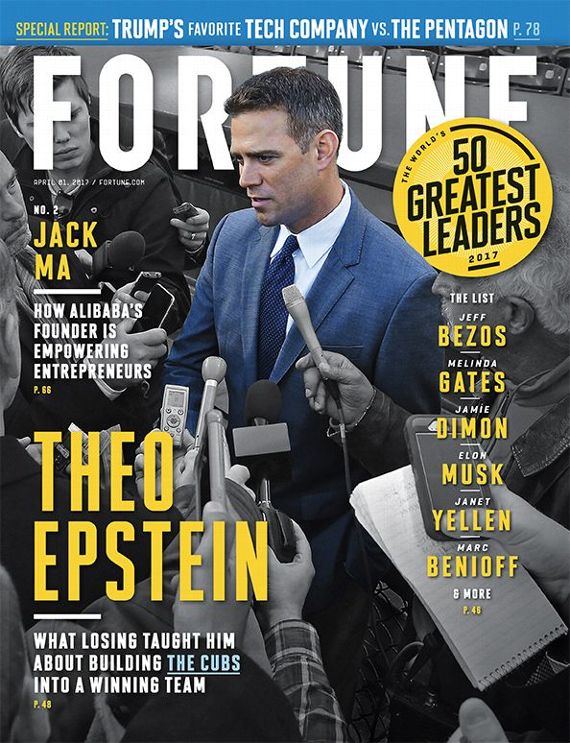
“That is ridiculous. The whole thing is patently ridiculous. It’s baseball–a pastime involving a lot of chance. If [Ben] Zobrist’s ball is three inches farther off the line, I’m on the hot seat for a failed five-year plan.”

—-Theo Epstein, president of the Major League Baseball’s 2016 World Champion Chicago Cubs, upon learning that Fortune Magazine had chosen him #1 among “The World’s Greatest Leaders” in a click-bait list released last week.

Thank-you, Theo, for explaining moral luck and the perils of consequentialism to the public. When it came down to the final innings of Game 7 in last year’s World Series, it looked for a while like Cubs manager Joe Maddon was about to blow the chance to win an elusive title after over a century of frustration by keeping his clearly gassed closer on the game. That his risky decision didn’t make Maddon a goat for the ages and Epstein one more name in the long list of Cubs saviors was pure moral luck—the element of chance that often distinguished heroes from villains. winners from losers and geniuses from fools in the public’s mind—and gross consequentialism, judging decisions by their uncontrollable results rather than their objectively judged wisdom and ethics at the time they were made.

If the Cleveland Indians had won that crucial game in extra-inning, no matter how, Epstein might have made Fortune’s list (I doubt it), but he would have been nowhere near the top. Continue reading

Ethics Hero Emeritus Desmond Doss, And “Hacksaw Ridge,”

desmond-doss

Desmond Doss, who died on March 23, 2006 at the age of 87,  was the very first hero to be enshrined in the Ethics Alarms Hall of Heroes. I wrote about him before there was an Ethics Alarms, shortly after he died.  I had never heard of Doss before, and I remember being angry that I had never heard of him. Everyone should know about him. There literally are no Americans who were any more heroic, and whose ethical conduct was any more astounding, than Desmond Doss.

If the values of this nation, and especially Hollywood, were healthy and correctly aligned, he would be a household name, and the film about his World War II heroism would have been made long ago. Finally “Hacksaw Ridge” was produced in 2016, and has been nominated for an Academy Award, although it will never win.

When I first read about Doss, I couldn’t get my mind around what he had done to be awarded the Congressional Medal of Honor, the only conscientious objector ever to achieve that honor during combat. During the battle of Okinawa, we were told that he survived heavy enemy fire as he struggled to carry seventy-five wounded soldiers to the sheer cliff at Hacksaw Ridge, personally picking up each one and lowering them over the edge the cliff 400 feet to safety.   How is that possible? Now that I’ve seen the film, it still seems impossible.

Desmond Doss proved that principled opposition to violence against his fellow human beings need  not be based on fear, self-interest or self-preservation. It is often impossible to tell whether those who oppose armed combat really object to the spilling of all human blood in battle, or only their own. With Desmond Doss, there was never any doubt. He didn’t like the term “conscientious objector,” preferring the term “conscientious cooperator.” He enlisted in the army following Pearl Harbor, believing that the war against the Axis had to be fought and wanted to be part of the war effort despite believing, as a devout a Seventh Day Adventist, that it was a sin to kill, with no exceptions. Thus he refused to carry a rifle (or shoot one, even in training) but yet insisted that he be involved in combat as a battlefield medic. He achieved conscientious objector status  but would hot accept a deferment. Assigned to the 307th Infantry Division as a company medic, Doss was hazed, abused and  ridiculed  for his dedication to non-violence, and as the Mel Gibson-directed film shows, many of his tormentors eventually owed their lives to his astonishing heroism. All of his compatriots were amazed by his evident fearlessness under fire and remarkable dedication to duty, never hesitating to go after a wounded soldier no matter what the personal risk. As a combat medic on Guam and at Leyte in the Philippines, Doss had already been awarded the Bronze Star  before the three-day battle at Hacksaw Ridge.

Many of the soldiers in Doss’s 307th Infantry, 77th Infantry Division were driven off the ridge by a furious Japanese counter-attack, and  wounded G.I.s were stranded atop it. Doss remained with the wounded, and, according to his Medal of Honor citation refused to seek cover, carrying them, one by one, to the edge of the ridge in the face of enemy fire, some of them from behind enemy lines. He lowered each man on a rope-supported litter he improvised on the spot, using double bowline knots he had learned as a youngster and tying the makeshift litter to a tree stump to serve as an anchor. Every wounded man was lowered to a safe spot 35 feet below the ridge top by the 145 pound medic. Finally, Doss came down the ridge himself, incredibly, unharmed. Continue reading