Hollywood screenwriter turned conservative writer and blogger Roger Simon wrote a post last week titled, “Why the Remaining NeverTrumpers Should Apologize Now.” If, by NeverTrumpers, Simon meant those who refuse to this day to accept the fact that the President was duly elected and continue to work to undermine his Presidency by any means possible, the headline would be too restrictive. Those unethical citizens and dangerous insurrectionists owe everyone an apology, including the founders and children yet unborn. They have done incalculable damage to the nation, society and our institutions, and we will suffer grievously because of it, if the U.S. survives it at all.
It is clear, however, that he is directing his screed at people like me, non-ideological moderates and conservatives who proclaimed during the 2016 campaign that they would never support the candidacy of Donald Trump, for all the self-evident reasons. Simon writes,
“Nevertheless, it is time for the remaining NeverTrumpers to apologize for a reason far more important than self-castigation or merely to make things “right.” Donald Trump — whose initial victory was a shock, even, ironically, to those of us who predicted it — has compounded that shock by being astoundingly successful in his first year, especially at the conclusion. (He’s a quick study, evidently.) More conservative goals have been achieved or put in motion in eleven months than in any time in recent, or even distant, memory. It’s an astonishing reversal for our country accompanied by the beginnings of an economic boom.”
It is true that any objective and fair observer should be able to acknowledge that the Trump administration has been far from the nightmarish failure Democrats and the news media have misrepresented it to be. It is also true that the cataclysmic bungle that the Left was certain Trump would sink the country with has not occurred. (Progressives consider conservative policies as cataclysmic, and thus are useless for this analysis.) Unlike the Left, I will give the President credit for what he has presided over and facilitated, because all Presidents get credit for that. ISIS has been greatly weakened. The economy and consumer confidence are improving. The stock market is soaring. Illegal immigration is no longer being encouraged and sentimentalized by the federal government. We are backing away from world government, and refusing to be extorted by North Korea. As promised, the glut of federal regulations is being decreased, rather than expanded. Continue reading →
1 Idiot’s Delight. It seems unkind to say, but today we will learn just how many idiots there are in Alabama. That’s useful information for any state, don’t you think? There is literally no non-idiotic justification for voting for a man like Moore, with his record, to any elective office, much less the U.S. Senate. Yet I strongly suspect he will win, and the disproportionately Democratic and liberal tilt of the those exposed in the Harvey Weinstein Ethics Train Wreck will have been the tipping point.
At an election eve Moore event, one of the speakers was Bill Staehle, who served with Moore in Vietnam. As an endorsement of Moore, Staehle told the tale of a fellow soldier comrade of both men who invited them to accompany him to a private club in Saigon to celebrate the man’s final night there. The third man drove them to the club in his Jeep, but when they arrived, Staehle told the crowd, it became clear that they were at a brothel, and that their colleague had tricked them.
“There were certainly pretty girls. And they were girls. They were young. Some were very young,” Staehle said. Here is the point of the story: Moore was shocked by what he saw, Staehle claims. “We shouldn’t be here, I’m leaving,” Staehle, quoted the future disgraced judge and absurd Senate candidate as saying. They both left, leaving their friend stranded with underage prostitutes all night.
The moral of the story: “He’s the same guy… He’s honorable. He’s disciplined. Morally straight. Highly principled.”
Hey, I’m convinced!
The story, of course, proves nothing relevant to Moore’s character at all, and if Staehle thinks it does, he’s an idiot.
Staehle hadn’t seen Moore in 45 years, and this was a single incident. How does he know “He’s the same guy”? Besides, the anecdote tells us nothing about Moore’s character. Who knows why Moore left? Maybe he didn’t want to pay for sex with young girls, knowing that he could get plenty free once he got back to Sweet Home Alabama. Maybe he wasn’t attracted to Asian girls. Maybe he was afraid of getting a disease.
Only an idiot would find Staehle’s logic persuasive….but that is the target group, I guess. Continue reading →
I ran a red light last night, and I’m feeling bad about it. Ted Kaczynski made me do it.
It was after midnight, and I was returning home after seeing the pre-Broadway production of the musical “Mean Girls,” based on the cult Lindsay Lohan comedy. I was late, my phone was dead, I knew my wife would be worried, and I was stopped at an intersection where I could see for many football fields in all directions. There were no cars to be seen anywhere.
Ted, , aka “The Unabomber” or “Snookums” to his friends, cited my exact situation as an example of how we have become slaves to our technology. Why do we waste moments of our limited lifespan because of a red light, when there is no reason to be stopped other than because the signal says to. Admittedly, this had bothered me before I read Ted’s complaint. Stop lights should start blinking by midnight, allowing a motorist to proceed with caution, as with a stop sign. If one isn’t blinking, we should be allowed to treat it as if it is.
Last night, I ran the light. With my luck, there was a camera at the intersection, and I’ll get a ticket in the mail. But..
…whether I do or not doesn’t change the ethical or unethical character of my conduct. That’s just moral luck.
…it was still against the law to run the light, even it I was treating it as a blinking light, because it wasn’t
…breaking the law is unethical, even when the law is stupid, and
…there was no legitimate emergency that could justify my running the light as a utilitarian act.
So I feel guilty. Not guilty enough to turn myself in, but still guilty, since I am guilty.
Update: Let me add this; I was thinking in the shower.
On several occasions in the past, I have found myself stopped by a malfunctioning light that appeared to be determined to stay red forever. Is it ethical to go through the light then? The alternative is theoretically being stuck for the rest of my life. So we run such lights, on the theory the frozen stop light is not meeting the intent of the law or the authorities who placed it there, and to remain servile to the light under such circumstances is unreasonable. Yet running it is still breaking the law, and isn’t stopping for a light in the dead of night with no cars to be seen also not consistent with the intent of the law and the light? What’s the distinction?
Last year (to the day) when I posted the Ethics Alarms ethics guide to Frank Capra’s 1946 masterpiece “It’s A Wonderful Life,” one of the great ethics movies of all time, as this blog’s official welcome to the holiday season, I wrote, “I suspect we need it more in 2016 than usual.” As it turned out, we need it even more in 2017.
Multiple forces have been hard at work for a full year now, roiling the nation, painting the future as dire and the present as unbearable, trying to divide us and even to encourage discord and conflict during this special time when we are supposed to remember what is most important in life. In case you have been infected, it’s not politics and not partisan agendas, but love, family, community, kindness, and friends. The simple message of Frank Capra’s masterpiece—it has aged far better than his other films, including, and maybe especially, “Mister Smith Goes To Washington”—that no one is a failure who has friends, is vital to recall when so many are rejecting friends because they don’t conform to some ideological talking point. This is madness, and watching and heeding “It’s A Wonderful Life” is a better remedy than Thorazine.
Senate Minority Leader Chuck Schumer actually told his Twitter followers this week to bring a chart prepared by a think tank to attack the Republican tax plan during Thanksgiving dinner. This is part of the effort to politicize everything in our lives, by zealots who value power over humanity, country, and spirituality. They belong with Mr. Potter, not George and Clarence.
I need this movie more in 2017 than usual for other reasons. It has been a year in which I have lost many peers and cherished friends, and listened to too many of the living bemoan the passage of time and looming mortality. I don’t think like that—a lifetime gift from my brave and fatalist father—but I can’t pretend that the game clock isn’t running out, or not face the fact that I have not sunk anywhere near the baskets I could have and should have. Fortunately, what I wrote in an earlier year introducing this post still resonates…
Everyone’s life does touch many others, and everyone has played a part in the chaotic ordering of random occurrences for good. Think about the children who have been born because you somehow were involved in the chain of events that linked their parents. And if you can’t think of something in your life that has a positive impact on someone–although there has to have been one, and probably many—then do something now. It doesn’t take much; sometimes a smile and a kind word is enough. Remembering the lessons of “It’s a Wonderful Life” really can make life more wonderful, and not just for you.
Have a terrific Thanksgiving, everyone.
And here we go:
1. “If It’s About Ethics, God Must Be Involved”
The movie begins in heaven, represented by twinkling stars. There is no way around this, as divine intervention is at the core of the fantasy. Heaven and angels were big in Hollywood in the Forties. The framing of the tale seems to advance the anti-ethical idea, central to many religions, that good behavior on earth will be rewarded in the hereafter, bolstering the theory that without God and eternal rewards, doing good is pointless.
Yet in the end, it is an ethics movie, not a religious one. George lives an ethical live, not out of any religious conviction, but because step by step, crisis after crisis, he chooses to place the welfare of others, especially his community and family, above his own needs and desires. No reward is promised to him, and he momentarily forgets why we act ethically, until he is reminded. Living ethically is its own reward.
We are introduced to George Bailey, who, we are told, is in trouble and has prayed for help. One has to wonder about people like George, who resort to prayer as a last resort, but they don’t seem to hold it against him in Heaven. The heavenly authorities assign an Angel 2nd Class, Clarence Oddbody, to handle the case..He is, we learn later, something of a second rate angel as well as a 2nd Class one, so it is interesting that whether or not George is in fact saved will be entrusted to less than Heaven’s best. Some lack of commitment, there— perhaps because George has not been “a praying man.” This will teach him—sub-par service!
2. Extra Credit for Moral Luck
George’s first ethical act is saving his brother, Harry, from drowning, an early exhibition of courage, caring and sacrifice. The sacrifice part is that the childhood episode costs George the hearing in one ear. He doesn’t really deserve extra credit for this, as it was not a conscious trade of his hearing for Harry’s young life, but he gets it anyway, just as soldiers who are wounded in battle receive more admiration and accolades than those who are not. Yet this is only moral luck. A wounded hero is no more heroic than a unwounded one, and may be less competent as well as less lucky.
3. The Confusing Drug Store Incident
George Bailey’s next ethical act is when he saves the life of another child by not delivering a bottle of pills that had been inadvertently poisoned by his boss, the druggist, Mr. Gower. This is nothing to get too excited over, really—if George had knowingly delivered poisoned pills, he would have been more guilty than the druggist, who was only careless. What do we call someone who intentionally delivers poison that he knows will be mistaken for medication? A murderer, that’s what. We’re supposed to admire George for not committing murder.
Mr. Gower, at worst, would be guilty of negligent homicide. George saves him from that fate when he saves the child, but if he really wanted to show exemplary ethics, heshould have reported the incident to authorities. Mr. Gower is not a trustworthy pharmacist—he was also the beneficiary of moral luck. He poisoned a child’s pills through inattentiveness. If his customers knew that, would they keep getting their drugs from him? Should they? A professional whose errors are potentially deadly must not dare the fates by working when his or her faculties are impaired by illness, sleeplessness or, in Gower’s case, grief and alcohol.
4. The Uncle Billy Problem
As George grows up, we see that he is loyal and respectful to his father. That’s admirable. What is not admirable is that George’s father, who has fiduciary duties as the head of a Building and Loan, has placed his brother Billy in a position of responsibility. As we soon learn, Billy is a souse, a fool and an incompetent. This is a breach of fiscal and business ethics by the elder Bailey, and one that George engages in as well, to his eventual sorrow.
TMZ reported that Yu Darvish, the highly-regarded Dodger starting pitcher who may have delivered the worst World Series performance for a hurler ever, apologized to Dodger fans following his early exit from Game 7. Darvish didn’t make it out of the second inning in either of his two starts.
To begin with, I don’t think he apologized. Darvish said, “Dodger fans … they expect we won the World Series. I couldn’t do it. I still feel sorry,but I did my 100%, so…” Of course he’s sorry that he stunk during the Series, lost two games, and was a major reason his team was defeated by the Houston Astros. He regrets tat he didn’t play better. That, however, is not the same as apologizing, which is how TMZ and—yecch–Breitbart headlined the story. It is a social balm to say that you are sorry that your best efforts weren’t good enough, but one should not apologize for bad results unless your conduct was wrongful in some way. An athlete not being at his best on a given day is not wrongdoing. It’s moral luck. If he performed badly because he was drunk, or tried to lose, or didn’t prepare properly, then he owes his stakeholders an apology for breaching their trust and his duty of competence. If, as Yu says he did, the athlete gave “100%,’ then there is nothing to apologize for.
Acting as if there is something to apologize for helps confuse the easily confused public on an important aspect of accountability. We are accountable for bad events when our actions lead to those events, but we can only be blamed for those bad events if some negligence misconduct or other variation from competent and responsible standards causes the undesirable results, when such results could have been anticipated. Continue reading →
I haven’t been in tip-top shape the last several days, making new posts more of an ordeal than they should be. Luckily this motivates me to catch up on updating the Rationalizations List, which has several waiting additions, including these:
Rationalization #15 A. The Reverse 15, or “If I don’t do it ( and I don’t want to) somebody else will.”
The Reverse 15 uses exactly the same excuse as #15. The Futility Illusion: “If I don’t do it, somebody else will,” but for the opposite purpose. In #15, the rationalizer wants to avoid the consequences of doing something unethical by arguing that his or her refusal to follow orders would have no practical effect: someone else would just step in and do what was demanded anyway. How, asks the fictionalized version of Confederate Captain Henry Wirz in “The Andersonville Trial,” can a post-Civil War military tribunal fairly hold him responsible for cruelly mistreating the Union prisoners in the Georgia prison camp as he was ordered to, when if he refused he would have been shot, and his successor would have abused them anyway?
In 15A, the argument is the opposite. The rationalizer refuses to perform a necessary ethical act out of apathy, callousness or fear, but this was reasonable because he or she was certain that someone else would do the right thing instead. The Reverse 15 could also be called “The Kitty Genovese Rationalization,” recalling that the many people who heard the murdered woman’s screams chose not to “get involves” while convincing themselves that someone would come to her aid. All of the Mount Everest climbers who left a stricken colleague behind to die protested later that they were certain the next climber behind them (or the next, perhaps) would stop to help the man. We pass a stopped car in distress on the highway at night, reasoning that someone else will stop to help, sparing us the trouble.
Sometimes someone does. Sometimes not. This abdication of an ethical duty is accomplished by casting one’s lot, and gambling with the fate of another, while relying on the unpredictable quirks of moral luck. The only ethical decision is to take action. You must do what you know is the ethical act yourself, and not ignore your obligation because you can pass the buck and then argue, disingenuously, “How could I know that everyone else would be as unethical as I am?”
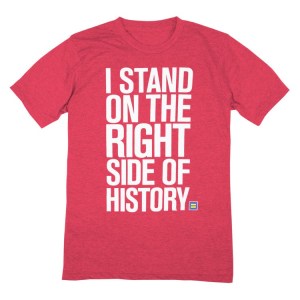
Rationalization #1B. The Psychic Historian, or “I’m On The Right Side Of History”
Tonight the MLB play-offs end, leaving us with a World Series featuring either the Yankees against the Dodgers (tell me how that one turns out), or the Houston Astros against the Dodgers, which is better. My wife’s wish for a blown ball-strike call so obvious and outrageous as well as game-deciding that baseball resolves to let computers police the strike zone did not, alas, occur.
This did, however:
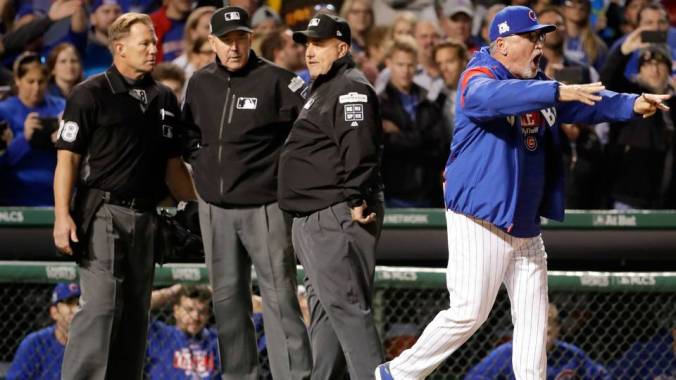
In the top of the eighth inning of a crucial Dodgers-Cubs NLDS game, Dodger batter Curtis Granderson struck out. The pitch hit the dirt, and Cubs catcher Willson Contreras, as the rules require when a strike isn’t caught cleanly, tagged Gunderson for the final out of the inning. Granderson argued to home plate umpire Jim Wolf that his bat had made slight contact with the ball. It didn’t. The replay showed that his bat missed the ball by at least four inches. Nonetheless Wolf, after conferring with the other umpires agreed that the ball was a foul tip. Gunderson’s at bat was still alive.
1 Tales of Moral Luck: Yankee manager Joe Girardi was facing a possible post-season firing for an embarrassing botch during the second game of the American League Divisional Series against the Cleveland Indians. NY had lost the second game, putting them in an 0-2 hole in a best of 5 series, after an Indian batter’s foul tip into the catcher’s glove for strike three and the inning’s final out was mistakenly ruled a hit by pitch, loading the bases. Replay showed that the ball had hit the knob of the bat, not the batter’s hand, but Girardi didn’t call for a replay review even though his catcher demanding one. The HBP loaded the bases, and the next batter hit a decisive grand slam. Girardi made things worse in his post-game comments by spinning and rationalizing, then finally took responsibility the next day. He also admitted that he didn’t realize that managers had two challenges in the play-offs, when they had only one a game during the regular season.
Yesterday, the Yankees completed a remarkable comeback, winning three straight games to defeat the odds-on favorites to represent the American League in the World Series. Girardi’s bad judgment, poor preparation and immediate resort to excuses when he undermined his team’s chances no longer matters. He was saved by moral luck, just as earlier he had been slammed by moral luck. After all, if the next batter in Game 2 has popped up harmlessly, ending the inning without any damage, Girardi’s terrible mistake would have been a footnote to a Yankee victory.
Now it’s a footnote again.
Moral Luck.
2. WHOA! Didn’t see THAT coming! TWITTER just boarded the Harvey Weinstein Ethics Train Wreck!
Actress Rose McGowan, one of Weinstein’s victims who reached a $100,000 settlement with the Hollywood serial harasser 20 years ago and who is now on the attack having decided that she doesn’t want to be a Hollywood actress any more, has been using social media to condemn actors and executives who enabled Weinstein, writing in one tweet, “you all knew.” Recently, after Ben Affleck tweeted that the allegations against Weinstein “made him sick,” McGowan called him out on Twitter.:
@benaffleck “GODDAMNIT! I TOLD HIM TO STOP DOING THAT” you said that to my face. The press conf I was made to go to after assault. You lie.
In a newly published memoir, Sally Quinn, the famous journalist who married iconic Washington Post editor Ben Bradlee and became a D.C. society matron, then a religion columnist, reveals a lief-long obsession with mysticism and the occult. Ouija boards, pentagrams, witchcraft, charms, spells, seances, messages from the dead (like Ben), voodoo, the whole thing: Quinn writes that she has had an “epiphany” revealing that “believing in magic is as legitimate as any religion or faith.”
I’ll buy that. I wouldn’t say that the next step is an application to Hogwarts, however.
So these are the people who presume to tell Americans what to think, eh? Good to know.
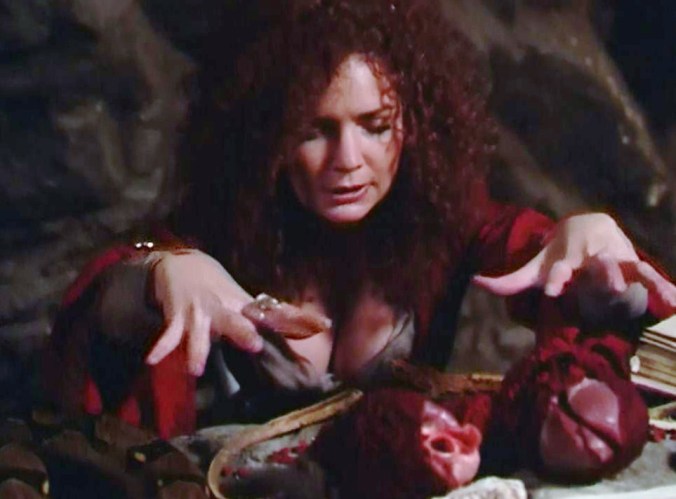
But I digress. In a recent Washingtonian Magazine profile contrived to puff the release of “Finding Magic,” Bradlee’s widow says that she not only believes in hexes, she’s used them. And they work!
She reveals that, in her less mellow days, she put hexes on three people who promptly wound up having their lives ruined, or ended.
The first, cast in 1969, was spurred by old-fashioned jealousy. Some exotic beauty at a Halloween party inspired lust in Quinn’s beau at the time—and then killed herself just days after Sally cast her spell.
Her second victim was Clay Felker, the longtime editor of New York magazine who oversaw a brutal profile of Quinn in 1973, just before her catastrophic debut on the CBS Morning News. Quinn hexed Felker not long after flaming out at CBS and returning to Washington. “Some time afterward, Rupert Murdoch bought New York magazine in a hostile takeover, and Felker was out,” she writes. “Clay never recovered professionally. Worse, he got cancer, which ultimately caused his death.”
Target number three: a shady psychic who, the autumn after Quinn Bradlee was born, ran afoul of Sally’s maternal instincts. The woman dropped dead before year’s end.
This raises a classic ethics question that I nearly posed today as an Ethics Quiz. I didn’t, because I know the answer and have no doubts about it. (If it’s an ethics quiz, I at least have doubts.) The question would have been:
Ethically rather than legally, is there any difference between Sally Quinn and a murderer?
The answer is no.
I’d say that the first two victims make her the ethical equivalent of someone who is guilty of manslaughter, and the last one, after her first two hexes led to her targets’ deaths, was, again ethically rather than legally, premeditated murder.
Sally says that after the psychic dropped dead, she swore off her Death Hex. That’s admirable. The fact remains, however, the while believing an instrumentality would lead to harm when employed against specific individuals, she employed it, got her desired results, and believed that she was the cause of their subsequent deaths. She also doesn’t express any remorse or regret. Continue reading →
Baseball finally installed a replay review system to address umpire calls that were shown by TV slow-mo to be clearly wrong. For all the complaining about the system, it was the only ethical choice. Mistaken calls were changing the results of games, and because of technology, this was now obvious to all. Only technology could solve the problem.
Unfortunately, however, human beings still control the technology. Bias, emotion and other impediments to ethics will still prevail more often than we like to think. Yesterday’s Red Sox Yankee game provided a classic example.
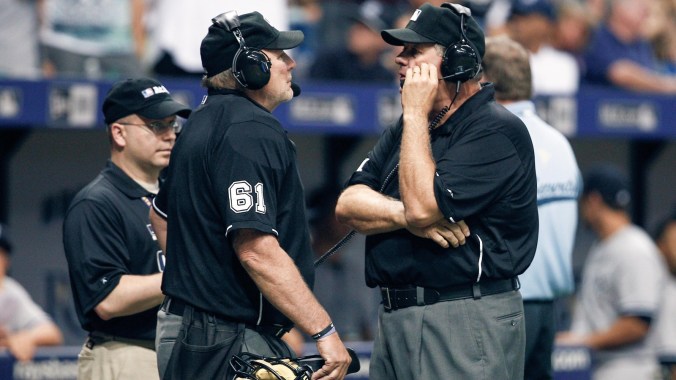
Yankees manager Joe Girardi challenged a safe call on the Sox’s Andrew Benintendi when he slid into second base for an apparent double. The video showed that the second base umpire had missed the play. Upon review—the umpires put on headsets to get the verdict from a New York studio where another set of umpires check the video from multiple angles—the call was reversed, and Benintendi was out.
In the same inning, Red Sox manager John Farrell challenged an inning-ending double play. The review showed Red Sox baserunner Mookie Betts safely reached second before the throw, allowing the Red Sox to score the game’s first run. For the second time in a single inning, Greg Gibson, the second base umpire, had his call reversed. I have never seen this happen before. For an umpire, this is not just embarrassing, it is professionally humiliating.
Later, in the seventh inning, the same star-crossed (cross-eyed?) umpire called Yankee Greg Bird out as he was doubled off second base after a lineout. The video this time was more conclusive than the first challenge: the umpire blew it, again. Bird had beat the throw.
While the challenge was being reviewed, the Red Sox broadcasters, who had concluded that Bir should have been called safe at second, were talking about the rarity of the same umpire being reversed three times in a single game. Sox color man Dennis Eckersley wondered aloud if professional courtesy and loyalty might affect the review. What he was really asking was whether the umpires in New York would allow a colleague to be exposed to the disgrace of being reversed three times in one game. This wouldn’t only make him look bad, after all. It would make umpires look bad. Three strikes and you’re out, after all.
Sure enough, the decision from New York was that the call at second was correct. Bird was out, even though the video showed he was safe.
The umpires have plausible deniability here: this was hardly the first time that a replay review seemed at odds with a video. Nonetheless, it was a sobering display. By all appearances, the umpires distorted the game to protect one of their own who was having a terrible night. They were employing the Golden Rule in the kind of setting where the Golden Rule works against an ethical result, not for it.
Fortunately for the umpires, allowing the third blown call at second was allowed to stand had no effect on the game’s outcome, but that is just moral luck. The umpires made a very clear statement. They regard loyalty to colleagues as more important than their profession, the game, their fans, or public trust. They, or at least the umpires involved, cannot be trusted to put aside their biases and conflicts when their duties demand it. Technology may be unbiased, but the humans using it are not. Professionals are not always professional when a colleague’s fate is involved.




 Ethics Alarms