No, It Still Doesn’t Justify Torture

No.

The news of how Osama bin Laden was finally tracked down and killed has caused a predictable outbreak of consequentialism. It appears that Khalid Sheikh Mohammed provided some of the key intelligence that led to the successful operation in Pakistan while he was undergoing “enhanced interrogation” in CIA prisons in Rumania and Poland. “See?” Dick Cheney’s fans are saying today. “Rendition and torture work. We wouldn’t have killed Bin Laden without them. So what do you think of those tactics now?” The opponents of torture who foolishly argued against it based on pragmatic considerations—“Torture doesn’t work!”—rather than ethical ones–-“It is absolutely wrong!“—set themselves up for this.  Now what should they say? Continue reading

Colorado’s Adultery Dilemma

Relax! It's OK...you're in Colorado!

In most states, adultery is one of the great examples of how something can be wrong and destructive without being illegal, a useful concept to have in mind when a corrupt politician or a crooked corporate executive  says “I didn’t break any laws!” It is also a good example of unethical conduct that is better controlled by ethics than law. A law against adultery is theoretically defensible as a deterrent of harmful social conduct, and the state definitely has an interest in preserving family stability. The problem is that regulating offenses triggered by love, lust and romance feels excessively intrusive to most of us. It has overtones of the Plymouth colony. For better of worse, minimizing adultery belongs in the realm of ethics, not the criminal law. Continue reading

The Ethicists, Backing Judge Walker and Gay Marriage, At An Unacceptable Price

"Oh, all right...as long as we like the decision."

Thanks to the Judge Walker controversy, now have proof that the best legal ethicists in the nation are human. I suppose that’s something.

My colleagues in the legal ethics field are arguing—decreeing, really— that Judge Vaughn Walker’s decade-long same-sex relationship didn’t need to be disclosed before he ruled against Proposition 8 (California’s voter-approved gay marriage ban) because, they say, it created no reasonable doubts about his impartiality. Coincidentally, they also really, really like his decision. But then, so do I. Continue reading

Judge Walker Was Wrong

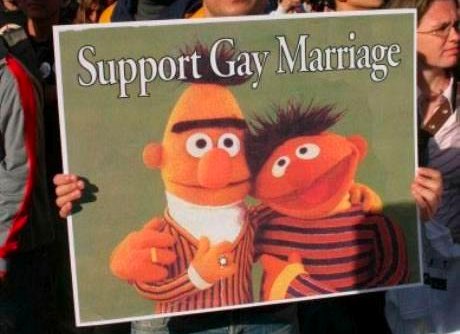
Now that we know about Bert, should Judge Ernie have recused himself?

Judge Vaughn Walker, the Federal District judge who a year ago ruled California’s Proposition 8, which banned same-sex marriages, unconstitutional, was wrong. No, not about the law, which is pretty clearly unconstitutional: his opinion was fair and well-reasoned, and is likely to be upheld on appeal. Walker was ethically wrong in his handling of the delicate issue of his own sexuality, which had raised a controversy about his objectivity and ability to be impartial.

Two weeks ago, following his retirement from the bench, Walker publicly disclosed for the first time that he has been in a same-sex relationship for the past ten years. This changes the analysis regarding the propriety of his ruling on Perry v. Schwarzenegger. Walker had long been rumored to be gay; supposedly “everybody” knew he was gay. My position, as well as that of many others considering the arguments of anti-gay marriage opponents that he should recuse himself, was that sexual orientation could not and should not create a presumption of bias, any more than gender, age, race or marital status. Continue reading

Ethics Hero: Arizona Governor Jan Brewer

There is hope for Arizona yet...

Earlier, I wrote about a bill passed by the Arizona legislature that would broadly allow religious practices and beliefs to trump professional obligations, ethics codes and discipline. The bill, SB 1288, directed in part:

A. Government shall not deny, suspend or revoke a professional or occupational license, certificate or registration based on a person’s exercise of religion.

B. Government shall not deny, suspend or revoke a professional or occupational license, certificate or registration based on a person’s refusal to affirm a statement that is contrary to the person’s sincerely held moral or religious beliefs, regardless of whether those beliefs are specifically espoused by a recognized church or religious body…

C. A person’s exercise of religion is not unprofessional conduct.

It was widely assumed, including by me, that Republican governor Jan Brewer would sign this stunningly awful bill into a law which would allow any practice that could be called “religious” to be immune from community, cultural and professional norms of right and wrong unless they were explicitly illegal. She did not. She vetoed it, an act of responsible leadership and political courage.

You can read her veto letter here.

Arizona’s Anti-Ethical Free Exercise of Religion Bill

While I was worrying about the unethical nature of so-called “conscience clauses,” which allow certain professionals, like pharmacists, withhold their services when they clash with the professional’s religious convictions, the Arizona legislature was cooking up something unimaginably worse. Last week the Arizona House of Representatives passed and sent to the Governor Brewer to sign into law SB 1288, a mind-blowing bill prohibiting the denial of occupational licenses or positions on public bodies because of an individual’s exercise of religion.

The soon-to-be-law states:

A. Government shall not deny, suspend or revoke a professional or occupational license, certificate or registration based on a person’s exercise of religion.

B. Government shall not deny, suspend or revoke a professional or occupational license, certificate or registration based on a person’s refusal to affirm a statement that is contrary to the person’s sincerely held moral or religious beliefs, regardless of whether those beliefs are specifically espoused by a recognized church or religious body… Continue reading

Comment of the Day: “The Barefoot Contessa and the Compassion Bullies…”

Today’s Comment of the Day needs some background. The first comment regarding yesterday’s controversial post “The Barefoot Contessa and the Compassion Bullies…”, asserting the right of a celebrity to decline a sick child’s request, was by reader Nancy Simpson, who wrote…

“Obviously we have different beliefs about what constitutes “ethics”. The first duty of all persons in a civilized society is to care for the children. My ethics say that for the optimum function of society, we care for children unless what they ask for will cause physical or emotional harm to them.

“Short of confinement in a leprosy ward, this woman has no excuse for her unkindness to a child. If the “too busy” excuse is true, then she is just greedy. No law against being greedy, is there? She has no duty to be concerned with anything other than her money.

“The other place we have ethical differences is that it against my ethics to criticize control and blame a sick child’s mother. Talk about hit below the belt. Shame on you.

“Celebrities are not mandated to give back–they may bite the hand that feeds them any time they like. And I decide who gets my hard earned money, and it will not be her or Food Network.

“I don’t pay people who hurt children.’

I was, I admit, rather severe with Nancy, writing in response…

“No, Nancy, you are completely wrong. Obviously we do have a different understanding or ethics, because you have very little and you also didn’t really read or think about the post. If a stranger walks in your home and demands that you care for her child, are you ethically required to do it? What gives “Make A Wish” or Enzo, his mother or anyone the right to finger this one woman because he happens to watch her show and put her in the position of either having to make a major effort to please him—not cure him, not actually make him well, but just give him a good time—at the threat of being condemned by self-righteous uninvolved bystanders like you? Ridiculous.

“Maybe she had a brother with the same disease and spent years in therapy trying to conquer the depression his death caused…and the prospect of getting close with Enzo risks her long term mental health. Does her refusal pass your approval process then, or is she obligated to harm herself because a stranger’s child has a “wish”? How can you judge her actions when you have no idea what motivates her? Granting these things is usually a PR bonanza….I doubt her motivations are crass at all.

“Maybe she is especially emotional around sick children. You have no basis to criticize her. She is not Enzo’s slave, she is not his doctor, she is not his plaything. She has a right to say “no.” There is a difference between exemplary ethics, and ethics. It would be great if she decided to grant his request, but it is not unethical not to. I know—you don’t understand. Well, you can revel in your ignorance without telling me that I don’t understand.

“I DO have basis to criticize Enzo’s mother, and I hereby throw your silly “shame!” through your window.

“She set out to harm a woman who owed her nothing. She sicced the internet on someone for pure revenge. I sympathize with her, but her actions were unarguably wrong. If you think certain classes of people like “mothers of sick children” get special passes to act badly and harm others, go start a Cindy Sheehan fan club—you don’t have a clue what ethics are.

‘You know what rationalizations and excuses are, however.”

Now, today, new reader Yao added a very provocative Comment of the Day: Continue reading

The Ethics of Singing For Muammar

Sing, Nelly---and charge him through the nose.

Singer Nelly Furtado has been attacked recently for accepting a million dollars in 2007 to entertain Muammar Gaddafi and his family. The idea seems to be that, as ringingly put by screenwriter Mark Tapper,

“It is quite simply willful blindness to claim that there is no moral dimension in the choice to perform privately for a monster like Gaddafi, and in being paid exorbitantly from funds no doubt stolen from his own people, or misappropriated from foreign aid or dirty deals.”

Furtado isn’t the only one who crooned for the Libyan dictator, apparently. Mariah Carey, Usher, Lionel Richie, Beyoncé and other performers also accepted big bucks to give Muammar and his family a good time.Furtado is donating her fee to charity in the wake of criticism like Tapper’s and Beyoncé has also donated the million that she received to charity, apologizing profusely. Mariah Carey is begging for forgiveness.

I’m glad that the stars are giving their money to worthy causes, and no doubt it is a good public relations move in a society where half-baked ethical notions become conventional wisdom before much thought has been applied to them. Nevertheless, Furtado and the rest did nothing wrong by entertaining Gaddafi. Continue reading

Home-Grown Mengeles, And What We Must Learn From Them

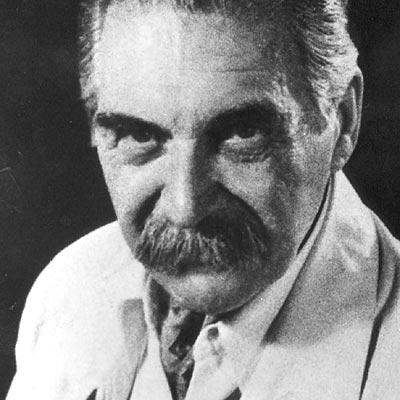
Josef Mengele: researcher, utilitarian, monster

We knew, or should have known, that this extremely ugly shoe was bound to drop eventually.

Last autumn, when the U.S. apologized for federal doctors infecting prisoners and mental patients in Guatemala with syphilis 65 years ago, it put us on notice that a vile and unethical cultural standard had taken hold of the American medical and scientific communities in the 20th century, one that held  it was “right” for the weakest, most powerless and most disposable of human beings to be tricked, coerced or bribed into serving as subjects for experiments that could lead to miraculous cures and treatments for the rest of the population. This–depriving human beings of their rights and lives in the interest of science—is “the ends justify the means” at its worst. But the Guatemala experiments proved that this was once flourishing and respectable in the U.S. scientific and medical research communities, so it would have been surprising if there weren’t more stories of home-grown Mengeles, and sure enough, there were. The U.S. acknowledged as much when it apologized for the Guatemalan tests. Now we have details. Continue reading

Where We Miss Morality: The Unmarried Mothers Disaster

USA Today included an editorial yesterday about the explosion of births to unmarried mothers in America that has exacerbated many societal problems. It’s a stunning story : in 1960,  the figure was 5.3%; by 1970, in the teeth of the cultural upheaval launched in the late 60’s, it had  more than doubled to 10.7%.   In 2009, 41% of children born in the USA were born to unmarried mothers,  including a frightening 73% of non-Hispanic black children.  The editorial suggested that reversing the trend is a priority, but was short on ideas for how to address it. Notably absent was the method of social control that had served the United States well since 1776, and had been effective world-wide since the institution of marriage: calling it wrong. Continue reading