Ethics Hero Emeritus: Phoebe Snow 1950-2011

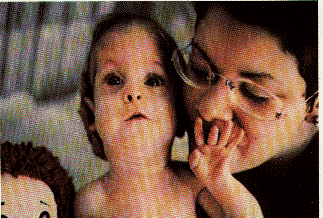
She sang a little too.

I thought Phoebe Snow had died long ago, when she was really just being an Ethics Hero.

In the mid-1970’s, the strong-voiced writer and singer of “Poetry Man” had two gold records at the young age of 26. She was hailed by critics as one of the most interesting and versatile singers in the pop world. “She appeared on ‘Saturday Night Live’ and recorded duets with Paul Simon and Jackson Browne. She made the cover of Rolling Stone magazine, which pronounced her voice ‘a natural wonder,’” recalled the Washington Post in her obituary today. Phoebe Snow was an entertainer and an artist, and had reached the place where all artists strive to reach but few ever do: being paid a fortune to do what she loved and was talented at doing.

In December 1975, she had given birth to a daughter, Valerie Rose, with severe brain damage and other disabilities. Most recording stars of her stature, as well as actors and those in other intense, lucrative and competitive fields in the arts and out of them, would have placed Valerie in an institution. (Arthur Miller, the moralist playwright, not only institutionalized his Down Syndrome son during his Broadway career but hid his existence from the public.) Snow, however, put her show business success on hold to care for her daughter. Continue reading

My Mother’s Funeral and the Kindness of Strangers

Few things are sadder than a long life commemorated by a sparsely attended funeral. The sadness is based more on illusion than reality, I know: the best way to ensure a good crowd at your funeral is to die young. Still, no son or daughter wants to deliver a eulogy to an empty chapel, even if the attendance figures at a love one’s funeral often say little about the richness of the life being remembered.

Most of the mourners at my mother’s funeral yesterday afternoon at Arlington National Cemetery barely knew her. Many had never met her; I doubt that she would have been able to name half of them if she had encountered them on the street. Yet they came, in the middle of a workday, to make sure that my mother’s family, including my sister and me, did not have to endure the sadness of the empty chapel. It was an amazing group. Among those whose connection to my mother was solely that they knew me, there were several whom I had not seen or spoken with in years, and others whose presence immediately made me feel guilty for being out of touch with them for too long. There were colleagues from jobs I had left long ago, and old friends who had, through the relentless roadblocks that family, work and assorted crises and priorities of living, had receded into names on a Facebook list. A former fiancee…a cast member of a show I had directed long ago. They were all expending time, their most precious resource, to be kind.

I’ve been going to a lot of funerals lately, something I once avoided with a passion. I’m going to start going to a lot more, and not merely just because, to paraphrase a line from the last Indiana Jones movie, I’ve reached the time when life stops giving you things and starts taking them away. As Yogi Berra reputedly said, “You should always go to other people’s funerals, otherwise, they won’t come to yours.” I appreciate the joke, but I’m pretty sure what Yogi was talking about was The Golden Rule.

Comment of the Day: “The Barefoot Contessa and the Compassion Bullies…”

Today’s Comment of the Day needs some background. The first comment regarding yesterday’s controversial post “The Barefoot Contessa and the Compassion Bullies…”, asserting the right of a celebrity to decline a sick child’s request, was by reader Nancy Simpson, who wrote…

“Obviously we have different beliefs about what constitutes “ethics”. The first duty of all persons in a civilized society is to care for the children. My ethics say that for the optimum function of society, we care for children unless what they ask for will cause physical or emotional harm to them.

“Short of confinement in a leprosy ward, this woman has no excuse for her unkindness to a child. If the “too busy” excuse is true, then she is just greedy. No law against being greedy, is there? She has no duty to be concerned with anything other than her money.

“The other place we have ethical differences is that it against my ethics to criticize control and blame a sick child’s mother. Talk about hit below the belt. Shame on you.

“Celebrities are not mandated to give back–they may bite the hand that feeds them any time they like. And I decide who gets my hard earned money, and it will not be her or Food Network.

“I don’t pay people who hurt children.’

I was, I admit, rather severe with Nancy, writing in response…

“No, Nancy, you are completely wrong. Obviously we do have a different understanding or ethics, because you have very little and you also didn’t really read or think about the post. If a stranger walks in your home and demands that you care for her child, are you ethically required to do it? What gives “Make A Wish” or Enzo, his mother or anyone the right to finger this one woman because he happens to watch her show and put her in the position of either having to make a major effort to please him—not cure him, not actually make him well, but just give him a good time—at the threat of being condemned by self-righteous uninvolved bystanders like you? Ridiculous.

“Maybe she had a brother with the same disease and spent years in therapy trying to conquer the depression his death caused…and the prospect of getting close with Enzo risks her long term mental health. Does her refusal pass your approval process then, or is she obligated to harm herself because a stranger’s child has a “wish”? How can you judge her actions when you have no idea what motivates her? Granting these things is usually a PR bonanza….I doubt her motivations are crass at all.

“Maybe she is especially emotional around sick children. You have no basis to criticize her. She is not Enzo’s slave, she is not his doctor, she is not his plaything. She has a right to say “no.” There is a difference between exemplary ethics, and ethics. It would be great if she decided to grant his request, but it is not unethical not to. I know—you don’t understand. Well, you can revel in your ignorance without telling me that I don’t understand.

“I DO have basis to criticize Enzo’s mother, and I hereby throw your silly “shame!” through your window.

“She set out to harm a woman who owed her nothing. She sicced the internet on someone for pure revenge. I sympathize with her, but her actions were unarguably wrong. If you think certain classes of people like “mothers of sick children” get special passes to act badly and harm others, go start a Cindy Sheehan fan club—you don’t have a clue what ethics are.

‘You know what rationalizations and excuses are, however.”

Now, today, new reader Yao added a very provocative Comment of the Day: Continue reading

Comment of the Day: “The Barefoot Contessa and the Compassion Bullies…”

Commenter Marlene Cohn has some well-reasoned insight on the issue of a celebrity’s obligation to comply with a sick child’s wishes. Here is her comment on The Barefoot Contessa and the Compassion Bullies: an Ethics Drama:

“I enjoy a bit of celebrity gossip just as much as anyone, and always find internet reactions to perceived celebrity slights to be fascinating. Having been on the internet far longer than the hoards willing to throw around the dreaded “c” word, I’ve been able to see a true shift in what people generally expect of others. Continue reading

The Barefoot Contessa and the Compassion Bullies: An Ethics Drama

Monster?

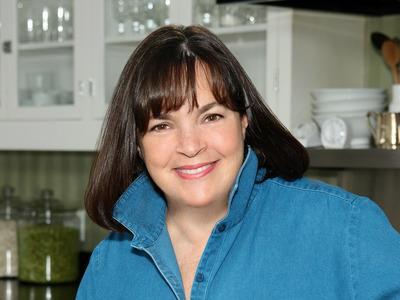
A boy named Enzo Pereda, now 6, was diagnosed with acute lymphoblastic leukemia in 2009. The Make-A-Wish Foundation asked him what his wish would be, and he said he wanted to meet the Food Network’s Ina Garten, the “Barefoot Contessa,” and watch her cook from his bed. Enzo’s wish was relayed to Garten through the Foundation, but she declined, saying that her schedule was too busy with a book tour. Enzo opted to wait. The request was made again this year, and Garten’s refusal was final and unconditional. Enzo’s mother, who has catalogued his illness in a blog called “Angels for Enzo,” was furious, writing: Continue reading

The Ethics Final: Ending My Mother’s Life Today

Some of our most important ethical decisions are made with the least analysis. At least that was the way it was for me this morning at 10:34, when my sister and I directed that my 89-year-old mom, Eleanor Coulouris Marshall, be taken off of life support. Continue reading

Ethics Dunce: Crane Interiors in Woodbury, Tenn.

"Hi! I can't answer the phone now, but please leave a message!"

Teresa Danford’s son, Lance Cpl. Mark Rhyne, is deployed in Afghanistan, where he is only able to call home once or twice a month. He has been overseas for seven months. On Valentine’s Day, Teresa, an employee of Crane Interiors in Woodbury, Tennessee, received one of her son’s precious phone calls at her job, on her personal cell phone. She was promptly suspended for three days without pay, for Crane has a no cell phone call policy for employees. Her manager informed her that she would be fired if it ever happened again. Continue reading

The Wrestler, the Girl, and Cultural Confusion

"Wanna wrestle?"

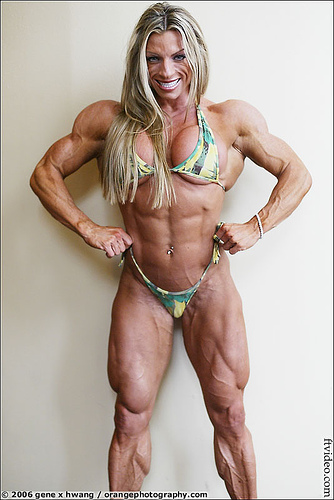
Sixteen-year-old high school sophomore wrestler Joel Northrup forfeited his match against a fourteen-year-old wrestler with two X chromosomes, Cassy Herkelman, at the Iowa state wrestling championships, saying that “As a matter of conscience and my faith I do not believe that it is appropriate for a boy to engage a girl in this manner.” Obviously Herkelman didn’t require protection from anyone or anything. She was her district’s 112-pound champion wrestler, and she won the Iowa championship for her class as well.  Cassie had won 20 of 33 matches, all against male wrestlers, on her way to the state championship. Maybe Northrup didn’t want to risk being ridiculed for losing to a girl; maybe he was uncomfortable with the sexual overtones of an inter-gender contest. All we can do is assess his conduct by taking him at his word: he believes a young man wrestling a young woman is morally wrong, and was willing to forfeit a match he might have won. Joel was, after all, the fifth-ranked wrestler in the state at 112 pounds, and had a 35-4 record.

Was his decision admirable, or sexist? Was it gentlemanly, or demeaning? Continue reading

Abortion Ethics: The Delusions of P.Z.Myers

Mere “Ethics Dunce”-dom doesn’t suffice for P.Z. Myers, gonzo biologist and professor who writes the intermittently enlightening, frequently infuriating blog, Pharayngula. Writing about the horrific case of Dr. Kermit Gosnell, an abortionist/quack/butcher whose method would make him a likely model for an episode of “Criminal Minds,” Myers wrote this, referring to the charges against him based on the fact that his version of “abortion” consisted, in at least seven cases, of inducing a live birth and murdering the baby afterwards, with a scissors: Continue reading

The Comment of The Day: Yes, It’s About Tide Commercials, But Read It Anyway

Ethics Alarms reader Lianne Best weighs in on the Tide (with Acti-lift!) ads, with a valuable observation with far broader ethics significance. She aptly describes exactly how norms of appropriate conduct become corrupted and coarsened (or sometimes enlightened and improved!) over time:

“I hope I’m not too late to the Tide with Acti-Lift! party, but for those who say these ads are “just marketing” and don’t have any real impact … the first time I saw each of these ads, I was horrified. With each subsequent viewing I was less and less offended, until they became normal. Participating in unethical behavior starts with it becoming normal, so these seemingly innocuous commercials are actually pushing the snowball down the slippery slope. Those with influence, whoever they may be, must be cautious with its use.”