Unethical Websites, Unethical Publicity Campaign, Unethical Studio…Of The Month.

...but none for stupidity.

…but none for stupidity.

“Do what?”

“Sure, why not? What a great idea!”

As part of its marketing campaign for 20th Century Fox’s new  film “A Cure for Wellness,” the studio created and launched realistic websites for the Sacramento Dispatch, the Houston Leader, the Salt Lake Guardian, the New York Morning Post and  the Indianapolis Gazette. They included a graphic displaying the current weather , and above the above the story, the standard labels, such as  News, Business, Sports, Entertainment. None of these publications are real. None of them included any disclaimers or explanations.

They did contain fake anti-Donald Trump stories. One especially popular one among Trump haters on social media claimed that the President  was refusing  to provide California federal support  as 188,000 citizens were evacuated to avoid the Oroville Dam overflow. Sanctuary cities, you know.  Trump is so mean. Can we impeach him yet?

Eventually the sites and stories were discovered to be fake. When asked  about the strategy, a spokesperson for Regency Enterprises, the film’s  production company, explained that  “‘A Cure for Wellness’ is a movie about a ‘fake’ cure that makes people sicker. “As part of this campaign, a ‘fake’ wellness site healthandwellness.co was created and the company partnered with a fake news creator to publish fake news.”

Oh. Continue reading
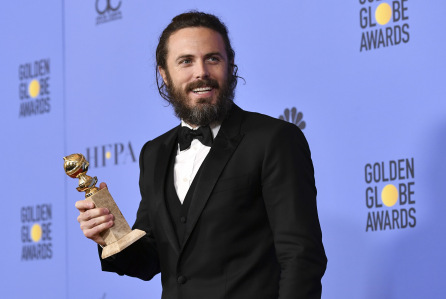
Award Ethics: Hollywood’s Casey Affleck-Nate Parker Controversy Is Ethically Simple, But Then, Hollywood Doesn’t Have Ethics

Mandatory Credit: Photo by Rob Latour/REX/Shutterstock (7734778do) Casey Affleck - Best Performance by an Actor in a Motion Picture - Drama - Manchester By The Sea 74th Annual Golden Globe Awards, Press Room, Los Angeles, USA - 08 Jan 2017

There were several possible Ethics Alarms posts that could have come out of The Golden Globe Awards last night, the obvious one involving the continuing arts community tantrum in the wake of the election of Donald Trump over Hollywood’s sweetheart, Hillary Clinton. Meryl Streep put herself in the running for “Gratuitous Cheap Shot Of The Year ” with her acceptance speech for something or other, but I decided that in a community where Rosie O’Donnell tweets “Fuck you!” to the Speaker of the House for simply completing his duty to certify the Electoral College vote, and over the weekend tweeted, “HE MUST NEVER BE SWORN IN – DELAY INAGURATION – INVESTIGATE – ARREST HIM” as her considered analysis of the proper workings of our democracy, Streep’s shot seemed like the height of restraint.

The more interesting issue on display at the Golden Globes  involves actor Casey Affleck, Batman’s brother, who won the night’s Best Actor in a Film Drama award for his performance in “Manchester by the Sea.” Last year, it was revealed that the actor had two sexual harassment lawsuits filed against him in 2010 that alleged he had groped women on the set and created a generally hostile work environment while directing the film, “I’m Still Here.” Since during the campaign Hollywood was all-in using misogyny and sexual  harassment as one of the many accusations against Donald Trump, some claim that honoring Affleck undermines the community’s assumed condemnation of the Trump-like conduct he was accused of.

Complicating the matter is the conundrum surrounding Nate Parker, the previously unknown black artist who was the main creative force behind the 2016 slave-revolt film “The Birth of a Nation.”  As Oscar buzz was ramping up for his film—remember that the Academy of Motion Picture Sciences is more or less obligated to find plenty of nominations and awards for African Americans, regardless of objective artistic merit—  new details surfaced concerning a decades old criminal case in which Parker was accused of raping a female student while both were at Penn State.  He was acquitted,  but the facts were ugly, and the alleged victim committed suicide. Once that was known, all of the promise shown by “The Birth of a Nation” evaporated. Although the film was a smash at festivals, it received mixed reviews,bombed at the box office, and has been poison at the various awards so far, receiving no nominations.

The New York Times, among other media sources, has published several articles about the apparent double standard, saying most recently,
Continue reading

“Don’t Breathe” Ethics

I just watched the 2016 horror/suspense thriller “Don’t Breathe,” in which Stephen Lang, always excellent, plays a blind veteran whose home is invaded by three self-righteous young sociopaths who intend to rob him. The movie is the latest genre movies with ethical mind-benders concocted in the House of Raimi, as Sam Raimi, the flamboyant auteur behind “The Evil Dead,” “Xena,” the first couple Spiderman movies and especially “Drag Me To Hell,” was the lead executive producer here and Raimi’s protege, Fede Alvarez, directed and wrote the script.

How do I do this without spoiling the film for someone who hasn’t seen it? I can’t. If you intend to ever see the hit 2016 movie but have not yet, then just wait for the next post. Otherwise, read on.

“Don’t Breathe” becomes one of those monster movies where you start rooting for the monster, and even that doesn’t encompass the  ethical morass the movie creates. Imagine “Wait Until Dark”except that the imperiled blind woman (Audrey Hepburn) is replaced by a blind Steven Seagal (the younger, thinner version), or maybe Billy Jack, and he beats the living daylights out of  or kills the three middle-aged male thugs—including a creepy evil mastermind played by Alan Arkin— who get into his house.

Got that? Okay, now replace the three thugs with three attractive twenty-somethings, including a troubled young woman trying to start a new life after an abusive childhood. Continue reading

“White Christmas” Ethics Addendum: Battlefield Incompetence, Insubordination And More In The Holiday Classic


A Special Guest Post by Texagg04

Ethics Alarms commenters who are honored with the annual “Commenter of the Year” title in the yearly Ethics Alarms awards have the option of joining the elite ranks of guest bloggers here. Texagg04 got the honor a couple years ago but never exercised his option. His recently posted, meticulously-researched and fascinating  multi-comment  addition to my 2012 post about the holiday film “White Christmas” seemed too extensive for a mere Comment of the Day, and I asked tex to edit it into a single post. He agreed, and what follows is the result. I recommend seeing the film (it’s on Netflix) either before of after reading his analysis. The 2015 update to the 2012 Ethics alarms “White Christmas” post is here.

—Jack

***

As the kids were watching “White Christmas” and I walked by, in passing, I noticed something amiss about the “military” feel of the opening scenes that seemed off ethically. So I copied and pasted the first website that claimed to be a script of White Christmas. I’m not sure what it was…if it was a working copy or a first draft, but it has significant differences from the actual filmed scenes. So, I’m forced to modify some of my assessment from the original three posts.

All the dialogue is transcribed *directly* from the listening to the movie, so I think I’m pretty close to word for word. The scene descriptions and action statements are modified versions of the script I got from the original website (which can be found here).

Before I go into commentary, I’ll insert the entire dialogue for perusal and familiarity. There are numbers to reference particular dialogue in my analysis at the end. Here are the opening scenes—General Waverly is played by Dean Jagger; Captain Bob Wallace is Bing Crosby, and Private Phil Davis is Danny Kaye:
Continue reading

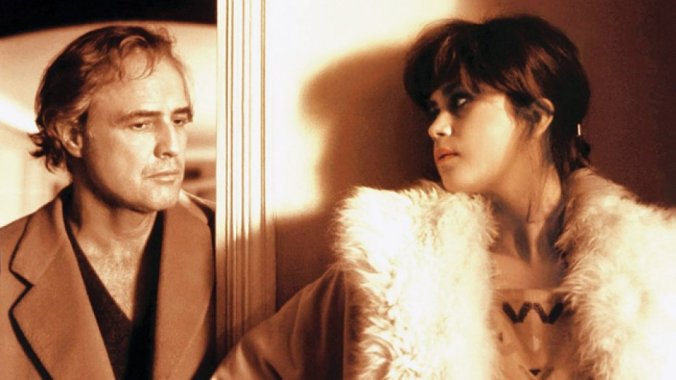
The Rape Of Maria Schneider

tango_2011_a_l

There are many stories of directors crossing ethical lines by using abusive, unfair and disrespectful methods obtain a vivid performance from an actor. None are as bad as this one.

Now a video has surfaced of Italian director Bernardo Bertolucci admitting that in his acclaimed 1972 film “Last Tango In Paris,” the infamous rape scene where Paul (Marlon Brando) sodomizes Jeanne (Maria Schneider) with a stick of butter was not consented to by the 19 year-old actress, who was not warned of the unscripted sequence before it was thrust upon her, and in her. She was, in short, raped.

No wonder it seemed so realistic.

“The sequence of the butter is an idea that I had with Marlon in the morning before shooting it,” Bertolucci said in the 2013 interview at La Cinémathèque Française in Paris. “I’d been, in a way, horrible to Maria, because I didn’t tell her what was going on…I wanted her reaction as a girl, not as an actress…I wanted her to react humiliated…I think she hated me and also Marlon because we didn’t tell her.”

The film was a sensation, though and both Brando and Bertolucci received Academy Award nominations, so it was worth it.

Right?

Apparently Schneider alluded to the rape in private conversations and interviews, but never explicitly enough that it was clear what had been done to her. Now Hollywood is reacting with appropriate outrage.

“The should be in jail,” tweeted actor Chris Evans. (Psst!...the actor is long dead, Chris, as is Schneider. Bertolucci is 76.)

What a disgusting story of complete ethics rot in the arts, and what a damning indictment of Bertolucci, Brando and the culture that produced them.

_____________________

Pointer: Fred

Workplace Dilemma: Do You Really Want To Know What Everyone Else Is Being Paid?

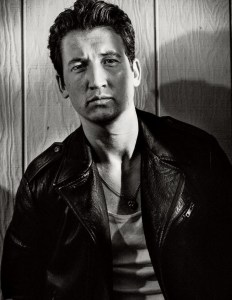
Miles Teller, who really showed THEM...

Non-La La Land star Miles Teller, who really showed THEM…

The male star of the buzzy movie musical “La La Land,” which opens next week, is Ryan Gosling. The role was originally offered to Miles Teller, who was a rising hot property and star on the threshold for acing the role of the abused drummer in “Whiplash,” like “La La Land” directed by Damien Chazelle.

But according to the people familiar wit negotiations, Teller was insulted by money he was offered,  a paltry $1 million, primarily because his putative co-star, Emma Stone,was being offered almost $3 million. After some back and forth, Chazelle replaced Teller with Gosling. Thus did Teller lose out on an a rare opportunity to make himself a major star in a film that is widely believed to be an Oscar magnet, and, of course, he won’t have that million dollars, either.

This a particularly vivid example of the ethics dilemma created by comparative salaries. I have not seen or heard of a satisfactory solution to it, from the management side or the labor side. Management would prefer that employees not know what other employees are making, and with good reason. The information can cause envy, bitterness, anger and lawsuits. Every employee has a tendency to believe they are more valuable, and indispensable, than they really are. Of course, some employers want to keep salaries secret because there are disparities that they cannot defend, or that may be illegal. While transparency is desirable to prevent unfair salary differences, however, it can make legitimate disparities untenable. Continue reading

More Ethics Movies For The Holidays: “Woman In Gold”

portrait-of-adele-bloch-bauer-i-by-gustav-klimt

The movie critics site “Rotten Tomatoes”calls “Woman in Gold” dull, which tells you pretty much all you need to know about “Rotten Tomatoes.” No, there are no explosions, no sex scenes, no CGI, just a well-acted, powerful story of how justice can take a long time to prevail, but given enough dedication, integrity and luck, it still does prevail with sufficient frequency to stave off despair.

“Woman in Gold” is a 2015 film starring Ryan Reynolds and Helen Mirren. It is a virtual docudrama telling the true story (mostly accurately) of Maria Altmann (Mirren), a plucky Jewish refugee in Los Angeles, who, assisted by her young lawyer, Randy Schoenberg, battled the government of Austria  to obtain the return of Gustav Klimt’s renowned portrait of her aunt, Adele Bloch-Bauer. That painting, along with more by Klimt and  other painters as well, were among the art treasures stolen by the Nazis  prior to World War II. The legal battle ended up before the Supreme Court of the United States, and the conflict was finally settled by a shocking decision by an Austrian panel of mediators. You can read about the real case here.

It may be dull to dull minds, as Red Smith famously said about baseball, but I have seen the film twice now, and it moved me to tears both times. “Woman in Gold” shows once more, as I fervently believe, that right can and often does triumph over bureaucracies, greed, power and stupidity, and that lawyers, maligned as they are, are often essential to that process. Schoenberg shows us the epitome of a zealous and courageous lawyer, making personal and professional sacrifices for a cause he comes to believe is important both to his client and to humanity. Continue reading

Holiday Ethics Assigment: Quick! Watch These 25 Great Old Ethics Movies Again Before You Go Bonkers Too!

movie-theater

I am compiling a new list of great ethics movies to help those troubled by the recently completed Presidential campaign, the election and its aftermath. I haven’t decided whether to reveal it piecemeal, or collectively as I have before, but I do need to begin by presenting the previous list of 25, actually the combination of several previous posts. Ethics films I have covered individually since those lists debuted, like Spotlight and Bridge of Spies, will eventually be added.

For now, here’s the top 25. Don’t pay attention to the order.

1Spartacus (196o)

The raw history is inspiring enough: an escaped gladiator led an army of slaves to multiple victories over the Roman legions in one of the greatest underdog triumphs ever recorded. Stanley Kubrick’s sword-and-sandal classic has many inspiring sequences, none more so than the moment when Spartacus’s defeated army chooses death rather than to allow him to identify himself to their Roman captors (“I am Spartacus!”)

Ethical issues highlighted: Liberty, slavery, sacrifice, trust, politics, courage, determination, the duty to resist abusive power, revolution, love, loyalty.

Favorite quote: “When a free man dies, he loses the pleasure of life. A slave loses his pain. Death is the only freedom a slave knows. That’s why he’s not afraid of it. That’s why we’ll win.” [Spartacus (Kirk Douglas)]

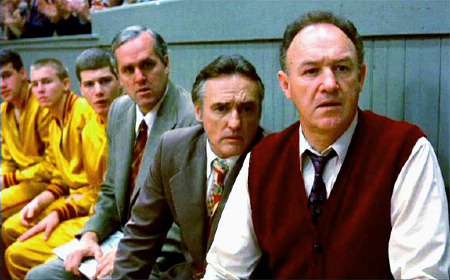
2.  Hoosiers (1986)

“Hoosiers” is loosely based on true story, but its strength is the way it combines classic sports movie clichés—the win-at-all-costs coach down on his luck, the remote superstar, over-achieving team—into a powerful lesson: it isn’t the final victory that matters most, but the journey to achieving it.

Ethical issues highlighted: Forgiveness, generosity, leadership, kindness, courage, loyalty, diligence, redemption.

Favorite quote: “If you put your effort and concentration into playing to your potential, to be the best that you can be, I don’t care what the scoreboard says at the end of the game, in my book we’re gonna be winners.” [ Coach Norman Dale (Gene Hackman)]

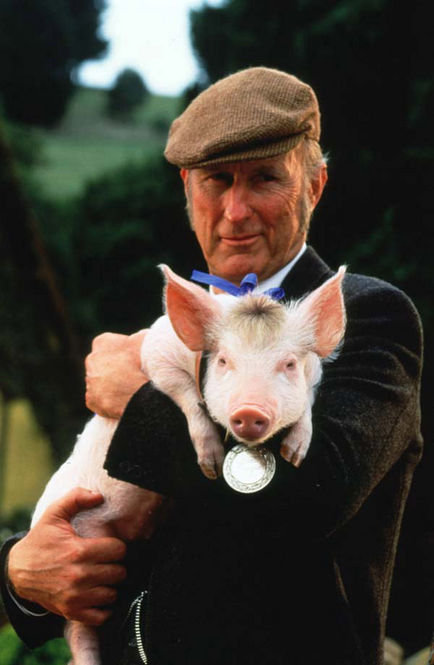
3. Babe (1995)

A wonderful movie about the virtues of being nice, the greatest civility film of all time. Second place: “Harvey.”

Ethical issues highlighted: Civility, kindness, reciprocity, loyalty, courage, love, friendship, bigotry, bias.

Favorite quote: “Fly decided to speak very slowly, for it was a cold fact of nature that sheep were stupid, and there was nothing that could convince her otherwise…The sheep decided to speak very slowly, for it was a cold fact of nature that wolves were ignorant, and there was nothing that could convince them otherwise”  The Narrator (Roscoe Lee Browne) Continue reading

“The Magnificent Seven” Ethics (Spoiler Warning!)

I have noted more than once what an excellent ethics movie the original 1960 Western classic “The Magnificent Seven” is. Occasional  Ethics Alarms contributor and apparently retired ethics blogger Bob Stone made an excellent case for what he calls his favorite ethics movie here, but the screenplay makes its own case with exchanges like this one:

Harry (Brad Dexter): “There comes a time to turn mother’s picture to the wall and get out. The village will be no worse off than it was before we came.”

Chris (Yul Brenner): “You forget one thing — we took a contract.”

Vin (Steve McQueen): “It’s not the kind any court would enforce.”

Chris: “That’s just the kind you’ve got to keep.”

or the very first scene, where gunslinger Chris volunteers to drive a horse-drawn hearse to Boot Hill where a group of armed bigots are threatening to shoot anyone who tries to bury a recently deceased Indian, who lived in the town, in the town’s cemetery along with “decent white folks.”  Steve McQueen (Vin) goes along as Chris’s wing-man, and the first two of the seven team up for an act of pure altruism.

The remake of the film opened over the weekend, and in part because I’m doing a program for the Smithsonian about the lore surrounding the movie, I saw it. And took notes.

It’s not bad. I enjoyed it. It is yet another example of how Hollywood no longer trusts the Western genre or its traditional trappings: the heroes in this and the heroes in most modern Westerns are now portrayed as super-heroes, ridiculously fast on the draw, absurdly accurate with every shot, and able to ride like circus performers. At a certain point, this silliness leads to a damaging loss of suspension of disbelief. The intrusion of gratuitous diversity was also annoying: the end features three heroes riding into the sunset, and they consist of an African-American, a Native American, and a Mexican. How they missed including a handicapped gay woman is mystifying, and somebody should organize a protest. Well, at least all the whites and the Asian guy were killed. That’s something. Continue reading

Sometimes It All Comes Together…But First, A Song!

As those who have read here for a while know, among my fondest passions, virtually life-long, are baseball,  theater and ethics. Today, I have the pleasure of seeing them all come together in a single event. How often does that happen?

At noon, I will be giving my most recent musical Continuing Legal Education ethics seminar, “Ethics Cabaret,” at Nationals Park in D.C. prior to the Mets-Nats game. “Ethics Cabaret,” like its six predecessors, presents legal ethics hypotheticals  as parodies of pop, rock, Broadway or country-western standards, presented by a professional performer. In this case, the performer is American Century Theater veteran Esther Covington, who accompanies herself on the keyboard. I write the songs that make the young lawyers cry, but she sings them, beautifully and often hilariously.

Speaking of Barry Manilow, my favorite segment of the seminar is the parody of one of his signature songs, which you can hear above—it’s an ear-worm, so be careful. The legal ethics version is about “Bridge of Spies” and the many quandaries raised in the film, which I examined in this post earlier this year. The parody is called “Who is the Client?,” lyrics-only copyrighted by ProEthics. Here they are….you can sing them along with Barry’s version! Continue reading