More Casting Ethics: The Stunt Performer Dilemma

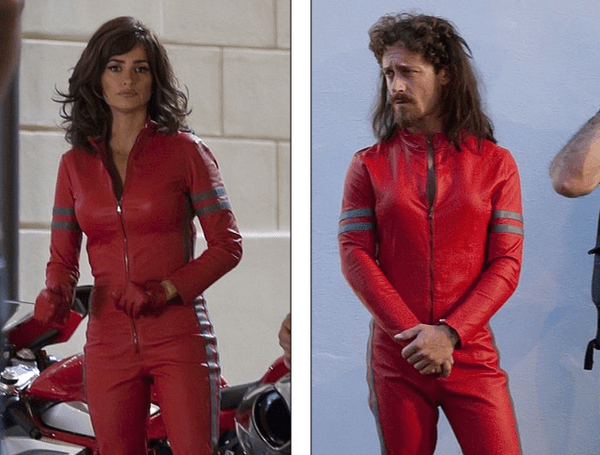
Penelope Cruz and her stunt double. Works for me!

Penelope Cruz and her stunt double. Works for me!

To recap: This month, we have already debated a wide range of casting ethics controversies…

The position of Ethics Alarms is identical in all three controversies. The only consideration in casting a role should be the director’s artistic assessment of who will do the best job meeting the artistic and commercial demands of that role, under the constraints of the project, which can include budget, locale and workplace conditions. Ethnicity, race and off-screen appearance should be secondary, and better still, irrelevant. Efforts to substitute political, diversity or affirmative action goals  for artistic ones undermine the integrity of the work, and are unfair to the audience as well as the work itself. Make-up is a tool of the performing arts, and is unrelated to blackface, which was a convention designed to denigrate African Americans. Confounding make-up used to allow a performer to play a character of a different ethnicity, race or skin shade with minstrelsy and blackface is intellectually dishonest or ignorant.

Now comes a new issue in this spectrum: the use of white, male stunt performers to substitute for black or female stars.

This article, in The Telegraph,  begins with the assumption that the practice is inherently unethical:

“For decades, white stunt performers would paint their faces and bodies black to double for black stars. Similarly, it was not uncommon for stuntmen to put on heels and wigs to double for women. This was not happening in a vacuum: all the while, black and female stunt performers were pressing for recognition and the right to work in the jobs for which they were best suited….There is an understanding within the studios that such incidents don’t look good and need to be kept hush-hush.”

If, as the article and the Hollywood activists it interviews assert, the practice of “blacking up” white stunt performers is designed to exclude qualified black stunt performers from working, then of course it is unethical. Given the close-knit stunt performer community, described as a white, male, “old boys network” in the essay, this is certainly possible, even likely. Nevertheless, the assertion that there is anything intrinsically unethical, unfair or wrong with using a disguised white stunt performer to substitute for a black star, a male stunt performer to substitute for a female star, or any other variation imaginable is, as with the Hispanic and Afghan complaints, based on non-existent ethical principles. Continue reading

Yet More Casting Ethics: Let’s Slap This Bad Idea Down For Good, Shall We?

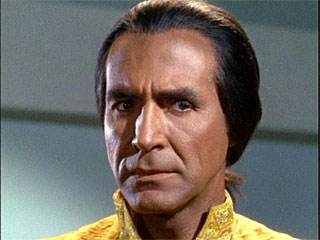
What? They cast a Hispanic actor as Khan instead of a genetically engineered Mongolian actor?

What? “Star Trek” cast a Hispanic actor as Khan instead of a genetically engineered Mongolian actor?

One way really terrible ideas take hold and do damage to the culture is for rational people to ignore them while zealots, ideologues and wackos keep repeating them over and over until they no longer sound as wrong as they are. Allowing illegal immigration to continue undiscouraged was one of those ideas, manifestly ridiculous and destructive. Now look where we are.

Ethic Alarms has had several posts on another really bad idea lately that is being pushed on the culture by political correctness and affirmative action activists: the loopy assertion that ethnic roles in movies and TV should only be cast with actors whose ethnic origins match those of the characters, and that if a director casts someone else, racism and bigotry are at play. Not too long ago, such an assertion would be regarded as too silly to discuss, but we have been through an intense period—the period known as “The Obama Era”— where tribal spoils, grievance-mongering and group identification have been accorded higher priority than, for example, talent, competence, experience or proven success. Through the fog of such distortions, the idea of rigid ethnic casting doesn’t seem so crazy, though it is crazy indeed.

I regard it my duty as someone who has both professional expertise in ethics and casting to slap down this rotten and indefensible  idea every time it raises its repulsive head. I recommend that you do the same.

Yesterday, Ana Valdez, the ex­ec­u­tive di­rec­tor of the Latino Donor Col­lab­o­ra­tive, wrote to the Washington Post to endorse film critic Ann Hornaday’s column complaining about white actors playing Middle Eastern roles (I managed to hold down my bile with that one), and  added…

She failed to ac­knowl­edge per­haps the big­gest white­wash­ing: the con­tin­ual cast­ing of white ac­tors to play Lati­nos. This has been go­ing on for decades, from Eli Wal­lach play­ing Calvera in “The Mag­nif­i­cent Seven” to Mark Ruf­falo play­ing Michael Rezen­des, a Bos­ton Globe re­porter, in “Spot­light.” Jen­nifer Con­nelly won an Os­car for her por­trayal of Ali­cia Lardé Nash in “A Beau­ti­ful Mind,” and Ben Af­fleck played Tony Men­dez in the Os­car-win­ning “Argo.” All of these char­ac­ters are Latino. Ethan Hawke, Meryl Streep, Cather­ine Zeta-Jones, Jeremy Irons and Glenn Close all have played Lati­nos in mo­tion pic­tures…. It does look like Hol­ly­wood is try­ing not to hire Lati­nos.

No, it doesn’t look like that at all. Continue reading

More Casting Ethics: In Search Of Acting Afghans

whiskeytangofoxtrot

The problem is that our educational system belches out new graduates who have been indoctrinated into rigid and often absurd ideas about right and wrong, They quickly fill the culture with those ideas and their freedom-stultifying emanations. The ideas act like viruses: if you don’t diagnose them and wipe them out, our very minds are at risk.

Here is an example, by mere coincidence, concerning casting ethics, the same topic as the recent post about how some African-Americans seem to want to discriminate on the basis of skin shade, at least when it comes to casting movies. (Who knew?) I was reading Entertainment Weekly on an airplane, as I only read Entertainment Weekly on airplanes, and this whole issue (The “Batman v. Superman” issue) struck me as being written by 22 year-olds. In a review of Tina Fey’s latest bomb (“Whiskey Tango Foxtrot”—“WTF,” or What the Fuck, get it?), reviewer Leah Greenblatt wrote this…

“And its more than a little disappointing that the two major Afghan supporting roles are filled by obviously non-Afghan actors….”

Leah doesn’t bother to explain why it’s a little disappointing; she just assumes it’s obvious, as in, “What? They didn’t hire real Afghans to play Afghans? I’m outraged!” Meanwhile, a young impressionable reader who assumed that a film reviewer has some expertise in such things, would absorb this heretofore unknown standard of decency and take it as cant. Contagion! This is how the political correctness virus eats our brains. Continue reading

Oscar Ethics Post Mortem: The Academy Just Guaranteed That Whatever Artists Win Oscars Next Year, They Will Have No Credibility Whatsoever

Good job, everybody!

Good news, Sipke! The fix is in: if you make a movie this year, no matter how crappy it is, you'll get a nomination. Happy now?

Good news, Sipke! The fix is in: if you make a movie this year, no matter how crappy it is, you’ll get a nomination. Happy now?

Thanks to an extended public self-flagellation by the Academy of Motion Picture Arts And Scientists last night, any future Oscar nominations or awards to black performers, designers, writers and directors will be regarded by the public and the Hollywood community itself with justifiable suspicion, doubts and cynicism. Last night’s ceremony, from Chris Rock’s all-race monologue to the choice of the music over the credits, was a tacit commitment by the Academy to henceforth and forever name sufficient minority nominees and winners regardless of the merits of their work or the comparative merits of their work to any white artists. Diversity is officially more important than merit. By hook or by crook, there will now be prominent honors to Hollywood blacks….even if some of the honored work is crap.

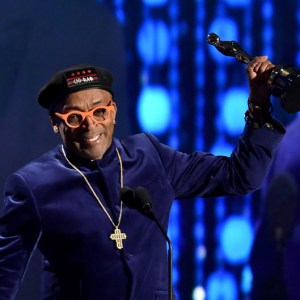
Not surprisingly, given its traditional and intellectually wan reflex liberalism, Hollywood painted itself into an affirmative action and quotas mandate. After last night, the voters won’t dare fail to nominate a whole bunch of blacks, so Spike Lee will come to the ceremony.  This does put pressure on black artists to actually turn in some outstanding, or at least plausibly decent, work to avoid making all those guaranteed nominations and awards look as phony and rigged as they will be. If the 2017 Oscars include nominations for Samuel L. Jackson playing Samuel L. Jackson, a lifetime achievement award for Sydney Poitier and a gift nod to James Earl Jones for a charming cameo as a crusty old hermit in “The Sandlot, Part 3,” it’s going to be even more obvious what’s going on. Continue reading

Ethics Quote Of The Month: “Bridge of Spies”

bridge-of-spies-656

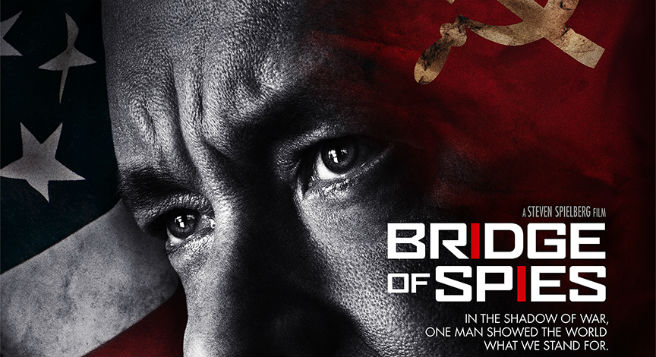
The shooting script for the Academy Award nominated film “Bridge of Spies” is now online. Written by Matt Charman and the Coen brothers, it, like the film that Steven Spielberg made out of it, provides an unusually accurate and nuanced portrayal of ethical lawyering. The movie is worth seeing, better more than once, and I expect that I will use many issues raised in it for class discussion as I teach legal ethics to lawyers this year.

There is one howlingly wrong scene, in which the lawyer, Jim Donovan (played by Tom Hanks) has a private discussion with the judge who will be sentencing his client, a convicted Russian spy. Donovan argues against a death sentence. If this happened, and I doubt it, it would have been an egregious ethics breach: this is called ex parte contact, and is strictly forbidden.

The film redeems this misstep many times over, especially in a scene that neatly explores both the duty of confidentiality and the duty of loyalty, as well as the crucial role of rules in society, and why “the ends justify the means” as well as those who advocate that philosophy must be rejected. “Ethics Bob” Stone told me that he now uses the scene in his business ethics classes.

The scene begins with Donovan meeting in a restaurant with a man who has been following him…. Continue reading

Keep It Up, Vulgarians

This morning I was listening to a CNN reporter in New Hampshire interviewing an ordinary, middle aged woman who is a Trump supporter, and she dropped a word inappropriate for TV live. The interviewer said, “You just said a cuss word!” and she just ignored him. In Phoenix, Don Harris, the head of Arizona’s largest NAACP chapter, was discussing the somehow national scandal over six white teenage Desert Vista High School students posting a photo of themselves aligned so the letters on their T-shirts spelled N-I-*-* E-R when he just couldn’t resist saying that a TV reporter who had just interviewed him had “nice tits”as he was speaking to another TV interviewer.

The recording was posted, and Harris had to resign as Chapter president. Called about the incident by another reporter, Harris said, among other things, “I’m really fucking sorry. I’m going to slash my wrists . . . Better yet, I’m going to throw myself out of a fucking window, except I’m on the first floor . . . I’m one of the best goddamned people in the state. They’ve seen me now, they’ve seen what I’ve done. I’ve given up my law practice. I’m down here six, seven days a week. That’s what my commitment is. I support NOW, the women’s organization — goddamn! — are you shitting me? Are you going to write this up?”

Why yes, Don, you vulgar fool, they are.

Harris and the dumb New Hampshire woman (I did say she was a Donald Trump supporter, right?) are victims of the crude and ugly culture of rudeness and incivility being imposed on the culture. If you don’t fight back, you will be sucked in: your civility and decency ethics alarms will become rusted and useless. At the 2016 Golden Globes awards, knowing they were on live TV and in front of an audience of adults, various presenters and award winners used the words cunt, sugar tits, fuck and fucking (twice). Speaking like this in private or controlled workplace surroundings is as old as the hills, but somewhere the principle has been lost in which such gutter discourse was understood to be ugly, lazy and the mark of an unmannerly lout when it leaks into more formal, or public settings. Who thinks this is a positive development? Continue reading

A Law Student Creates A Dishonest List Called “100 Times A White Actor Played Someone Who Wasn’t White” And Begins Another List Called “Times The Washington Post Published A Race-Baiting Piece Of Lazy Research And Sloppy Reasoning By Someone Who Looks Like She Will Be A Terrible Lawyer”

I didn’t set out to make the news media’s tolerating unethical race arguments the theme today, I really didn’t. While I was researching ESPN’s decision not to hire whites on its new website, to which the Wall Street Journal shrugged and said, by not saying, “Wait….WHAT?” in effect, “Sure, go ahead, discriminate!”, I came upon this piece of journalistic offal called “100 Times A White Actor Played Someone Who Wasn’t White” on the Washington Post website. It was authored by Meredith Simons, a law student and freelance writer. Well, Meredith, free-lance writers get away with these miserably researched and unfairly gathered articles a lot, but if you try to sneak this kind of crap past a judge or a senior partner, you’re going to have a rude awakening.

The fact that her article is incompetent and unfair in myriad ways doesn’t mean that Hollywood has been an equal opportunity employer throughout decades past. It hasn’t, but it has reflected the society and tastes in which it operates, and often has been a leader in race attitudes, as in the film “Imitation of Life.” There is work to be done, but careless articles like Simons’ just causes ignorance and confusion.

The immediate impetus for her hit piece on Hollywood casting was apparently the controversy over the casting of white actor Joseph Fiennes as Michael Jackson in a planned biopic. Simons calls him “African American icon Michael Jackson,” which is the lawyer’s trick of framing an issue to rig the debate—good one, Meredith—but skin-bleaching, child-molesting, whitebread pop star Jackson is hardly an “African American” icon: he’s a national pop icon who went out of his way to reject race and racial labels. That is what the song “Black and White” was about, right? Sure, the casting was a gimmick, but it’s a clever and legitimate gimmick that I would guess Jackson would have approved of enthusiastically. When they make “The Rachel Dolezal Story,” will Simons complain if a black actress gets the part?

So based on a phony race controversy—two, in fact, with the Oscar nomination spat included—Simons comes up with an even more phony list. “Despite decades of protests over racially inappropriate casting and the recent protests over the lack of diversity among Oscar nominees, filmmakers continue to cast white actors as minority characters on a depressingly regular basis,” she writes.

(A tip  for Social Justice Warriors: don’t write about the performing arts and casting if you don’t know a damn thing about either. The purpose of the performing arts is 1) to make a good product and 2) to make money. Anything that in any way interferes with either is irrelevant. There is no such thing as “racially inappropriate casting” if it furthers either of these objectives, or ideally both. It is not Hollywood’s job to eradicate racial inequality in the U.S. If it helps, that’s responsible and ethical of the movie-makers. This is, however, neither its art nor its business.)

Simons’ list is the epitome of the Texas Sharpshooter fallacy done badly. The fallacy consists of cherry-picking facts that support a predetermined argument and “drawing a circle around them” as if they are the sole relevant facts, while intentionally or mistakenly omitting equally relevant facts that would tend to disprove it. Bad lawyer that she is, she draws a metaphorical circle around “facts” that don’t even support her argument. I’m not going to go through the entire hundred  (say “thank-you, Jack!”) but I’ll point out some of her most egregious botches.

To begin with, either she didn’t see the movies on the list, or intentionally misrepresents them. My favorite, and typical of her terrible research: Continue reading

It’s Time To Play “Ethical, Unethical, Stupid, Or Tongue-In-Cheek?”, The Celebrity Quote Game Show!

Quiz show5

Are you ready, panel?

Here we go…I read to you from Mediate:

As the controversy continues over the white-washed pool of actors nominated this year for the Oscar awards, gay British actor Sir Ian McKellen has stated that homophobia is just as prominent in the film industry as racism.

McKellen, perhaps most prominently known for his work in the Lord of the Rings and X-Men series, spoke with Sky News today about why he felt sympathetic to the minority actors who felt like they were being overlooked by the Academy. While McKellen said that the concerns had merit, he also stated that black people were not alone in feeling disenfranchised by Hollywood.

“It’s not only black people who’ve been disregarded by the film industry, it used to be women, it’s certainly gay people to this day,” McKellen said. “And these are all legitimate complaints and the Oscars are the focus of those complaints of course.”

In a separate interview with The Guardian, McKellen also said that actors have won Oscars for playing gay characters in the past, and yet despite being nominated himself, no openly homosexual actor has ever won.

Now, you need some background for this round, panel. 

It is almost certain that a very large proportion of Hollywood is gay, and it has always been this way. The exact percentage is open to question, but those who have worked in other areas of show business encounter a large percentage of gay men, and also women, among designers, producers, directors, and actors, at all levels of the theater. In most college theater programs, there is a clear predominance of gays among both faculty and students. It would be strange indeed if the dominance of gays in the other aspects of show business was significantly different from the demographics in film. This suggests that there must be a strong contingent of closeted or privately gay men and women among the voting members of the Academy of Motion Picture Arts and Sciences.

So now your question, panel: Was Ian McKellen’s bold assertion…

“Ethical, Unethical, Stupid, Or Tongue-In-Cheek?”

You have…30 seconds!

Time’s up!

Continue reading

Ethics Film of the Year: “Spotlight”

No spoiler alerts necessary; I’m not going to say much about the film’s plot. Just go see it.

Sure, I was predisposed to like “Spotlight.” It’s about Boston, my home town; Fenway Park even appears in it, Red Sox and all.  I had also followed the unfolding Catholic Church sexual molestation scandal there that the Boston Globe broke in 2002. This was the Globe’s momentous investigative journalism series which showed the extent to which high-ranking Church officials allowed child predator priests to continue harming trusting kids, as the Church paid for confidential settlements to victims and transferred the criminal priests to other parishes, where they could, and did, strike again. “Spotlight” tells the story of how a group of Globe editors and reporters finally exposed a local conspiracy of corruption that spread across institutions and professions, and that pointed to a world-wide scandal that still haunts the Catholic Church today.

It’s a better ethics movie than “All The President’s Men,” to which it will inevitably be compared. Whether it’s a better movie or not is a matter of taste. (I liked it better.) Where the movie really shines, however, is how it raises so many of the ethics issues we routinely cover here, such as…

  • Legal ethics: the duty of lawyers to represent clients, confidentiality, and when, if ever, human ethics require the breaching of professional ethics.
  • Ethics corruptors, and what happens when admired, trusted and powerful people and institutions require their followers to show their loyalty by ignoring, rationalizing or covering up wrongful acts.
  • Journalism ethics: the business of journalism’s conflict with the duty of journalists to find and publicize the truth; how ambition, personal biases and non-professional concerns can warp perspective and performance
  • Ethics and religion, hypocrisy, and the institutional utilitarian choice to protect the whole when it means sacrificing individuals
  • Rationalizations, including the Saint’s Excuse and the King’s Pass, in which prominence and “good deeds” seem to justify double standards.
  • Hindsight bias, Moral luck, and more.

Continue reading

“White Christmas” Ethics (UPDATED)

White-Christmas

I just watched“White Christmas” again when my wife wasn’t around (she hates it), and was again struck by how entertaining it manages to be while making no sense at all and containing one ethics breach or gaffe after another. Ethics Alarms did an ethics review of the film in 2012, and reading it now, I realize I was too kind. This is an update.

Yes, I still get a lump in my throat when the old general, played by Dean Jagger, gets saluted by his reunited army unit, which has gathered at his struggling, snowless, Vermont inn on Christmas Eve to remind him that he is still remembered and loved. Nonetheless, it is by far the strangest of the Christmas movies, and also the most unethical. Though everything works out in the end, the characters in the sloppy plot spend the whole movie lying, extorting, betraying, manipulating and generally mistreating each other, always with no recriminations at all, and usually with no consequences either.

The movie starts out with guilt extortion. Army private Phil Davis (Danny Kaye) rescues his smooth-singing captain, Bob Wallace (Bing Crosby) from being crushed by a falling wall in a World War II bombing raid. (It’s not a plot feature, but the battlefield set for the entire opening sequence is itself unethical by being chintzy even by musical standards: it looks like they are filming a skit for a Bob Hope Christmas Special.  I thought it was lousy when I saw it as a kid.) Phil then uses Wallace’s debt of gratitude to coerce him into accepting the aspiring comic as a partner in Wallace’s already successful civilian act. This is obviously unfair and exploitative, but Bing accepts the ploy with good spirits, and the next we see  the new team of Wallace and Davis knocking ’em dead and rising in the ranks of stage stars. Now they have a show on Broadway, and as a favor to a mutual army buddy, they agree to watch the boonies nightclub act of “The Haynes Sisters” (Rosemary Clooney as Betty. and Vera-Ellen, of wasp-waist fame, as kid sister Judy. Did you know that in the “Sisters” number, Clooney sang both parts? ). Bing is immediately smitten with older sister Rosemary, but there is a tiff over the fact that younger sister Judy fooled them into seeing their act: she, not her brother, had sent the letter asking for a “favor.”

This is the first revealed of many lies woven into the script. This one is a double beach of ethics: Judy uses her brother’s name and contacts without his permission or knowledge, and lures Wallace and Davis to the night club under false pretenses.

Bing dismisses Judy’s cheat by noting that everyone “has an angle” in show business, so he’s not angry. Rosemary is, though, and reprimands Bing for being cynical. That’s right: Vera/Judy uses their brother’s name to trick two Broadway stars into watching their little act, and Rosemary/ Betty is annoyed because Bing/Bob (Bing’s bandleader, look-alike, sound-alike brother was also named Bob) shrugs off the lie as show business as usual. True, Betty is technically correct to flag the Everybody Does It rationalization, but shouldn’t she be grateful that Bob isn’t reaming out the Haynes sisters and leaving the club in a huff? OK, nice and uncynical is better than nice and cynical, but Bob is still giving her and Judy a break.

As we soon find out, however, Betty is prone to flying off the handle.

Continue reading