A Law Student Creates A Dishonest List Called “100 Times A White Actor Played Someone Who Wasn’t White” And Begins Another List Called “Times The Washington Post Published A Race-Baiting Piece Of Lazy Research And Sloppy Reasoning By Someone Who Looks Like She Will Be A Terrible Lawyer”

I didn’t set out to make the news media’s tolerating unethical race arguments the theme today, I really didn’t. While I was researching ESPN’s decision not to hire whites on its new website, to which the Wall Street Journal shrugged and said, by not saying, “Wait….WHAT?” in effect, “Sure, go ahead, discriminate!”, I came upon this piece of journalistic offal called “100 Times A White Actor Played Someone Who Wasn’t White” on the Washington Post website. It was authored by Meredith Simons, a law student and freelance writer. Well, Meredith, free-lance writers get away with these miserably researched and unfairly gathered articles a lot, but if you try to sneak this kind of crap past a judge or a senior partner, you’re going to have a rude awakening.

The fact that her article is incompetent and unfair in myriad ways doesn’t mean that Hollywood has been an equal opportunity employer throughout decades past. It hasn’t, but it has reflected the society and tastes in which it operates, and often has been a leader in race attitudes, as in the film “Imitation of Life.” There is work to be done, but careless articles like Simons’ just causes ignorance and confusion.

The immediate impetus for her hit piece on Hollywood casting was apparently the controversy over the casting of white actor Joseph Fiennes as Michael Jackson in a planned biopic. Simons calls him “African American icon Michael Jackson,” which is the lawyer’s trick of framing an issue to rig the debate—good one, Meredith—but skin-bleaching, child-molesting, whitebread pop star Jackson is hardly an “African American” icon: he’s a national pop icon who went out of his way to reject race and racial labels. That is what the song “Black and White” was about, right? Sure, the casting was a gimmick, but it’s a clever and legitimate gimmick that I would guess Jackson would have approved of enthusiastically. When they make “The Rachel Dolezal Story,” will Simons complain if a black actress gets the part?

So based on a phony race controversy—two, in fact, with the Oscar nomination spat included—Simons comes up with an even more phony list. “Despite decades of protests over racially inappropriate casting and the recent protests over the lack of diversity among Oscar nominees, filmmakers continue to cast white actors as minority characters on a depressingly regular basis,” she writes.

(A tip  for Social Justice Warriors: don’t write about the performing arts and casting if you don’t know a damn thing about either. The purpose of the performing arts is 1) to make a good product and 2) to make money. Anything that in any way interferes with either is irrelevant. There is no such thing as “racially inappropriate casting” if it furthers either of these objectives, or ideally both. It is not Hollywood’s job to eradicate racial inequality in the U.S. If it helps, that’s responsible and ethical of the movie-makers. This is, however, neither its art nor its business.)

Simons’ list is the epitome of the Texas Sharpshooter fallacy done badly. The fallacy consists of cherry-picking facts that support a predetermined argument and “drawing a circle around them” as if they are the sole relevant facts, while intentionally or mistakenly omitting equally relevant facts that would tend to disprove it. Bad lawyer that she is, she draws a metaphorical circle around “facts” that don’t even support her argument. I’m not going to go through the entire hundred  (say “thank-you, Jack!”) but I’ll point out some of her most egregious botches.

To begin with, either she didn’t see the movies on the list, or intentionally misrepresents them. My favorite, and typical of her terrible research: Continue reading

It’s Time To Play “Ethical, Unethical, Stupid, Or Tongue-In-Cheek?”, The Celebrity Quote Game Show!

Quiz show5

Are you ready, panel?

Here we go…I read to you from Mediate:

As the controversy continues over the white-washed pool of actors nominated this year for the Oscar awards, gay British actor Sir Ian McKellen has stated that homophobia is just as prominent in the film industry as racism.

McKellen, perhaps most prominently known for his work in the Lord of the Rings and X-Men series, spoke with Sky News today about why he felt sympathetic to the minority actors who felt like they were being overlooked by the Academy. While McKellen said that the concerns had merit, he also stated that black people were not alone in feeling disenfranchised by Hollywood.

“It’s not only black people who’ve been disregarded by the film industry, it used to be women, it’s certainly gay people to this day,” McKellen said. “And these are all legitimate complaints and the Oscars are the focus of those complaints of course.”

In a separate interview with The Guardian, McKellen also said that actors have won Oscars for playing gay characters in the past, and yet despite being nominated himself, no openly homosexual actor has ever won.

Now, you need some background for this round, panel. 

It is almost certain that a very large proportion of Hollywood is gay, and it has always been this way. The exact percentage is open to question, but those who have worked in other areas of show business encounter a large percentage of gay men, and also women, among designers, producers, directors, and actors, at all levels of the theater. In most college theater programs, there is a clear predominance of gays among both faculty and students. It would be strange indeed if the dominance of gays in the other aspects of show business was significantly different from the demographics in film. This suggests that there must be a strong contingent of closeted or privately gay men and women among the voting members of the Academy of Motion Picture Arts and Sciences.

So now your question, panel: Was Ian McKellen’s bold assertion…

“Ethical, Unethical, Stupid, Or Tongue-In-Cheek?”

You have…30 seconds!

Time’s up!

Continue reading

Ethics Film of the Year: “Spotlight”

No spoiler alerts necessary; I’m not going to say much about the film’s plot. Just go see it.

Sure, I was predisposed to like “Spotlight.” It’s about Boston, my home town; Fenway Park even appears in it, Red Sox and all.  I had also followed the unfolding Catholic Church sexual molestation scandal there that the Boston Globe broke in 2002. This was the Globe’s momentous investigative journalism series which showed the extent to which high-ranking Church officials allowed child predator priests to continue harming trusting kids, as the Church paid for confidential settlements to victims and transferred the criminal priests to other parishes, where they could, and did, strike again. “Spotlight” tells the story of how a group of Globe editors and reporters finally exposed a local conspiracy of corruption that spread across institutions and professions, and that pointed to a world-wide scandal that still haunts the Catholic Church today.

It’s a better ethics movie than “All The President’s Men,” to which it will inevitably be compared. Whether it’s a better movie or not is a matter of taste. (I liked it better.) Where the movie really shines, however, is how it raises so many of the ethics issues we routinely cover here, such as…

  • Legal ethics: the duty of lawyers to represent clients, confidentiality, and when, if ever, human ethics require the breaching of professional ethics.
  • Ethics corruptors, and what happens when admired, trusted and powerful people and institutions require their followers to show their loyalty by ignoring, rationalizing or covering up wrongful acts.
  • Journalism ethics: the business of journalism’s conflict with the duty of journalists to find and publicize the truth; how ambition, personal biases and non-professional concerns can warp perspective and performance
  • Ethics and religion, hypocrisy, and the institutional utilitarian choice to protect the whole when it means sacrificing individuals
  • Rationalizations, including the Saint’s Excuse and the King’s Pass, in which prominence and “good deeds” seem to justify double standards.
  • Hindsight bias, Moral luck, and more.

Continue reading

“White Christmas” Ethics (UPDATED)

White-Christmas

I just watched“White Christmas” again when my wife wasn’t around (she hates it), and was again struck by how entertaining it manages to be while making no sense at all and containing one ethics breach or gaffe after another. Ethics Alarms did an ethics review of the film in 2012, and reading it now, I realize I was too kind. This is an update.

Yes, I still get a lump in my throat when the old general, played by Dean Jagger, gets saluted by his reunited army unit, which has gathered at his struggling, snowless, Vermont inn on Christmas Eve to remind him that he is still remembered and loved. Nonetheless, it is by far the strangest of the Christmas movies, and also the most unethical. Though everything works out in the end, the characters in the sloppy plot spend the whole movie lying, extorting, betraying, manipulating and generally mistreating each other, always with no recriminations at all, and usually with no consequences either.

The movie starts out with guilt extortion. Army private Phil Davis (Danny Kaye) rescues his smooth-singing captain, Bob Wallace (Bing Crosby) from being crushed by a falling wall in a World War II bombing raid. (It’s not a plot feature, but the battlefield set for the entire opening sequence is itself unethical by being chintzy even by musical standards: it looks like they are filming a skit for a Bob Hope Christmas Special.  I thought it was lousy when I saw it as a kid.) Phil then uses Wallace’s debt of gratitude to coerce him into accepting the aspiring comic as a partner in Wallace’s already successful civilian act. This is obviously unfair and exploitative, but Bing accepts the ploy with good spirits, and the next we see  the new team of Wallace and Davis knocking ’em dead and rising in the ranks of stage stars. Now they have a show on Broadway, and as a favor to a mutual army buddy, they agree to watch the boonies nightclub act of “The Haynes Sisters” (Rosemary Clooney as Betty. and Vera-Ellen, of wasp-waist fame, as kid sister Judy. Did you know that in the “Sisters” number, Clooney sang both parts? ). Bing is immediately smitten with older sister Rosemary, but there is a tiff over the fact that younger sister Judy fooled them into seeing their act: she, not her brother, had sent the letter asking for a “favor.”

This is the first revealed of many lies woven into the script. This one is a double beach of ethics: Judy uses her brother’s name and contacts without his permission or knowledge, and lures Wallace and Davis to the night club under false pretenses.

Bing dismisses Judy’s cheat by noting that everyone “has an angle” in show business, so he’s not angry. Rosemary is, though, and reprimands Bing for being cynical. That’s right: Vera/Judy uses their brother’s name to trick two Broadway stars into watching their little act, and Rosemary/ Betty is annoyed because Bing/Bob (Bing’s bandleader, look-alike, sound-alike brother was also named Bob) shrugs off the lie as show business as usual. True, Betty is technically correct to flag the Everybody Does It rationalization, but shouldn’t she be grateful that Bob isn’t reaming out the Haynes sisters and leaving the club in a huff? OK, nice and uncynical is better than nice and cynical, but Bob is still giving her and Judy a break.

As we soon find out, however, Betty is prone to flying off the handle.

Continue reading

Ethics Quiz: “Don’t Eat The Daisies” Ethics

I’m trying to take a breather from the Syrian refugees, President Obama, Presidential candidates and rampaging college students, and an ethics issue from a 1960 Doris Day comedy is as far away as I can get.

In “Don’t Eat the Daisies,” a movie loosely (very loosely) based on the humorous mommy anecdote best seller by Jean Kerr, wife of then New York Times  theater critic Walter Kerr, newly appointed prime drama critic Larry McKay (David Niven), his lovely wife Kate (Doris), their four rambunctious kids, their sheep dog and their wise-cracking house-keeper (Patsy Kelly)—yes, this was essentially the “Brady Bunch” without the girls—move to the country. Doris gets roped into the annual musical (for charity, natch) of the very amateur Hooten Holler Players. They ask the Larry for a play they could use, and he isn’t very helpful, so Doris calls up Alfred North, an old friend of the couple and a successful novelist played by Richard Haydn, best known as the sneaky Max in “The Sound of Music,” who has just had his first Broadway play skewered by McKay (Integrity! Integrity!). He is secretly seething and seeking revenge. The betrayed playwright siezes his chance: he sends Doris an obscure, terrible Foriegn Legion melodrama by an unknown author, and the Hooten Holler players turn it into a musical spoof.

Days before its ready to open, after all the tickets have been sold, Doris asks David to watch a rehearsal. He immediately recognizes the plot and some particularly awful lines: he wrote the  play under a pseudonym! “BWAHAHAHAH!” laughs Max, or rather Alfred. Larry’s  onetime friend, now relentless foe, has set the critic up for humiliation and professional doom, for other New York critics have been tipped off that the play getting its world premiere by the Hooten Holler Players is in fact the creation of the hypercritical critic himself. Once this abysmal mess is seen and taken apart by the critic’s rivals, his judgment will never be taken seriously again.

Niven demands that the production be cancelled, and forbids the Players to perform his work. Doris, who stars in the play, begs him to reconsider: the humble theater group will be ruined, and the charity will lose much needed support. The critic explodes: why does she care more about the amateur theater group than her husband’s career? She tells him that his theatrical power and fame has made him petty and mean. Their marriage seems ready to disintegrate.

Your retro-Hollywood Ethics Alarms Ethics Quiz of the Day is..

What’s going on here, and what do you do about it?

Continue reading

Ethics Revelations In The Obituaries: Media Bias And “Big Al”

obits

Ethics revelations lurk everywhere, even in the obituaries pages:

The Surprising Integrity of “Big Al”

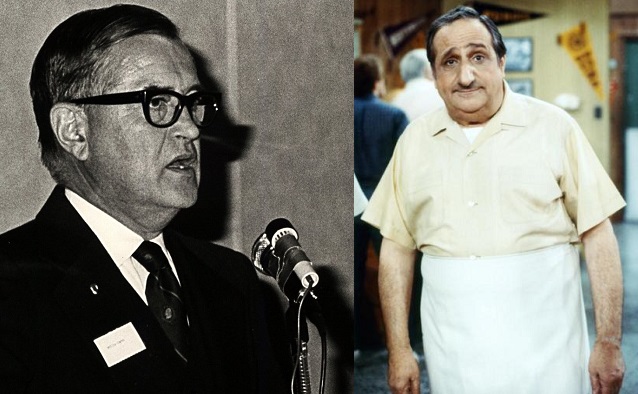
Al Molinaro, the rumpled, large proboscused character actor best known as “Murray the cop” on TV’s “Odd Couple” and the proprietor of
the diner on “Happy Days,” where he mastered the world-weary catch phrase of “Yeeeaaahh, yeah-yeah-yeah…,” died last week at the advanced age of 96. In his Washington Post obituary, I gained new admiration for Al. (I was always an Arnold (Pat Morita) man, myself, and if you don’t understand that reference, good for you. You ignored “Happy Days.”) At the end of Al’s obit, there was this…

“In 1990, Mr. Molinaro told the Chicago Tribune that Marshall, who went on to direct hit films including “Pretty Woman,” tried unsuccessfully to recruit him for big-screen work.

“I can’t work in movies with Garry because I’m so square that I won’t be in a movie that has four-letter words in it,” Mr. Molinaro said. “That puts me pretty much totally out of films these days. . . . You get to a point where you don’t want to do just anything for the career. You gotta live with yourself.”

Now that’s integrity, and in show business, of all places. Our culture remains civil and benign only if we are willing to fight for it, or at least withhold our assistance as it deteriorates. Molinaro had the courage and integrity to accept this civic duty, Few among as do, and actors—especially specialty character actors like Al, almost never do. I remember that Mel Brooks harbored dreams of getting John Wayne to play “The Waco Kid” in “Blazing Saddles,” and said that he ran in to the Duke and talked him into reading the screenplay.  Wayne called him the next day and told Brooks that he loved the script, but that he couldn’t take the role. “It’s too dirty,” he said. “I’m John Wayne!” But he said he laughed all night as he read it, and promised to be “at the head of the line” when it opens. Continue reading

World Series Ethics: His Decision Didn’t Work, But Mets Manager Terry Collins Was Right

KC wins

The end of the baseball season is traumatic for me, except for those few years that ended in Boston Red Sox championships, and those two golden glow seasons (1967 and 1975), when the team lost at the end but fought such a good fight that it felt like they had won. In my house we refer to the days between the end of the World Series and the beginning of Spring Training as The Dark Time.

On the plus side, I have about three more hours every day to do something productive.

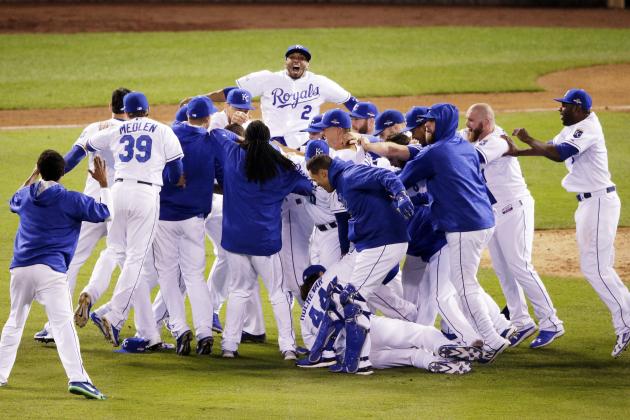
For the second consecutive year, baseball ended with an ethics conundrum in its final game. Last night, as the Kansas City Royals battled back from a late deficit again (they had done so in the previous game as well) to take the Series four games to one,against the New York Mets at Citi Field, the topics were trust, courage, leadership, and most of all, consequentialism. The latter is to baseball as apple pie—or baseball— is to America.

Let me set the stage. The Royals, having stolen the previous game from the Mets’ grasp by an unlikely 8th inning rally (the Mets lost one game all season when they were leading in the 8th; they lost two such games in this five game series). With their backs against the wall (on the short end of a 3-1 game tally, the Mets had to win last night to avoid elimination), the New York sent their ace, the remarkable Matt Harvey, to the mound to do what aces do: win. Harvey had it all last night. After eight innings, the Royals hadn’t scored.  Harvey looked fresh in the eighth, and got the Royals out without surrendering a baserunner.

All season long, with a close game after eight innings, Mets manager Terry Collins would tell his starter to take a seat and let his closer finish the game. This is standard practice now: complete games by starting pitchers are a rarity. Once, not too long ago, the league leader in that category would be in double figures. Now the top is usually about five. Moreover, nobody cares. The best teams have 9th inning specialists who almost never lose one-run leads, much less two, and the Mets had a great one, Jeurys Familia.

After Harvey’s dominant eighth, the Fox cameras recorded the drama unfolding in the Mets dugout. Collins’ pitching coach told Harvey that his night was done and Familia, as usual, would close out the game. Harvey pushed past the coach to confront his manager, passionately. Let me finish it, he insisted. The game is mine. Continue reading

A Bobby Jindal Critic Asks, “Would I Be Uncivil If I Were To Suggest That Somebody Punch This Man Right In His Dick?” Why Yes, I Believe You Would…

By all means, this should be our model for political discourse...

By all means, this should be our model for political discourse…

Gov. Bobby Jindal, desperately trying to stay relevant in the Republican race to be the party nominee in 2016, weighed in on the Oregon community college shooting with an extensive blog post that shows, if nothing else, that the Fifties live. It’s pretty awful, designating as “root causes” of the violence such Oldies but Stupidees as “glorifying violence” in popular culture (Actually, this one is closer  to 1650), movies, TV shows, music (Run, Tipper! This is your chance!) the decline of religion ( “…we flaunt the laws of God and common decency”—I think you mean “flout” there, Bobby), the decline of the family…you know the list. The problem with Jindal’s rant—other than its exaggerations, poor writing and hysterical tone— is that taking any single event and attributing it to generic causes is demagoguery, and as intellectually dishonest as  blaming the NRA every time someone is murdered with a gun.

The Huffington Post, mocking Jindal’s eminently mockable screed, asked “What about gun violence?” as if Jindal left out the one obvious “root cause.” Is it really necessary to point out that gun violence is responsible for gun violence? But that’s anti-gun code for guns, you see. Guns are responsible for the shootings. Take the evil guns away, and nobody dies! That this facile and deceitful dead end reasoning is so accepted among progressives and liberals that it is considered an obvious truth is depressing, but I digress.

Jindal is also depressing, since the only remedy for violent movies, TV shows and video games is censorship of one kind or another, and you know what the Right will do if it gets that started: TV couples will again be sleeping in twin beds like Rob and Laura Petrie by edict. His lack of logic is depressing too—how does someone like this get elected a governor?—when he attributes alleged conditions like “the family is a mess” to a rampage by someone who might have been raised like Opie Taylor but whose mind just snapped, as they have a tendency to do. Again, a single incident has specific causes. Jindal’s main argument is exactly as exploitative and dishonest as using the Oregon shooting to lobby for gun regulations that wouldn’t have stopped the shooting. Continue reading

“Kill The Messenger” And The CIA Crack Story Ethics Train Wreck

I finally saw the 2014 docudrama “Kill the Messenger,” which completed—I hope—the passenger list for a 30-year-old Ethics Train Wreck.

The film purports to be the true story of Gary Webb, the San Jose Mercury News reporter who wrote the sensational “Dark Alliance” series of investigative reports in 1996. The series attributed the inner city crack cocaine explosion in part to Nicaraguan anti-government Contra rebels in  the 1980s funding their efforts by drug smuggling and sales, all with the knowledge and assistance of the  CIA. The agency, the series claimed, was acting to support the Contras despite Congress rejecting the Reagan administration’s request for aid. Like most Hollywood accounts of anything, the film distorts and misrepresents facts to make a better story. Unfortunately, Webb’s story is made more dramatic by making him out to be a tragic hero and victim of a sinister alliance between the mainstream media and the U.S. Government. That’s not exactly true, fair or accurate, and in this matter, affirmatively harmful.

The fastest way to survey this particular Ethics Train Wreck is to list the distinguished passengers, more or less in order of boarding: Continue reading

The Ethics Alarms New NFL Season Ethics Quote Of The Week: Ex-Football Fan Steve Almond

football-brain-injury-symptoms

“We know, on some level, that a good many of the players we cheer for each Sunday will be revealed as all too human when they wind up battling dementia. But… fans have a whole suitcase full of rationalizations intended to preserve our right to consume, and thus sponsor, this hyper-violent game. “The players know the risks!” we insist. “They get paid millions!” But ultimately, our most effective dodge resides in our willingness to view the game as one big movie.”

Steve Almond, author of “Against Football, in an essay today for the Washington Post titled “Hollywood’s version of the gridiron is just fantasy football
(It hypes violence for the sake of drama — then reassures us everything is okay)”

Perfect timing for this article, a reminder of what fans are really watching and cheering for during the pro football season, which began today.

No, I won’t be watching.

Her’s another chilling quote from Almond’s article: Continue reading