Shirley Temple Black (1928-2014)

shirley-temple

Shirley Temple Black, perhaps best known to most of us as Little Miss Marker, Curly Top,the Littlest Rebel, Heidi, or, most of all, Shirley Temple, died overnight. I learned of her passing this morning in a Facebook update from child performer advocate Paul Petersen, like Shirley a distinguished and successful former child star who has dedicated his post-performing career to important causes. He wrote:

SHIRLEY TEMPLE passed in the night. She was 85…and no age at all. What a life. What a treasure. A woman of amazing courage and dignity.The world was enriched by her accomplishments. She will always be a part of us. Rest now, Shirley Temple. We love you.

There really isn’t too much more that needs to be said.  Few human beings ever began having a positive impact on society so soon in life (she began making adults smile at the age of three, when she made her first film) and continued to do so for so long. From show business, a profession that so often leads to ethical rot,  and a rarefied corner of it infamous for leaving its practitioners spoiled, narcissistic, addicted to fame and dysfunctional, Shirley Temple emerged as an adult who was industrious, courageous, intelligent, compassionate, and dedicated to public service. Often dismissed and mocked as a washed-up child star, she proved again and again that her detractors were not just wrong to pre-judge her, but spectacularly wrong. She excelled as a diplomat, serving as U.S. ambassador to Ghana and Czechoslovakia, using her Hollywood fame to open doors and hearts, and also as the U.S. delegate to the United Nations. Temple never played the celebrity: my favorite Shirley moment was when she returned, in her seventies, to join a large group of former Oscar winners (hers was a special award, at the age of six) on the stage of the Academy Awards. As they announced the names of the famous performers and the camera panned the group, it was Shirley who received the most loving response from the Hollywood crowd, which stood and cheered. Shirley looked genuinely surprised, beamed, showed those famous dimples, and handled it, as she always handled everything, with charm and poise.

A proto-feminist, Shirley Temple was one of the first celebrities to go public with a diagnosis of breast cancer, and raised national awareness by promoting a frank discussion of mastectomies. In her autobiography, she also had the courage to point out the predominance of sexual predators in the the Hollywood power structure and culture, recalling that MGM musical unit head Arthur Freed*, whose career is celebrated in “Singing in the Rain,” exposed himself to her in his office when she was barely 13. (She laughed at him; he threw her out of his office.)

Historians credit Shirley Temple with saving the movie studio RKO and raising America’s spirits during the Great Depression; she also was a Cold Warrior, a mother, the inspiration for a best-selling line of dolls as well as the alcohol-free cocktail that still bears her name, and one of a kind. It is fair to say we will never see her like again.

Late in life, she told an interviewer, “If I had it all to do over, I wouldn’t change a thing.” How many of us can say that sincerely?

Paul was right. What a life!

Take a curtain call, kid…

* The original version of the post incorrectly referred to Arthur Freed as Alan Freed, who was an  influential disc jockey in the early days of rock and roll. I apologize to both of them.

“Jack Reacher” Ethics, Or Why It’s No Fun Going To Movies With Me

Jack ReacherI thought the Tom Cruise action film “Jack Reacher” would be a good way to escape from an aggravating day at the ethics grindstone, but no. It was rapidly apparent that this would be one of these movies with a sociopathic vigilante hero—Reacher (Cruise) is kind of a cross between Steven Segal and Billy Jack, summarily executing bad guys and completely uninterested in nuances like trials. The character, from the pen of British writer Jim Grant, is supposed to be 6’5″ tall and weigh about 250, so having the diminutive Cruise play him is a bit like having Danny DeVito play Fezzik in “The Princess Bride.”

The main annoyance was the typical persistent misrepresentation of legal ethics, especially the attorney-client privilege. Reacher is dark, free-lance, drifting Mr. Fix-it, and he is engaged by lawyer Helen Rodin as an investigator to prove her client, an ex-military sniper who is being prosecuted by her father, the DA, for apparently gunning down five random innocent victims in a shooting spree, is something more than a mad dog killer. In their initial conversation about the case, Cruise asks if what he is telling her is privileged. She assures him that it is, but the sequence is misleading, for Reacher and for the audience. Continue reading

If You Are Surprised To Learn That “No Animals Were Harmed During The Making Of This Film” Doesn’t Mean That No Animals Were Harmed During The Making Of The Film, Then You Havn’t Been Paying Attention To The Ethical Culture In Hollywood

"OK, the tiger almost drowned. No harm, no foul, right?"

“OK, the tiger almost drowned. No harm, no foul, right?”

Hollywood abuses its child actors routinely, and you really believed it was kind to animals?

Today the Hollywood Insider carries a thorough exposé revealing that the American Humane Association, which supposedly monitors films for their treatment of  animals and grants the familiar“No Animals Were Harmed” trademark accreditation seen at the end of film and TV credits, participates in the covering-up of animal deaths and cruelty as much as it prevents them. The report suggests that the AHA  has been thoroughly co-opted by the industry, so that it is not an objective advocate for the creatures it supposedly represents, but a willing participant in audience deception.

The smoking gun quote may be this one, from Dr. S. Kwane Stewart, the veterinarian who took over as the national director of the AHA’s “No Animals Were Harmed” program in April:

“This whole idea that we’re cozy with the industry — it’s simply not the case. We first and foremost want to keep the animals safe…[but] we need to keep in mind that [the producers and directors of productions the AHA monitors] want to arrive at their vision as well.”

This means, of course, that the AHA representatives are not acting as an advocate for the animals, but as a participant in the film-making process that balances the lives and welfare of the animals against the concerns, needs and profit motives of the speaking, spending, threatening and otherwise powerful human beings with which they share a species and common values. Gee–I wonder who has the most weight in reaching that balance… Continue reading

“Would You Rather”: An Ethics-Horror-Health Care-Dinner Party In Hell Movie You May Have Missed

“Would You Rather” is an odd 2012 film that sets up a film-long set of unlikely ethical dilemmas for its characters to solve. Desperate to save her dying brother with expensive medical treatment she can’t afford, the heroine (played by Brittany Snow) finds herself at a dinner party with seven other desperate strangers, hosted by a wacko family of millionaires who will help one of them after the others have been “eliminated” during the course of the evening. As what is described as a game progresses, each contestant is put through escalating rounds of risk, pain and torture in which they must make various Sophie’s Choices, such as…

  • Would you rather administer a painful shock to yourself with high-voltage electricity, or the person next to you? What if that person has been weakened by a previous shock? What if she is in a wheelchair?

More Evidence That Word Banning Is Unethical

WHAT did you say?

WHAT did you say?

There is more to discuss, a lot more, regarding what I will now call “The Klosterman Apology,” because it sounds like  a Robert Ludlum novel. For now, however, since it is fresh in my jet-lagged mind, I’d like to focus on the inevitable result of declaring certain words and phrases so objectionable, hurtful, uncivil or politically incorrect that extraordinary means are employed to eliminate them. In the case of The Klosterman Apology, the words were “retard” and “retard,” and a Mom with a blog threatened “The Ethicist” from the New York Times magazine with an onslaught of political correctness bullies if he didn’t immediately express his abject contrition for having used these words in a harsh way a decade ago, in another job that didn’t directly involve ethics. Chuck capitulated, gracefully and well. As I will discuss in another post, I don’t think he had much choice. Still, word-banning is an ugly, and ultimately unethical business. Continue reading

Post Script: Rant Sports And Its “Top 25 Athletes Turned Actors of All Time” vs. The Ethics Alarms List

Suprise!

Surprise!

This topic isn’t really worth two posts, I know, but after some commenters mentioned other obvious examples of distinguished athletes turned actors the Rant Sports  incompetent post ignored, I did some additional research myself.

The first thing I discovered was that Renae Juska’s list was about 90% lifted from other similar web lists that had appeared on various sites over the past three years. These lists were almost as incompetent as hers, though one of them included Johnny Weismuller, and another included Esther Williams. For the most part, however, all included the same basic group of athlete-actors, clearly serving as the basis for the next blogger looking for a cheap post.

This is how bad or misleading information gets stuck in the public mind and discourse, and the process occurs regarding topics and issues that matter, not just gratuitous lists.. This is why politicians still talk about women only earning 78 cents for every dollar earned by a man, and how 50% of marriages end in divorce. This how rumors and mistaken beliefs take hold and spread, changing the results of elections and the course of history…lazy writers cribbing dubious facts, unsubstantiated stats and lazy compilations of data from other lazy writers. The phenomenon feeds itself. Take the current case: someone asking themselves the question, “Gee, I wonder who the most prominent actors who were also accomplished athletes are?” will google the question and check four or five sites, read virtually the same names on all of them, and think the topic has been accurately researched. That will be an illusion, and soon there will be another post, confirming the earlier ones, and further validating informational garbage.

I also checked the biographies of actors whom I knew had athletic backgrounds, and the performing credits of prominent athletes whom I knew worked in TV, stage and films. I also considered some of the candidates, omitted by Juska, that various commenters had suggested. The result is this list of 30 athlete/actors who were ignored by Juska and Rant Sports, every one of whom is beyond question more deserving of a place on an “all-time” list of “Top 25 Athletes Turned Actors” than many of the choices on the Rant Sports list, and quite a few of which—Robson, Williams, Henie, Rigby, Weismuller, Crabbe, Norris, Beradino, and others—should rank near the top. Continue reading

Unethical Website and Post Of The Month: Rant Sports And Its “Top 25 Athletes Turned Actors of All Time.”

Maybe #1---but that would take some research.

Maybe #1—but that would take some research.

It is true that you cannot trust everything, indeed most things, that you read on the web, and thus should approach all supposedly factual statements with skepticism and ready access to Google. That does not excuse websites that recklessly and irresponsibly spread misinformation however, or that through their own laziness and ignorance spread ignorance among others.

A slick sports website called Rant Sports provided a particularly galling example this week, when it presumed to post a list it called “Top 25 Athletes Turned Actors of All Time.” All the sports sites draw traffic with this kind of trivia-mongering, but even trivia-mongering demands a modicum of research, care, and fact. This may be an opinion piece, but it isn’t the opinions that are problematical. Renae Juska, the fraud who created the list, obviously engaged in no research at all, so her”Top 25″ really was “First 25 I was able to jot down on a piece of paper.” As I will now demonstrate, Juska, on a site dedicated to sports, made an assertion that is demonstrably and objectively false, and under color of authority, misleading readers but just as wrongly, unfairly neglecting many athletes who would have to be ranked on any such list that was given the amount of research expected of a seventh-grader’s term paper.

Here are some examples of how misleading and poorly researched the list is:

  • To begin with, all but one of the “top athletes” are male. Wrong. One of the greatest athletes-turned actresses died just last month, the great Esther Williams, a record-setting competitive swimmer who was unable to compete in the Olympics because of World War II. She was an athlete IN her movies, the most famous of which were aquacade spectaculars featuring Williams swimming, diving, doing what was later called synchronized swimming (she is credited with helping to create the sport), all while smiling and looking drop-dead gorgeous in a one-piece bathing suit. Does Williams qualify as a “Top Actor” over Number 16 on Juska’s idiotic list, the immortal Stacy Keibler, the only woman he deems worthy? Here are her credentials, as Juska cites them: “She began acting in 1998 and was a professional wrestler from 1999-2006. Her most well-known appearances have been in WWE Judgement Day, Summerslam and WrestleMania XX. She has also had guest appearances on How I Met Your Mother, Mayne Street and Samurai Girl.”  Esther’s credits are here, and you can see her in action here:

To say there is no contest is not an opinion, it is fact. Of course, Juska probably never heard of Esther Williams, which means that she has no business making this list at all.

Believe it or not, it gets worse… Continue reading

Ethics Dunce: Jim Carrey

 Jim Carrey, not fooling as much as we thought...

Jim Carrey, not fooling as much as we thought…

There are no rule, laws, or principles of ethics that requires that an actor who usually portrays an ass actually has to be an ass, but if there were, Jim Carrey would be in complete compliance with them.

Jim Carrey announced via Twitter that he now objects to  “Kick-Ass 2,” the soon-to-be-released movie he stars in, citing as his reason the December, 2012 Sandy Hook shooting, which he apparently thinks will be made worse by the movie, or would have been caused by it if the film had come out earlier, or, well, something.  “I did Kick-Ass a month [before] Sandy Hook and now in all good conscience I cannot support that level of violence,” Carrey tweeted. “I meant to say my apologies to others [involved] with the film. I am not ashamed of it but recent events have caused a change in my heart.” Continue reading

Superhero Ethics: The Duty To Rescue

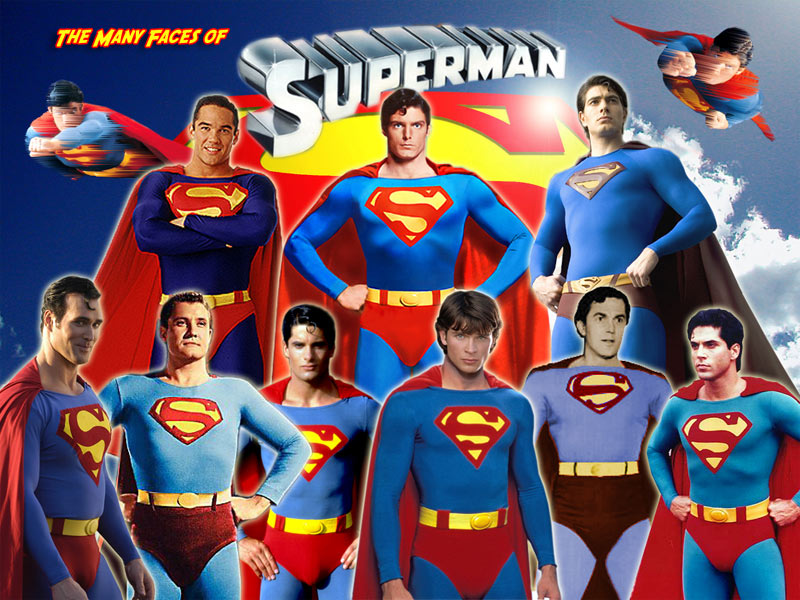
Which is the cold, calculating, utilitarian face?

Which is the cold, calculating, utilitarian face?

In the new Superman film, Supie fails to rescue an important character in distress after the character requests that he allow him to perish.

Lawyer and superhero obsessive James Daily, co-author of “The Law and Superheroes” and the Law and the Multiverse blog, has taken to his keyboard to examine whether the transplanted Kryptonian had a legal duty to rescue the victim anyway.

His conclusion, and the law’s, is no. Daily writes,

“People are sometimes surprised to learn that, by default, there is no obligation under American law to help or rescue other people…Even “Good Samaritan” laws do not create an obligation to act as a Good Samaritan, but instead only encourage such acts of kindness by shielding some would-be rescuers from legal liability if they accidentally end up hurting rather than helping the victim. This “American rule” (not to be confused with the American rule for attorneys’ fees) applies even when a life could be saved with the most minimal of effort. As a result it has been called “morally repugnant” and “revolting to any moral sense,” but it is nonetheless the law in most states….” Continue reading

Ethics Hero Emeritus: Annette Funicello

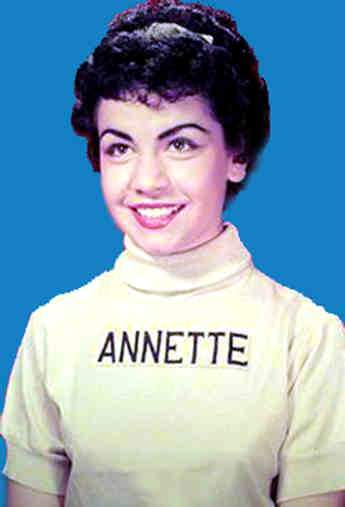
AnnetteAnnette died yesterday after a long, painful decline triggered by the onset of Multiple Sclerosis 25 years ago. To understand why she was an Ethics Hero, one need only read the New York Times obituary, which captures her essence well. One is an Ethics Hero if one goes through life caring about others, being loyal, responsible and fair, never inflating one’s own value and worth above those you live and work with, and having integrity.

If you can do all this while being a celebrity, TV star, teen idol, recording star,  movie star and adolescent lust object, you are more than an Ethics Hero. You are a miracle. That was Annette. Continue reading