Unethical Website and Post Of The Month: Rant Sports And Its “Top 25 Athletes Turned Actors of All Time.”

Maybe #1---but that would take some research.

Maybe #1—but that would take some research.

It is true that you cannot trust everything, indeed most things, that you read on the web, and thus should approach all supposedly factual statements with skepticism and ready access to Google. That does not excuse websites that recklessly and irresponsibly spread misinformation however, or that through their own laziness and ignorance spread ignorance among others.

A slick sports website called Rant Sports provided a particularly galling example this week, when it presumed to post a list it called “Top 25 Athletes Turned Actors of All Time.” All the sports sites draw traffic with this kind of trivia-mongering, but even trivia-mongering demands a modicum of research, care, and fact. This may be an opinion piece, but it isn’t the opinions that are problematical. Renae Juska, the fraud who created the list, obviously engaged in no research at all, so her”Top 25″ really was “First 25 I was able to jot down on a piece of paper.” As I will now demonstrate, Juska, on a site dedicated to sports, made an assertion that is demonstrably and objectively false, and under color of authority, misleading readers but just as wrongly, unfairly neglecting many athletes who would have to be ranked on any such list that was given the amount of research expected of a seventh-grader’s term paper.

Here are some examples of how misleading and poorly researched the list is:

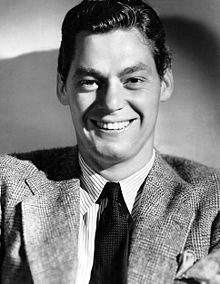
  • To begin with, all but one of the “top athletes” are male. Wrong. One of the greatest athletes-turned actresses died just last month, the great Esther Williams, a record-setting competitive swimmer who was unable to compete in the Olympics because of World War II. She was an athlete IN her movies, the most famous of which were aquacade spectaculars featuring Williams swimming, diving, doing what was later called synchronized swimming (she is credited with helping to create the sport), all while smiling and looking drop-dead gorgeous in a one-piece bathing suit. Does Williams qualify as a “Top Actor” over Number 16 on Juska’s idiotic list, the immortal Stacy Keibler, the only woman he deems worthy? Here are her credentials, as Juska cites them: “She began acting in 1998 and was a professional wrestler from 1999-2006. Her most well-known appearances have been in WWE Judgement Day, Summerslam and WrestleMania XX. She has also had guest appearances on How I Met Your Mother, Mayne Street and Samurai Girl.”  Esther’s credits are here, and you can see her in action here:

To say there is no contest is not an opinion, it is fact. Of course, Juska probably never heard of Esther Williams, which means that she has no business making this list at all.

Believe it or not, it gets worse… Continue reading

Ethics Dunce: Jim Carrey

 Jim Carrey, not fooling as much as we thought...

Jim Carrey, not fooling as much as we thought…

There are no rule, laws, or principles of ethics that requires that an actor who usually portrays an ass actually has to be an ass, but if there were, Jim Carrey would be in complete compliance with them.

Jim Carrey announced via Twitter that he now objects to  “Kick-Ass 2,” the soon-to-be-released movie he stars in, citing as his reason the December, 2012 Sandy Hook shooting, which he apparently thinks will be made worse by the movie, or would have been caused by it if the film had come out earlier, or, well, something.  “I did Kick-Ass a month [before] Sandy Hook and now in all good conscience I cannot support that level of violence,” Carrey tweeted. “I meant to say my apologies to others [involved] with the film. I am not ashamed of it but recent events have caused a change in my heart.” Continue reading

Superhero Ethics: The Duty To Rescue

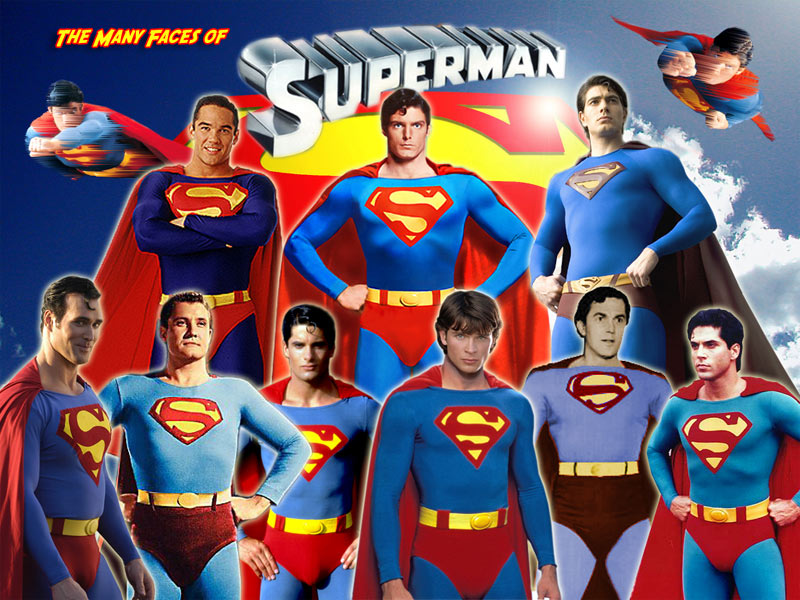
Which is the cold, calculating, utilitarian face?

Which is the cold, calculating, utilitarian face?

In the new Superman film, Supie fails to rescue an important character in distress after the character requests that he allow him to perish.

Lawyer and superhero obsessive James Daily, co-author of “The Law and Superheroes” and the Law and the Multiverse blog, has taken to his keyboard to examine whether the transplanted Kryptonian had a legal duty to rescue the victim anyway.

His conclusion, and the law’s, is no. Daily writes,

“People are sometimes surprised to learn that, by default, there is no obligation under American law to help or rescue other people…Even “Good Samaritan” laws do not create an obligation to act as a Good Samaritan, but instead only encourage such acts of kindness by shielding some would-be rescuers from legal liability if they accidentally end up hurting rather than helping the victim. This “American rule” (not to be confused with the American rule for attorneys’ fees) applies even when a life could be saved with the most minimal of effort. As a result it has been called “morally repugnant” and “revolting to any moral sense,” but it is nonetheless the law in most states….” Continue reading

Ethics Hero Emeritus: Annette Funicello

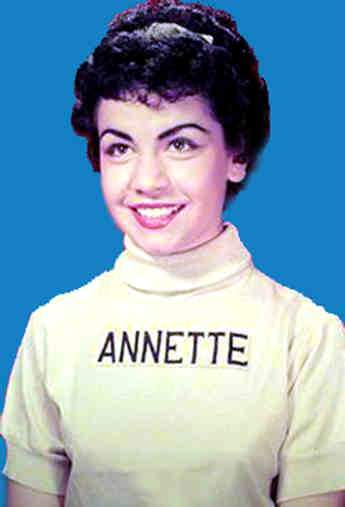
AnnetteAnnette died yesterday after a long, painful decline triggered by the onset of Multiple Sclerosis 25 years ago. To understand why she was an Ethics Hero, one need only read the New York Times obituary, which captures her essence well. One is an Ethics Hero if one goes through life caring about others, being loyal, responsible and fair, never inflating one’s own value and worth above those you live and work with, and having integrity.

If you can do all this while being a celebrity, TV star, teen idol, recording star,  movie star and adolescent lust object, you are more than an Ethics Hero. You are a miracle. That was Annette. Continue reading

Ethics Quote of the Week: Moses (Charlton Heston) in “The Ten Commandments”

The evil that men should turn their brothers into beasts of burden, to be stripped of spirit, and hope, and strength – only because they are of another race, another creed. If there is a god, he did not mean this to be so.

—-Moses, as played by Charlton Heston and scripted by seven writers, in Cecil B. DeMille’s “The Ten Commandments.” answering to the Pharoah Seti’s question, “Then why are you forcing me to destroy you? What evil has done this to you?”

The Ten Commandments“The Ten Commandments” is so extravagantly fun and entertaining that, I must confess, I never watched it as an ethics film until tonight, as ABC once again broadcast the Biblical epic on an Easter weekend. This quote especially struck me as remarkable for a film made by an infamously rigid conservative, DeMille, in 1956.

On Dec. 1, 1955, Rosa Parks was arrested for refusing to give up her seat on a Montgomery city bus. The next twelve months were tense, difficult days in which the entire U.S. population was undergoing a wrenching cultural debate regarding human rights.  On Dec. 6, 1955, the civil rights boycott, led by Marin Luther King, of Montgomery city buses began. January 1956 saw Autherine Lucy, a black woman, accepted for classes at the University of Alabama in Tuscaloosa, the first African-American ever allowed to enroll.  On Jan. 30, the home of Martin Luther King, Jr. was bombed in Montgomery. February 4 saw rioting and violence on the campus of the University of Alabama and in the streets of Tuscaloosa. Lucy had to flee the campus, and the university’s Board of Trustees barred her from returning. On the 22nd of that month, warrants were  issued for the arrest of the 115 leaders of the Montgomery bus boycott. A week later, courts ordered Lucy readmitted, but the school expelled her. Continue reading

Coming To A Ballot Box Near You: “The Naked Senator Principle”?


Go Ashley!

Go Ashley!

Ashley Judd, the accomplished Hollywood actress-feminist (and the non-singing sister in the singing Judd family), is seriously contemplating a run for the Kentucky Senate as a Democrat against Senate minority leader Mitch McConnell. There is a potential problem, however, implies the conservative “Daily Caller.” Judd will become the first serious contender for high national office who has appeared on screen numerous times in various degrees of nudity. The blog’s entertainment editor has done her research with no less an authority than MrSkin.com, and reports that Judd went topless for 1996′s “Normal Life” and went topless and bottomless in 1999′s “Double Jeopardy.” Meanwhile, in both 1996′s “Norma Jean and Marilyn” and 1999′s “Eye of the Beholder,” Judd went full frontal while also baring her comely tush. Ashley had a lesbian sex scene in 2002′s Oscar-nominated “Frida,” and “Mr. Skin”  categorized nine other scenes as “sexy,” and if you can’t trust him on such matters, whom can you trust?

We have learned that former porn stars can’t be middle school teachers or beauty queens, that art teachers can’t be seen painting pictures with their butts (even with paper bags over their heads) and that “the Naked Teacher Principle” decrees that those we entrust with the the shaping of young minds cannot be trusted to do the job if their naughty bits are just a mouse click away. Doesn’t it follow that there is a “Naked Senator Principle”? Surely internet nudity that was previously available at the Multiplex is a disqualification for Congress. Isn’t it? Shouldn’t it be? Continue reading

And One More…UPDATE: “Cheated Out Of Their Final Bows: Hollywood Snubs Its Own At The Oscars…”

Yesterday I attempted in a small way to make up for the injustice perpetrated on their own by the Academy of Motion Picture sciences, by noting the passing of ten talented and worthy film actors who were unfairly and inexplicably left off the Oscar’s “In Memoriam” feature. I was afraid that I missed someone important, and sure enough, I did. And it was…

Susan Tyrell (1945-2012)

susan-tyrrell

Leaving out Tyrell was especially callous by the Academy (not that dissing the others was not), because, first of all, she was a previous nominee for Best Supporting Actress (for John Huston’s “Fat City,” made in 1972), and second, because Tyrell had battled courageously against multiple health issues while doggedly trying to pursue her craft.  In 2000, she lost both legs as a result of a rare blood disease, but stayed active, performing in seated roles and voice parts to the end. Susan Tyrell was an electric performer, a veteran of Broadway and Off-Broadway, fearless, quirky, and unforgettable.

Except, apparently, by her colleagues in Hollywood.

I’m sorry I missed you first time around, Susan.

Cheated Out Of Their Final Bows: Hollywood Snubs Its Own At The Oscars, And Worse Than Ever

Oscars

Once, the excuse that routinely issued from the Academy of Motion Picture Sciences when a significant film actor was omitted from the annual “In Memoriam” segment at the Oscars—“There just wasn’t enough time!”-–seemed almost plausible. It was still a lousy and dishonest excuse, don’t get me wrong: in a broadcast that routinely approaches four hours and wastes time like it is money in Washington, we are supposed to believe that there aren’t three seconds to give a proper send-off to the likes of Harry Morgan (last year) or Farrah Fawcett (the previous one)? That excuse won’t fly at all now, however, as some diabolical deal with the behind the camera members, the warped priorities of the Oscar show’s Broadway musical nerd producers, Neil Meron and Craig Zadan, and the final decisions regarding who would be featured in the movie industry’s public goodbye being made by, apparently, throwing darts at a dartboard combined to produce the most extensive and egregious snubs within memory.

This is a television broadcast and tailored for the public audience, after all. The Academy gives its technical awards in a separate private ceremony: wouldn’t that be the  place to bid a respectful farewell to the seemingly endless list of deceased publicity agents, make-up artists,movie executives and key grips whose completely unrecognizable faces and names were paraded before us last night, often with out of context quotes that made no sense at all? Then, guaranteeing that the “we ran out of time!” alibi would be risible, the segment’s editors chose a non-actor for the prestigious final place on the death list, composer Marvin Hamlisch, as an excuse to drag Barbra Streisand into the proceedings. I appreciate Hamlisch’s achievements, but his movie credits were not so extensive as to justify the honor (we are basically talking about one Academy Award-winning song, “The Way We Were,” and his arrangements of Scott Joplin’s music in “The Sting”), and the award show’s misbegotten “theme” of movie music was not sufficient justification to place a non-actor in the position of highest honor.

Meanwhile, the following actors, all who made significant contributions to American film in their careers, were cheated out of their final bow, and we, the film-going audience, were cheated of our chance to remember them, and say goodbye. It was a disgrace.

Ethics Alarms isn’t the Academy, but here, like last year, is its salute to the faces and careers Oscar forgot: Continue reading

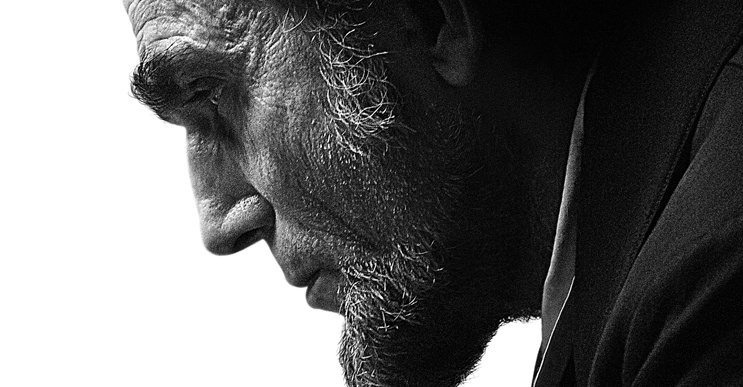
More “Lincoln” Criticism: What Does Spielberg’s Film and Ethics Alarms Have In Common?

lincoln crop

I won’t hold you in suspense, and no, it’s not that I expect or deserve any awards. What Steven Spielberg’s justly acclaimed historical drama and this blog have in common is being unfairly peppered with a presumptuous breed of complaint that nears the top of my all time “Unfair Criticisms List.”

Here, the complaint usually takes this form: “Why are you writing about Chex Mix labeling when [Pick ONE:] a) we’re about to give up our sovereignty and let anyone just break the law to come across the border? b) Fox news lies to the public every day? c) there are unethical things going on that I care about more ?” Regarding Lincoln, the favorite criticism in the media and on the web of late has been that in the process of showing the sausage-making and political maneuvers that allowed the 13th Amendment to become the law of the land, Spielberg neglected to show the evils of slavery, which, of course, if he were to do without risking the criticism (which he would get anyway) that he did so in a perfunctory and inadequate way, would require either lengthening the film to an unwatchable length, or cutting out significant portions of the story he chose to tell. This obnoxious complaint was brought to a full-throated crescendo by Tony Gittens, director of the Washington, D.C., International Film Festival, in today’s Washington Post. He writes:

“Steven Spielberg’s film “Lincoln” will probably walk away with this year’s Academy Award for best picture, and that would be unfortunate. As Post film critic Ann Hornaday pointed out , “Enslaved people and the terror they endured in the 19th-century South are never portrayed” in the film. Mr. Spielberg did not shy away from depicting the extent of man’s institutionalized cruelty in his moving “Schindler’s List.” Why not in “Lincoln”? Worse, the film ignores the contributions African Americans made toward their own liberation. Instead, they are portrayed as loyal Union soldiers and observers from the balcony as Congress debates their fate. This was simply not the case. From the moment they were brought to these shores, African Americans resisted their enslavement, spawning leaders such as Harriet Tubman and Frederick Douglass. In fact, at the time “Lincoln” takes place, Washington had a significant free black population, many of whom walked the streets in front of the White House. But this is not portrayed. “Lincoln” concludes with stalwart abolitionist Thaddeus Stevens, a white man, in bed with his compliant African American housekeeper. All of the dramatic political maneuvering we had just witnessed on the screen, the struggle of lawmakers to come to grips with how to help make right years of unjust legalized oppression — all of this is reduced to the conjugal relationship between two disparate individuals. Here, once again, “Lincoln” misses the point.”

No, Mr. Gittens misses the point, and it should be a hard point to miss. Continue reading

Comment of the Day: “Are Musicals Reviewed By Ignoramuses?”

WordPress, for only the second time in three years, was kind enough to include my recent post about Stephen Sondheim’s footnote lament that musicals were the only art form largely reviewed by incompetents. This has brought a lot of new visitors to Ethics Alarms, and I hope they are interested in ethics as well as musicals. One such new reader is a Prof. Ratigan, who apparently does some reviewing himself. Here is his Comment of the Day, on the Jan 3, 2013 post (Here’s something weird—last year’s Jan.3 post was also about Sondheim!) Are Musicals Reviewed By Ignoramuses?…

Two points. The first is the literacy issue. I think it’s interesting that it would appear that a good reviewer is either a novice or a master where everything in between is amateur. I’ve been reviewing movies for the past year (on a blog) and I’ve definitely felt that in my own stuff. The more movies I watched and connections I could draw, the more it became apparent how much I really needed to do to become proficient. I needed to read a lot more literature, read a lot more scripts, and watch a lot more movies. Otherwise, I would start to create a context but have a nagging feeling that the director/writer/actor (who are often scholars of film) might/probably know more than me and were doing something else. It seems that these musical reviewers aren’t expected to take the next step from reviewer to analyst. Continue reading