Hump Day Ethics Hunches, 4/29/2020….There Must Be An Ethics Analogy For A Five-Headed Shark

1. Idiotic movie ethics. Last night I watched “Five-Headed Shark Attack,” hoping to discover a new all-time bad horror movie. First, it wasn’t that terrible, meaning that it was a total waste of time. Mainly, however, the title was a shark bait-and-switch. The preview (and the posters) said the shark had 5 heads and was shaped like a starfish. No, it had four heads, and looked exactly like a Disney cartoon character’s glove.

Late in the movie, we saw that the monster’s tail had a mouth (once we saw it gobble a foot that slipped by the four heads), but it had no eyes, guided the shark like a tail, and no character in the film ever saw it, so the creature was never once called a “Five-Headed Shark.” My wife and I had an argument over my contention that just because a tail has teeth, that doesn’t make it a head.

2. I think we can fairly conclude now how serious progressives and Democrats are about standing up for women and fighting against sexual assault and harassment: They’re not . #MeToo and #TimesUp are clearly political weapons to be used against conservatives, Republicans and abortion opponents, real or otherwise, and certain groups, like black Democrats, are immune, even from adverse opinion.

Nice. A lot of women are going to suffer because of this, and they can blame their own alleged advocates.

In Maryland, right next door to Virginia where African-American Lt. Governor Justin Fairfax is still in office despite having been credibly accused of rape and sexual assault , Democrat Kweisi Mfume easily won a special election yesterday to finish the term of the late Elijah Cummings, retaking a Maryland congressional seat he held for five terms before leaving to lead the NAACP.  Mifune had to leave the NAACP after it was revealed that he dated one staffer while its president, and another alleged she had been sexually harassed by him and was passed over for a promotion after she rejected his advances, according to the Baltimore Sun. She then threatened to sue the organization, so the NAACP paid her a $100,000 hush money payment in 2004 to avoid the lawsuit. This was the sort of scandal that drove Bill O’Reilly off Fox News. Continue reading

Movies To Keep You Happy, Inspired And Optimistic, Part II

Another boring weekend approaches, so it’s time to finish this project.

Some further clarifications on this continuing list: it’s not a list of my favorite films by any means. The criteria is, as the title above would suggest, the emotions the film leaves you with, or that well up inside your earthly vessel during the film. One reader reacted to the first list by dissing “Rocky,” but here’s the point: when I first saw that film in a stuffed theater, and the movie reached the part in the climactic fight when, after seemingly being out-boxed and outclassed by the champion Apollo Creed, Rocky sees Creed lets his guard down for an instant and , dazed and bleeding, suddenly hits him with a series of the body blows we had seen him practicing on sides of beef . The crowd in a Philly bar goes bananas, and the audience in the theater went bananas too, only louder, cheering and applauding. I’ve seen a lot of movies, and I can count on the fingers of one hand the times I’ve witnessed that kind of spontaneous eruption of excitement and elation from an audience.

I also have to explain why what anyone here knows are my four  favorite comedies don’t appear. They just don’t fit the theme, that’s all. They make me laugh, pretty much every time, but they can’t be called inspiring by any normal definition of the word.

Here’s the second half of the list:

Sea Biscuit (2003)

I’m not a horse enthusiast,nor a fan of the sport of kings, but this is a wonderful story, and mostly true.

Star Wars (1977)

Oh, all right..

Sleepless in Seattle (1993)

And so much better than the stupid movie it evokes, “An Affair To Remember.”

Angels With Dirty Faces (1938)

The only movie ever where a guy’s walk to the electric chair makes you smile..

Spartacus (1960)

Maybe my favorite story out of history ever, plus Cory Booker’s favorite scene…

The Wizard of Oz (1939)

Obligatory.

To Sir With Love (1967)

The list needs an inspirational teacher movie (and only one) so I pick this one. Lulu’s song scene makes the difference.

Bells Are Ringing (1960)

Probably the least seen or appreciated film on the list. But Judy Holiday radiates the joy of performing and the genius of a comic pro here like few others, and attention must be paid. Forget that it was her last movie…

As Good As It Gets

One of the best romantic comedies ever, and one of the strangest. Plus an incredibly cute dog… Continue reading

From The Archives: “Ethics Quote of the Week: Moses (Charlton Heston) in ‘The Ten Commandments'”

Seven years ago, while  watching the annual showing of “The Ten Commandments ” on ABC, I realized how advanced its civil rights message was for its time, and what an interesting and instructive ethics movie the epic was. This post was the result. I’ve edited it a bit.

The movie hasn’t been shown yet in 2020 ; it’s scheduled for the weekend before Easter, which is late this year.  I never miss it, and if you watch the film with your ethics alarms primed, you might see it in a whole new dimension.

_______________________________

“That evil that men should turn their brothers into beasts of burden, to be stripped of spirit, and hope, and strength – only because they are of another race, another creed. If there is a god, he did not mean this to be so!”

—-Moses, as played by Charlton Heston and scripted by seven writers, in Cecil B. DeMille’s “The Ten Commandments,” answering the Pharoah Seti’s question, “Then why are you forcing me to destroy you? What evil has done this to you?”

“The Ten Commandments” is so extravagantly fun and entertaining that, I must confess, I never watched it as an ethics film until tonight, as ABC once again broadcast the Biblical epic on an Easter weekend. This quote especially struck me as remarkable for a film made by an infamously rigid conservative, DeMille, in 1956.

Less that a year earlier, on Dec. 1, 1955, Rosa Parks was arrested for refusing to give up her seat on a Montgomery, Alabama city bus. The next twelve months were tense, difficult days in which the entire U.S. population was undergoing a wrenching cultural debate regarding human rights.  On Dec. 6, 1955, the civil rights boycott of Montgomery city buses, led by Rev. Martin Luther King , began. January 1956 saw Autherine Lucy, a black woman, accepted for classes at the University of Alabama in Tuscaloosa, the first African-American ever allowed to enroll.  On Jan. 30, the Montgomery home of Martin Luther King, Jr. was bombed. February 4 saw rioting and violence on the campus of the University of Alabama and in the streets of Tuscaloosa. Lucy had to flee the campus, and the university’s Board of Trustees barred her from returning. On the 22nd of that month, warrants were  issued for the arrest of the 115 leaders of the Montgomery bus boycott. A week later, courts ordered Lucy readmitted, but the school expelled her. Continue reading

“Dark Waters”

“Dark Waters” is another ethics movie, and a very good one. Like all ethics movies involving real events, it is also educational—disturbingly so.

The film, which was released late last year, dramatizes the story of attorney Robert Bilott and his nearly two decades of battling DuPont over its deliberate (okay, “negligent”) poisoning of citizens and the entire nation with the chemicals used to manufacture Teflon. Yes, “the entire nation”: that’s not hyperbole. It is believed that the unregulated and toxic chemical called PFOA is in the system of everyone living in the U.S. as a result of DuPont’s conduct.

The movie has not been a prominent success, perhaps because is treads along the well-worn path of earlier movies about similar corporate scandals and class action law suits, like  Julia Roberts’ “Erin Brockovich” ( Pacific Gas and Electric Company ) and  John Travolta’s “A Civil Action” (Beatrice Foods and W. R. Grace and Company). The star (and producer) of “Dark Water,” Mark Ruffalo, isn’t quite in the same star category as Travolta and Roberts, but an A-list cast was assembled to back him, including Anne Hathaway, Tim Robbins,  Victor Garber, Mare Winningham, and Bill Pullman.

“Dark Waters,” horrifying to say, is mostly accurate. It was also one of those films where I was left wondering, “How did I miss this? Was it me, or was the story under-reported? If it was the latter, why was it under-reported?” The film was based on the 2016 New York Times Magazine article “The Lawyer Who Became DuPont’s Worst Nightmare” as well as that lawyer’s memoir. Exposure,” giving  Bilott’s perspective on his 20-year legal battle against DuPont. In the end, the company paid over $600 million  in a settlement, which was far less than they should have paid; I’m sure the company regards this as a victory. (Its stock went up after the announcement.)

Imagine: Continue reading

Movies To Keep You Happy, Inspired And Optimistic , Part I

This is a very subjective and personal list. The main requirement was that they all must be, in the final analysis, upbeat. I also have seen all of them more than once.

I left out some obvious choices that I have already devoted full posts to on Ethics Alarms, like “It’s a Wonderful Life” and “White Christmas.” Some of the films on my ethics movies list appear here, but not for the same reasons. Obviously, I encourage you to see those movies too.

Below is approximately the first half of the list. The rest will be along eventually.

Rocky (1976)

It still holds up as one of the most exhilarating sports movies of all time.

The Natural (1984)

Great score and a happy ending, unlike the novelette it was based on.

True Grit (1969)

This is the John Wayne version, with two of the go-to scenes I’ll play when I want to feel better.

E.T. (1982)

Other than the unforgivable rainbow at the end, a near perfect feel-good film.

Stand By Me (1986)

One of two Stephen King movies on the list. Does anyone not love this film?

The Shawshank Redemption (1994)

And the other King movie. has any suicide in a film been quite this satisfying?

Erin Brockavich (2000)

More or less a true story, which makes it especially inspiring.

Singin’ in the Rain (1952)

If Donald O’Connor walking up walls doesn’t get your heart pumping and your mouth smiling, nothing will. Continue reading

Ethics Train Wreck Analysis: The Richard Jewell Case

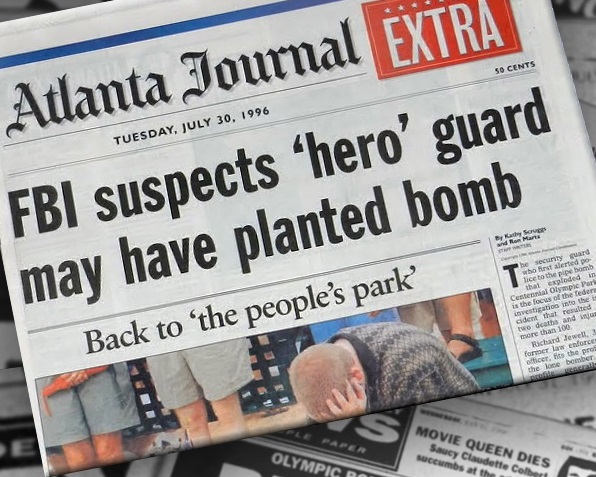
“Richard Jewell,” Clint Eastwood’s excellent but much maligned film about a historical episode with many ethics twists and turns, is extremely accurate and fair in all respects, except for the glaring exception of the screenwriter  Billy Ray’s representation that reporter Kathy Scruggs obtained the information that Jewell was under suspicion by the FBI in exchange for one night stand with the agency’s lead investigator. This was the point where the Richard Jewell Ethics Train Wreck of 1996 acquired a car containing the 2019 movie “Richard Jewell.”

Let’s look at those other cars.

I. Jewell

Jewell was a socially awkward, lonely, obese man who lived with his mother. He was in many ways a stereotypical misfit with low  self-esteem, who developed ambitions about becoming a law enforcement officer, a job that would would provide him with the respect and power that he lacked and wanted. The film begins with Jewell’s stint as an office supply clerk in a small public law firm, where he becomes friends with attorney Watson Bryant. Jewell quits to pursue his dream of becoming a law enforcement officer, and Bryant, in saying good-bye, asks his friend to promise that if he ever acquires the authority he seeks, he won’t become a jerk, and abuse it.

This was a real life conversation. Bryant recognized that Jewell was a border-line Asperger’s sufferer, whether or not he knew the name or the clinical condition, and exactly the kind of personality who should never be given a shield and a gun.

Jewell took a job as a campus security officer at Piedmont College, and rapidly realized Watson Bryant’s worst fears by reacting to his authority by abusing it, being over-zealous and generating an unusual number of complaints from students. Jewell was fired, but the need for security personnel at the upcoming Atlanta Olympics gave Jewell another chance at some authority at least. He probably shouldn’t have had such a chance. Jewell was not a man who should have been in the security field or the law enforcement field; his judgment was poor, and his emotional problems made him a bad risk.

Thus the conditions for the ethics train wreck were put in place. It was up to moral luck whether hiring Richard Jewell would turn out to be a disaster, or a  fortunate near miss. Instead, it turned out to be something else entirely, a classic example of a bad decision having a good result—at least for a while.

2. The Bomb

In the early morning of July 27, 1996, Jewell, now working in Atlanta’s Centennial Park as part of the Summer Olympics security force, noticed an abandoned backpack by a bench. Over-zealous, officious and a fanatic about following procedure, Jewell insisted on reporting the pack as a “suspicious package,” despite the chiding of his colleagues, who wanted to take it to Lost and Found. If, as was overwhelmingly likely, the backpack had been just a backpack, Jewell probably would have been mocked. But again moral luck took a hand. He was right. It was a bomb. Jewell and other officers began clearing the area, and the bomb went off, killing one victim, Alice Hawthorne, and wounding many, still  far less serious damage than what might have occurred had Jewell not been so scrupulous in his discharge of his duties.

3. The Hero, the Scapegoats, and the Tip
Continue reading

How I Boarded The “Richard Jewell” Ethics Train Wreck

It is unusual to see an ethics train wreck continue to  roll along to the extent that it affects the movie about the ethics train wreck, but that was what happened with the Richard Jewell saga. Remember the definition of an ethics train wreck: an episode in which virtually everyone who becomes involved in it, however tangentially, becomes entangled in ethics mistakes and misconduct. The  “Richard Jewell” Ethics Train Wreck (or the Richard Jewell Ethics Train Wreck) even yanked me on board.

I’ve already written about the film, directed by Clint Eastwood and a 2019 holiday bomb (no pun intended). My focus then was on the single unethical feature of the screenplay, its unfair portrayal of the real-life Atlanta-Constitution reporter, the late Kathy Scruggs, who broke the FBI leak that the security guard who had become a national celebrity by detecting the deadly pipe bomb that had exploded at the 1996 Atlanta Olympics  was suspected of making the bomb himself. Though film reviewers usually register few rejections when films smear the deceased in pursuit of a more compelling narrative, “Richard Jewell’s” claim that Scruggs traded sex for the leak walked into the #MeToo buzzsaw, and on that basis alone, Clint’s movie was trashed  by reviewers and pundits alike.

Me Too, and I hadn’t seen it. I wrote in part,

I strongly doubt the average viewer passed on the film because it may have been unfair to a dead reporter. Who had the genius idea that releasing a film about the press’s abuse of a strange, sad, fat man played by an unknown actor would be a Christmas season hit? I had no interest in seeing the movie, and I’m an admirer of Eastwood and will cheer on any further proof of how rotten our journalism has become, but why pay to see the news media falsely try to destroy a security guard in 1996 when the same institution has been trying to destroy the President of the United States for three years?… So the news media was incompetent and vicious to Richard Jewell? That’s supposed to get me to the movie theater?

Nevertheless, let me be clear: I hate what the movie did to Kathy Scruggs, just as I detest it every time an individuals can’t defend themselves are lied about in a movie, misleading audiences and scarring their reputations….

Unless Eastwood had strong evidence that the reporter was trading sex for information, he should not have used her name. He owes the Scruggs family an apology, and I’m glad his movie is tanking.

Gee, the seats on the “Richard Jewell” Ethics Train Wreck are so comfy, and the fare on the snack car is excellent! Continue reading

Post Flight Ethics Landing, 3/5/2020: Goodbye, Liz, And Good Riddance

I’m blotto, my friends.

It’s been a long day. But I still have some items to review in my waning moments of clarity…

1. Again, movie Bowdlerizing. Why does this keep happening? I know it was routine in the Sixties to bleep  and cut vulgar words out of movies on TV,  but even then it was a practice that marred films great and small, ruined the directors’ and the screenwriters’ craft, and warped character, humor and intensity. Now, when Congress  members spit out charming epithets like “motherfucker” at will,  the sensitivity to tender ears makes no sense at all. Why don’t studios and directors stand up for the integrity of their work? All the “Forget you!” exclamations are bad enough, but sometimes memorable exchanges are lost to dumb Puritanism.

Last night I watched the end of “Stand By Me” before I went to bed. In the climactic scene where Ace and his gang of hoods tries to take the dead body from the four 12-year-old protagonists, young Gordie LaChance (Played by a pre-“Star Trek” Wil Wheaton) points a revolver at the gang leader ( Kiefer Sutherland). When Ace accuses Gordy of bluffing, the mild-mannered kid  cocks the gun and says, with chilling intensity, “Suck my fat one, you cheap dimestore hood.” That line was excised completely, as was the humorous retort by Chris (River Phoenix) after the gang retreats, “Suck my fat one? Who told you you had a fat one, LaChance?” To which Gordie replies, “Biggest one in four counties.”

2. More on Schumer… I’m desperate to find a full transcript of Schumer’s Senate remarks today defending himself against Mitch McConnell’s absolutely fair and accurate condemnation of Schumer’s threatening rant against the two Supreme Court justices yesterday. I heard it live this morning, and I thought, “Wow! This may be the most impressive array of non-stop rationalizations to try to excuse the inexcusable that I’ve ever heard!”

I know this: it culminated in #64, Yoo’s Rationalization or “It isn’t what it is, ” when the Senator said, “Of course, I did not intend to suggest anything other than political and public opinion consequences for the Supreme Court, and it is a gross distortion to imply otherwise.” Of course! It’s a gross distortion to imply that Schumer meant what the clear meaning of his words conveyed, rather than something that his words didn’t suggest at all. Continue reading

Trump Tweets: The Movies

Stipulated: the ethics position here has been since long before the Trump years that Presidents should keep their opinions of persons, places, things and events having nothing to do with their duties or responsibilities to themselves.

Presidents are not kings, nor popes, nor universal authorities on everything. They have a role to fill, and they should fill it; it’s not like there should be plenty of time left over for weighing in on such matters as sports, popular culture, celebrities, and local controversies.

President Obama did far more of this than was responsible or good for the country, notably during race-related controversies. President Trump, obviously, has taken this misuse of his position into the stratosphere with his addiction to Twitter. His unrestrained tweets have done him at least as much harm as good; my own guess is that if he eschewed social media, his approval ratings would be 10% higher than they are.

It is also, I think, beyond argument that Trump’s use of Twitter guarantees that future Presidents will also use it to opine on matters that are none of their business. This is not a good thing.

The President’s latest self-made controversy, actually two controversies, came when he tweeted in part last week,

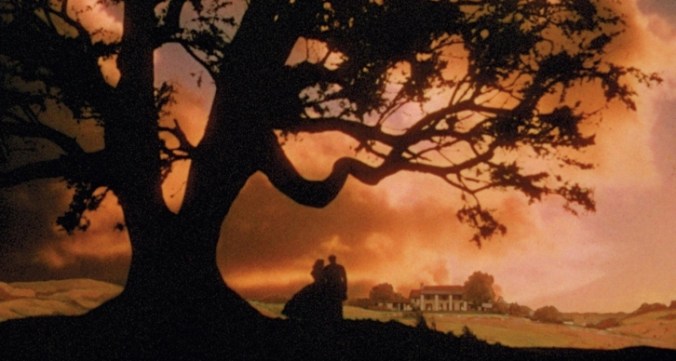
“How bad were the Academy Awards this year? Did you see? And the winner is: a movie from South Korea. What the hell was that all about? We’ve got enough problems with South Korea, with trade. On top of it, they give them the best movie of the year? Was it good? I don’t know? I’m looking for — where? — can we get ‘Gone with the Wind’ back please? ‘Sunset Boulevard.’ So many great movies. The winner is: from South Korea. I thought it was Best Foreign Film. Best Foreign Movie. No. Has this ever happened before? …”

And then he went off on Brad Pitt’s gratuitous crack about John Bolton. Continue reading

Morning Ethics Warm-Up, 1/31/2020: A Man’s Home Is His Box, And More…

Hello, Ethics Alarms, Good-bye January…

Between the nauseating impeachment charade and baseball’s cheating scandal (and the largely ethically ignorant commentary regarding it),  the bias of the mainsteam media reaching critical mass in episodes like this and the Don Lemon panel’s mean girls mockery of those dumber than dumb Trump supporters, mounting evidence that Democrats are going nuts based on the rise of a superannuated Communism fan in the race for the party’s Presidential nomination, and, of course, my wife doing a face-plant into some asphalt,  it was a not a happy 31 days at The House of Ethics.

Amazingly, it has been a very good month for the President, becoming the first POTUS to unequivocally endorse the anti-abortion movement by appearing at the March for Life, cutting a partial deal with China, ridding the world of Qasem Soleimani (and in doing so, prompting  his domestic foes, including the news media, to publicly sympathize with a terrorist and a nation that habitually calls for America’s destruction), releasing a Mid-East peace plan that is garnering support everywhere but from Iran, the Palestinians, and, of course, the U.S. media, and seeing economic figures so good even the New York Times has been forced to acknowledge them, all while being called every  name in the book and an existential threat to democracy on C-Span by the Democratic House impeachment managers.

1. “Dolemite Is My Name” We finally watched “Dolemite Is My Name,” (on Netflix), Eddie Murphy’s homage to comic Rudy Ray Moore and  his 70s Blaxploitation film “Dolemite.” So much for my proud claims of cultural literacy: I never heard of  Moore or his film, which is apparently a genre classic. Moore is regarded as the Father of Rap; how did I miss this for so long? Murphy’s movie tells the mostly true story about how a group of complete novices, led by Moore, made an exuberantly idiotic movie (faithful to Moore’s formula for success with black audiences: “Titties, funny, and Kung-Fu”) for $100,000 that grossed 10 million.

The movie is fun as a black version of “Ed Wood” (same screenwriters, I discovered later) and won some awards. For it to be make any 2019 Ten Best lists, however, is blatant race pandering by critics. Continue reading