Observations On “The Circle” (2017)

The best thing about “The Circle,” the dystopian social media-on-steroids drama starring Emma Watson and Tom Hanks, is that you now can watch it as part of a double feature with Netflix’s new “The Social Dilemma,” and consider how much of the movie is coming horribly true. Without offering too many spoilers, the film is the story of a young woman (Watson) who believes she has found her dream job working for an Amazon/Facebook-like Big Tech company run by creepily a slick and charismatic Tom Hanks. He is the prophet of over-sharing, developing and peddling products that will feed every aspect of everyone’s life into Big Data-storing and manipulating computers and banish privacy forever, all for the Greater Good, of course. The young woman, Mae, is quickly corrupted, and soon a force within “The Circle,” as Tom’s creation calls itself, to expand and use the company’s power to facilitate universal, indeed mandatory voting, for example. Law enforcement! Social control!

Mae’s epiphany is that secrets are bad, the equivalent of lies. She decides to become the first person to share every waking moment—except three minutes to use the toilet—with Hanks’ ubiquitous social network.

The movie, which is basically a long “Dark Mirror” episode, was panned by critics for its predictability, lack of originality and unambiguous ethical issues. They were right. (The movie was a box office success anyway, because apparently fans of Harry Potter will watch anything with Emma Watson in it. Watson has even less screen presence as an adult actress than fellow ex-child star Natalie Portman, something I wouldn’t have believed possible.) Continue reading

The “Around The World In 80 Days” Curse, Or How Good Things Can Lead To Bad Results, Cont.: The Worst

I won’t keep you in unnecessary suspense. The worst of the “Around The World In 80 Days” -spawned monstrosities is, by far, 1967’s “Casino Royale,” the most misbegotten movie in history. In fact, it was  finally seeing this film all the way through that inspired the post. I had avoided the film in 1967, because I followed movie reviews scrupulously then and “Casino Royale,” was panned by almost every critic. In the intervening years, I attempted to watch the movie, or parts of it, at least four or five times, in each instance abandoning the effort after 15 minutes or less. Finally, this week, TCM ran it, so I resolved to stick it out.

The movie was even worse than I had thought it would be. It is unimaginably incompetent, and I would have said unwatchable, except that I watched it.

BUT the film includes in its cast (among others), David Niven, Peter Sellers, Ursula Andress, Joanna Pettet, Woody Allen, Barbara Bouchet, Terence Cooper, Deborah Kerr, Orson Welles, William Holden, Charles Boyer, John Huston, Kurt Kasznar, George Raft, Jean-Paul Belmondo, Jacqueline Bisset, Peter O’Toole, Stirling Moss, and Geraldine Chaplin.

What’s so horrible about the film? It was made because the production company had acquired the rights to the single Ian Fleming James Bond novel not sold to the Broccoli group, then in the middle of making the first wave of wildly successful James Bond films starring Sean Connery. Unable to squeeze enough money out of Broccoli to satisfy their greed, and knowing that the public would not accept heroic James Bond who wasn’t named Connery, the Agent/Producer Charles Feldman and his partners resolved to use the title to trash the franchise it couldn’t be a part of. “Casino Royale” is a film version of vandalism. The idea was to make “Casino Royale” into a spoof, and apparently their idea of a spoof was chaos. Continue reading

The “Around The World In 80 Days” Curse, Or How Good Things Can Lead To Bad Results

Movie impresario Mike Todd’s greatest legacy is the 1956 film adaptation of Jules Verne’s novel, “Around the World in 80 Days.”  The movie was a cultural phenomenon: the title song was inescapable, it was a “must see” for everyone, it dominated the Academy Awards the following year. Todd’s brilliant innovation was that he stuffed the movie with celebrity cameos. Current and past stars showed up in tiny bits and appearances. It was a clever gimmick: in a long, leisurely film, it gave the audience a “Where’s Waldo?” game to play, and the raft of VIPs provided a sense of grandeur and importance. Some of the appearances were inside jokes; some completely gratuitous. The effect, after one has seen, for example, Buster Keaton, Frank Sinatra and Edward R. Murrow show up in the same movie, was to wonder, “Who will be next? Donald Duck? Harold McMillan?” (No, but Noel Coward arrived.) It was like a party.

Since the trick worked (ATWIED was a huge hit), the obvious drawbacks of the concept were not considered, prime among them being that focusing attention on actors as actors rather than the roles they are playing risks destroying the crucial suspension of disbelief. The other problem is that playing the star game tempts film-makers into using the gimmick as a substitute for making a good movie.

In fact, an argument could be made that this is what Mike Todd did. Today, it is almost inconceivable that “Around the World in 80 Days” was regarded in its time as a great movie, or that audiences would sit still for it. Personally, I find it nearly unwatchable, and I recognize all of those stars, The average viewer under the age of 80 will not. Mike’s innovation has a limited shelf-life.

Ah, but “Around the World in 80 Days” not as unwatchable today as some of the movies it spawned, not even close. After Todd’s triumph, the idea that having many famous performers in small parts was a formula for a hit took root. It worked sometimes, in cases where the story was an epic or particularly important, as in “How the West Was Won” and “the Longest Day.” It created a fun “Which celebrity will die next?” game in the better disaster movies of the Seventies. However, the legacy of “Around the World In 80 Days” includes several of the worst big budget Hollywood films ever made, with some of the most stellar casts ever. Continue reading

Comment Of The Day: “Thursday Ethics Thirst-quencher, 8/20/2020: Actually, This Doesn’t Taste So Good….”

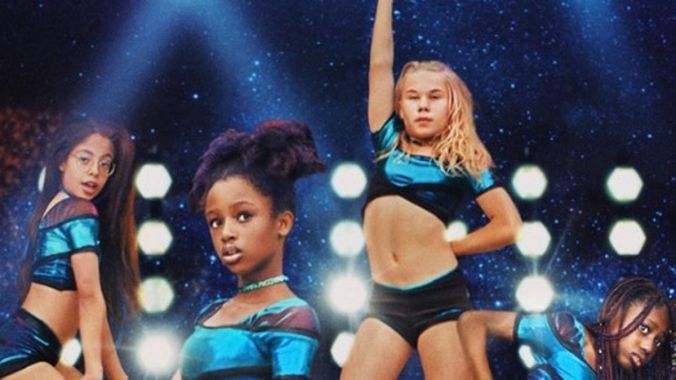
Well this is confusing: Humble Talent appended his Comment of the Day, a timely review of the controversial Netflix film “Cuties,” to yesterday’s ethics warm-up, even though that post contained nothing even vaguely related to “Cuties.” It was really a comment on the post above from August, though you won’t find it there.

In that post, I noted that conservative pundit Rod Dreher  had written, before the Netflix production was available to subscribers,

“Twerking their way to stardom. Eleven years old….These are little girls, and this Netflix show has the acting like strippers as a way of finding their way to liberation. What is wrong with these Netflix people? Do they not have children? Do they think our daughters are only valuable insofar as they can cosplay as sluts who are sexually available to men? ….There is nothing politicians can do about this…I hope sometime this fall a Senate committee calls Netflix CEO Reed Hastings] to Capitol Hill and forces him to talk about how proud he is that he has 11 year olds twerking on his degenerate network.”

Now the film is available, and here is Humble Talent’s Comment of the Day, as he watched it so you don’t have to:

We talked about this back in August, but it released today, and the responses [ on the film review site Rotten Tomatoes] are…. predictable. I don’t think I’ve ever seen such a drastic reviewer/viewer ratio. It’s heartening, maybe that the top reviewers are much more mixed than the (in my opinion) ideologically driven proletariat reviewers, but not by much. Continue reading

Luncheon Ethics Laniapppe, 9/9/20: Track! Movie Fraud! Mainstream Media…Well, You Know.

1 And speaking of movies…I just finished watching the latest from cult director Charlie Kaufman, “I’m Thinking of Ending Things.” I won’t spoil it or recommend you don’t see it, except to say that it is one of those films that you leave not knowing what you just watched, and resolving either to watch it again (nope!) or decide you wasted your time. It’s a demented cross between “My Dinner with Andre,” “Back To the Future” and “The Exorcist Part II” that would have made a decent Twilight Zone episode at 30 minutes. I tried to puzzle the thing out while and  after I watched it, which seemed fair: how many movies end with a complete rendition of Jud’s gloomy solo “Lonely Room” from “Oklahoma” and a dream ballet, after over 40 minutes of conversations in a car while driving through a snowstorm? At least the film was original, challenging, and bold…or so I thought.

Then I read an article about one of the actors (all the performances are excellent) who said he asked Kaufman, the writer and director, what the film was about, and the answer he got was “I don’t know.” Whaaaaat?

That’s fraud on the audience, a cheat, and unethical. Be obscure, be mysterious, be oblique or vague, but at least have a point when the presumption of any audience member is that every movie means something. This is like James Joyce revealing, after scholars have written books and treatises and had symposia arguing what “Finnegan’s Wake” was about, that he just threw down random words on paper and that the book really didn’t mean anything.

2. Nah, there’s no mainstream media bias! (1) Headline of the Day:  From the New York Times front page: “Scaring voters didn’t work in 2018. Will it now?” I’d say that in 2020, it is the violent and intimidating conduct of the Left, such as Black Lives Matter and the antifa, the Democratic governors and mayors refusing to protect their communities and maintain order, and the fact that the mainstream media now so blatantly attempts to cover for all of it that is “scaring voters,” or should. How is there any valid comparison with 2018?

This is the false innuendo version of fake news. The headline implies that Republicans are exaggerating the breakdown of civic order that has been rationalized and excused by Democrats. Continue reading

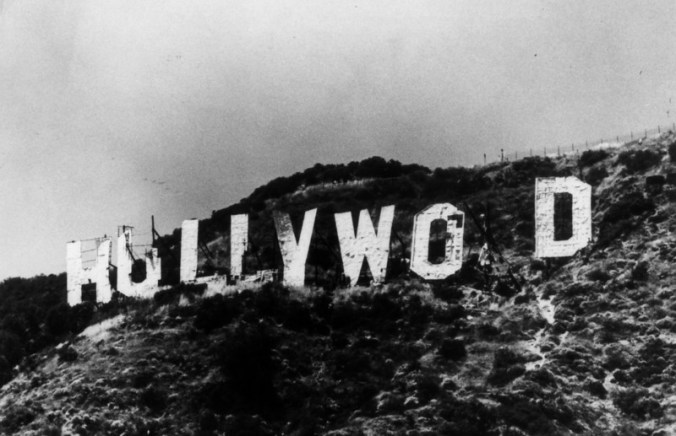
Ethics Dunces: The Academy Of Motion Picture Arts And Sciences, Or “Good-Bye, Oscar!”

The Academy of Motion Picture Arts And Science signed the death warrant of the Oscars, or, in the alternative, the film industry itself. This would warrant the “Madness! Madness!” clip, but I’m getting sick of it since that last moment in “Bridge Over The River Kwai”  been relevant almost every day since early June.

It was in June, in fact, that the Academy said it would add a diversity component to the Oscar requirements. I wrote than that it was an anti-artistic development. Yesterday, the dreaded other shoe dropped, and it was far more dilapidated and stinky metaphorical footwear  than I could have imagined, even with the complete contempt for Hollywood and the intellect of its leadership I have developed over the years. I am certain the race-hucksters and minority activists are dancing with joy, having destroyed the Oscars in order to “save” them. Yes, it’s a victory: the Woke Mob has succeeded in wrecking another American  institution and source of enjoyment for the  public. The only question is which institution: merely the Awards, or Hollywood itself.

To be optimistic, I assume it’s just the Oscars, in which case the Academy just committed suicide. The Awards show once was a shared cultural experience, then the actors started getting political and partisan, then the integrity of the process began to look fishy, and over time, culminating in the nominations miraculously including more African American nominees because a activists complained about too many white people receiving the honors. If I had bothered to think about the Oscars at all, they would have been high on my list of casualties of the George Floyd Ethics Train Wreck. Of course Hollywood would leap at the invitation to mandate the “right” kind of discrimination.

When you read the hilariously pompously named “Academy Aperture 2025” below, it should become immediately clear that the Academy has abandoned its mission of encouraging, promoting and rewarding excellence in cinema, and now will be giving out awards for meeting interest group dictated quotas and dubious social justice criteria. Whether the movies are any good or not will be secondary. Artists are being given incentive to seek political objectives at the cost of artistic integrity and worth.  Well, good luck with that: I doubt many Americans will care about such awards, especially since they barely care about the Oscars now. The Academy Awards seem to be following the doomed path of the Miss America Pageant, which capitulated to the feminists, ceased to be about attractive women in bathing suits, and thus eliminated the only justification, already slim,  for its existence.

I think I understand how the Academy came to make such a bone-headed decision: it is dominated by progressives, and as they have devolved from  passion to fanaticism to  obsession, progressives have become deluded into  accepting the concept that politics and political correctness determines virtue and value in all things.  It is an indefensible decision that betrays the essence of art, but I understand it.

I assume that most film-makers, and all of those with integrity— will choose to follow their artistic vision whether it allows the requisite number of “diversity” boxes to be checked or not. I assume that eventually, maybe quickly, a widely praised and a hugely successful film will be snubbed for not having the required number of handicapped and trans key grips, and the Awards will be mocked out of existence. We shall see: the studios, being award-hungry and run my morons, will initially insist that films meet the Oscars’ restrictive criteria, and then, when the box office suffers, most of them sill conclude, “To Hell with this: let’s make movies people want to see.”

Hollywood has bet its chips on joining the Black Lives Matter mission of creating a race-based culture where color and ethnicity, and secondarily gender, dictate advancement, financial rewards, influence and power. This is part of the indoctrination process, and if it results in bad art, so be it.

I think it’s a foolish bet, but time will tell.

Now hold on to your butts, as Samuel L. Jackson says in my favorite dinosaur movie: here are the standards that, beginning in 2024, films  will have to meet on order to  to qualify for the Best Picture category… Continue reading

Mid-Day Ethics Mitigations, 9/8/2020: Flip-Flops, Trust, China, And Zip-a-Dee-Doo-Dah [Corrected]

1. Stipulated: President Trump contradicts himself, misrepresents facts and exaggerates routinely. But how can Biden supporters use that as their rationalization? Biden and Kamala Harris repeatedly promised to ban fracking during the primaries; now, campaigning in Pennsylvania where fracking means jobs and business, both are suddenly pro-fracking.

On August 13, Biden said that he would call for a nationwide face mask mandate. “Every single American should be wearing a mask when they’re outside for the next three months, at a minimum,” Biden said . “Let’s institute a mask mandate nationwide starting immediately, and we will save lives.” Kamala Harris, like Biden a lawyer, agreed. “That’s what real leadership looks like,” Harris said. “We just witnessed real leadership. Which is Joe Biden said that as a nation, we should all be wearing a mask for the next three months, because it will save lives.”

Biden reiterated his vow in his acceptance speech on the final night of the 2020 Democratic National Convention. “We’ll have a national mandate to wear a mask — not as a burden, but to protect each other,” Biden said on August 20. “It’s a patriotic duty.” Of course, any second year law student and probably some astute college freshmen could have told the Democratic ticket that the government can’t require citizens to wear anything, and that the two were talking Constitutional nonsense aimed at the Bill of Rights-challenged members of the Democratic base, which is most of it.

Then over the weekend,  Biden admitted that his mask edict would probably be unconstitutional. “Here’s the deal, the federal government…there’s a constitutional issue whether the federal government could issue such a mandate, I don’t think constitutionally they could, so I wouldn’t issue a mandate,” Biden said.

Didn’t he and Harris already know this? If not why not; in fact, why the HELL not? Why wasn’t the news media “factchecking” Biden when he made a manifestly impossible pledge?

There is no advantage or ethical superiority in saying things that are untrue some of the time as opposed to doing it more often. Any politician who shows a lack of integrity, whose words can’t be relied upon and who changes his supposed views depending on what audience is listening to him or her is untrustworthy, and untrustworthy is untrustworthy. You are either worthy, or you’re not. Two instances like the fracking and mask reversals are enough to know Biden and Harris are not candidates who mean what they say. (You should have figured that out already, though.)

And, of course, sometimes if they DO mean what they say, it’s disturbing. Continue reading

HBO Max Adds A Disclaimer For Morons Onto “Blazing Saddles”

You know: morons.

HBO Max thinks people are so stupid and shallow that they must have  “Blazing Saddles” explained to them, lest someone—one will do–think it’s intended to advance “systemic racism” rather than to ridicule it. I do not believe in hating people, but it takes every bit of principle and energy I can muster not to hate both the political correctness dictators who  believe in “trigger warnings,” and the hoards of dim bulbs and sheep-human hybrids who appreciate them. I’m still looking for the complete text of the introduction HBO Max has slapped on Mel Brooks’ masterpiece, but I know enough.

It is intoned  by University of Chicago professor of cinema studies and TCM host Jacqueline Stewart, who also delivered the disclaimer added to “Gone with the Wind.” I like Stewart, who is smart and knowledgeable, but I would have liked her better if she refused to participate in this insulting exercise.

“This movie is an overt and audacious spoof on classic Westerns,'” Stewart says. This, writes Kyle Smith in the New York Post, is to “set things up for anyone who might be clicking on the Mel Brooks comedy thinking they’re in for Swedish drama about the lingonberry harvest.” “It’s as provocative today as it was when it premiered back in 1974,” she says. No, tragically, it is more provocative. Thanks to the racial politics of censorship and ruthless power-seeking that has metastasized on the Left in the George Floyd Freakout, professors are losing their jobs and being “cancelled” for mentioning the word that Blazing Saddles uses repeatedly as a punchline. Any professor who analyzed the use of racist language in “Blazing Saddles” would risk being called a racist by the student body. Continue reading

How Popular Culture Makes Us Misinformed And Stupid: Gunfights And Sub Battles

I recently perked some interest here in a comment when I mentioned how my dad, who taught various forms of weapon use while a trainer in the Infantry, railed at every example of a “Mexican stand-off” represented in a movie or TV show. “First one to shoot wins, or both quickly realize that there’s a mistake, and put down the guns,” he said. I was inspired by the Netflix Western “The Ballad of Lefty Brown,” which is very good, but the writer really liked Mexican stand-offs.

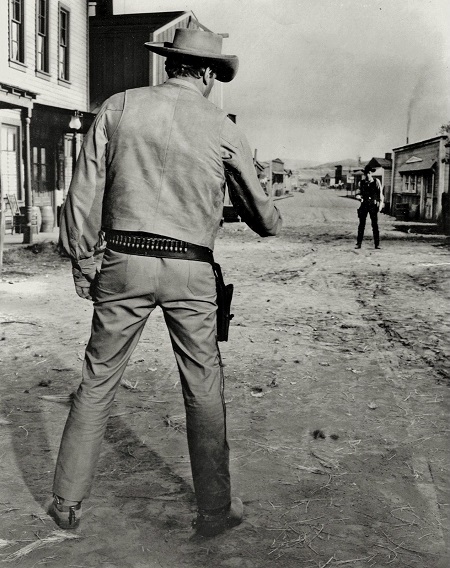
Another example is the old, dusty street showdowns Westerns have featured for a hundred years. They just didn’t happen, except for a few anomalies. One of them occurred this date  in 1865, when Wild Bill Hickok faced off in the Springfield, Missouri city square against a former Confederate soldier named Davis Tutt in a dispute over a watch.  Wild Bill won—his skill with a pistol was no myth—but the dime novel writers used the episode and Hickok’s colorful persona to create the impression back East that Wild West gun fighters were having quick draw showdowns daily. In fact, the Hickok-Tuttle affair was the first one documented.

The classic western showdown, also called a walkdown, was far rarer than drunken men shooting at each other spontaneously, ambushes and sneak attacks. The showdowns aren’t even as common in the movies as some people think who should know better. One article on the History Channel site talks about showdowns “like in ‘High Noon.'” Despite the title, there is no classic showdown in “High Noon.” And once he stopped making two-reelers as a B-movie star, John Wayne’s characters were never in any “middle of the street” duels either. Continue reading

Is It Unethical To Use HIV Transmission As A Plot Element In Drama?

In an essay in The Body, an HIV-AIDS community website, Abdul-Aliy A Muhammad argues that it is unethical and exploitive for writers to use the disease as a plot point in TV shows and movies. His argument is pitched at black writers particularly. (In case you are not familiar with the term he uses, the “down low” refers to apparently heterosexual black men who secretly have sex with males.) He argues in part,

Last week’s episode of the popular show on the Oprah Winfrey Network (OWN), Greenleaf, provided a storyline that’s become all too familiar—the disclosure of HIV status as a spicy and scandalous plot twist.

…During this season, at the end of episode three, a shocking reveal happens: AJ was raped in prison, and the person who raped him transmitted HIV to him. AJ is now suffering from HIV disease and finally tells Grace. That’s how the episode ends. As an HIV-positive Black person, my heart sank, because again, the failure to hold any nuance with HIV emerged, 16 years after the “down low” and HIV plot twists of the early 2000s. It’s as if we’re frozen in time.

… I want to say this to the writers and producers of Greenleaf, and other Black creatives: HIV is not a plot twist device. HIV is not a caricature, and HIV is not predatory. Yes, there are the very real stories of people contracting HIV after being raped, and yes, there are some people who are not fully open to their partners and who may have transmitted HIV. But the narrative of HIV as a hidden monster and prison rape are not what drive the epidemic in Black communities.

…[T]here have been many harmful representations of HIV stories in the media. Let’s start with Tyler Perry’s 2010 film…For Colored Girls Who Have Considered Suicide / When the Rainbow is Enuf. In his film adaptation, Janet Jackson’s character, “Lady in Red,” is married to a man named Carl Bradmore…His character is struggling with sexual desire and can be seen cruising for other men in the film, and ultimately there is a scene where oral sex is performed in a car. Hardwick’s character Carl Bradmore is in a BMW under a bridge and gets head from another Black man.

…Throughout the film, Lady in Red has a scarf tied around her neck, and toward the end, the scarf is red. She coughs frequently and drinks tea, ostensibly to soothe her throat. The drama erupts toward the end of the film, when they are both sitting on a bed and not facing each other. She says something to the effect of, “You can keep your sorry and your HIV”—which is saved as a grand reveal, to provide shock and melodrama to the story. Shange’s original play includes no “down low” men, and it was written before HIV, so these aspects were specifically added by Perry.

I watched this film in shock…. My mother was a Tyler Perry fan; she thought his desire to (and practice of) giving leading roles to Black actors was something to celebrate. I on the other hand felt… here again is another media representation of the [down low] monster as a viral operative to drive the drama of the plot, and to both titillate and disgust. There is data that suggests that Black people aren’t doing anything behaviorally different than white people when it comes to intimacy or other vulnerable ways to become HIV positive. The difference in disproportionate infections comes from anti-Black racism that discourages trust of systems and incarcerates and criminalizes Black people. Our vulnerability is undergirded by the lack of infrastructures of care and the breakdown of food systems in the hood and in the rural South.

Until we truly consider the truth about HIV and not the easily propagated myths, we are doing more harm to our communities and aren’t standing in solidarity with HIV-positive Black people…. Isn’t it time for TV and film catch up and stop with the same tired use of HIV as plot twist or cautionary tale. Continue reading